

Brick Repair in Apple Valley
10 Years
Workmanship warranty, in writing

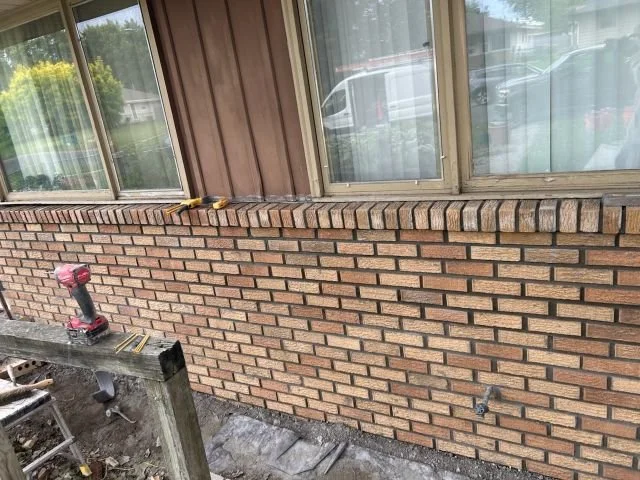
Meltwater running off a salted front step or garage apron soaks into the brick beside it, a few courses deep, and in time those faces crumble while the wall above stays whole. For Apple Valley houses, the repair is to cut out those faces and replace them course by course, as high as the salt has reached. Whether the new brick is sealed afterward is a separate question, settled at the wall.
Apple Valley Fronts at Ground Level
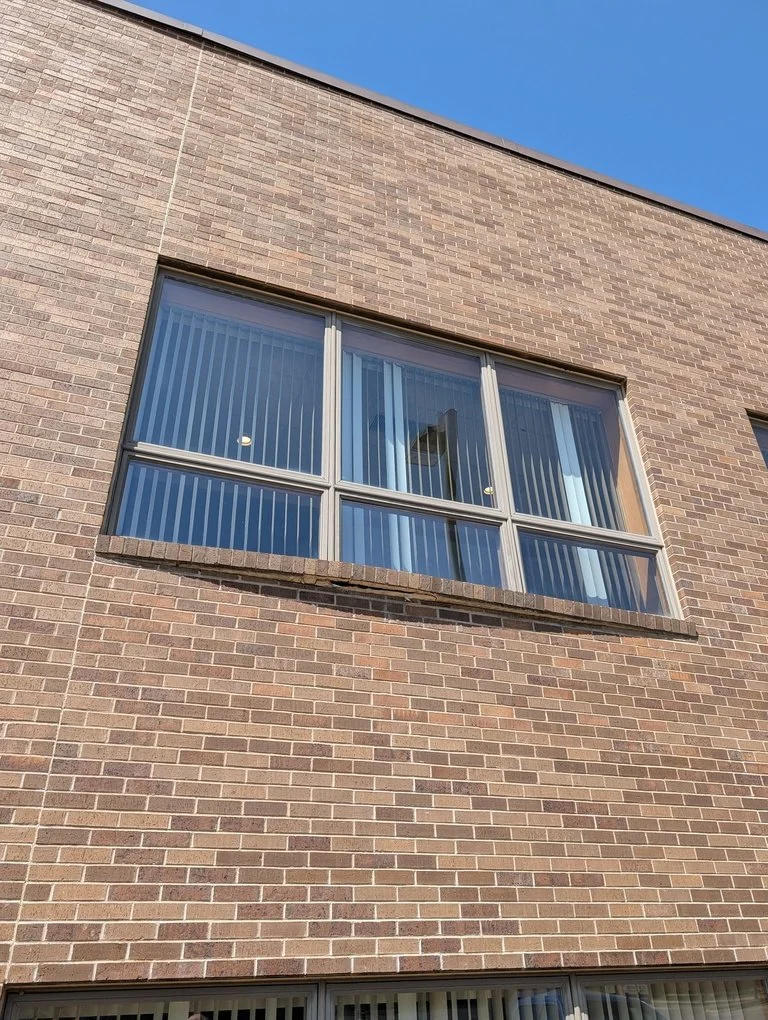
The bulk of Apple Valley's housing, some 14,026 homes, was built from 1970 through 1999. Our Apple Valley page says plainly that on a house of that age, the brick wall itself is seldom the problem, and we hold to that here.
The bottom of the wall beside an entry is the exception. Where a front's brick runs down to a stoop, the flank of the front steps, or the edge of a garage apron, its lowest courses sit in whatever runs off a salted surface. The brick a few courses higher stays out of that water. The one brick repair a younger Apple Valley house may need can be a short run, a few courses deep, beside the step you use every day.
Damage in the Bottom Courses
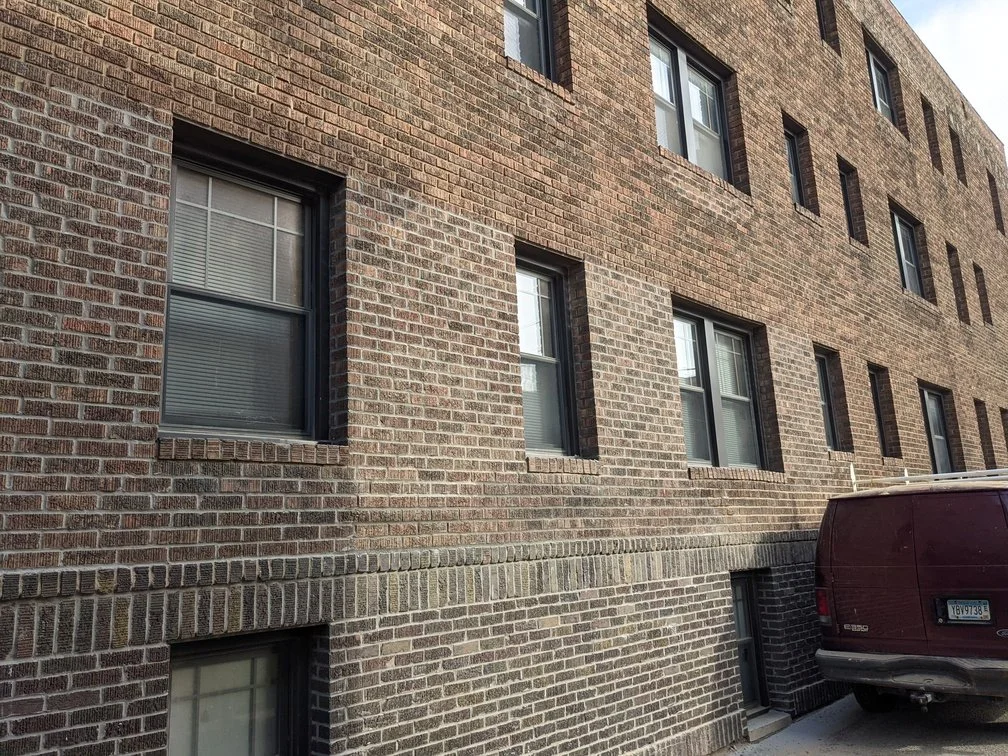
Faces crumbled or flaked away in the lowest few courses beside a step, a stoop or an apron, with sound brick above them
Grit and flakes of brick gathering on the step or along the edge of the apron where it meets the wall
A brick low beside a salted surface that has split across its face or sits loose in its bed
To Seal or Not, Decided at the Wall
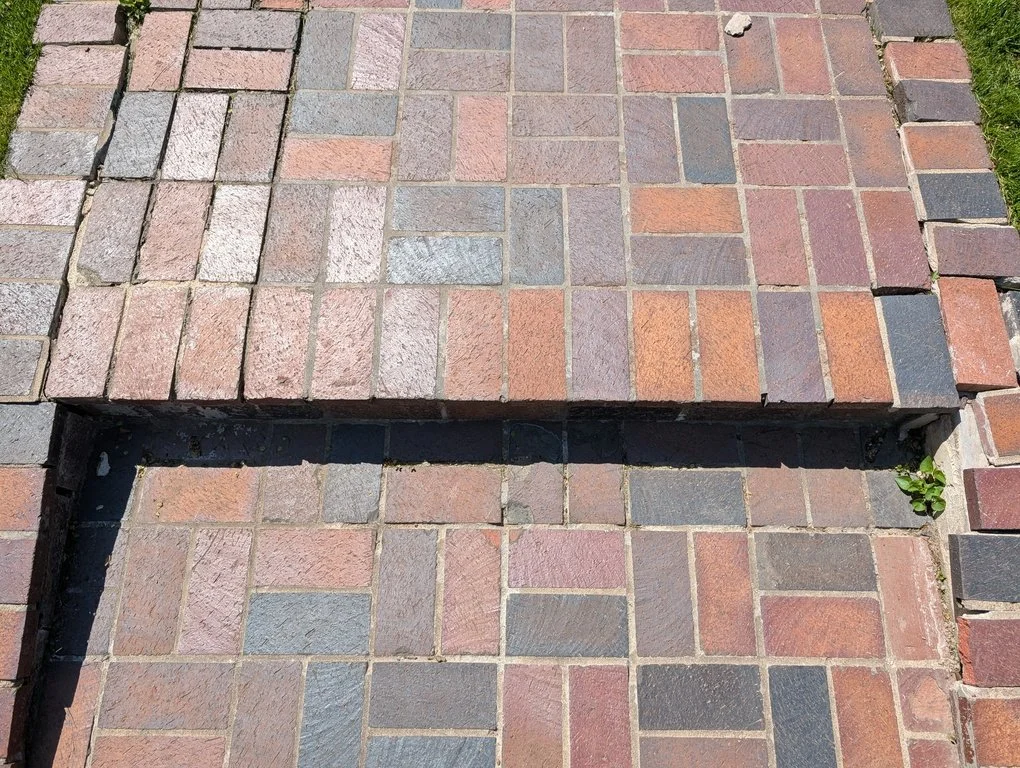
The repair itself comes first. Units whose faces the salt has destroyed are cut out and replaced, along the run and up as many courses as the damage reaches. Where it is the mortar rather than the brick that has worn back, the job is repointing instead, and our Plymouth tuckpointing page sets out how to tell the two apart at the foot of a wall.
Sealing is the second decision, made during the visit, never out of habit. A clear sealer on the new units and the ones beside them can slow how much salty water those few courses draw in from the step. That is the one place on a wall where our brick repair page says a sealer does something. On the sound brick above the salt line, it has no job to do, and we leave it off.
The visit weighs a narrow set of things: how far the damage reaches up the wall, how much of the step's runoff lands on the brick, and whether the brick beside the new units is sound. Where those point to a sealer helping, it goes on the repaired run and its neighbors. Where they do not, the new brick is left bare, matching the wall above it.
A sealer is no substitute for the replacement. It does nothing for brick whose face has already gone, which is why the damaged units come out first, and it cannot keep salt off the wall.
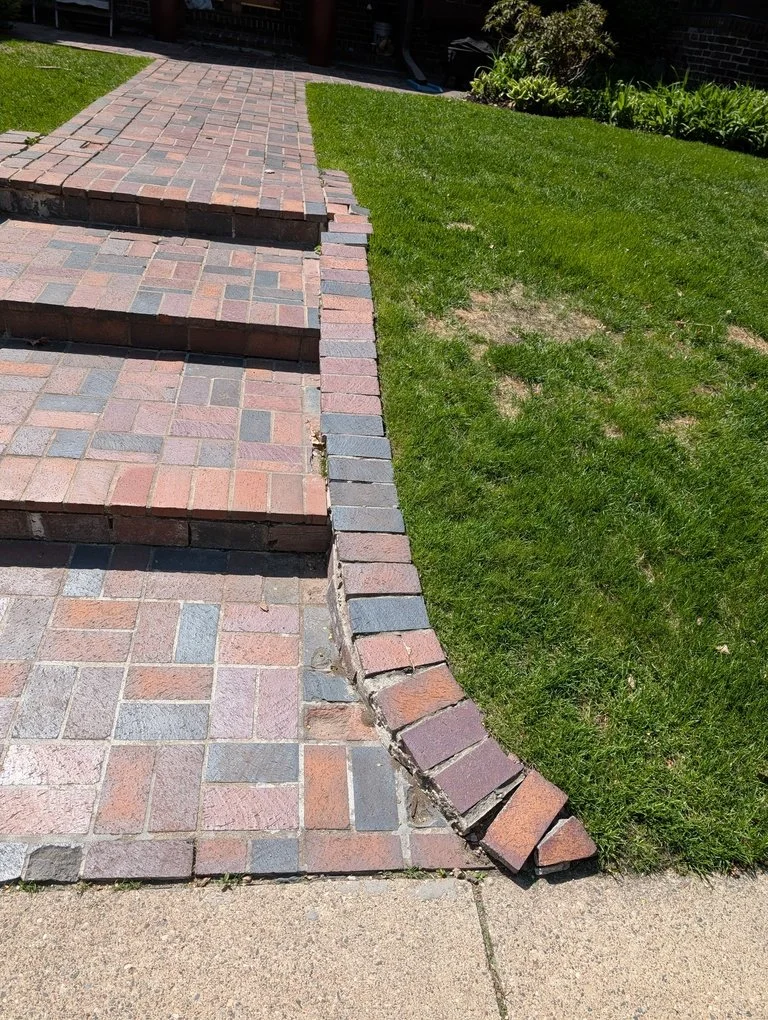
Inside a Bottom-Course Repair
Salt-damaged units in the lowest courses cut out and replaced with new brick chosen to suit the front around them
Units around them checked as the old brick comes out, and any found cracked behind the face replaced as well, once you have been told the count has risen
New joints shaped like the original joints elsewhere on the front
A sealer on the repaired run and its neighbors, only where the visit shows it will help
Left out: sealing the wall above, and the step or stoop itself, which is covered on our Apple Valley stone steps page
Exterior mortar work is scheduled for weather mild enough for it to cure.
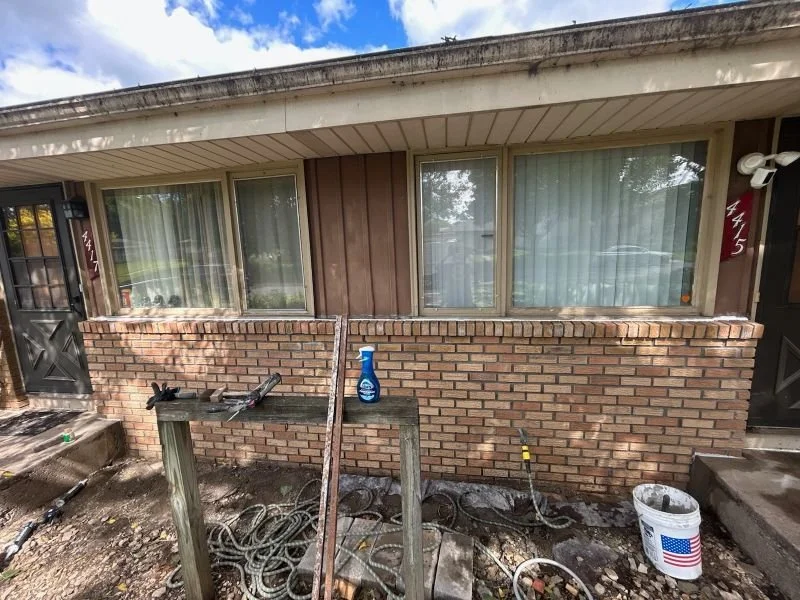
Two Lines for the Bottom Courses
Beside a step or an apron, these are the lines that apply:
Sealing, where the visit calls for it, is included in the repair price, with no figure or line of its own.
Before you call
Every figure on this page depends on square footage and on what we find when we look. They are rough guides to help you decide whether to call, not quotes. The exact number comes after the visit, and the visit is free.
When the Step Is Salted
While you are here, should the whole wall be sealed?+
No. Above the splash from the step, the brick has no salt to keep out, so a sealer there would serve no purpose, a point our Apple Valley page makes too.
Will sealing stop the damage coming back?+
No one can promise that. A sealer can slow how much salty water the new brick takes up, but salt still reaches the wall whenever the step is treated, and brick that low stays exposed to it.
Does the step itself need work?+
Sometimes. If the step has settled toward the house or its stone, brick, or concrete has failed, that is step work, priced on our Apple Valley stone steps page, and Sam can look at both on the same visit. Each goes on the written estimate as its own item, so you can book either one without the other, or both together.
Is this the same as the tuckpointing quote I was given?+
Not necessarily. Tuckpointing renews the mortar; this repair replaces bricks whose faces have gone. Our Apple Valley tuckpointing page covers how to tell whether a repointing quote fits your wall.
What Customers Say
What appears below is our live Google feed, not testimonials we picked out, so it shows whatever is genuinely on it.
The Step and the Wall in One Frame
What helps on the first call:
- 1. A photo from the yard of the step or apron with the brick beside it in frame
- 2. Close shots of the worst bricks in the bottom courses
- 3. Whether that step or apron is treated with salt or another deicer
- 4. Whether anyone has sealed or coated the brick before