


Chimney Crown and Raincap Work in St. Paul
10 Years
Workmanship warranty, in writing

The concrete slab on top of a chimney is the smallest part of it, the part nobody can see from the ground, and one of the first places we check when water is getting into a house.

Signs Your Chimney Crown or Raincap Needs Work
Water is coming in near the fireplace, and the roofers say it is not the roof
When roofers have cleared the roof, and the leak is still there, the crown is where we start, and it can be the answer even on a crown that is only months old. Sam has traced exactly that on a chimney another company had just rebuilt.
You can see cracks in the concrete on top
Usually visible from an upstairs window or in a photo taken from a ladder. Cracks in a crown are not cosmetic. They are the route water takes into the top of the masonry, where it then works downward through the whole stack.
Somebody has caulked it
A crown that has been caulked has usually been caulked because it was cracked and somebody wanted it to stop leaking without rebuilding it. Sam lists caulking over cracked crowns as one of the most common things he finds other people have done. It is worth knowing that this is a holding measure and it buys a season or two.
The metal cover over the flue is missing, rusted through, or was never there
Open flues let rain straight down into the chimney and let animals in. Nesting material inside a chimney holds water against the masonry year-round, which is a slower, more damaging problem than rain.
The crown was rebuilt recently, and it is still leaking
It happens. Asked what other contractors most often get wrong on a rebuild, Sam gave a three-word answer: crown too thin. A crown can be new and still be the leak.
What We Do Up There

Full crown rebuild, cast in place
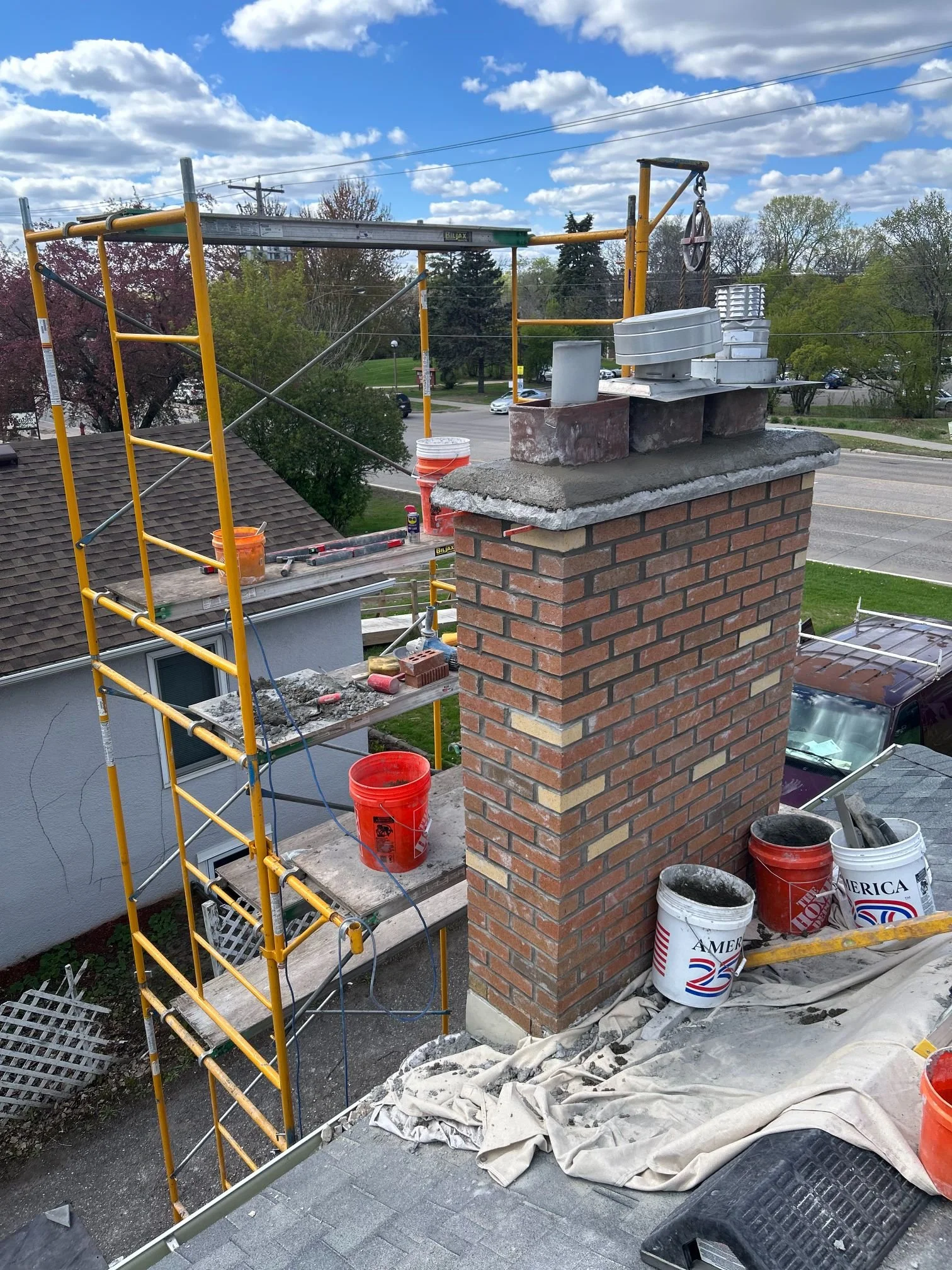
The failed crown comes off, the top of the masonry is made good, and a new crown is formed and poured on site to the right thickness, with slope and overhang built in. It is formed on the stack because a cast-in-place crown fits the chimney it sits on, which a pre-cast unit cannot.
Crown sealing
Where the crown is structurally sound but has hairline cracks, a flexible sealer over the top is the appropriate response. We will say when we think that is the problem.
Raincap supply and fitting
Fitted over the flue, sized to the flue, with mesh. Straightforward work, and one of the cheapest ways to stop both water and animals getting into a chimney.
Raincap repair and replacement
Rusted, damaged or badly fitted caps replaced.
Repointing the top courses while we are up there
The courses immediately below a failed crown have usually taken water for as long as the crown has been failing. If the joints up there have gone, doing them at the same time costs a fraction of what it costs to come back.
Working out whether the crown is actually the problem
Included in the estimate. We do not bill for diagnosis. On a leak, finding the entry point is most of the job.
What this job does not include
Dampers, both top-mount and throat. Not something we fit.
Flue liners and relining. Not our trade. We will say so and give you a name.
Chimney sweeping, creosote removal and graded safety inspections. A different trade, referred out.
Roofing itself. We do take on the flashing where the chimney meets the roof, and we will tell you in the estimate whether yours needs it.

What It Costs
Crown and cap work is priced within our chimney repair ranges because, by the time someone is up there, it is rarely the only thing that needs doing.
A crown seal with minor repointing sits in our basic tier. A full crown rebuild with repointing to the top courses sits around the middle. A raincap fitted on its own is a much smaller job than either, and Sam will price it at the visit. Height and roof pitch move all three, for the obvious reason that getting to the top of a tall stack on a steep roof is most of the work.
What moves the price
Height of the stack and pitch of the roof: These move the price more than the crown itself does.
Whether the top courses of brick also need doing: They usually do, and it is far cheaper done in the same visit.
Whether the crown is the actual leak: Sometimes it is not, and we will tell you.
Every figure on this page depends on square footage and on what we find when we look. They are rough guides to help you decide whether to call, not quotes. The exact number comes after the visit, and the visit is free.
How The Work Runs

Why This Small Job Is Worth Doing Properly
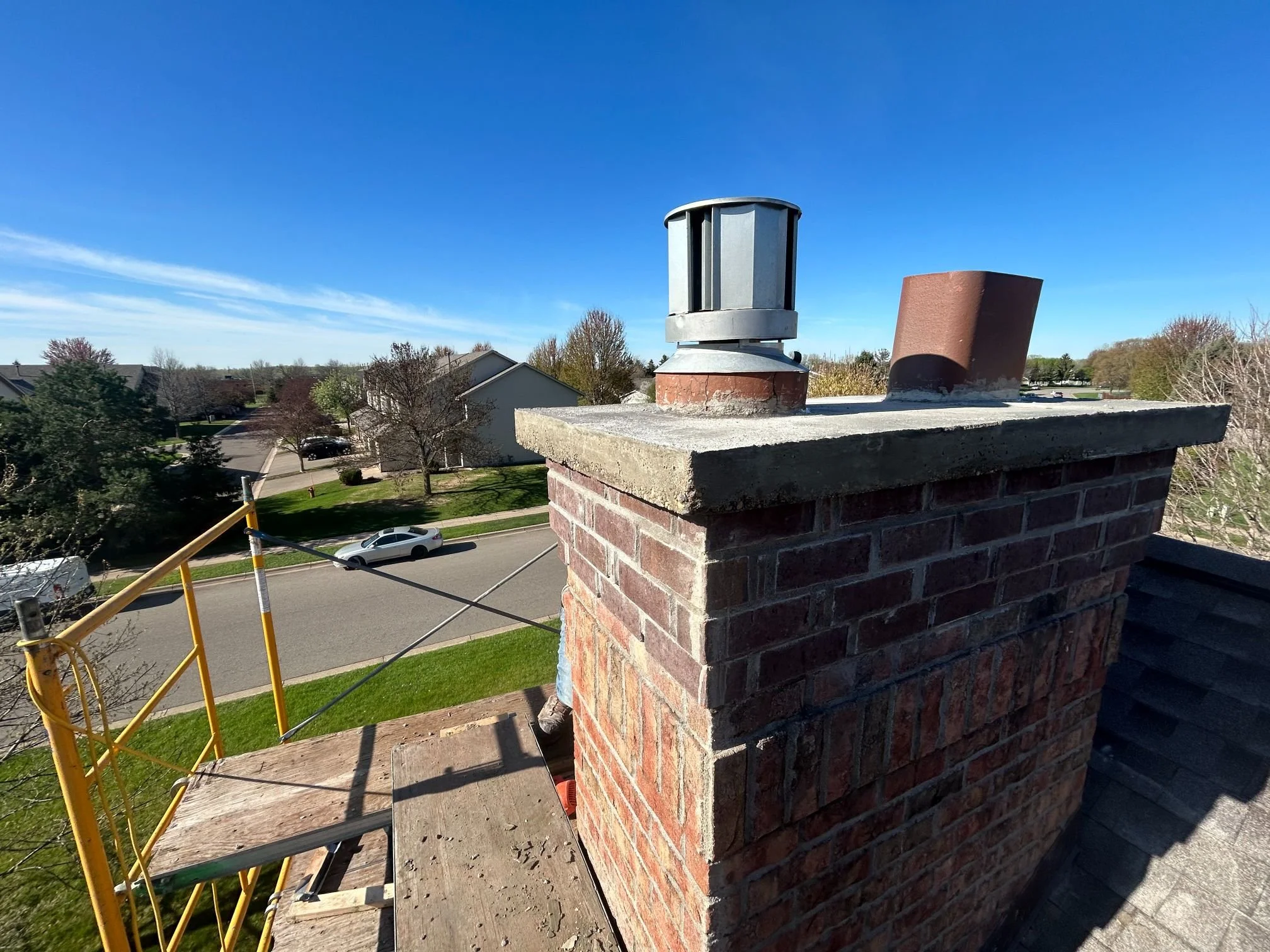
A crown poured properly, sloped properly, and overhanging the brick face is not an expensive thing to build. It is just one that takes as long as it takes.
A raincap is a small ticket, and ours goes out with the same six people who do the rebuilds. Sam prices it himself the same way he prices everything else.
Ten years on the workmanship, covering what we did, with the written terms available at the estimate. It is not a materials warranty.
Crown, Cap, Raincap: Which Word Means What
There are two different things on top of a chimney and the trade uses the words for them inconsistently, which makes shopping for the work confusing.
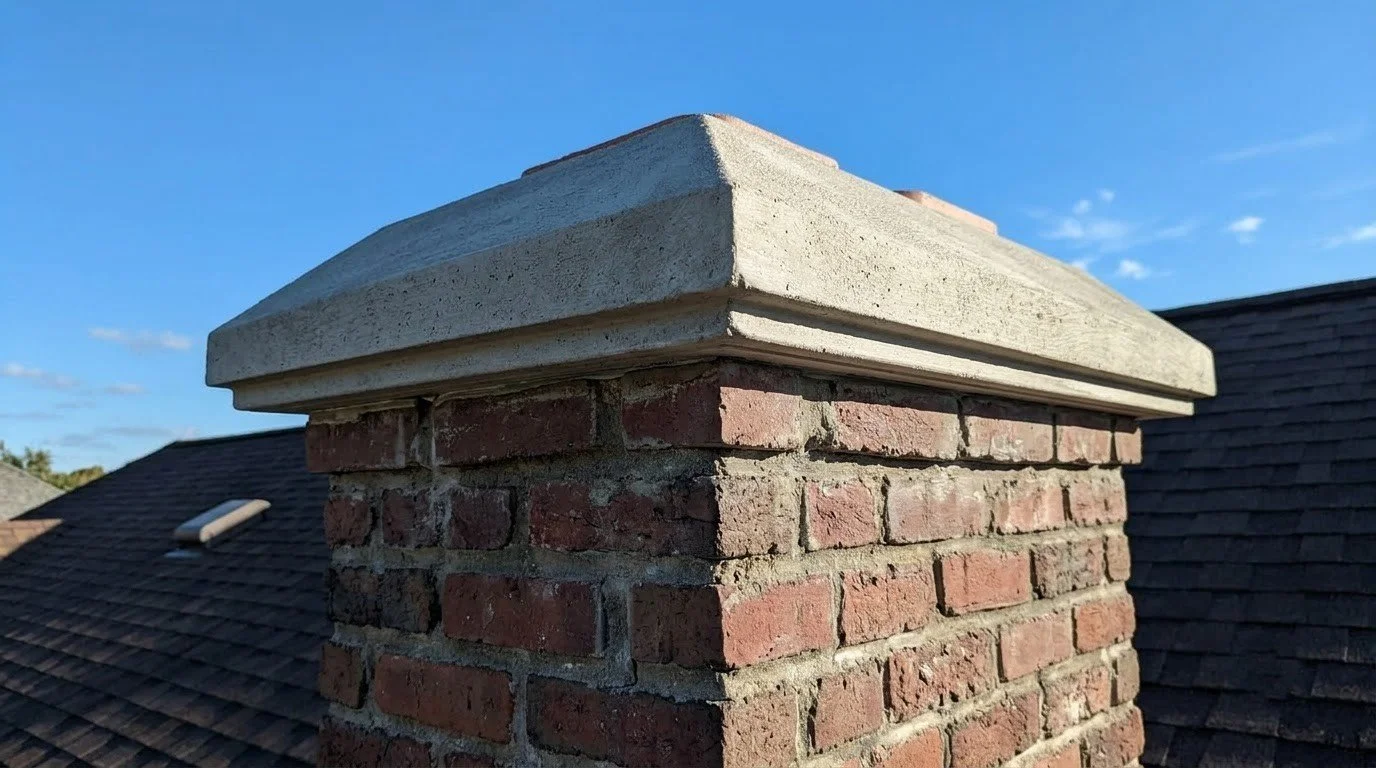
The crown is the sloped concrete slab covering the top of the brickwork, with the flue coming up through it. Its job is to shed water off the top of the stack and throw it clear of the brick face. Sam usually calls this one the cap, and if you speak to him you will hear that word.
The raincap is the metal cover that sits over the flue opening itself, on legs, with mesh around the sides. Its job is to keep rain out of the flue and animals out of the chimney.
Crown means the concrete, and raincap means the metal, because that is the more common convention. If you are comparing quotes, check which one each quote is actually pricing, because a crown rebuild and a raincap are not remotely the same amount of work.
What a crown should look like when it is right: cast in place on the stack itself. Thick enough not to crack. Sloped away from the flue so water runs off it. Overhanging the brick face so the runoff is thrown clear of the wall. Sam's own answer on the most common mistake other contractors make on this work was three words long. Crown too thin.
There is also a procedure called crown sealing, which is a flexible coating applied over a crown that is sound but has hairline cracks. It is a real product with a real use, and it is not a substitute for rebuilding a crown that has broken up. We will tell you which of the two you are looking at as you stand in front of the chimney, and we will show you why.
Common Questions
In most quotes and most search results, the crown is the sloped concrete slab on top of the brickwork and the cap, or raincap, is the metal cover over the flue opening. Sam himself tends to call the concrete one the cap, so it is worth confirming which one any quote is pricing. They are not similar amounts of work.
Crown work is priced inside our chimney repair tiers. A crown seal with minor repointing sits in the basic tier, starting at about $3,500 for a single-story house. A full cast-in-place rebuild sits around the middle, roughly $5,500. A raincap on its own is a much smaller number, and Sam will give it to you at the visit.
Both are real answers. Hairline cracking on a crown that is otherwise sound can be sealed. A crown that has broken up, lost pieces, or is thin enough to keep cracking needs rebuilding. We will tell you which one you have and why.
On the right crown, yes, and it is cheap. On a crown that has failed structurally, it is money spent to delay the same job. The distinction is whether the concrete is intact.
The usual reason is that the crown was poured too thin, or the mix was wrong. It is the most common defect we find on other people's crowns, and a crown only months old can absolutely be the leak.
If you have an open flue, yes. It keeps rain out of the chimney, and it keeps squirrels, birds, and mice out, which matters more than people expect. Nesting material inside a chimney holds water against the masonry year-round.
A properly sized mesh cap will keep them out of the flue. If something is already nesting in there, that needs dealing with first, and by someone whose trade it is.
No. Neither top-mount nor throat dampers. If that is what you need, we will point you to someone who fits them.
You can, and it will hold for a while. What it will not do is stop the crown from deteriorating beneath the caulk, and we mention this because we constantly find caulked crowns, usually on chimneys that are still leaking.
The pour itself is often a day. What takes the time is curing, and nothing else on the chimney can happen until it has. Weather affects this more than anything.
A crown has to be poured, and concrete will not cure in a freeze, so that part waits for the temperature. A raincap is a different matter and can go on in cold weather, which is worth knowing if water is getting into the flue right now.
Where a chimney needs it, yes, and doing it alongside the crown is the sensible order. We will tell you plainly at the estimate whether yours needs it, without pretending it is ours.
Where We Do This Work
Crown and cap work is often a single visit, which makes it one of the jobs where a long drive genuinely changes the arithmetic. Our service area page has the full list. Past about forty-five miles from St. Paul, send photographs first.

What Customers Say
What appears below is our live Google feed rather than testimonials we picked out, so it shows whatever is genuinely on it.
Google review, September 2025Get A Free Estimate
A photo from an upstairs window, or from a drone if you have one, is worth more than a description here. Do not get on the roof for us.
The first job is establishing whether the crown is actually your leak. Sometimes it is not, and then you have saved the cost of a crown you did not need.
(612) 509-0718 · A person answers during business hours; Sam does the estimate · No service call fee