

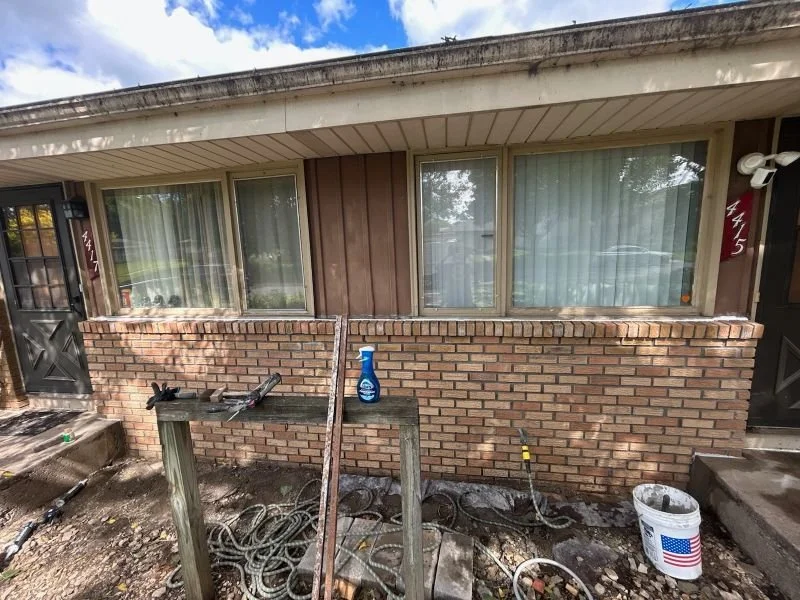
Tuckpointing in Plymouth
10 Years
Workmanship warranty, in writing

Look at the bottom few courses of brick beside your driveway, front walk, and steps. Salt and snowmelt reach the wall there winter after winter, and on Plymouth houses built from the 1970s through the 1990s, that is where worn joints tend to show first. Tuckpointing repairs them: the failed mortar is ground out and fresh mortar packed back in.
Low on a wall, the first question is whether the mortar has worn or the brick has, because those are two different jobs at two different prices. Our tuckpointing page explains grinding, packing, and striking, as well as the choice of mortar.
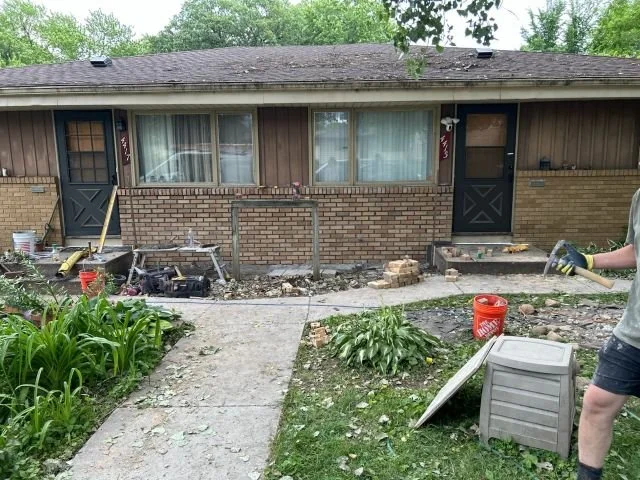
Signs at the Foot of the Wall
Joints set back behind the brick in the bottom courses
The mortar has worn back from the face, and the brick in front of it is still flat and hard. Repointing is made for this stage.
Sandy mortar at the sides of the steps and stoop
Brick around an entry takes the melt off the treads as well as off the drive. Mortar there that scratches away under a key has lost its binder.
A pale band a few courses up
Water drying out of the brick can leave a white line or crust low on the wall. It means water is moving through those courses, and the joints are the first place to look.
Brick faces flaking or crumbling
Once the faces themselves begin to come away, the damage has moved past the mortar. That stretch of wall is a brick repair job, covered below.
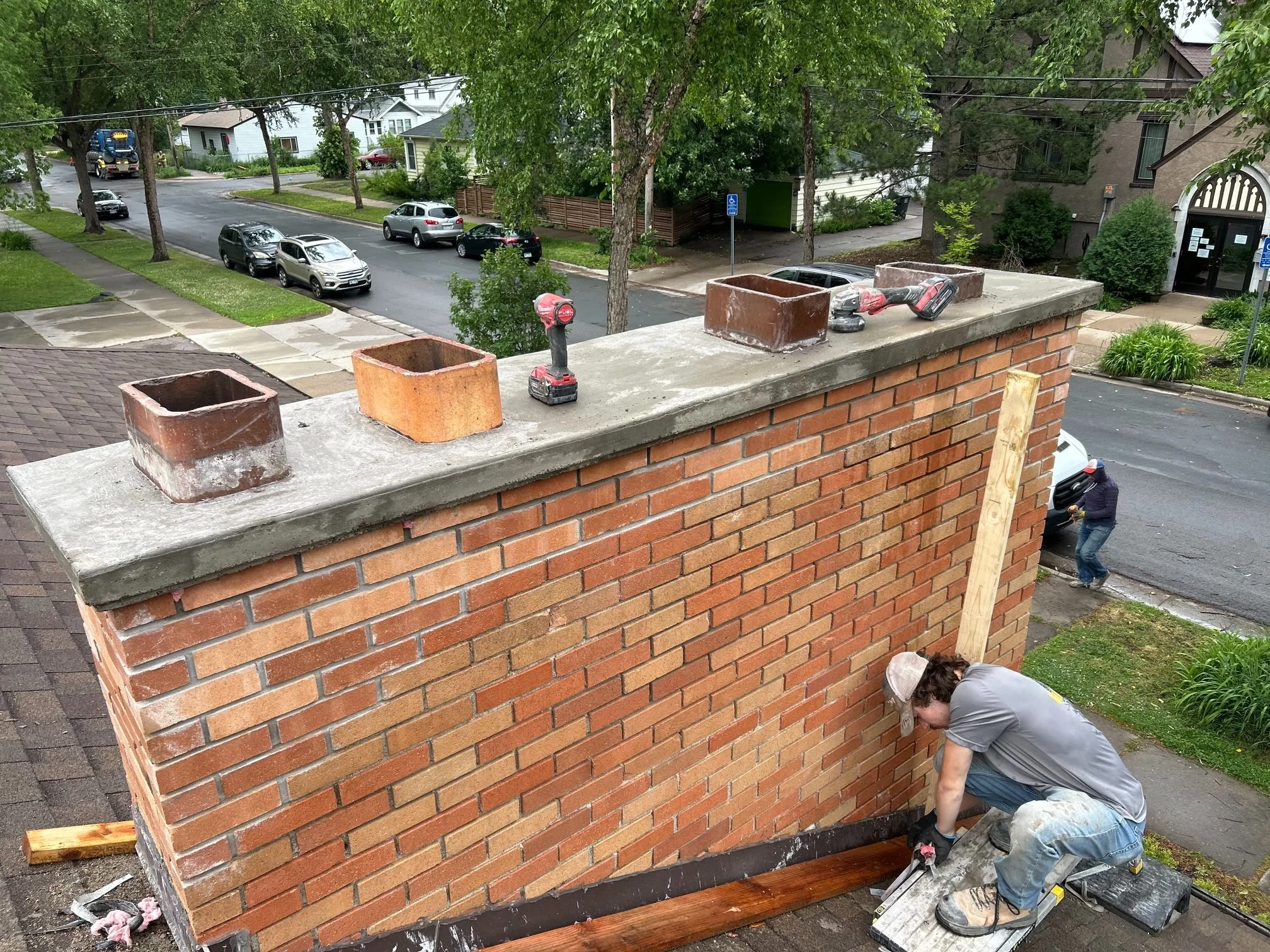
Worn Joints or Worn Brick: Reading the Bottom Courses
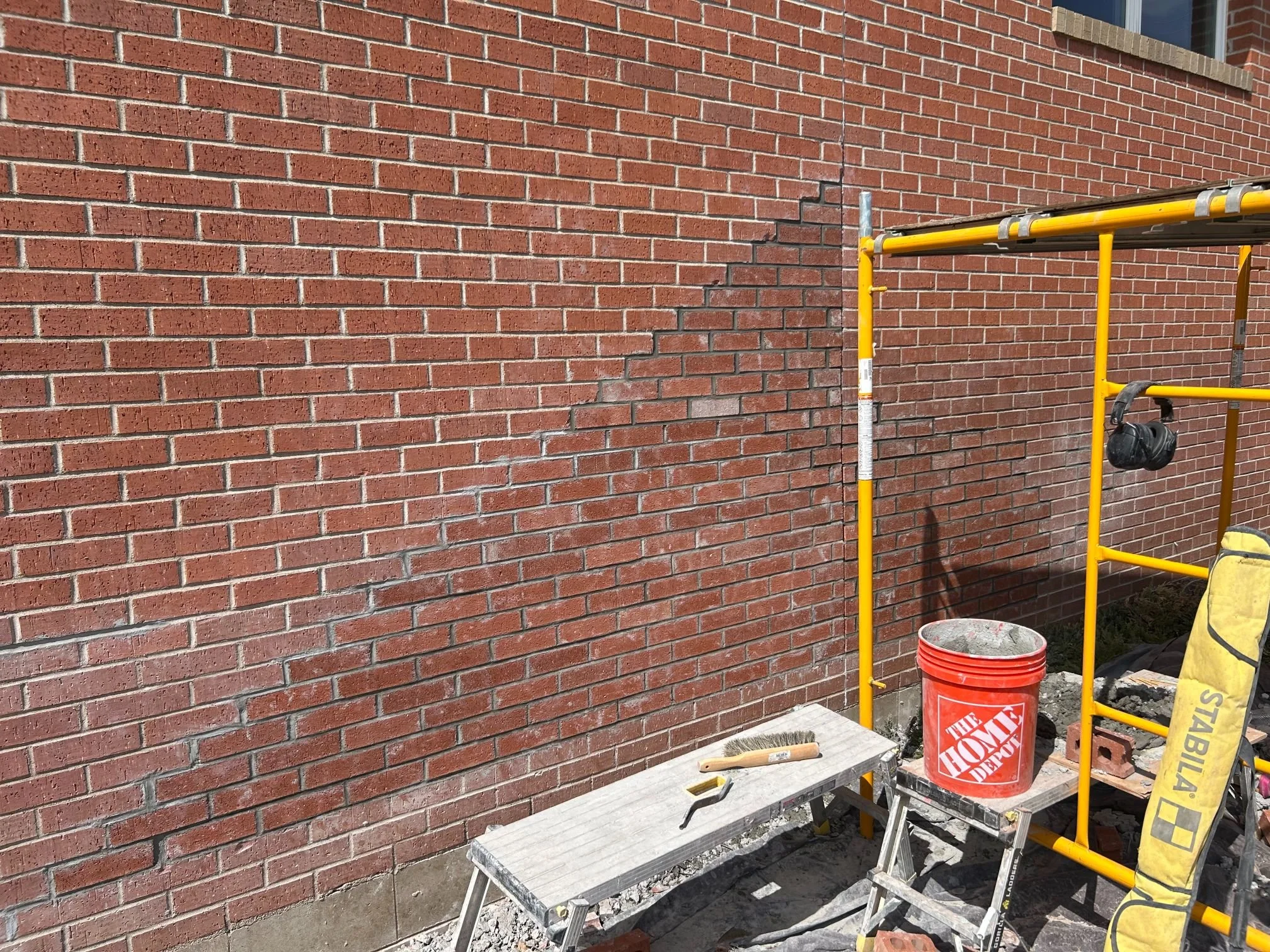
Mortar is meant to be the weaker part of a wall. When salty meltwater soaks the bottom courses and then freezes, the joints should give way first, and if that is where the damage has stopped, the fix is mortar only. The joints in the affected courses are ground out and repointed, and the brick stays where it is.
Sam reads the bottom of the wall one course at a time: whether each joint has worn back or cracked away from the brick, and whether the faces beside it are still flat and hard or have started to scale and shed flakes. He also notes how far up the damage climbs. Beside a driveway it may stop at two courses; beside steps that are salted hard, it can reach higher.
That reading leads to one of three answers. Where every face in the run is sound, it is a repointing job priced as shown below. Where a few faces have gone among sound ones, those bricks are cut out and replaced, and the run is repointed in the same job, with the brick work priced from our brick repair page. Where the faces across a run have gone, new mortar around them would only frame the damage, and the estimate says so.
Left until the faces go, the bottom courses become a brick job, and the new units have to be matched to the rest of the front.
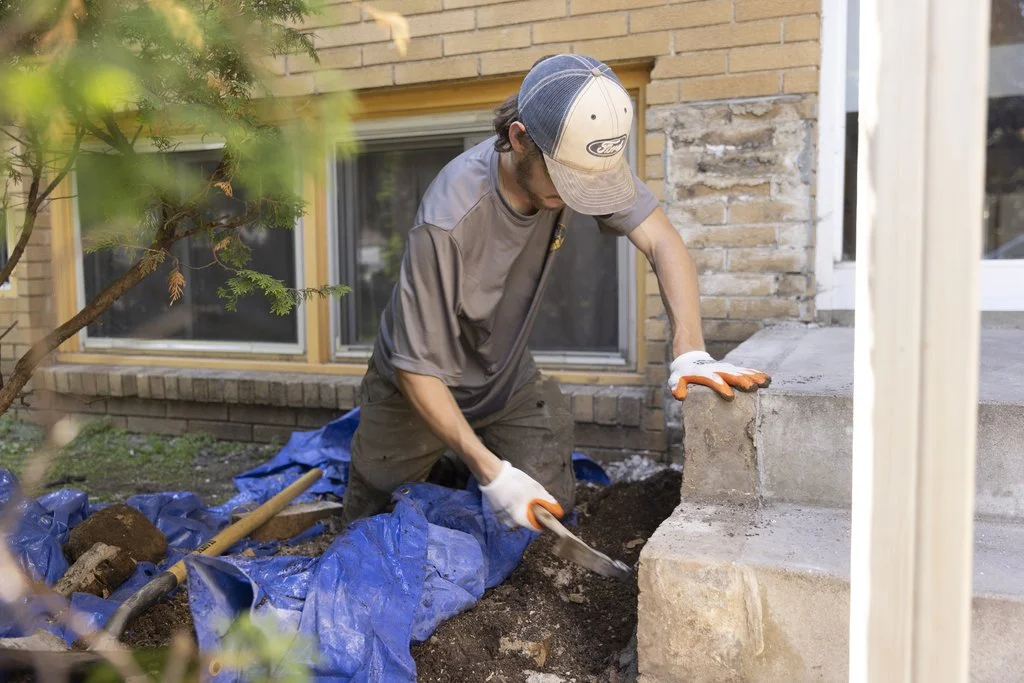
Why the Work Sits Low on Plymouth Houses
By Census estimates, 20,128 of Plymouth's homes, three in every five, were built from 1970 through 1999. On houses of that age, wherever brick meets a drive, a walk or a stoop, it is within reach of the salt spread there.
The Bassett Creek watershed commission, which monitors Parkers Lake, found that chloride from deicing salt enters the lake mainly with the winter and spring snowmelt. Melt works the same way on a single lot. As the snow beside a drive or a stoop thaws, it carries salt into the bottom courses of any brick it touches. The salt that matters to your wall is the salt on your own drive, walk, and steps.
Older houses are a separate case. Plymouth also has 4,151 homes from 1940 through 1969 and 620 from before 1940, and on those the joints can be failing well above the bottom courses. Our Plymouth page covers what else those houses ask for.
Scope of a Plymouth Job
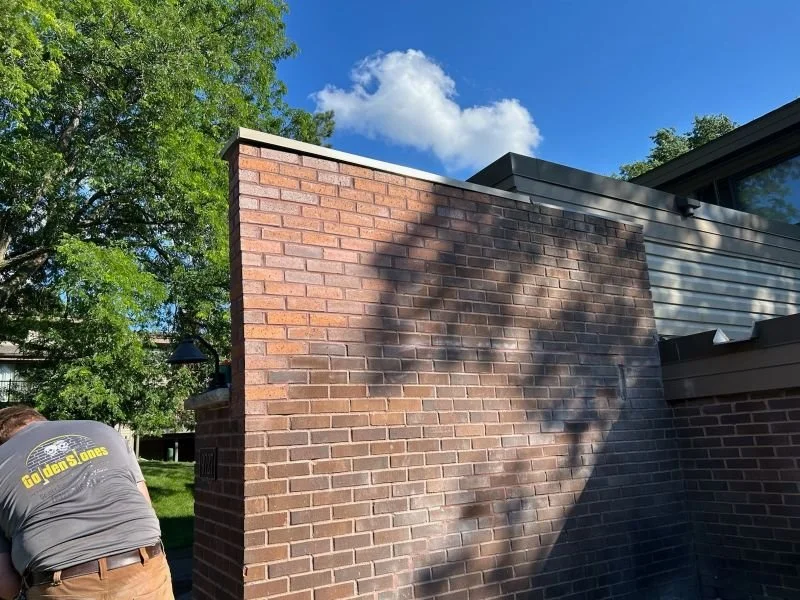
The bottom courses beside drives and walks
Ground out and repointed course by course, to the height the damage reaches, along the stretch that has failed.
Brick facing at the front entry
Brick around a stoop or beside the front steps, repointed where its joints have gone. The steps themselves are on our Plymouth stone steps page, and the low walls beside them are on our step side walls page.
Chimney joints
Repointed along with any crown work and priced on our chimney repair lines. For the rest of the stack, see our Plymouth chimney repair page.
Whole walls on the older houses
On a house from before 1970, failed joints can run the full height of an elevation, and the job is priced on the whole-wall line.
What stays out of the job
Stucco, siding, and thin-adhered veneer are outside our scope of work, and we do not fill joints with caulk.
Pricing by the Run and by the Wall
Four lines from our tuckpointing page cover the work, from a salted strip by the drive up to every wall:
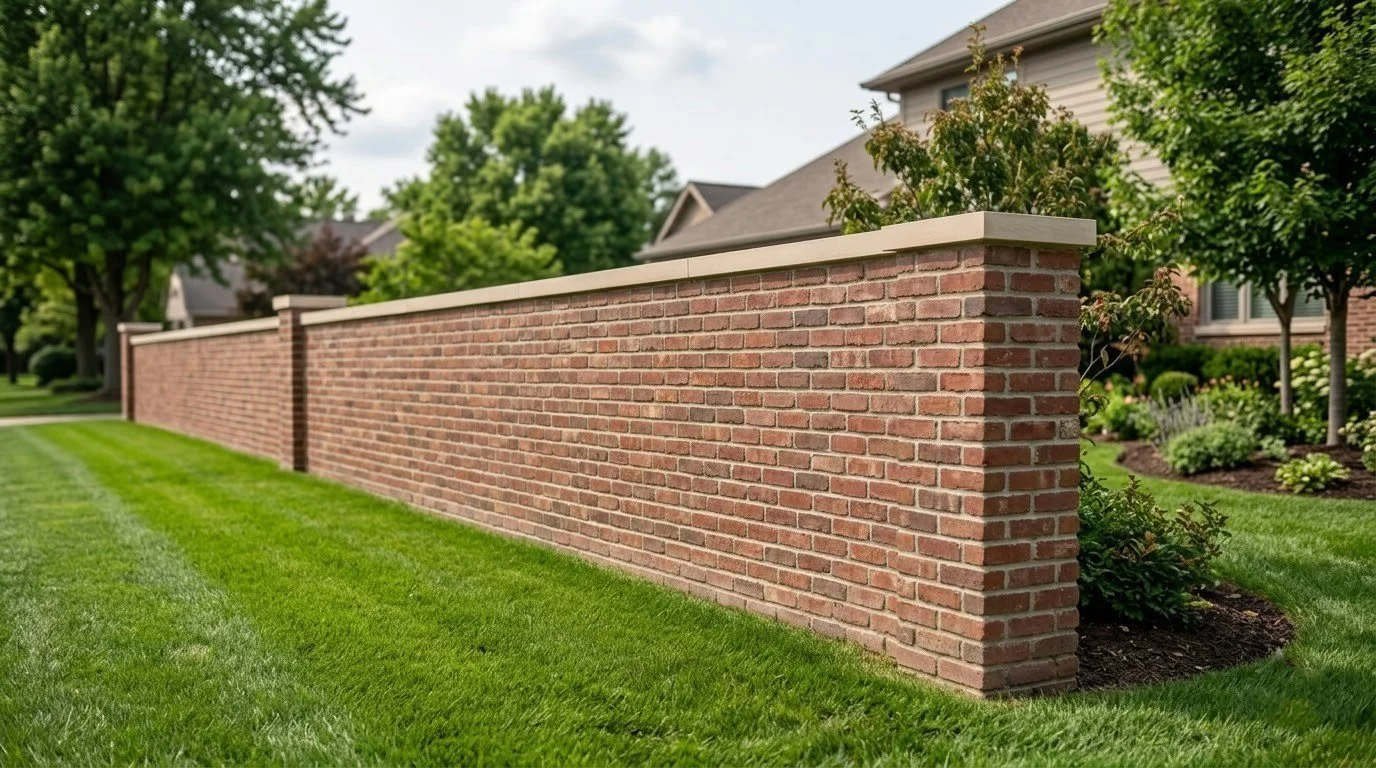
Small area, roughly a 10 by 10 section or less: from about $2,800
Repointing one wall from grade to eaves: around $6,000 to $8,000
More than one elevation, or all the way around: priced from there upward
Chimney repointing with chimney work: on our chimney repair lines
Brick replacement mixed into the run is priced separately, from our brick repair page.
Every figure on this page depends on square footage and on what we find when we look. They are rough guides to help you decide whether to call, not quotes. The exact number comes after the visit, and the visit is free.
Questions From Plymouth Driveways
Should the bottom courses be sealed after they are repointed?+
Sometimes. A breathable sealer over freshly repointed brick at grade can slow how fast salty water soaks back in. It goes on last, over sound joints only, and Sam decides at the visit whether your wall is a candidate.
Does the side of the garage count?+
Yes, when it is brick, and its joints have worn. It is quoted with the house. A low garage wall that leans or has cracked through is a garage masonry job, covered on our garage masonry repair page.
Can you repoint just the courses by the drive?+
Yes. If the joints above and around them are sound, the estimate stops at the courses that have failed. Joints elsewhere that are close to the end go on the estimate as an option you can take or leave.
What Customers Say
What appears below is our live Google feed rather than testimonials we picked out, so it shows whatever is genuinely on it.
Photographing the Bottom Courses
What helps on the first call:
- A photo of the brick along the drive or walk, taken from low down and close enough to show the joints, tells Sam whether he is likely looking at mortar or at brick. Add one of the whole front.