

Masonry Contractor in Victoria
10 Years
Workmanship warranty, in writing

The median Victoria house dates from 2006, which is later than in any other city we cover, and 91 percent of the city was built in 1970 or later. About 101 properties predate 1940.
Which makes the older ones the interesting part. Victoria has a real nineteenth-century core, settled by Swiss and German families from 1851, and the brick in it has a documented origin in the next town along.
What Hard Mortar Does To Soft Brick
This is the single most useful thing we can tell anyone who owns one of the older buildings in this city, and it is the mistake we are most often called out to undo.
Nineteenth-century brick was fired at lower temperatures than modern brick, and it is softer as a result. The mortar it was laid in was softer still, and deliberately so. A wall like that has to move, because everything does, and the design intent was that the mortar would take that movement and give way over time. Mortar is cheap to replace. Brick is not.
Repoint that wall in a modern mix, and you reverse the arrangement. The joints become the hardest thing in the wall, so the movement has nowhere to go except through the units. The faces spall off, and the damage is permanent, because a brick that has lost its fired outer skin cannot be repaired, only replaced. And in this city, replacement means finding brick from yards that shut in 1961.
It is not a difficult thing to get right. The decision simply has to be made before the first joint is ground out.

What Victoria Homeowners Call Us About
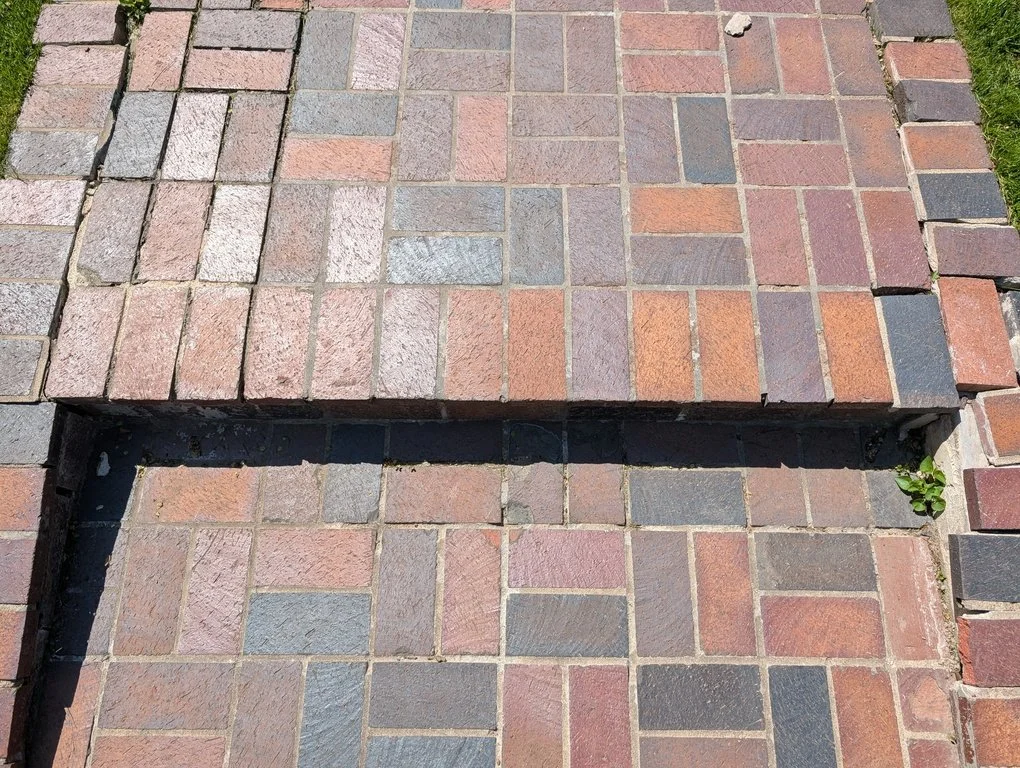
Entryways and steps that have moved
The most common call from a city this new, and the clay till explains it. Ground that holds water and swells will lift anything set shallow on it.
Chimney crowns on the 2000s housing
About 1,337 homes here went up between 2010 and 2019 and 931 in the 2000s. Those crowns are barely into their second decade, so what we are usually looking at here is whether a sound one wants sealing, not whether a failed one wants replacing.
Repointing on the old brick
The pre-war group is small, around 101 properties, and much of it is soft nineteenth-century brick. Those walls want a soft mix and somebody who knows the difference.
Retaining walls on ground that was cut to build on
Many of the plots here were cut into the slope to create a level pad. The base and the drainage behind a wall decide whether it stays where it was put.
Brick lifting over a garage door
Corroding steel over wide openings. Younger here than in most cities we cover, but it is coming.
What We Do In Victoria
Weighted toward a city built mostly this century, with the older brickwork given its own proper treatment.
Steps, stoops and entryways
Rebuilt over a footing carried beneath the freezing depth. Where the clay loam swells and shrinks with the weather, depth is not part of the job; it is the job.
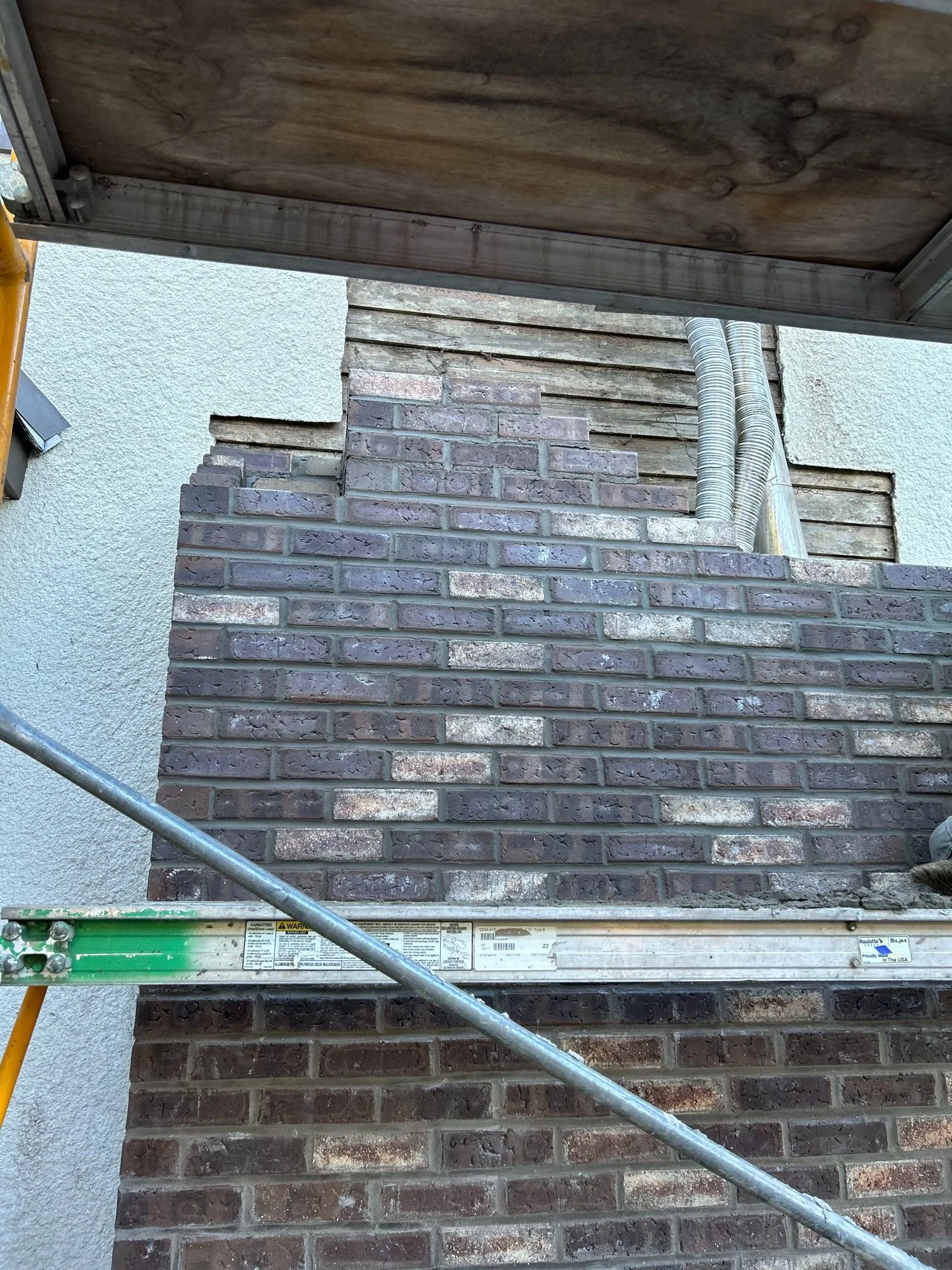
Tuckpointing and repointing on the old brick
In a mix that suits nineteenth-century brick. Bed soft brick in hard mortar and the movement transfers into the units, which then spall. It is the part of the work most often mishandled.
Brick repair and matching on historic walls
Chaska brick has not been made since 1961, so replacement is a sourcing exercise. We will tell you honestly at the estimate whether a close match is realistic before anybody starts.
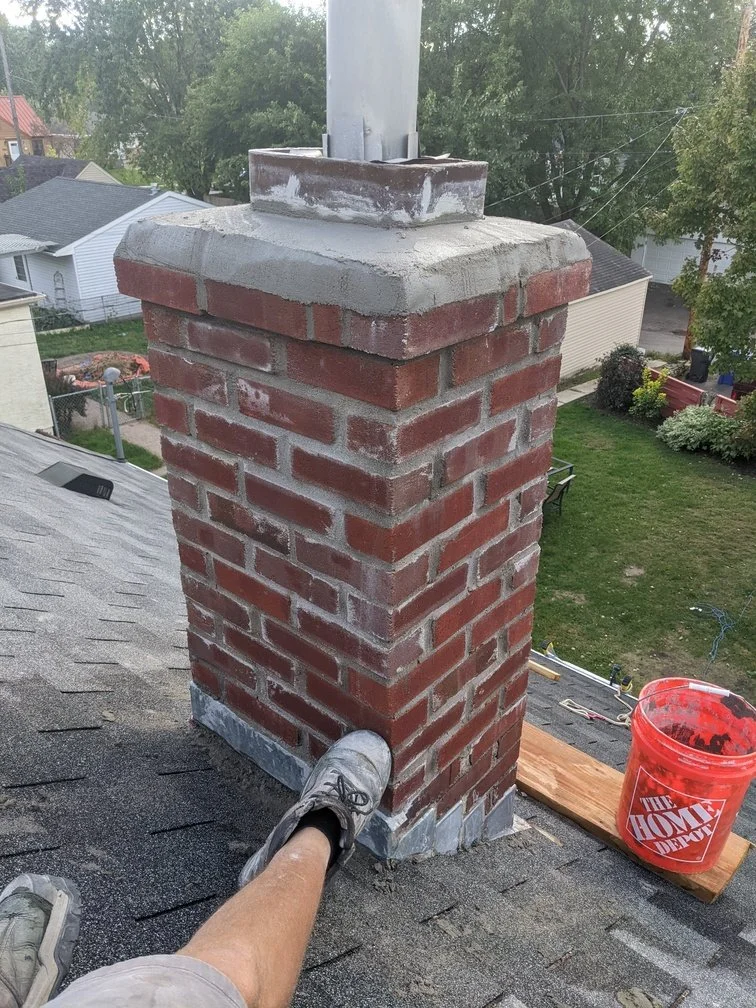
Chimney crowns and raincaps
On modern housing, where sealing a sound crown is frequently the right answer and much cheaper. Our crown page sets out how to tell.
Chimney repair and rebuild
Two kinds of housing here mean two different jobs, and we will tell you which one yours is before quoting.
Retaining walls and garden walls in natural stone
Taken down, footing and water path corrected, relaid from whatever stone has survived. Block walls are not something we build or repair.
Patios and walkways in natural stone
Flagstone and natural stone. On till that holds water, the base under a patio is doing all the work.
Stone foundation repair
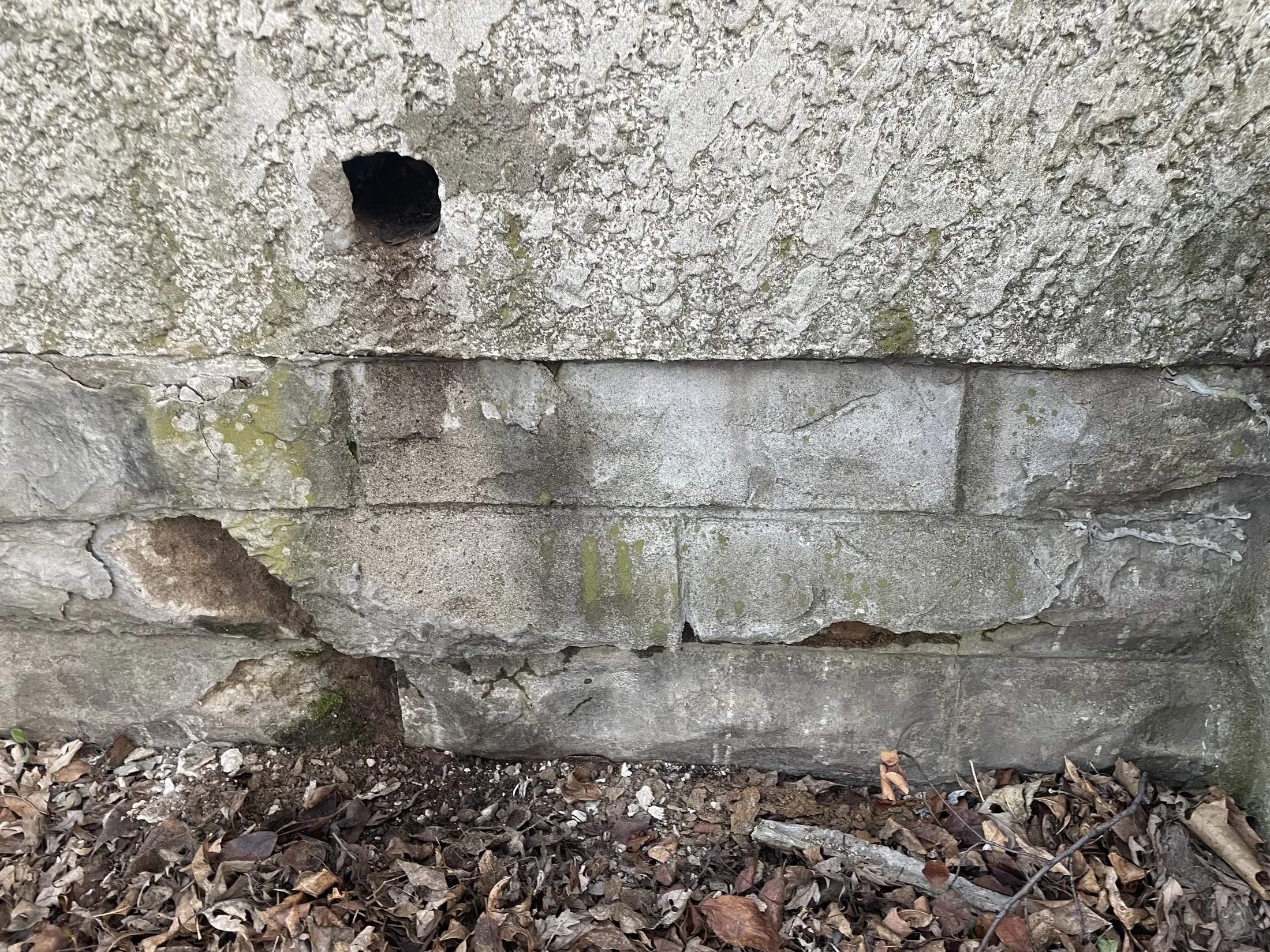
For the small group of genuinely old properties. Rebuilding failed sections where stones have moved.
Brick From Chaska, And Why That Matters When You Repair It
The city's own history records that in 1870 the parish built its second and present church using bricks manufactured in Chaska. That is a specific, local and unusually useful fact, because Chaska brick is documented in its own right.
All of that closed in 1961. So if you own something built of Chaska brick, the material is no longer made, so matching it is a sourcing problem and not a catalog one. It also behaves like the soft brick it is: laid in soft mortar, and unforgiving of anybody repointing it in a hard modern mix.
No stone within reach of anybody building here, either. The state atlas maps a prominent buried valley crossing the county from Waconia through Victoria to Chaska, with glacial fill in the county's buried valleys running 550 to 600 feet deep, and no bedrock outcrop is mapped anywhere in the city. Which is precisely why the 1870 church is brick from the next town rather than stone from this one.
Clay loam till holds water and heaves when it freezes. On a page about a city this new, that is the single most practical thing on it.

What It Costs
No travel charge, and no minimum job size. Victoria is a longer drive than most of our work, and there is still no charge for it.
Starting points: $3,500 for chimney repair on a single-story house; $5,500 for a recast crown; meaningfully less to seal a sound one; $2,800 for tuckpointing a small area; $1,500 for minor brick replacement; $7,500 to $11,500 for steps.
None of those help with the nineteenth-century brick, and a figure for it would have to be invented. The variable is sourcing units that were discontinued in 1961, and nobody can price that off a photograph. It gets a number at the visit, and the visit is free.
Every one of those figures depends on square footage and on what we find when we look. They are rough guides to help you decide whether to call, not quotes. The exact number comes after the visit, and the visit is free.

What Customers Say
No review anybody has left us names Victoria. What appears below is the live Google feed, not a testimonial we picked out, so it shows whatever is genuinely on it.
Google review, September 2025Tell us what is going on with your masonry
Tell us what you are seeing and attach photos if you have them. Sam comes out himself, and you get the options priced in writing. No charge either way, and no service call fee.
Common Questions In Victoria
Sometimes, and you will hear our answer before the work starts. The yards all closed in 1961, so there is no new supply. What exists is salvage, and how close a match you get depends on how hard the original was fired, because the same clay came out salmon at lower temperatures and cream at higher ones. If a close match is not realistic, we would rather say so at the estimate.
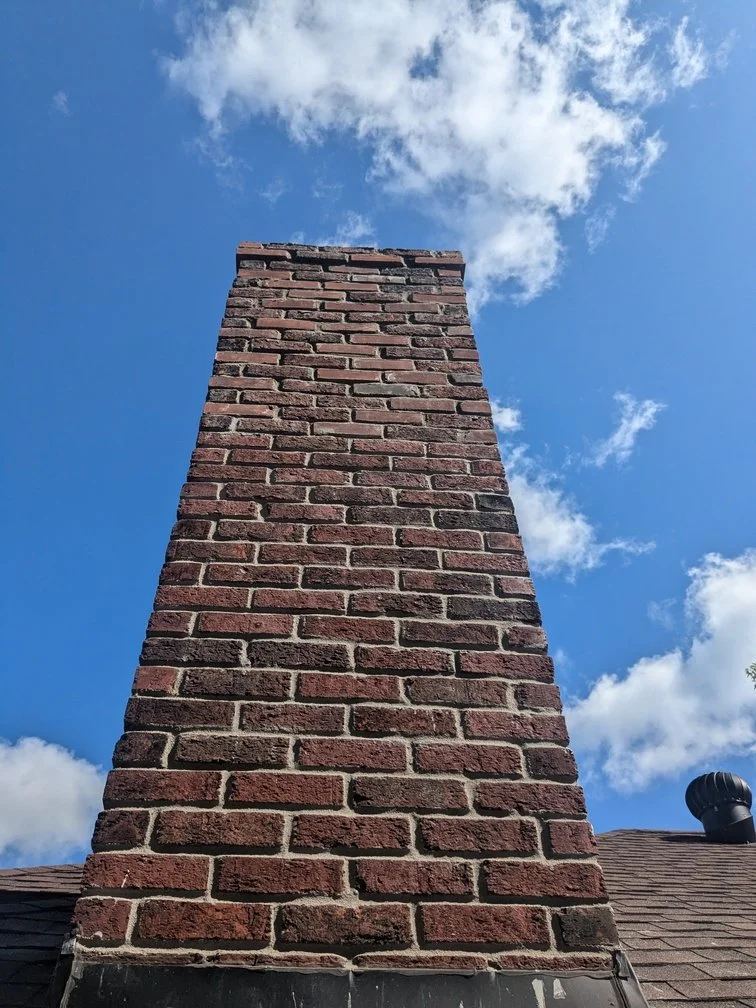
Not much yet, and that is the honest answer for most of this city. The one thing worth checking is the crown on top of the chimney, because it fails first regardless of how well it was built. On housing this age, sealing generally does it.
Almost certainly what they are set on. The ground here is clay loam till, which takes up water, swells, then shrinks back as it dries, and heaves when it freezes wet. Anything bedded shallow rides that movement.
Nothing within reach of anybody building here. A buried bedrock valley runs across the county through this city, with glacial fill in the county's buried valleys reaching five to six hundred feet, and no bedrock outcrop is mapped anywhere in Victoria. That is why the old buildings here are made of Chaska brick rather than local stone.
Yes, with a real distinction. Interior work, foundation repair from the inside, and fireplace work carry on. Exterior mortar work depends on the weather, and given the drive, we will tell you straight which side your job falls on before anything goes in the diary.
If you do, you will hear it from somebody with no stake in it. We fit no drain tile, no sumps, and no membrane, so when we say a wall wants water taken away from it before it wants mortar, that is worth what it costs you to listen to.
Get A Free Estimate In Victoria
Say whether the building is one of the old ones or part of the modern city. In Victoria, that splits the work almost completely, because there is very little in between.
If it is old brick, a close photograph plus one from a few steps back tells us a great deal, including whether we are looking at a matching problem before we have driven out.
(612) 509-0718 · No travel charge, no minimum job size · In-person estimate at no charge