


Chimney Rebuild in St. Paul
10 Years
Workmanship warranty, in writing

A rebuild means taking the chimney down to sound masonry and laying it back up. It is the biggest job we do on a chimney, and it is the one homeowners are most afraid of being sold, because the difference between a rebuild you needed and a rebuild you did not is several thousand dollars.
So this page starts with the rule we actually use. It is written down below, in the same words we use standing in your driveway, and you are welcome to hold us to it or take it to whoever else you are getting quotes from.
Where a repair and a rebuild are both defensible, we price both and honestly tell you how long each should last. That is not a sales position; it is the reason the company exists.

Signs Your Chimney Needs a Rebuild
Bricks are spalling across the whole stack, not just near the top
A few faces popping near the crown is a repair. Spalling spread across the chimney, and particularly spalling that runs low, means water has been moving through the whole structure, and patching it will not stop that.
You can see daylight or shadow into the joints
When the mortar has been set back far enough that the joint is open rather than recessed, the wall is no longer doing what a wall does. Repointing an open joint gives you a joint. It does not restore the bond that has already been lost.
The chimney is leaning
This one has no gray area. A lean means the structure has moved, and nothing you do to the surface will reverse it. Every leaning chimney we look at is a rebuild.
Work was done here before, and the same problems came back
Usually because the rebuild did not go down far enough the first time. New work laid on top of failed masonry inherits the failure, and it comes back faster the second time.
The top few courses have gone soft, and the crown has broken up
This is the most common rebuild we do, and it is far less alarming than it sounds. It is generally a roofline-up job, not a whole-chimney job.
Something was flagged during a home sale inspection
A rebuild is a defined, documentable piece of work with a warranty attached, which is often what a buyer or their inspector actually wants to see.
What This Job Covers

Roofline-up rebuild
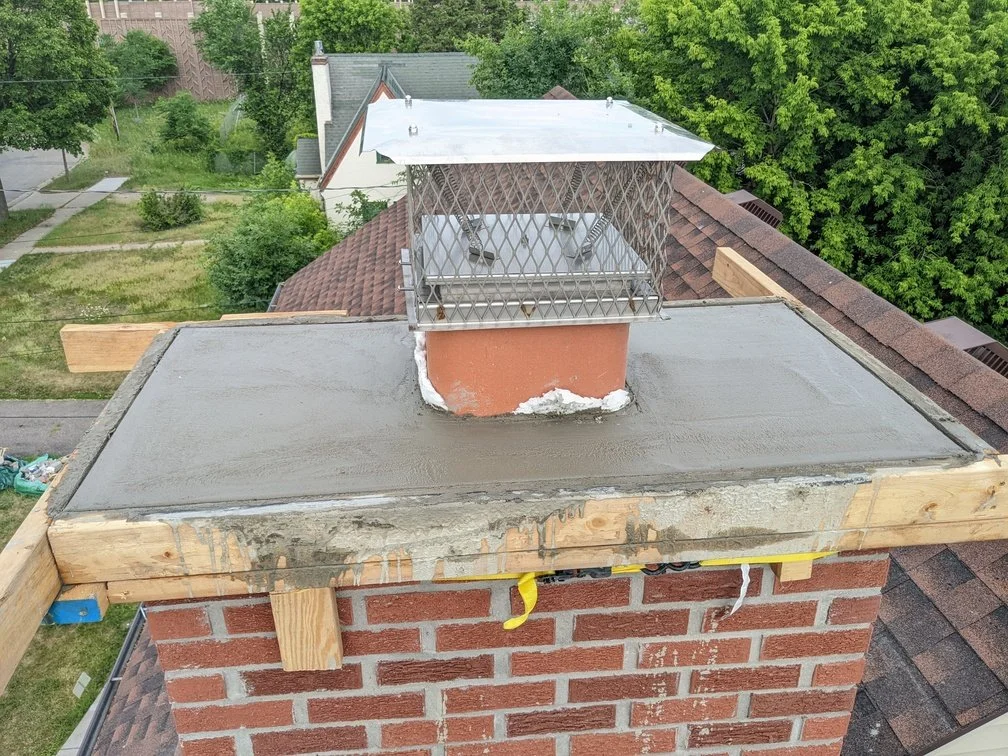
The most common scope by a distance. Everything above the flashing comes down, then goes back up with a new crown. The section below stays because it is generally still sound.
Partial rebuild with tuckpointing below
Where the top is gone, but the middle section is only tired. The failed part is rebuilt, the rest gets repointed, and you do not pay to replace masonry that has years left in it.
Full above-roof rebuild
Where the whole exposed stack has gone. Bigger job, same principle.
Rebuild down past the roofline
Uncommon, and it means the chimney has been neglected a long time. We will show you why before we provide a quote.
New cast-in-place concrete crown
Poured as part of every rebuild. Thick, sloped, overhung past the brick with a drip edge, because a thin crown is the single most common thing we see done wrong.
Raincap
Fitted as part of the rebuild. Keeps water and animals out of a flue that is now in good condition.
Brick matching and sourcing
Through a supplier we have used for years. On older houses, this is the part that takes the longest and is most worth getting right.
What this job does not include
Flue liners and relining. If the liner needs replacing, we will tell you and refer it out, but a rebuild does not include it.
Chimney sweeping, creosote removal, and graded safety inspections.
Dampers, gas inserts and wood stove work.
New chimney construction on new build. We rebuild what is there.
Roofing itself, beyond the flashing where the chimney meets the roof, which we do take on as part of the rebuild.

What It Costs
Our chimney repair page publishes a starting figure of about $8,000 for an above-roof rebuild on a single-story house, and that figure is real. What we will not do is publish a range for rebuilds in general, and that is deliberate enough to warrant an explanation rather than a blank.
A rebuild price is driven more by the size of the stack than by the word "rebuild". A small narrow chimney on an easy roof can cost less to take down and relay than a high tall one costs to re-cap. A single published range would be right for the modest jobs and badly wrong for everything else.
What moves the price
How tall and how wide the stack is. This is the biggest single factor, and it is why one range does not fit.
How far down the rebuild has to go. Roofline-up is the common case and the cheapest of the rebuild options.
Roof pitch and access. Safely staging a steep roof is a real cost in itself.
Brick matching. Sourcing a match for a 1920s house takes longer than pulling stock.
Time of year. The calendar fills from the front, so work booked early goes in sooner. A rebuild is exterior work, so the constraint is that the weather is mild enough for the mortar to cure.


How The Work Runs

Why Homeowners Pick Us For This

We quote the repair too
On a typical single-story chimney, that is roughly $3,500 versus $8,000, and showing both costs us the difference on jobs where the repair is enough.
We rebuild down to sound masonry
Going one course deeper than strictly necessary costs a fraction of a day. Stopping one course short means the new work is sitting on the failure, and you pay for the whole job twice.
Sam is on site for the complex ones
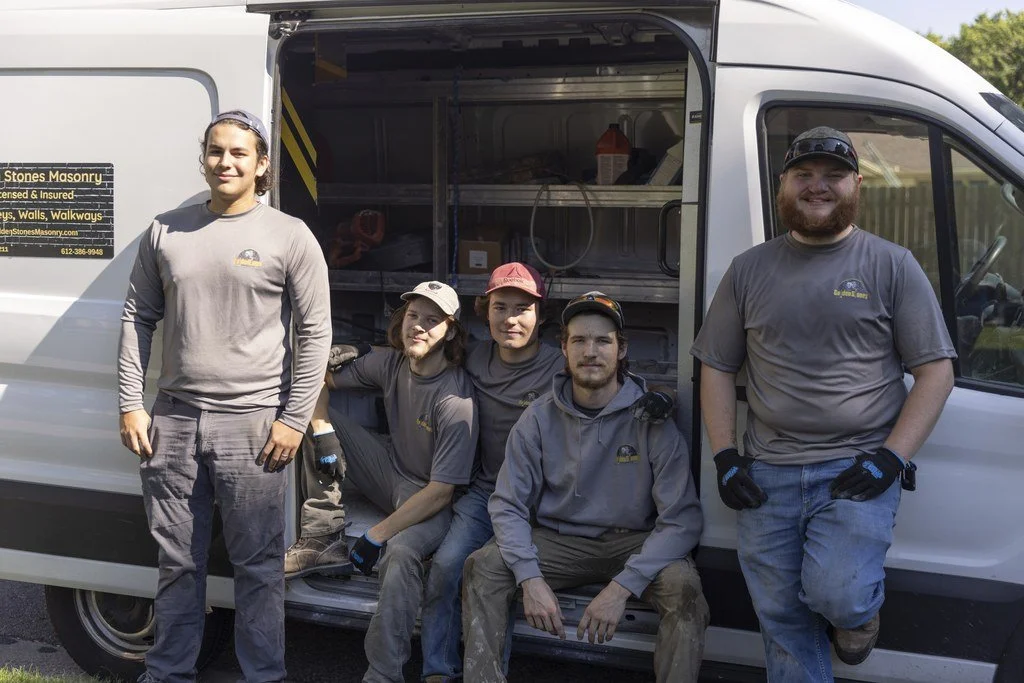
The same foreman leads most jobs and was the first person Sam hired; he is still here. Rebuilds with awkward access or a structural question get Sam on site as well, not just at the estimate.
The Rule We Use To Decide Rebuild Or Repair
Here it is, in the terms we actually think in.
Count the spalled brick faces and note how low they run. If spalling is spread across the stack and the count is somewhere around seven to ten faces or more, that is a rebuild. Isolated spalling concentrated near the top is usually not. The count matters, but how low it runs matters more, because low damage on a chimney means water has been moving through the whole structure rather than sitting at the top.
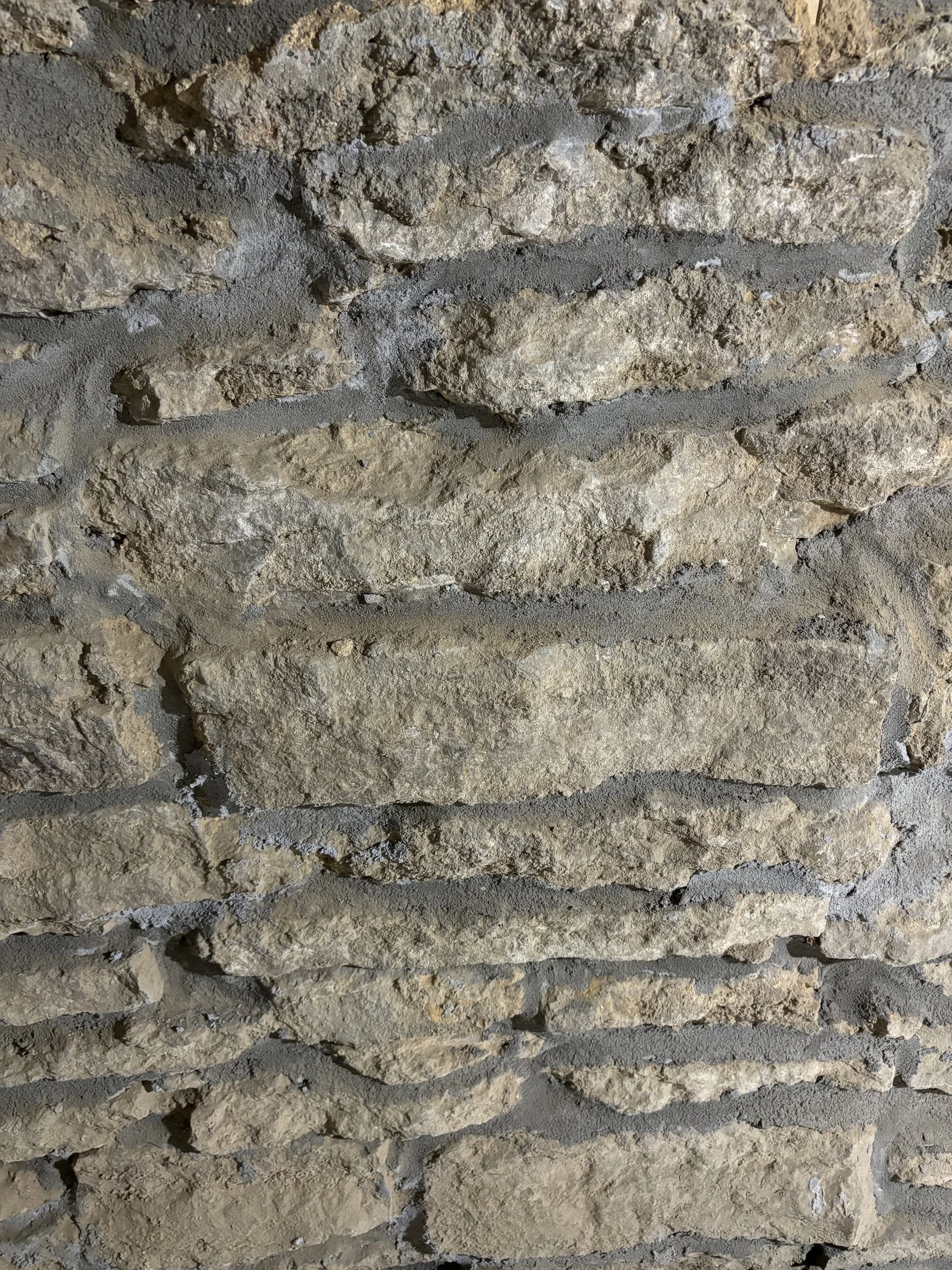
Look into the joints. Mortar that has weathered back but still fills the joint can be ground out and repointed. Mortar that has gone far enough that the joint is open, where you can see into the chimney rather than at it, means the bond is gone, and repointing is cosmetic.
Check for lean. Any lean at all is a rebuild. There is no version of this where surface work corrects a structure that has moved, and we will not pretend otherwise to win the smaller job.
If none of those three are true, it is a repair, and you should be quoted a repair. If any of them are true, it is at least a partial rebuild. In practice, the most common honest answer is somewhere in between: rebuild the failed section, tuckpoint the rest, and do not pay to replace masonry that still has years in it.
One more thing worth knowing, because it protects you from us as much as from anyone else. Ask whoever is quoting you how far down they intend to rebuild and why that depth. If the answer is a number of courses rather than a description of where the sound masonry starts, they have decided the scope before they looked.
Materials And Suppliers
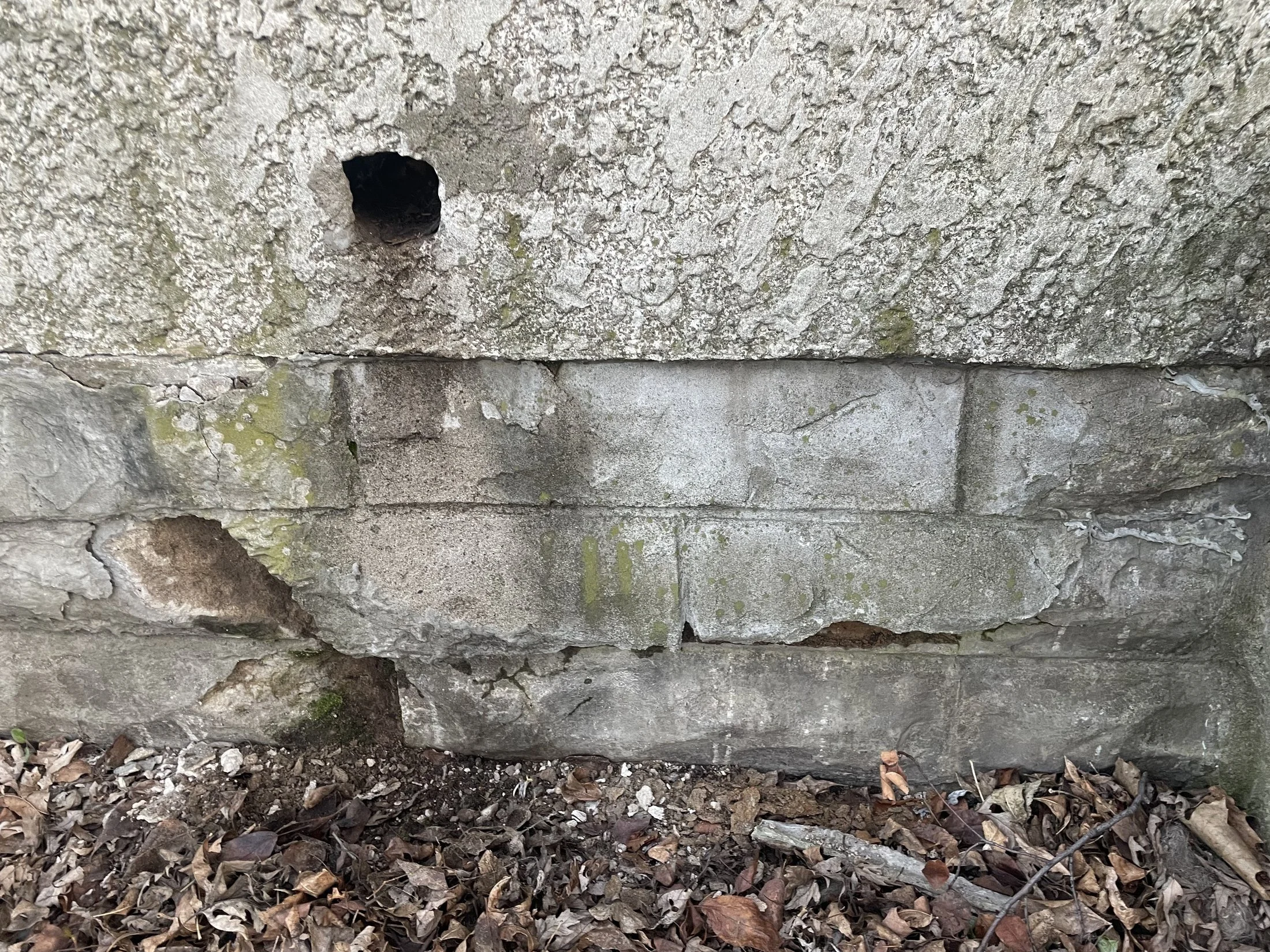
Brick and stone through a long-standing local supplier. During a rebuild, the match is what you will look at every day afterward, so we would rather spend time at the sourcing stage than explain it later.
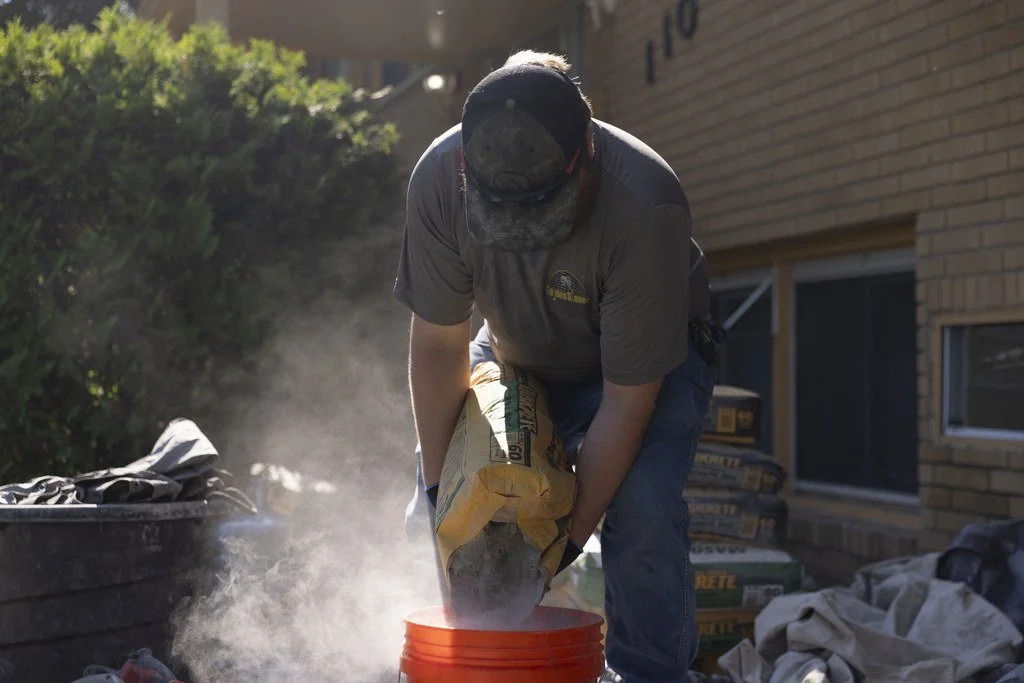
Mortar is Spec Mix premixed. A rebuilt stack is carrying its own weight, so the specification here is chosen for strength in a way that a surface repair is not, and the repointing that runs alongside it gets a different mix again. Crowns are cast in place on the stack, formed on site with a proper slope and an overhang past the brick face.
Common Questions
We do not publish a rebuild range, and that is deliberate. The price is driven by how tall and wide the stack is far more than by the word rebuild, so a small chimney rebuilt from the roofline can cost less than a high one costs to re-cap. Sam will give you a written number after he sees it, next to the repair price where a repair is defensible.
Spalling spread across the stack, roughly seven to ten faces or more, especially if it runs low. Joints open enough to see into the chimney. Any lean. Any one of those means at least a partial rebuild. None of them usually means a repair.
Sometimes, where the cause was sudden, such as a storm or an impact. Deterioration over years is normally treated as maintenance and is not covered. We do not handle claims or work with adjusters. We can document what we find, so you have something to submit, and the coverage call is between you and your insurer.
Usually not. Roofline-up is by far the most common scope, because the roof protects everything below it. A full-height rebuild means a chimney has been left a very long time, and if you are quoted one, you should ask to be shown why.
Longer than most people assume. What ends a chimney early is almost never the brick giving up; it is twenty years of water arriving through a crown nobody looked at. Age on its own is not a reason to rebuild, and we will say so.
Most roofline-up rebuilds take a few days on-site, plus curing time for the crown. Weather is the biggest variable, since mortar needs temperature to cure.
A rebuild is exterior work, so it waits on a stretch of weather mild enough for the mortar to cure. Booked early in the year, we can usually fit non-urgent work within about a month. Leave it late, and the calendar is against you. We will still come and look in the winter and have you priced and scheduled.
Our supplier is good at matching, and on most houses it comes out close. On a century-old chimney, it will not be identical, and we will show you the match before anything comes down rather than after.
No. Liners are not our trade. If yours needs replacing, we will tell you, and it is worth coordinating that with whoever does it before we rebuild around it.
The estimated price is what you pay. Sam under-quoted a chimney early on that turned out to need a rebuild, took the loss, and changed how he inspects, not how he bills. If something genuinely unforeseen appears, you will hear about it before anything else happens.
No. This is structural work at height, laid in mortar that must be specified correctly, and finished with a poured crown. It is the single worst job to have done cheaply, because the failure shows up three winters later inside your house.
Ten years on the workmanship, in writing. On a job this size, the warranty term is worth more than most of the things contractors put on a badge, which is why it is worth asking every quote you receive to put its own on paper.
Where We Do This Work
A rebuild puts the crew on one property for several consecutive days, so geography shapes the schedule more here than on a repair. The cities we cover are listed on our service area page, and for those located more than 45 miles from St. Paul, we ask for photographs before booking.
What Customers Say
What appears below is our live Google feed rather than testimonials we picked out, so it shows whatever is genuinely on it.
Google review, September 2025Get A Free Estimate
Photos help, particularly a shot from the ground showing the whole stack and one from closer if you can get it safely. Do not get on the roof for us.
Sam applies the rule above out loud at the chimney, so you hear the reasoning rather than just the verdict. Where a repair is genuinely defensible, you will get that priced too.
Free estimate, in person · Ten years in writing on the workmanship · (612) 509-0718