

Chimney Repair in St. Paul
10 Years
Workmanship warranty, in writing

Most chimney calls we take start the same way. Somebody has found brick chips in the yard, or seen the mortar joints opening up from the driveway, or watched water run down the inside of a fireplace during a hard rain. All three mean the same thing: water has been getting into the masonry, and it has been doing it for longer than anyone noticed.
We repair chimneys throughout St. Paul, Minneapolis, and the surrounding metro area. Cracked and spalled brick, failing mortar joints, crowns, raincaps, and leaks that other people have already tried to fix. What we will not do is sell you a rebuild when the chimney does not need one, which is the single most common complaint we hear about our trade.
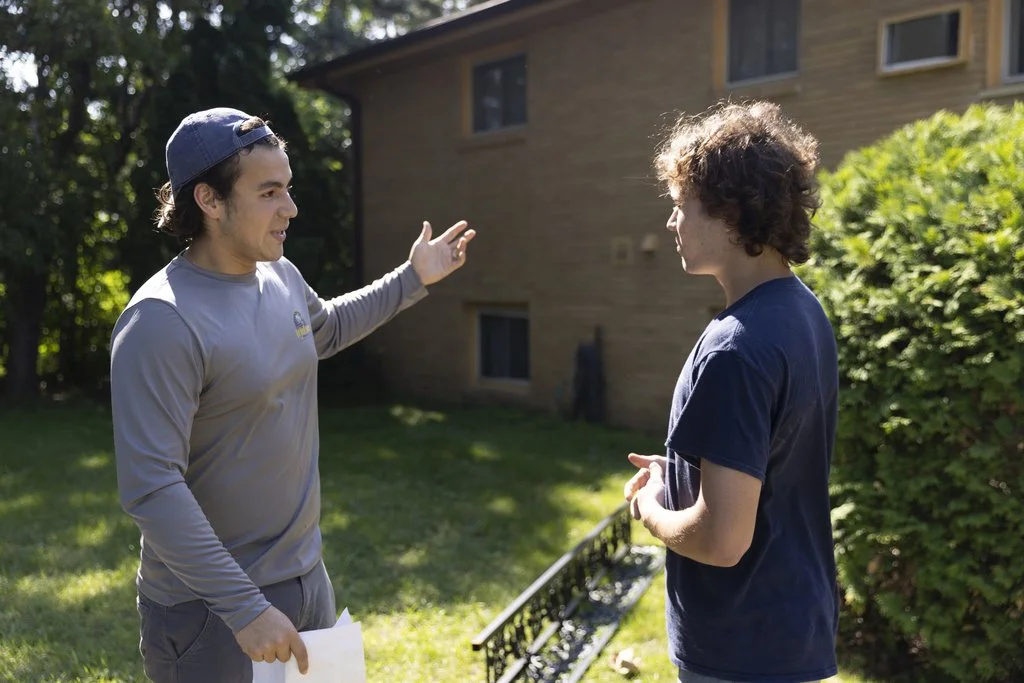
Sam comes out and looks at it himself, at no charge. You are told what is actually wrong, what the options are, and what each one costs before you decide anything.

Signs Your Chimney Needs Repair
Brick chips are showing up in the gutters or on the roof
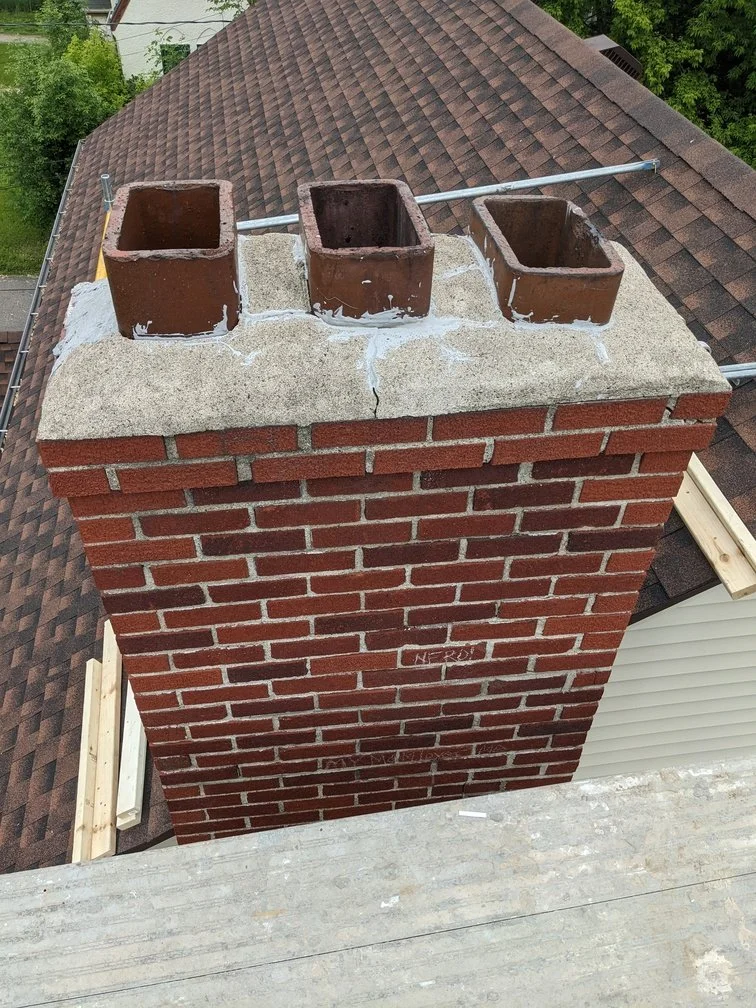
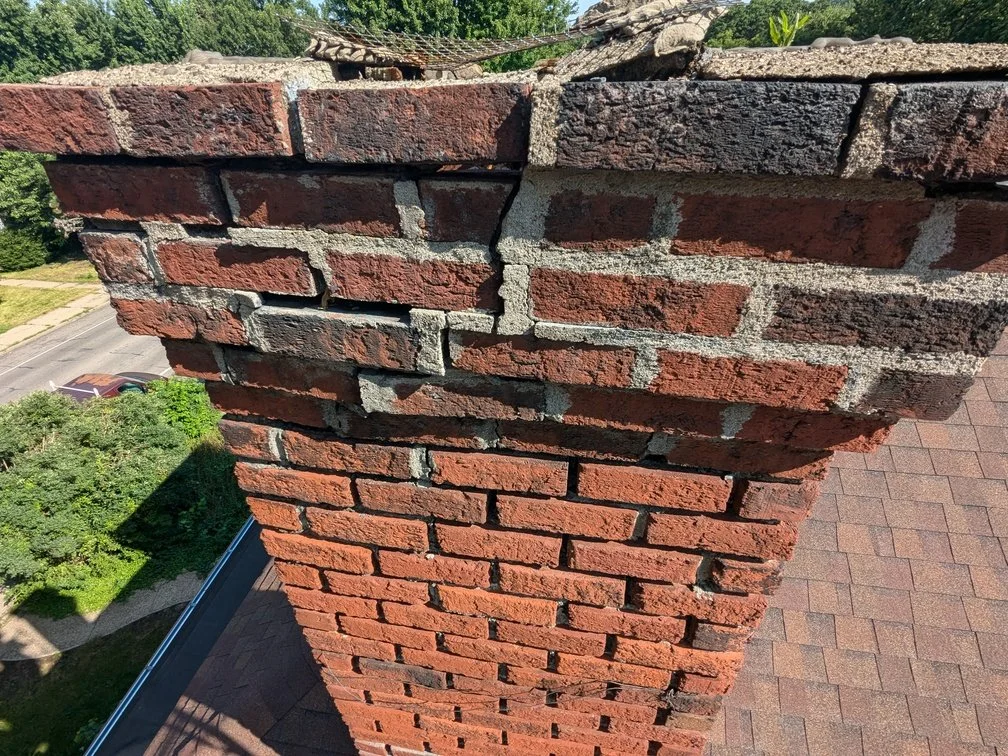
That is spalling. The face of the brick is popping off because water got in, froze, and pushed it apart from the inside. Once it starts, it does not stop on its own, and the number of bricks affected is the main factor determining whether this is a repair or a rebuild.
The mortar joints look recessed, or you can rake them out with a screwdriver
Mortar is meant to be the sacrificial part of the wall. It is softer than the brick on purpose, so it fails first and gets replaced. Joints that have gone soft or opened up are doing the job they were designed to do, and they are telling you it is time.
Water is coming into the firebox or staining the ceiling near the chimney
Water gets in at the crown, at the raincap, through open joints, or at the flashing where the chimney meets the roof. Finding which one takes a proper look, and sometimes a hose. It is very rarely obvious from the ground.
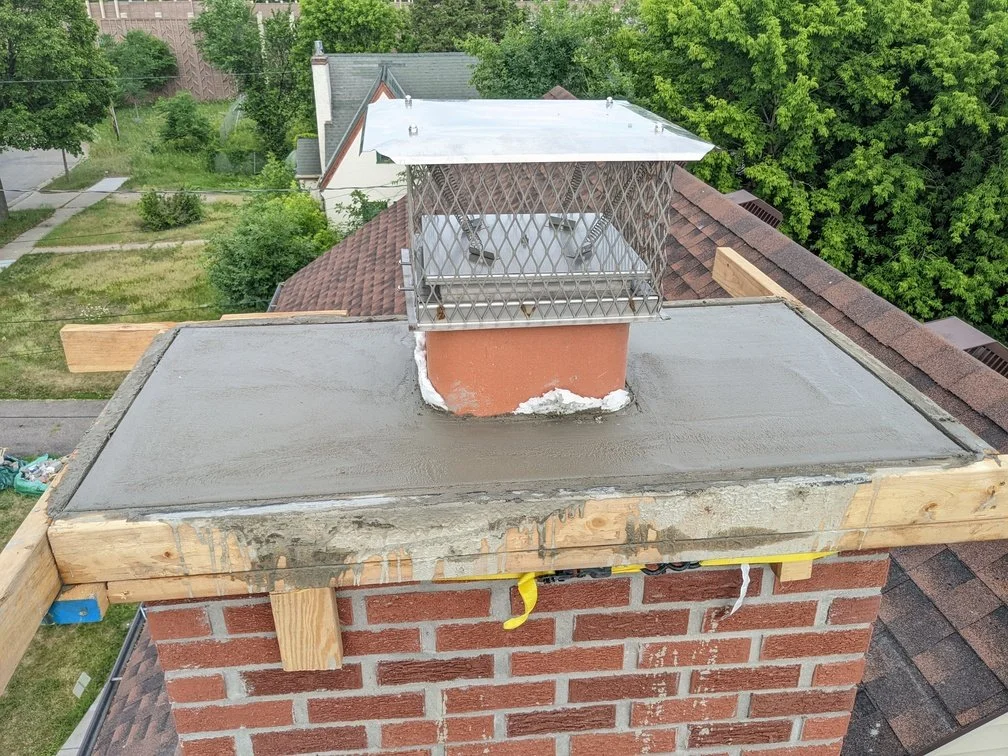
The crown on top is cracked, or somebody has caulked it
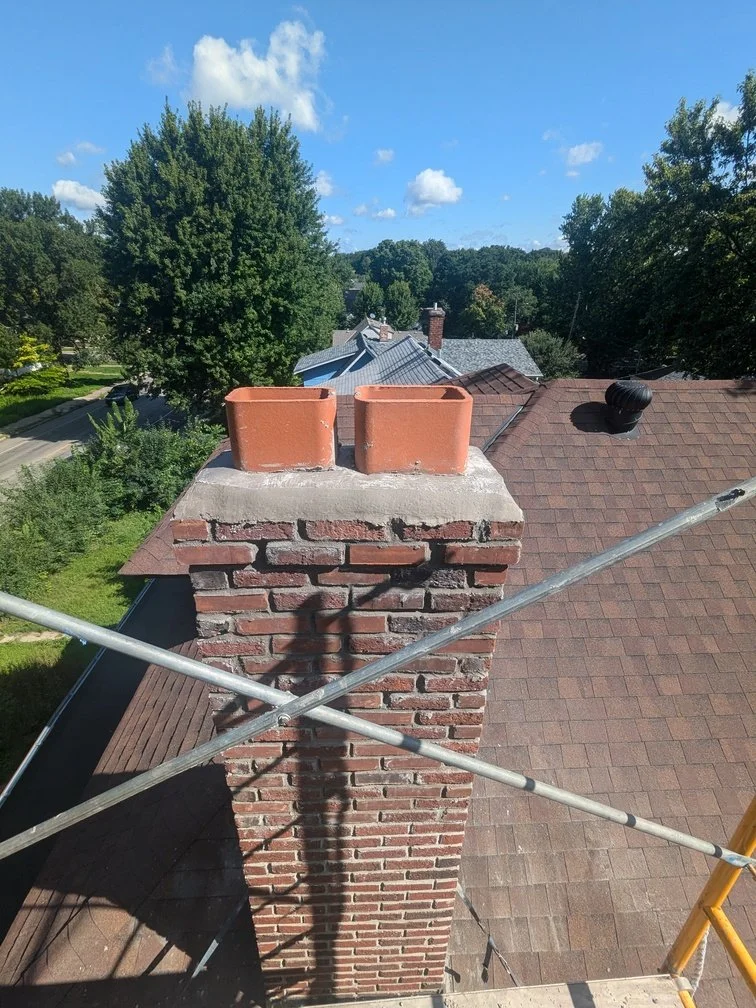
The crown is the concrete slab across the top of the stack, and it is the lid on the whole thing. A cracked crown lets water straight into the masonry below it. Caulk over a cracked crown is a delaying tactic, not a repair, and we take a lot of it back off.
The chimney looks fine, but the fireplace smells or feels damp
Damp masonry holds water for a long time after the rain stops. If the smell comes back every time it rains, water is getting in somewhere even if nothing looks dramatic from outside.
Somebody already repaired it, and it is still leaking
This is a call we take often. Usually, the previous repair addressed the visible issue but never found the entry point. We start over and find the entry point.
What This Job Covers

Spalled and cracked brick replacement
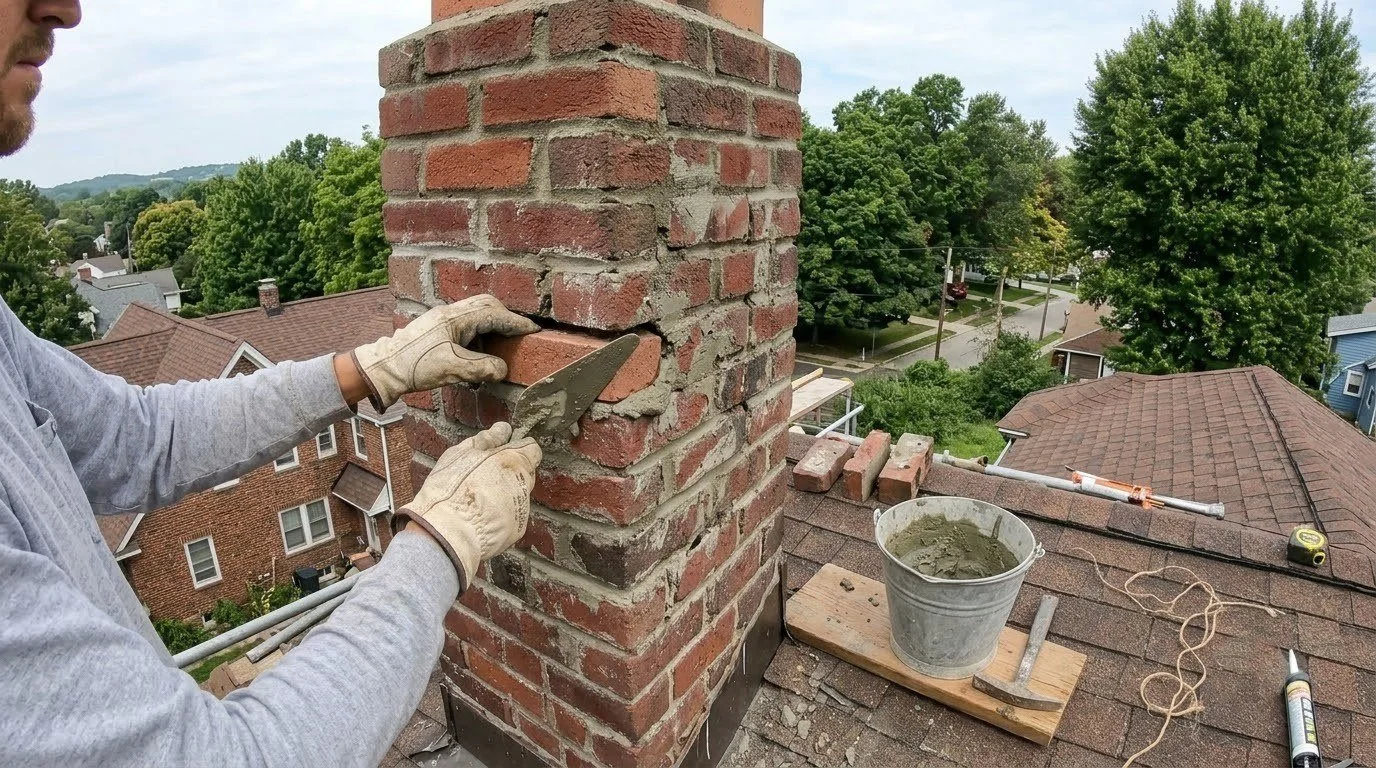
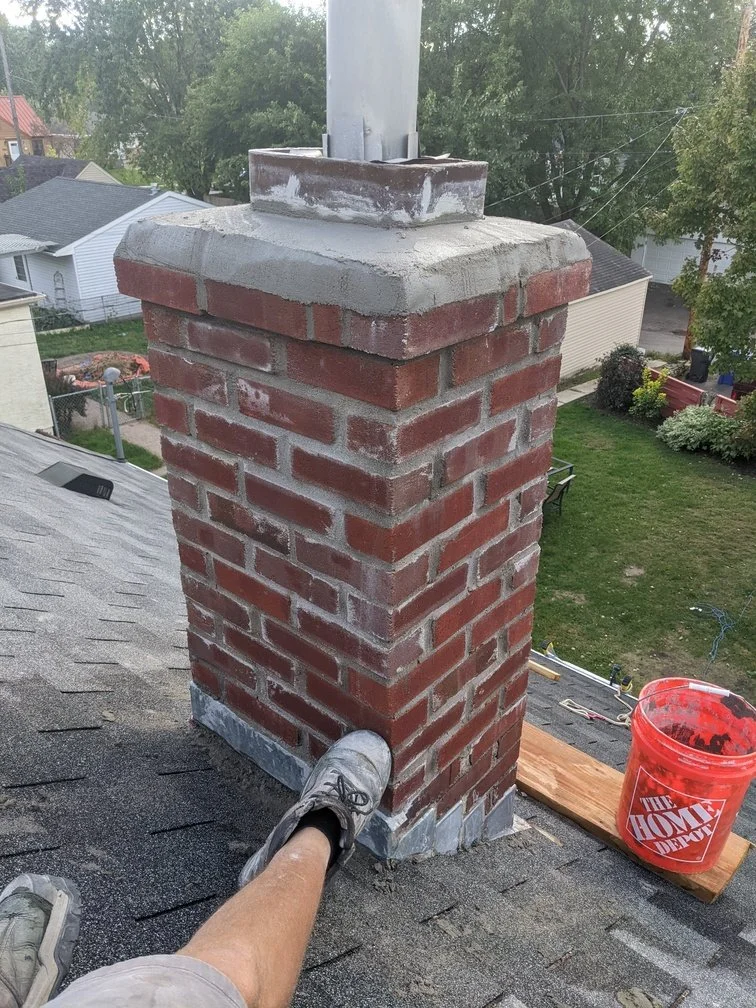
Individual brick swapped out and rebedded. Where one or two faces have popped, replacing them is the right answer. Where it is happening across the stack, we will tell you that a repair will not hold. Matching matters here: a replacement brick that is harder or a different color than the ones around it announces itself from the street for the next fifty years.
Repointing and tuckpointing the joints
Grinding out the failed mortar to a proper depth and packing in new mortar. Not smearing over the top of it, which is what a lot of the failed repairs we see turn out to be. On a chimney, this is usually done alongside crown work because the two failures occur together, and staging the chimney twice costs you more than doing both at once.
Crown and raincap work
Done as part of a repair when the top of the stack is where the problem is, which is often. Both have their own pages because the difference between sealing a crown and rebuilding one is worth more than a paragraph, and it is the thing people are sold on wrongly.
Leak diagnosis
Where the source is not obvious, we methodically test the chimney with the water until it reveals itself. It takes time, and it is the only reliable way to do it.
Water repellent, where the masonry is sound
A breathable water repellent over sound masonry. It slows absorption without sealing the wall, which matters because brick needs to dry out. We will not put it over failing joints, because that traps the problem in. Waterproofing is a maintenance step on a chimney that is already in good order, not a repair, and anyone selling it as a fix for open joints is selling you a delay.
Flashing
The metal detail where the chimney passes through the roof, and a genuine leak source. We take it on where a chimney needs it, and we will tell you at the estimate whether yours does.
What this job does not include
Chimney sweeping and creosote removal. Different trade, and we refer it out.
Level 1, 2, and 3 safety inspections. We inspect the masonry, not the flue system.
Flue liners and relining, including stainless steel. We will tell you if yours needs it and point you to someone who does it.
Dampers, top-mount or throat.
Gas fireplace inserts and wood stove installation.
Smoke chamber parging. We do refractory mortar and firebox work, but not that.

What It Costs
Homeowners arrive at this page having read that chimney repair costs $250 on one website and $21,000 on a forum. Both numbers are real; they are just describing completely different jobs, and neither was written about your chimney. Here is roughly where ours land.
Every figure below assumes a single-story house with reasonable roof access. They are starting points, not quotes, and the estimate we get after we review them is the number that counts.
What moves the price
Height and width of the stack. A tall, wide chimney costs more to cap than a small one costs to rebuild.
Roof pitch and access. Staging a steep roof safely is most of the difference on some jobs.
How far down the damage runs. This is the repair-versus-rebuild question, and it moves the number more than anything else.
Brick matching. Old brick that needs sourcing takes longer than a stock match.
Time of year. The calendar fills from the front, and a job booked early goes in sooner than the same job left late.
How The Work Runs

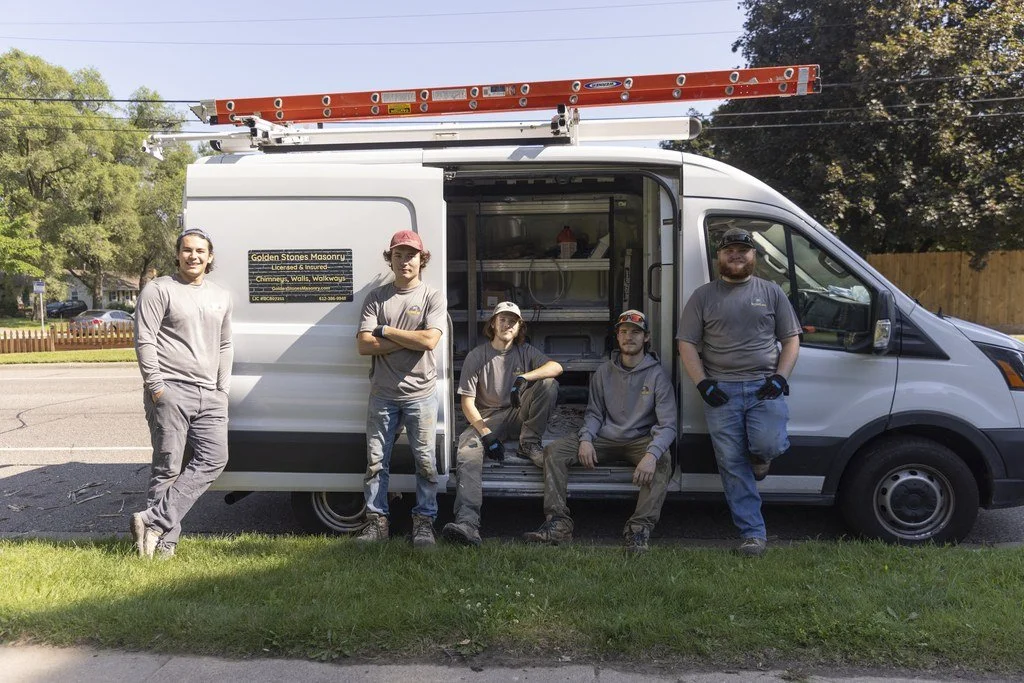
Why Homeowners Pick Us For This
Customers mention Sam by name
A good number of the reviews on our Google profile mention Sam by name. The live review feed is on the page, so you can see for yourself.
Old brick gets treated as old brick
Getting the grinding or the bedding wrong on a century-old chimney does damage that repointing does not undo.
Our warranty is on paper
Ask every contractor quoting you to put their warranty on paper, and compare the terms rather than the headline number.
We say no
Six services are listed above as things we do not do. That list costs us calls every week. It is also the reason the calls we do take are ones we can actually finish without handing you to a stranger.
Finding The Leak, Which Is Most Of The Job
A chimney leak is rarely a mystery because the water is hard to find. It is a mystery because there are only about six places it can be getting in and nobody has tested them in order.
The candidates are the crown, the raincap, open mortar joints, spalled brick faces, the flashing where the stack meets the roof, and the brickwork below the roofline. Each produces a slightly different pattern inside, but not different enough to diagnose from a photograph, and nowhere near different enough to diagnose over the phone. Sam's answer on phone triage is flat: he cannot do it; he needs to see it, and the volume of water helps a little and not much.
So the method is a hose and patience. Water goes on the chimney low down first and works upward in stages, with someone watching inside, so the entry point announces itself rather than being guessed at. It takes an hour or two, and it costs you nothing, because it happens at the estimate. The order matters: start at the top, and the water runs over everything below it, and you learn nothing.
This deserves a section of its own because of what we find instead on chimney after chimney. Someone couldn't locate the leak, so they caulked whatever looked most likely, then caulked more of it the following year. Caulk is what a chimney looks like when nobody ran the test.
Two things follow. A recent repair rules nothing out, and we have traced water to work that was only months old. And a company that has quoted you a rebuild for a leak without testing anything has priced the largest possible answer to a question it never asked. Sometimes a rebuild is right. It should not be the diagnosis of first resort.
Where water is coming through the top of the stack, the crown and the raincap are a subject in themselves, and our chimney crown and raincap page sets out what a crown should look like and why thin ones fail.
Materials And Suppliers
Brick and stone come from a local supplier we have used for years, and their matching is genuinely good, which matters more on a hundred-year-old chimney than almost anything else we do. Where a match is close but not exact, we will show you before we lay it rather than after.
Mortar is Spec Mix premixed, for consistency batch to batch. The mortar specification is chosen for the brick in front of us, every time. On a chimney it matters more than on a house wall, because a stack is exposed on four sides and moves more, so an over-strong mix has more opportunity to work against the brick.
Mortar dye is available if you want it, with the caveat we set out on the brick repair page: dyes and sample boards do not agree with each other as often as anyone would like.
Common Questions
Almost everything on this page is exterior: the stack, the crown, the cap, the joints, the flashing line. Interior chimney work means the firebox and refractory, which we also do. What we do not do inside is the flue itself, since liners are not our trade.
For a single-story house, a basic repair runs about $3,500, a mid-range job about $5,500, and an above-roof rebuild about $8,000. Add roughly 10% per extra story, and more for a steep roof, which we price at the visit. If you have read a number online in the low hundreds, that was describing a cap or a sealant job, not masonry.
Sometimes, for sudden damage such as a storm or an impact. Gradual deterioration from weather is normally treated as maintenance and is not covered. We do not handle insurance claims or deal with adjusters. What we can do is document what we find so you have something to submit; the coverage decision lies between you and your insurer.
For a raincap, possibly. For anything involving mortar, we would say no, and not because we want the work. Joints that are ground too deep, too shallow, or struck at the wrong moment will fail again within a few seasons, and the second repair costs more because the first one has to come out.
There is a specific rule Sam applies, and we have published the whole thing on our chimney rebuild page, including the borderline cases. The short version is that isolated damage near the top is usually a repair and almost anything else is worth a proper look.
A well-built chimney that gets its crown and joints looked after can run a very long time. What kills them is water, and water gets in through a small number of predictable places. Most of the hundred-year-old chimneys we work on are not at the end of their lives; they have just never had their tops maintained.
No. Sweeping, creosote removal, and graded safety inspections are a different trade, and we refer them out. What we inspect is the masonry: brick, mortar, crown and cap.
Usually close. A chimney is a harder case than a house wall because it is the most weathered brick on the building and is viewed against the sky, which is unforgiving.
Most repairs are one to three days on site. A crown replacement adds curing time before anything else can happen. Weather moves this more than anything, because mortar needs temperature to cure.
The laying depends on the weather, because mortar needs a certain temperature to cure, and we will not put it into a hard freeze. Everything before that does not. Call in the winter, and we will come out, look at it and get you priced, so you are at the front of the queue rather than the back.
Call us. This is a large share of what we do. The usual cause is that the previous repair addressed something visible rather than the actual entry point, which is often the crown, even a new one.
No, and there is no service call fee whichever way you decide. What the visit actually involves is on our free estimate page.
Ten years, in writing, on the work we performed: cracking or crumbling brick and joints on what we actually did. It does not extend to work we did not do. If we spot-tuckpoint one section and a joint, and later cracks appear, that is not covered, and if we rebuild a chimney above the roofline and the masonry below it deteriorates, that is not covered either. The full terms are in the contract and worth reading before you sign.
Where We Do This Work
We repair chimneys across St. Paul, Minneapolis, Bloomington, St. Louis Park, Richfield, Minnetonka, Eden Prairie, Plymouth, Maple Grove, Wayzata, Blaine, Circle Pines, Little Canada, Woodbury, Lake Elmo, Cottage Grove, Stillwater, South St. Paul, West St. Paul, Inver Grove Heights, Mendota Heights, Eagan, Burnsville, Apple Valley, Rosemount, Lakeville, Victoria, North Branch and Big Lake. Beyond about forty-five miles from St. Paul, we ask for photographs before booking a visit, which saves you a wait and saves us a wasted morning.

What Customers Say
What appears below is our live Google feed rather than testimonials we picked out, so it shows whatever is genuinely on it.
Google review, September 2025Get A Free Estimate
Send a couple of photos if you have them, and tell us what you are seeing. Sam will come out and look at it, and you will get a written estimate with the options priced.
If water is actively coming into the house, we work evenings and weekends for that. We are not a twenty-four-hour operation, and urgent scheduling does cost more, and we will say so before you agree to it.
Call (612) 509-0718 · Licensed MN BC807211 · 10-year workmanship warranty