

Masonry Contractor in Woodbury
10 Years
Workmanship warranty, in writing

Nine houses in ten here postdate 1970, the median one dating from 1997, and only around 399 properties are older than 1940. Some 9,471 of them went up in the 1990s alone.
Which keeps the masonry inventory brief and puts most of the interest underground rather than above it. Woodbury has a real ground story; the city is well aware of it, and, in places, it requests soil borings as a result.

What Woodbury Homeowners Call Us About
A stoop that has dropped out of level
Twenty to forty inches of silt lying over sand on the commonest Woodbury soils, and what a step was bedded into decides whether it is still level. That is most of what goes wrong at ground level here.
A cracked crown on a 1990s house
Close to a third of Woodbury went up in the 1990s, so those crowns reached the same age at the same time. They are still young enough that sealing a sound one is often the right answer.
Brickwork riding up over a wide opening
Corroding angles above wide openings, running to the same construction clock as everything around them.
A patio that has gone uneven
A silt cap drains poorly and perches water above the sand below it. A patio base never designed for that will shift long before the stone laid on it does.
A cladding panel shedding units
Masonry on housing this recent is cladding, not structure, so the failure tends to stay local. Water still finds its way in behind it.
What We Do In Woodbury
Scoped to the masonry a late 1990s house genuinely owns. The first two are what this ground produces most of.

Entryway, stoop and apron rebuilds
The dig and the footing are the entire exercise. On the commonest Woodbury soils that means getting through twenty to forty inches of silt into the sand and gravel below it, past frost and onto something that genuinely bears weight. Where the cap is thinner, it is quicker; on the east side it can end at rock instead. None of that is knowable from the street.
Crown rebuilds and raincaps
Close to a third of the city was built in ten years, so the crowns are of near identical age. Worth knowing before you ring: hairline crazing with no structural cracking can be sealed for a fraction of a recast, and one that has come apart cannot.
Lintel replacement
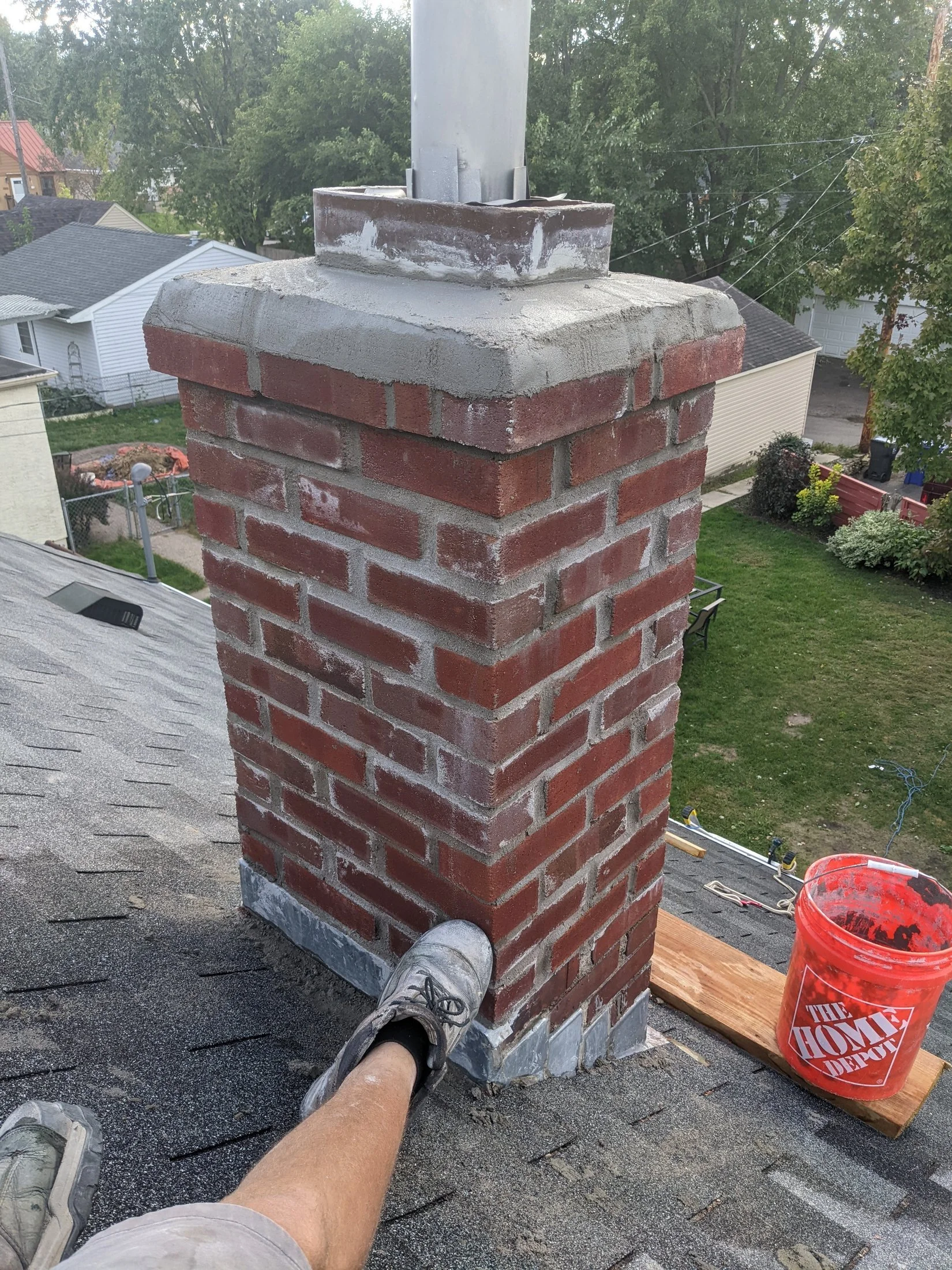
Out comes the rusted angle, in go the props, and the courses above come down and go back over fresh steel.
Patio and walkway repair in natural stone
Lifted, given a base that carries water away from the slab, and relaid. Flagstone and natural stone exclusively. On a silt cap, the base repays the spend.
Veneer and accent panel repair
Localized rebuilding, confined to the failed area. A modern builder brick can generally be tracked down. Victorian work usually cannot.
Retaining walls and garden walls in natural stone
Down it comes, footing and drainage corrected, then rebuilt using the stone that has held up. Block is a separate trade, and we keep a number for one.
Chimney repair and rebuild
For a stack that has come apart beneath the cap. Thirty Minnesota winters do a fraction of what twelve decades manage, so the count of spalled faces in Woodbury rarely reaches the seven to ten our rebuild page sets.
The older properties, and there are some
Woodbury holds 399 houses from before 1940 and 1,841 from the middle decades. Softer mortar, different failures, different methods. Say the decade on the phone, and we will know which conversation we are having.
Loess Over Outwash, And Rock Near The Surface In Places
Woodbury's own planning document sets out what is underneath. Which rock you meet first depends on where in the city you are, because a buried bedrock valley runs north to south through the middle of it. The one that matters is the St. Peter Sandstone, and it matters on the east side, where it comes close enough to the surface to be worth knowing about.
The soil survey is more exact than that, and the number matters to anybody digging. On Antigo and Waukegan silt loams, which are among the commonest soils here, the official descriptions put the silty mantle at twenty to forty inches before you reach stratified sand and gravel. On Chetek, it is 12 to 20 inches. On Mahtomedi there is effectively no cap at all and gravelly sand starts about eight inches down. So the depth of that silt changes by a factor of four across one city, and which of those you have decides how deep a footing has to go before it is standing on something that drains.
The east side is different again, and the difference is large. Around Woodbury Drive, the city maps ground with fifty feet or less of cover over the St. Peter Sandstone, and in 2005 a sinkhole opened in a stormwater pond built directly on it. The city has required soil borings there since.
The soil survey adds something separate on that side of town, and it is worth keeping distinct from the sandstone figure above. Out there, the survey maps Copaston, Channahon and Whalan, whose official descriptions put a limestone or dolostone contact at ten to twenty inches on the first two and twenty to forty on the third. That is a different rock surface from the one the St. Peter city plan discusses, and a much shallower one. What both facts have in common is that, on the east side, a footing trench can end at rock rather than at soil.
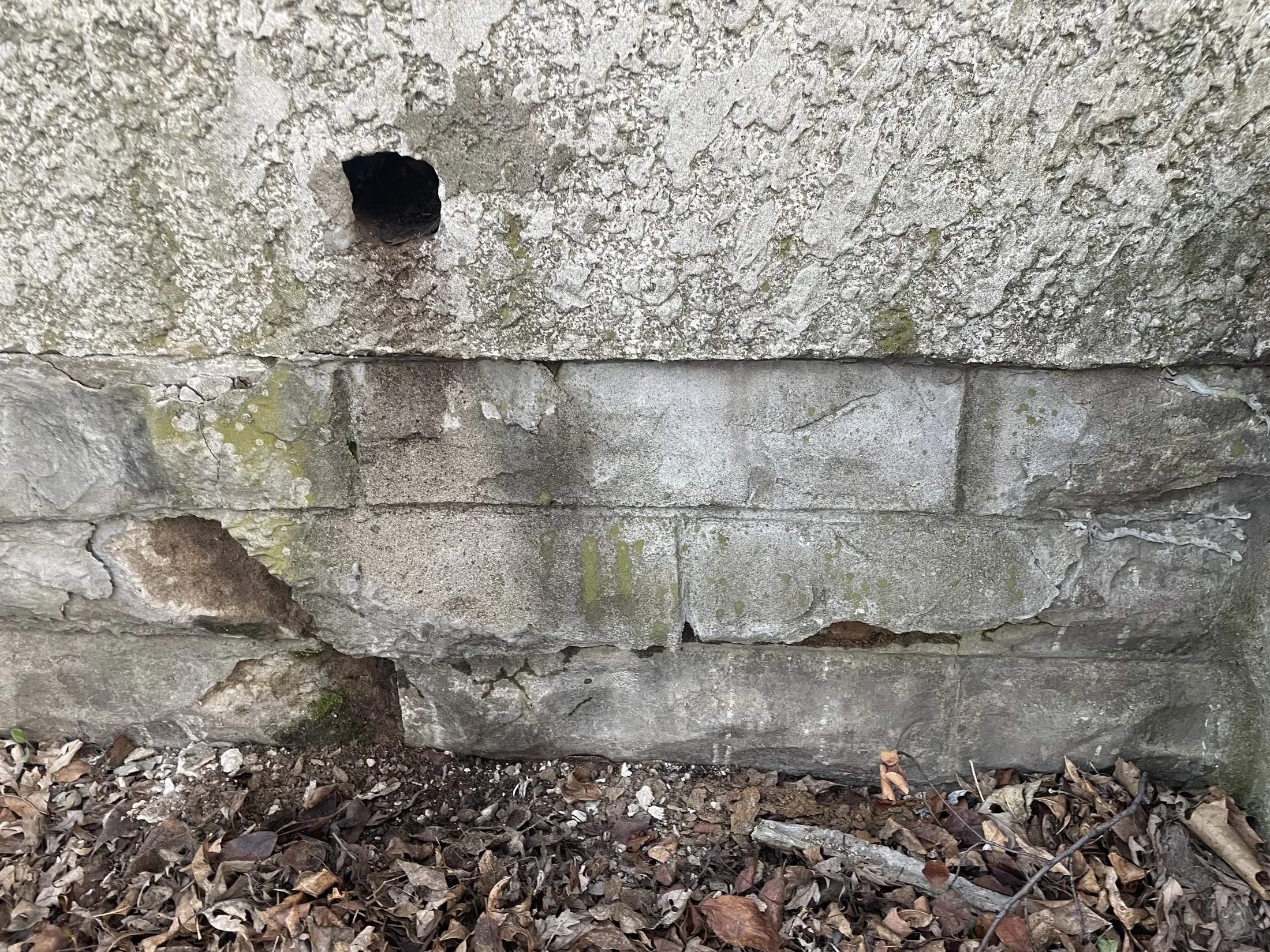
We are not raising this to worry anyone about their house. Houses here go on designed footings and get inspected. We raise it because it is why a mason in this city should not assume what lies beneath a patio, a wall, or a set of steps until it has been dug.

What It Costs
No travel charge, and no minimum job size.
Chimney repair on a single-story house begins at $3,500 and a recast crown at $5,500, with sealing a sound one considerably cheaper. Minor brick replacement begins at $1,500.
Nothing at grade carries a figure here. With a silt cap over sand and rock running shallow in parts of town, guessing what something rests on would be exactly that. We quote those once we have seen them, and seeing them is free.
Every one of those figures depends on square footage and on what we find when we look. They are rough guides to help you decide whether to call, not quotes. The exact number comes after the visit, and the visit is free.

What Customers Say
No review anybody has left us names Woodbury. What appears below is the live Google feed, not a testimonial we picked out, so it shows whatever is genuinely on it.
Google review, September 2025Tell us what is going on with your masonry
Tell us what you are seeing and attach photos if you have them. Sam comes out himself, and you get the options priced in writing. No charge either way, and no service call fee.
Common Questions In Woodbury
No, and we would rather say that plainly than let the phrase do any work on you. One opened in 2005 in a stormwater pond on the east side, where the city maps 50 feet or less of cover over the sandstone, and the city has required soil borings there ever since. Your house was designed and inspected for the ground it sits on. Our takeaway is narrower than the headline: never assume what a patio or a wall is founded on until it has been opened up.
Windblown silt sitting over the sand. The soil survey puts it at twenty to forty inches on the commonest Woodbury soils, twelve to twenty on some, and effectively nothing on others. It holds water where the sand underneath would have drained it, so anything set shallow sits in ground that stays wet longer, and wet ground that freezes lifts.
Because close to a third of Woodbury was built within ten years, those crowns are the same age, to within a year or two, and face the same problem together. That is arithmetic and not a defect, and on housing this young, sealing frequently does it.
Normally just that section, assuming the surrounding base is still doing its job. The failed patch comes up, gets a proper base beneath it, and the stone goes back. If the base was wrong from day one, you will hear that before anything starts.
For the outside work, yes. Interior and fireplace work runs all year. On a silt cap, the other consideration is that ground-level work goes better when the ground is not saturated, so the fall is often the best window here.

Get A Free Estimate In Woodbury
One picture of the trouble and one from further back showing where on the building it sits will normally get you a verdict over the phone.
If it is at ground level, say whether that corner of the garden stays wet after rain. Over a silt cap, that one answer explains a great deal we would otherwise have to dig to establish.
(612) 509-0718 · No travel charge, no minimum job size · In-person estimate at no charge