Tuckpointing and Mortar Repair in St. Paul
10 Years
Workmanship warranty, in writing

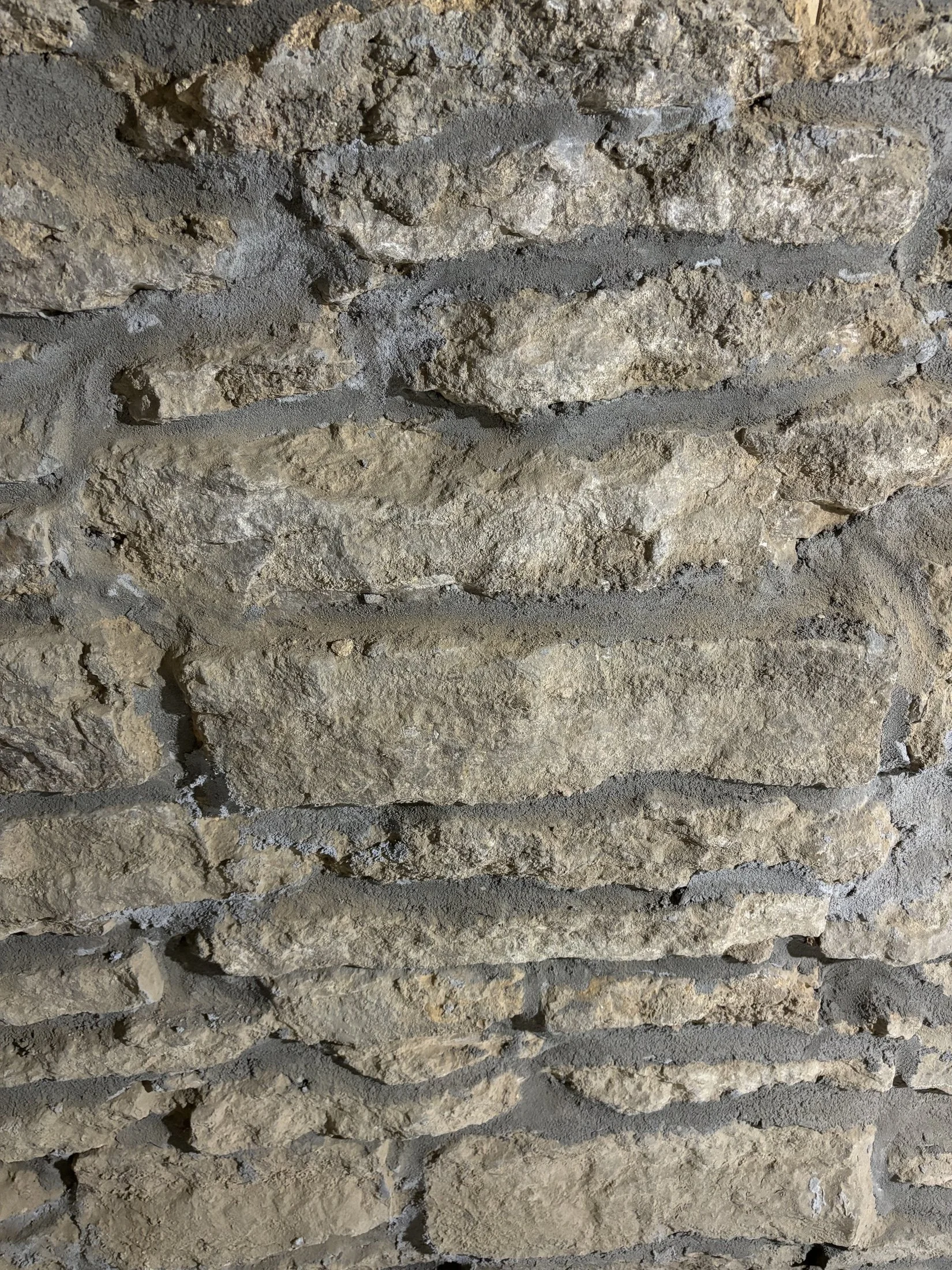
Tuckpointing is a confusing name for a simple job. In Sam's words: we grind out the old, damaged mortar and replace it with new mortar. That is the whole thing. The mortar is the soft part of the wall; it is supposed to fail before the brick does, and when it has, you take it out and put fresh mortar back in.
It is also the job with the widest quality gap in this trade. When done properly, joints are ground to depth, packed solid, and struck at the right moment, and the wall lasts for decades. Done badly, it looks fine for two years and then falls out, and the second attempt costs more because the first one has to come out first.
We tuckpoint chimneys, house walls, garage walls, garden walls, foundations and stone flatwork across St. Paul and the Twin Cities. Prices are published below, and Sam does the estimate himself.

Signs Your Mortar Joints Need Tuckpointing
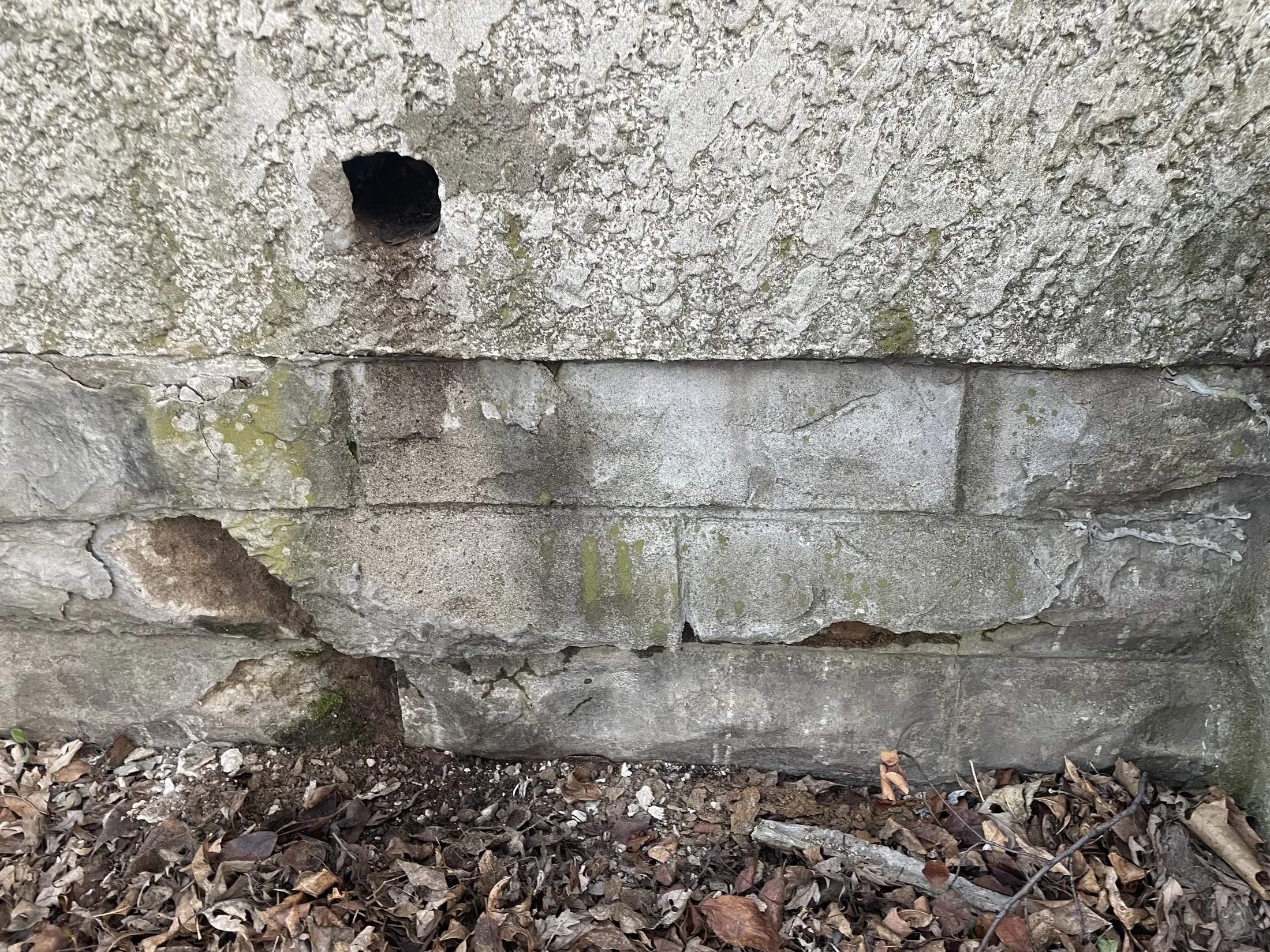
You can rake the mortar out with a screwdriver or a finger
The clearest signal there is. Mortar that has gone sandy has lost its binder, and it is no longer keeping water out or holding the wall in compression.
The joints look recessed compared with the rest of the wall
Weathering takes mortar back gradually. Once the joint is noticeably set back from the brick face, water sits in that recess.
Small holes are opening up in the joints
Often called bee holes. Water finds them, freezes, and turns a hole into a channel. They are an early sign and an easy one to catch.
White chalky staining on the brick
Efflorescence. Salts being carried out of the masonry by water moving through it. The staining itself is harmless and wipes off; it indicates that water is traveling through the wall.
Damp patches inside on an exterior wall
Once the joints have opened enough, wind-driven rain gets through the wall rather than off it. On a solid masonry wall, the inside face is the last place it shows.
A previous tuckpoint has fallen out
We take a fair amount of this back off. Mortar that was smeared over the surface instead of packed into a ground-out joint has nothing to hold onto.
What This Job Covers

Grinding out failed joints
To a proper depth, which means at least two and a half times the joint width and often deeper. Too shallow and the new mortar has nothing to grip. Too deep and you are cutting into brick you did not need to touch. The other failure here is chewing the brick edges with the grinder, which cannot be undone and shows on every course afterward.
Repointing and packing
New mortar is packed into the joint in layers, never filled in one pass, so it consolidates instead of shrinking back. A joint filled in a single pass looks identical on the day and pulls away from the brick as it cures, which is why so much failed tuckpointing looks fine for a season or two.
Striking the joint
Finishing the joint profile to match what is already on the wall. Timing matters here more than most people realize, and striking too early is one of the most common defects we see.
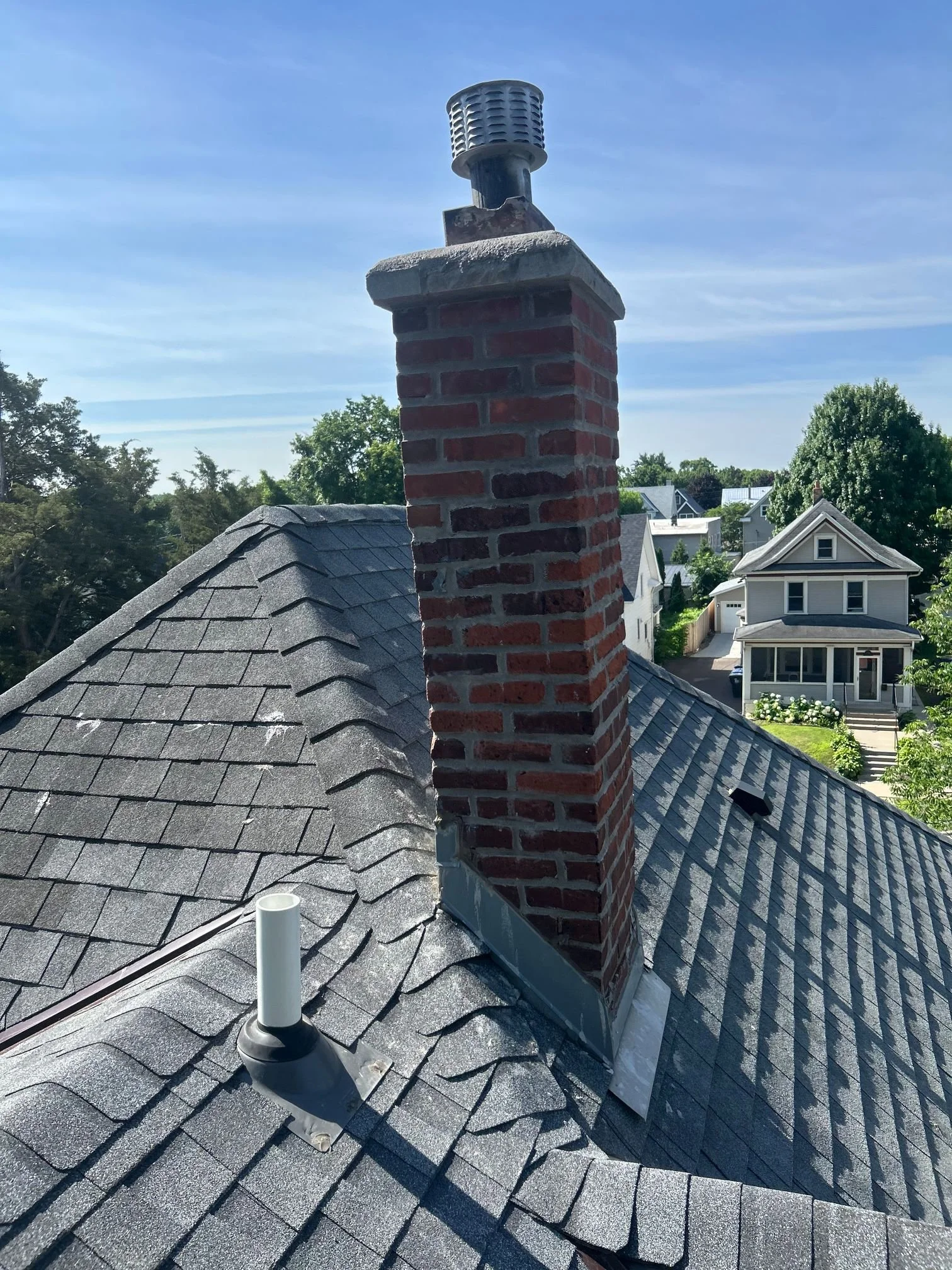
Chimney tuckpointing
The same work on a stack, usually alongside crown and cap work since the chimney is the most exposed masonry on the house. If you are staging a chimney anyway, it is almost always cheaper to do the crown at the same time than to come back for it in two years.
Foundation, garden wall and stone flatwork repointing
Exterior stone and block foundation joints, garden walls, retaining faces and garage walls. Garage walls are worth a specific mention because low brick walls on garages take road salt and ground moisture from both sides, and they fail years before the house does. Stone flatwork joints belong here too: the mortar between the stones of a stone patio, walkway or path, ground out and repointed the same way. Flatwork needs it more often than a wall, because a horizontal joint holds standing water instead of shedding it.
Mortar color matching
Custom blended on request. We are honest: dyes rarely finish exactly like the sample, and we will say so before you choose, rather than after.
Masonry cleaning and sealing
Where it is appropriate. A breathable repellent slows how quickly a sound wall takes on water. Sealing is the last step on a wall that has just been repointed, never a substitute for repointing it, and applying one to a wall with open joints simply shuts the exit on water that is already inside.
What this job does not include
Tuckpointing over spalled brick. If the brick faces have gone, repointing around them is cosmetic, and we will say so.
Historic preservation work under a heritage commission. We refer designated-historic projects out.
Caulking as a substitute for mortar. Not a shortcut we offer.
Painting or coating brick. Non-masonry paint on brick is one of the things we spend time undoing.

What It Costs
The tuckpointing numbers homeowners find online range from a few hundred dollars to five figures because they describe everything from a patch to a whole elevation. Here is roughly where ours sit.
These are starting points on typical residential work, not quotes. Tuckpointing pricing genuinely depends on many factors, and the estimate after Sam has seen the wall is the one that counts. Stone flatwork repointing runs $4,500 to $7,500 depending on the size of the area, priced on its own because a horizontal joint is a different job from a vertical one.
What moves the price
How much of the wall genuinely needs doing. Full-wall repointing is often unnecessary, and we will tell you when it is.
Access and height. Scaffolding a second or third story is a real line item.
Joint condition. Joints that have to be cut deep take longer than joints that have simply weathered back.
Whether brick replacement is mixed in. Spalled faces found during grinding change the scope.
Custom mortar color matching, if you want it.
Time of year. Exterior work booked early goes in sooner, because the calendar fills from the front.
Age of the building. Anything historic or genuinely old has to be inspected in person before the mortar is specified, because the right mix is a judgment about that wall, not a rule you can apply from a website.
How the Work Runs
Why Homeowners Pick Us for This
Four reasons in writing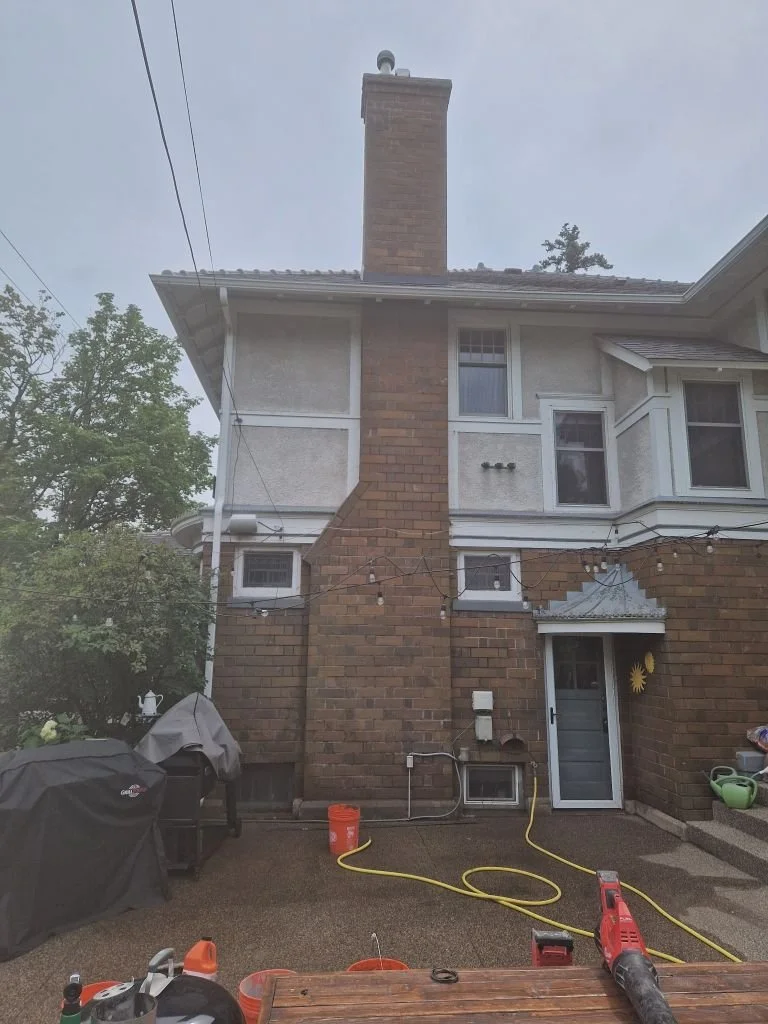
We tell you when only part of the wall needs it
Several of our reviews are from customers we quoted less work than they came expecting, including one who wrote that we recommended against additional work that would have raised our own estimate.
Struck at the right moment
Getting the strike wrong is what makes a repointed wall look repointed for the next twenty years.
We clean up
Cleanup appears in our reviews more often than almost anything except the price.
A ten-year workmanship warranty
Ten years, in writing, on the joints we repointed. Ask every contractor quoting your wall for theirs on paper rather than in conversation.

Type N, Type S, Type O, and Why It Matters on an Old Wall
Mortar comes in different types, and these types differ mainly in strength. Most homeowners never hear about this, and it is the single most consequential decision on a tuckpointing job.
The principle is that mortar should be softer than the brick around it. Brick and mortar both move with temperature and moisture, and something has to absorb that movement. If the mortar is the softer material, it takes the stress and eventually crumbles, which is annoying but cheap to fix because replacing mortar is what tuckpointing is. If the mortar is harder than the brick, the brick takes the stress instead, and brick faces spall off. That is not annoying; that is a facade being slowly destroyed, and no amount of repointing afterward can put a brick face back.
In practice we use Type N for most repair and repointing work. It is a general-purpose specification and suits the majority of walls in this metro. We use Type S where the work is structural or where we are rebuilding rather than repairing, because a rebuilt section carries load and requires compressive strength. We use Type O only where the brick is genuinely soft enough to require it, which, on a pre-1940 house, is a real possibility and worth checking rather than assuming.
You will find advice online, including in Twin Cities homeowner groups, insisting that any mortar containing Portland cement will destroy old limestone and that only lime mortar is acceptable. That is an overcorrection. It is true that a mortar too hard for its masonry causes damage, and it is true that plenty of old walls have been harmed by somebody reaching for the strongest bag on the shelf. It does not follow that every old wall needs a lime specification. The right answer is to look at the brick or stone you actually have and match the mortar to it, which is a judgment made at the wall, not a rule copied off a forum.
What you can reasonably do is ask. Ask whoever is quoting your job which mortar type they intend to use and why that one for your wall. If the answer is that they always use the same thing regardless, you have learned something useful.
Two Real Jobs
A customer wrote that what stood out was how much detail went into the bid and the description of the work before anything started; that everyone was friendly and responsive throughout; that the job finished within the expected timeframe; and that the finished tuckpointing was what he had hoped for. That sequence, a bid you can actually read followed by a crew that does what the bid said, is the whole job.
Google review, March 2025Before the company had a crew, Sam tuckpointed the wall of a four-story apartment building on his own by building a scaffold tower, working that section, taking it down, rebuilding it a few feet across and starting again. It is harder to build scaffolding that tall alone than it sounds, and it is the job he is proudest of.
Sam, on how the job went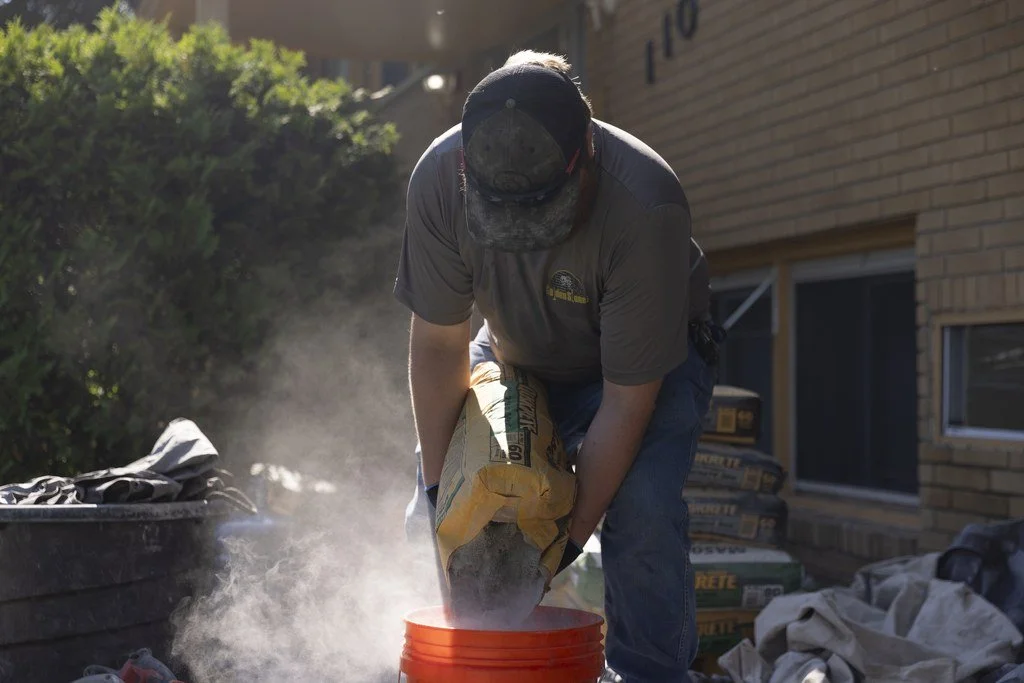
Materials and Suppliers
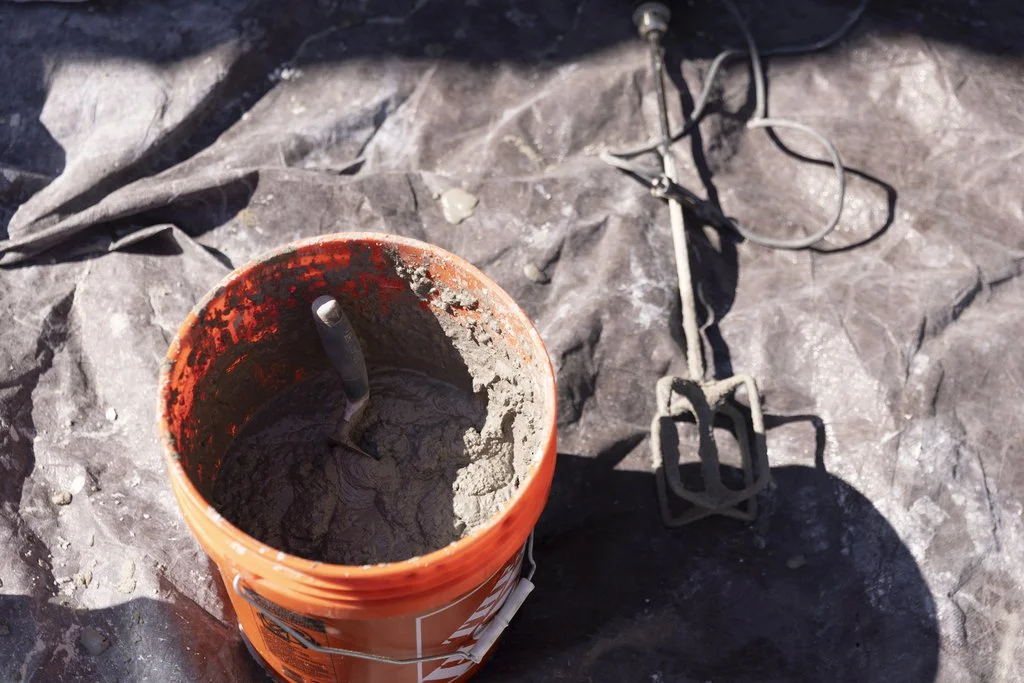
Mortar is Spec Mix premixed, so the specification is consistent from batch to batch across a job. On a wall that will be viewed from the street, batch variation is evident.
Which specification goes on your wall is set out in full above. Whichever it is, you are told before we mix it.
Brick and stone, where replacement is needed mid-job, comes from a local supplier we have used for years. Custom mortar color blending is available on request, with an honest warning that dyes rarely match the sample exactly.
Common Questions
We do not price it that way, and we would be cautious of anyone who does. The cost is driven by how deep the joints have to be cut, how much of the wall genuinely needs doing, and access, none of which scales cleanly with area. A small awkward high section can cost more than a large easy one.
Rarely. South and west elevations catch wind-driven rain and generally fail years before sheltered ones, so it is normal for one or two walls to need work while the others are fine. We quote what has failed.
A small area, roughly a 10-by-10 section, starts at around $2,800. A whole house wall is generally $6,000 to $8,000. Larger scopes go up from there. Those are typical residential starting points, not quotes.
In everyday use in this market, none. Strictly, repointing is replacing the mortar, and tuckpointing originally described a decorative finishing technique, but every contractor here, including us, uses tuckpointing to mean grinding out failed mortar and replacing it. If someone quotes you for one and you asked for the other, they mean the same job.
You can, and we would gently suggest starting somewhere other than the front of your house. The failure modes are all invisible for the first couple of years: not grinding deep enough, packing in one pass, striking too early. Each of those gives you a joint that looks correct and falls out later.
Some can. What we would ask them is how deep they grind, in layers or one pass, and how they judge when to strike. Those three answers tell you almost everything.
There is no schedule. It depends on exposure, the original mortar, and how much water the wall takes. A south or west elevation that catches wind-driven rain will need attention long before a sheltered one. Look at the joints, not the calendar.
A small area is often a day or two. A full-house wall usually takes several days, depending on access and height. Grinding is the slow part.
Frequently not, and we will tell you when you do not. Repointing an entire elevation when a third of it has failed is a common way to be overcharged.
Close, and closer still if we custom blend, which we will do on request. It will not be identical on a wall that has weathered for a century, and we would rather tell you that now than have you discover it on the day.
Inside, yes, all winter. Basement and foundation repointing is not affected by the weather at all. Outside, no, because mortar will not cure in a hard freeze, and we would rather tell you that than lay work that fails.
The powder itself is not. It is efflorescence, salt carried out of the masonry by water moving through it. It brushes off. What it is telling you is that water is traveling through the wall, and that is worth looking at.
No. If brick faces have gone, repointing around them is cosmetic. Spalling across a wall usually means at least a partial rebuild, and we would rather tell you that at the estimate than after.
It covers workmanship, which is a narrower and more useful thing than it sounds. If a joint we repointed fails, that is ours for ten years. If a brick the manufacturer made turns out to be bad, that is a materials question and a different conversation. We would rather be precise about it now than argue about it later.
Where We Do This Work
We tuckpoint across St. Paul, Minneapolis, Bloomington, St. Louis Park, Richfield, Minnetonka, Eden Prairie, Plymouth, Maple Grove, Wayzata, Blaine, Circle Pines, Little Canada, Woodbury, Lake Elmo, Cottage Grove, Stillwater, South St. Paul, Inver Grove Heights, Mendota Heights, Eagan, Burnsville, Apple Valley, Rosemount, Lakeville, Victoria, North Branch and Big Lake. Past about forty-five miles from St. Paul, send photographs first, and Sam will tell you honestly whether it is worth him coming out.

What Customers Say
What appears below is our live Google feed rather than testimonials we picked out, so it shows whatever is genuinely on it.
Google review, September 2025Get a Free Estimate
Photos of the joints close up, plus one of the whole wall, tell us a lot before we arrive.
The useful part of the visit is usually the argument about how much of the wall really needs doing. Bring a second opinion if you have one; we are happy to be checked.