

Masonry Contractor in Plymouth
10 Years
Workmanship warranty, in writing

Plymouth put up 7,557 houses in the 1980s and 6,142 in the 1970s, and 85.8 percent of the city dates from 1970 onward. Median build year: 1988.
So, the masonry conversation here is brief, and the interesting part isn't the buildings. It is that four separately named waters connected to this city are on the state's chloride-impaired list, one of them with a $300,000 project attached. Salt is the masonry problem a homeowner has the most direct control over, so this page focuses on it.
Four Named Waters, And What It Means For Your Brick
Minnesota's chronic standard for chloride in surface water is 230 milligrams per liter. Four waters attached to this city sit on the state's impaired list for exceeding it: Parkers Lake, listed in 2014, Plymouth Creek, listed in 2014, Bassett Creek at Medicine Lake, listed in 2010, and Bass Creek, listed in 2010. Medicine Lake itself is not on that list, and we are not going to imply it is.
The watershed organization spent $300,000 on chloride reduction at Parkers Lake, and its finding was blunt: most of the chloride there comes from winter de-icer running off the ground north of the lake. Separately, Plymouth is a Level 2 Smart Salting Certified City under the state program, which puts it among the more serious cities we work in on this.
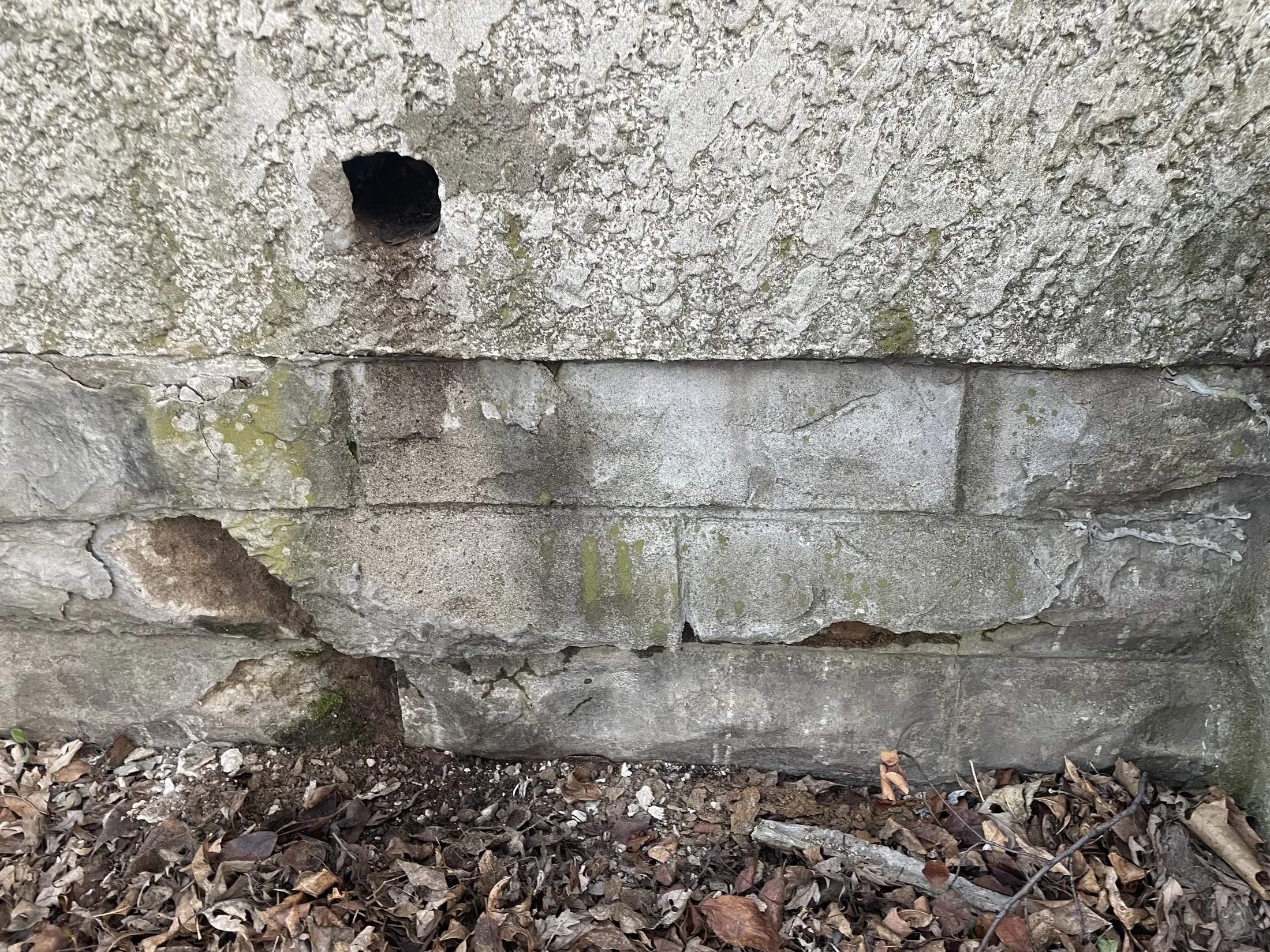
None of which is really about lakes, from where we stand. Chloride gets into the bottom four or five courses of brick beside a drive or a path, and it does its damage from inside the unit rather than on the face. A spalled brick cannot be repaired, only replaced, and repointing around one achieves nothing at all.
The most useful thing we can tell you here is free. If you salt a set of steps or a path every winter, that is the shortest-lived masonry you own. Switching to grit for the two or three worst weeks does more for it than anything we could sell you.

What Plymouth Homeowners Call Us About
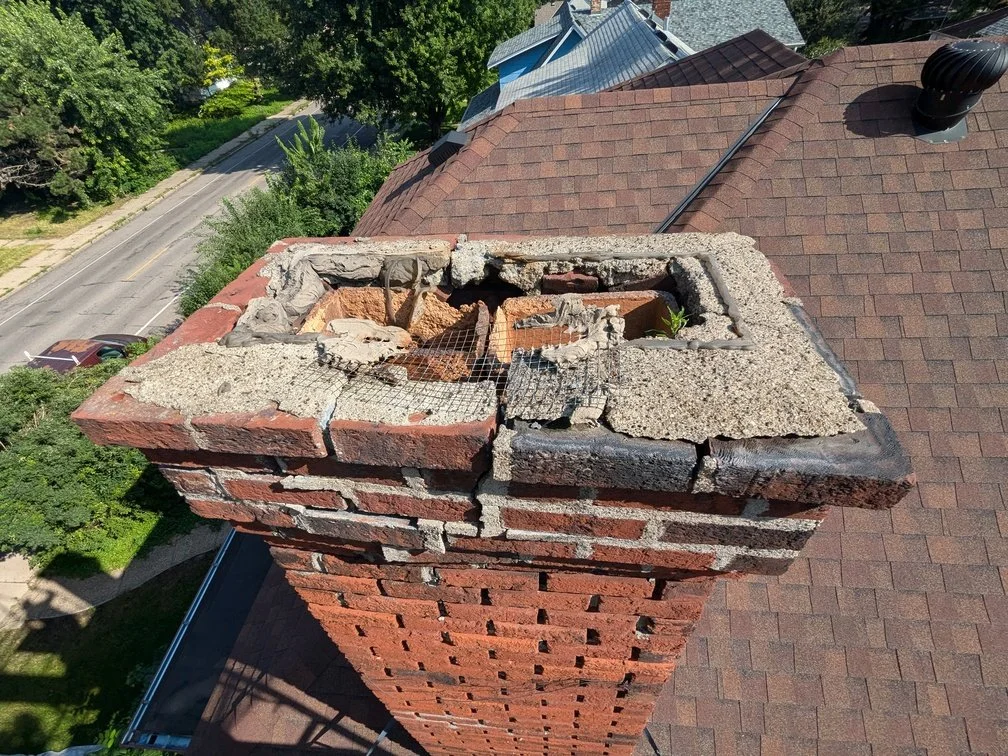
A crown that has split apart
With 7,557 houses raised inside one decade, a vast number of Plymouth crowns share a birthday to within a year or two, and they have passed forty together.
A stoop that has settled out of level
Loam holds water and lifts when it freezes, so an entry bedded shallow will shift. What went underneath it originally decides the whole thing.
A joint line lifting above a wide window
Steel angles spanning the wider openings were installed during the same construction wave that raised everything else here, and corroding steel occupies more space than sound steel.
A decorative panel shedding units
Masonry on housing this recent is decorative rather than load bearing, so a panel coming apart tends not to spread. Water still gets in behind it, which is the actual problem.
A wall or patio on soft ground
Worth checking in a city with this much mapped peat. Peat is compressible, and it does not stop compressing. Nothing structural should be bearing on it, and quite a lot of garden masonry accidentally is.
Brick coming apart at the foot of a wall
Salt, and in Plymouth it has a paper trail four waters long. The damage occurs inside the brick, so a spalled face cannot be repaired, and repointing around it buys you nothing.
What We Do In Plymouth
Briefer than our full catalog, because a 1988 house does not own most of it. The first two are where this city's housing points.
Crown rebuilds and raincaps
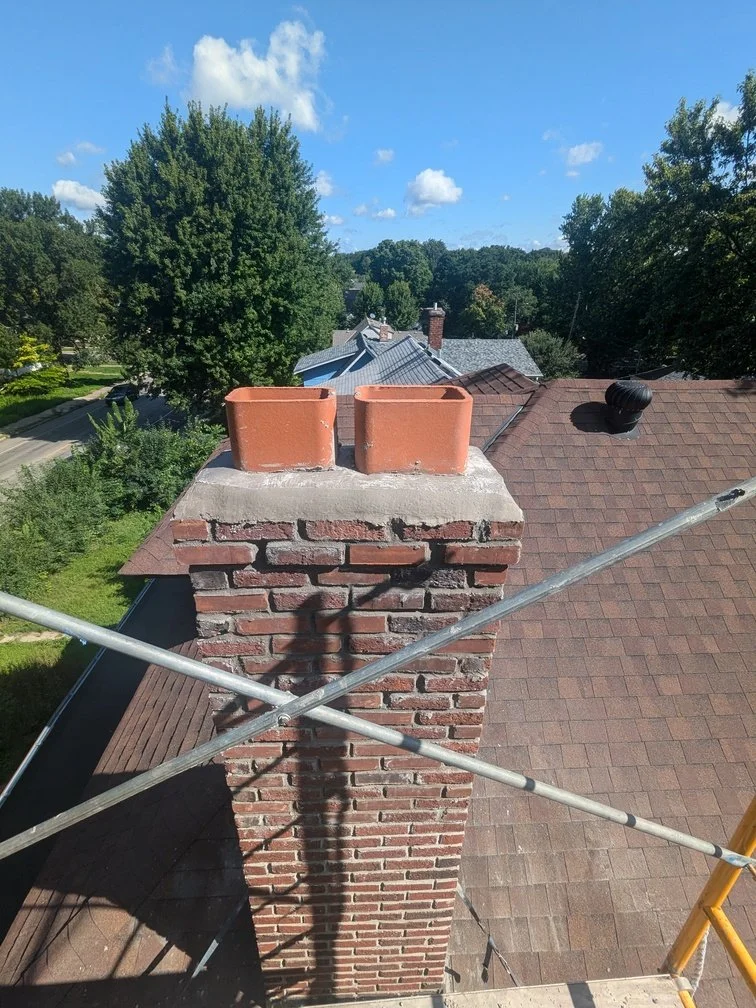
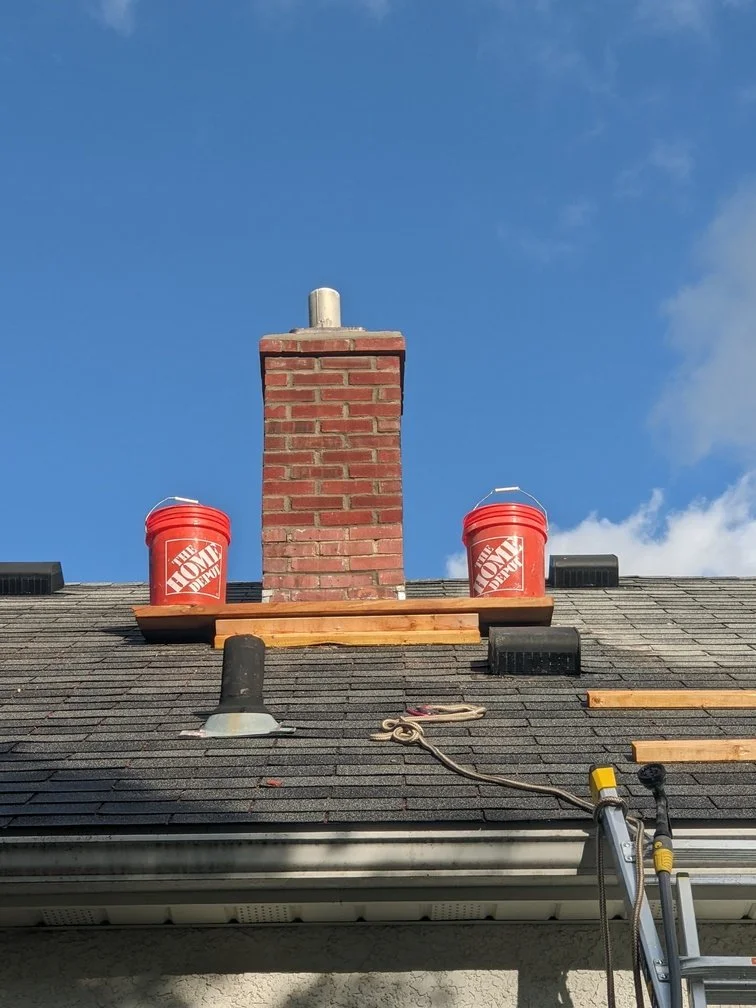
Where this city's arithmetic points, and the cause is arithmetic rather than any fault in how the crowns were poured. What is worth knowing before you ring: hairline crazing with no structural cracking can be sealed for a fraction of the cost of a recast, and a crown that has come apart cannot.
Entryway, stoop and apron rebuilds
Excavation and footing are the whole exercise. On loam that lifts each winter, an entry put back at its original depth simply repeats the failure. Where it sits beside a drive you salt, we will say what we think about that before quoting.
Lintel replacement
The rusted angle is removed, the opening propped, the courses above taken down and relaid over new steel.
Veneer and accent panel repair
Rebuilding the failed area and nothing beyond it. Matching forty-year-old builder brick is a far shorter search than matching anything fired a century ago.
Patio and walkway repair in natural stone
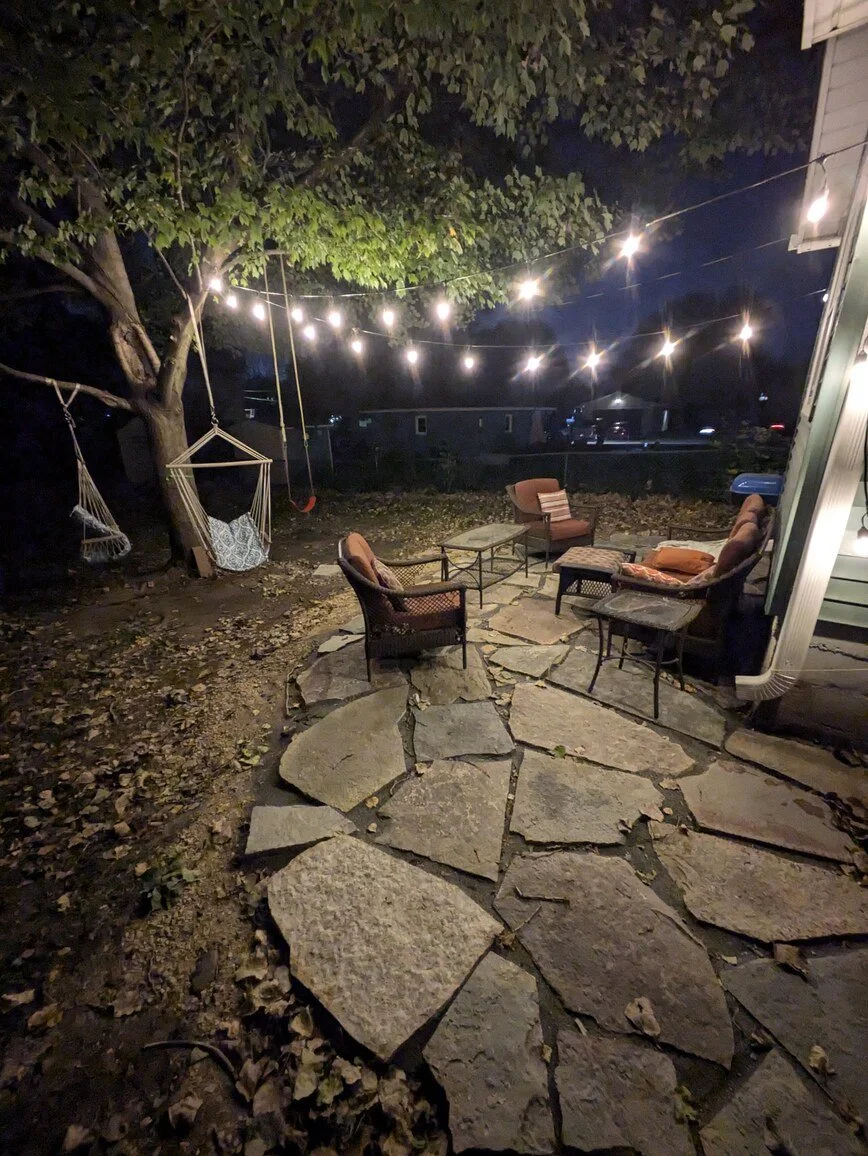
Lifted, a base sized to spread the weight laid underneath, then reset. Flagstone and natural stone, nothing else. On ground of this sort, the base is where your budget earns its keep.
Retaining walls and garden walls in natural stone
Dismantled, the footing and the drainage corrected, then relaid from whatever stone remains serviceable. Block walls sit with another trade entirely, and we can point you at one.
Chimney repair and rebuild
For a stack that has failed below the crown. On housing this age, the tally of gone faces normally stays under the seven to ten spalled faces our rebuild page sets as the line.
If your house predates 1970
Plymouth holds 620 houses from before 1940 and 4,151 from the middle decades. A 1955 property carries brick veneer with corroding metal fixings behind it, which has nothing in common with any of the work listed above. Tell us the decade on the phone.
Loam Till, Deep Ground And A Great Deal Of Soft Ground
The material under Plymouth is Villard till: a loam on undulating ground, which the state atlas rates as having no aggregate potential at all. That is a polite way of saying there is nothing in it worth digging up, and it is the opposite of the clean outwash sand you find in some of the cities south and east of here.
There is also a striking quantity of soft ground. There are 70 separate peat bodies mapped within 2.5 miles of City Hall, which is a lot of soft ground for one city to hold. Plymouth is kettle and wetland country and always has been.
Underneath all of that, the rock is a long way down. The limestone that defines parts of this metro is simply not here: sample the bedrock mapping and St. Peter Sandstone comes back across most of the city, and in the northwest the mapped bedrock surface is Cambrian sandstone under three hundred feet of glacial material. The city's own history records no quarry, pit, or brickyard, which is what you would expect of ground like that.

What It Costs
No travel charge, and no minimum job size.
In this city, the questions are nearly all about chimneys, so: $3,500 to start for repair on a single-story house, around $5,500 for a crown taken off and recast, and well under that to seal one that is still sound. Minor brick replacement starts near $1,500.
Ground level work is left unpriced on purpose. Entries, patios and walls are all decided by what sits beneath them, and that stays hidden until a spade goes in. We quote them at the visit, and the visit is on us.
Every one of those figures depends on square footage and on what we find when we look. They are rough guides to help you decide whether to call, not quotes. The exact number comes after the visit, and the visit is free.

What Customers Say
No review anybody has left us names Plymouth. What appears below is the live Google feed rather than a testimonial we picked out, so it shows whatever is genuinely on it.
Google review, September 2025Tell us what is going on with your masonry
Tell us what you are seeing and attach photos if you have them. Sam comes out himself, and you get the options priced in writing. No charge either way, and no service call fee.
Common Questions In Plymouth
Somewhere around forty, the answer flips. Crown first, then the steel above the wider openings, then whatever sits at ground level on nothing but soil. The decorative panel on the front is generally the last thing to trouble anybody.
Because everybody's house went up together. Over seven and a half thousand Plymouth homes were built inside one decade, which makes their crowns the same age to within a year or two. Nothing is wrong with them beyond the calendar.
To your brick, more than anything else you do. Chloride is drawn into the bottom courses beside a path or drive, breaking the unit up from within, so the face comes off, and repointing around it is money wasted. The four impaired waters attached to this city are the visible half of the same problem. Grit on the worst weeks is the cheapest masonry decision available to you.
Quite possibly. Seventy peat bodies are mapped within two and a half miles of City Hall, and peat keeps compressing under weight without ever stopping. Your house is fine, because houses are founded by design. A garden wall is another matter, and it is worth establishing before rebuilding one on the same spot.
Not within reach of anyone. The limestone that defines parts of this metro is absent under Plymouth, and the mapped rock surface sits well over a hundred feet down and in places past three hundred. The city's own history records no quarry, pit, or brickyard, which is what ground like that would predict.
Not entirely. Fireplace work and anything interior carries straight on. Exterior mortar needs weather to cure in, so that part waits, and we will say which yours is on the phone.

Get A Free Estimate In Plymouth
Take one shot of the stack from ground level and one of whatever caught your eye further down, and we can usually settle it over the phone. Please stay off the roof.
One thing that will not help us here is the build year, because so much of this city went up inside the same stretch. Describe what you can actually see instead, and where on the property it is.
(612) 509-0718 · No travel charge, no minimum job size · In-person estimate at no charge