

Masonry Contractor in Blaine
10 Years
Workmanship warranty, in writing

The median Blaine house was built in 1996, and 84.8 percent of the city dates from 1970 onward. Only about 286 homes here are older than 1940.
What makes this city different is not the housing; it is what the housing is standing on. Blaine sits on the Anoka Sand Plain, and the state geological atlas mentions the city by name when it explains what has to happen to that ground before anyone builds on it.
Salt, And The One Number Worth Knowing
Minnesota's chronic standard for chloride in surface water is 230 milligrams per liter. Sand Creek, which drains 6,658 acres of western Blaine, was measured at 128.33 milligrams per liter in baseflow in 2021, with an eight-year average of 78.1. Laddie Lake, inside the city, was added to the state's chloride-impaired list in 2024.
Those figures sit under the standard, and they are climbing. The watershed district's own report says chloride in baseflow has steadily worsened over the past ten years.
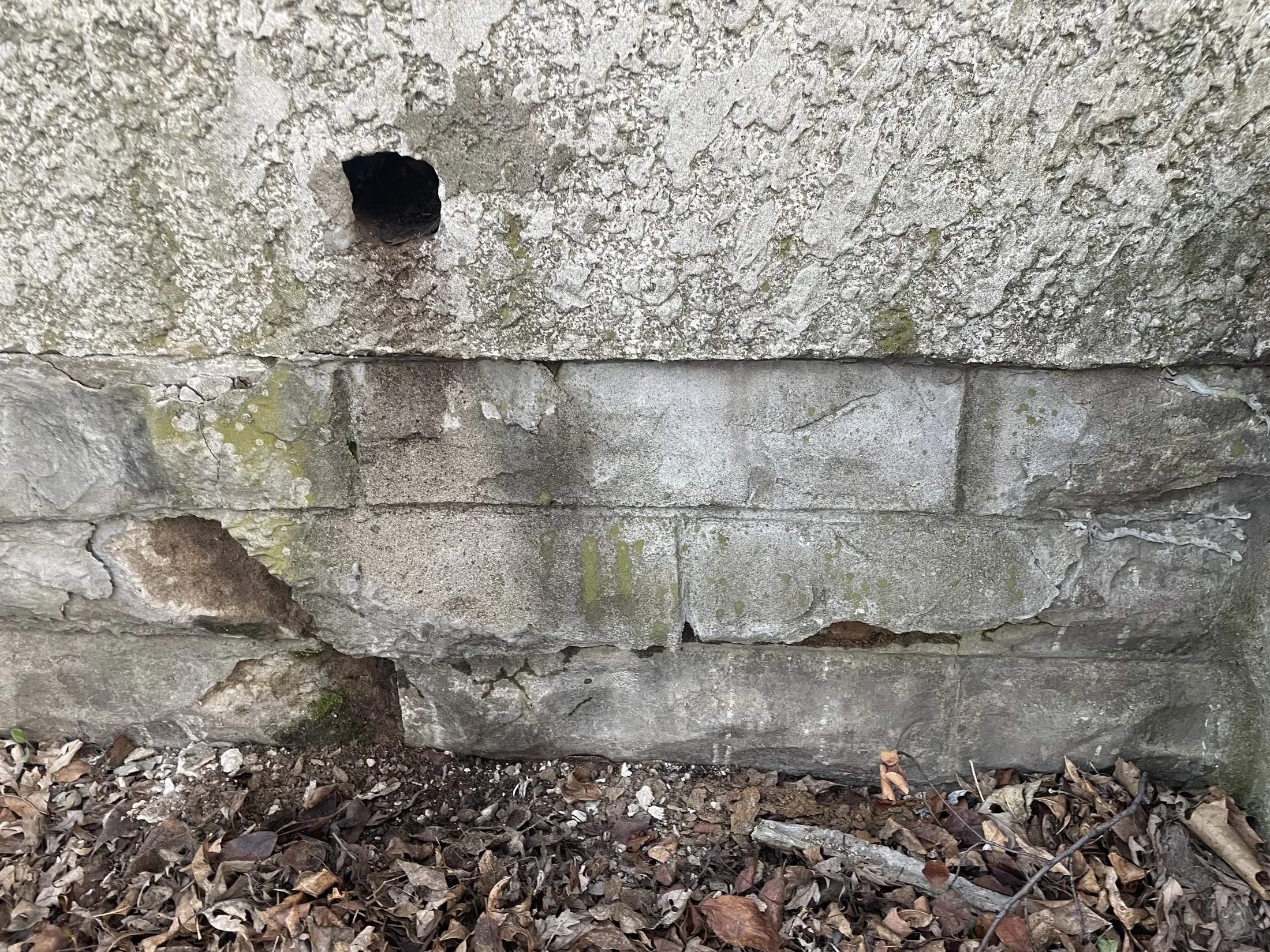
We raise it because salt is the most avoidable cause of masonry damage that anyone can control. De-icer taken up into the bottom courses of brick beside a driveway or a set of steps does its damage from inside the unit, and no amount of repointing fixes a spalled brick face. If you have a set of steps you salt every winter, that is the part of your masonry with the shortest life on the property, and switching to grit on the two or three coldest weeks does more good than anything we could sell you.

What Blaine Homeowners Call Us About
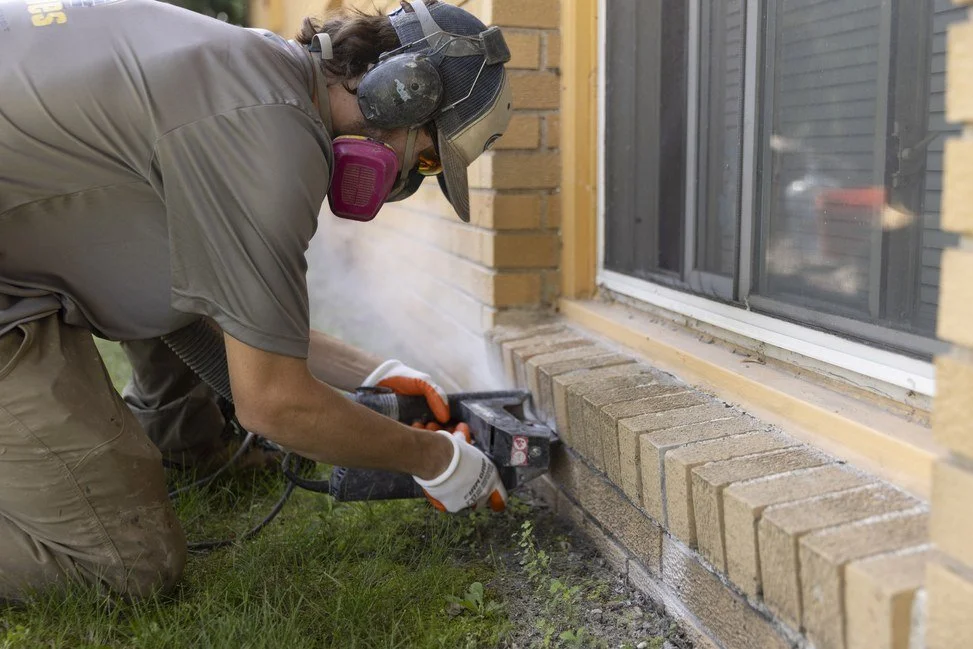
A front step or entry that has sunk
Bed something shallow into fill, or into sand with water sitting close underneath, and it sinks. Carry the footing beneath the freezing depth, and it stays where you put it. That is nearly the whole of masonry on a sand plain.
A patio or path that has dropped in the middle
Identical cause, more square footage. Out here the base beneath a patio carries the entire burden, and where it was laid thin it is the first thing to give.
A cracked crown on a house from the 1990s
Blaine put up 4,020 houses across the 1990s and 6,455 more in the 2000s. The older half of that group is coming up on thirty, and the younger half is barely twenty, which is early for a crown to fail. When one goes at that age, it is generally about how it was formed rather than how long it has stood, and that changes what we would recommend.
A garden or retaining wall leaning
A wall standing in sand wants a base designed for sand. With groundwater potentially inside the top ten feet, where the water goes behind the stonework counts for as much as the stonework itself.
A joint line gone crooked above a wide opening
Rusting steel, running to the same construction clock as the rest of Blaine.
What We Do In Blaine
Aimed at the masonry a 1990s house genuinely possesses, on ground that has more say than usual in how each job goes.
Entryway, stoop and apron rebuilds
The job this ground argues for hardest. With sand, shallow water, and pockets of engineered fill in the mix, the depth of the footing and what it ultimately rests on determine whether this is a repair or the first of two.
Patio and walkway repair in natural stone
Lifted, the base rebuilt to properly distribute the load on sand, and reset. Flagstone and natural stone only.
Retaining walls and garden walls in natural stone
Taken down, the footing rebuilt for sand and the water given somewhere to go, then relaid. We neither build interlocking block nor repair it, and that comes up in the first two minutes on the phone.
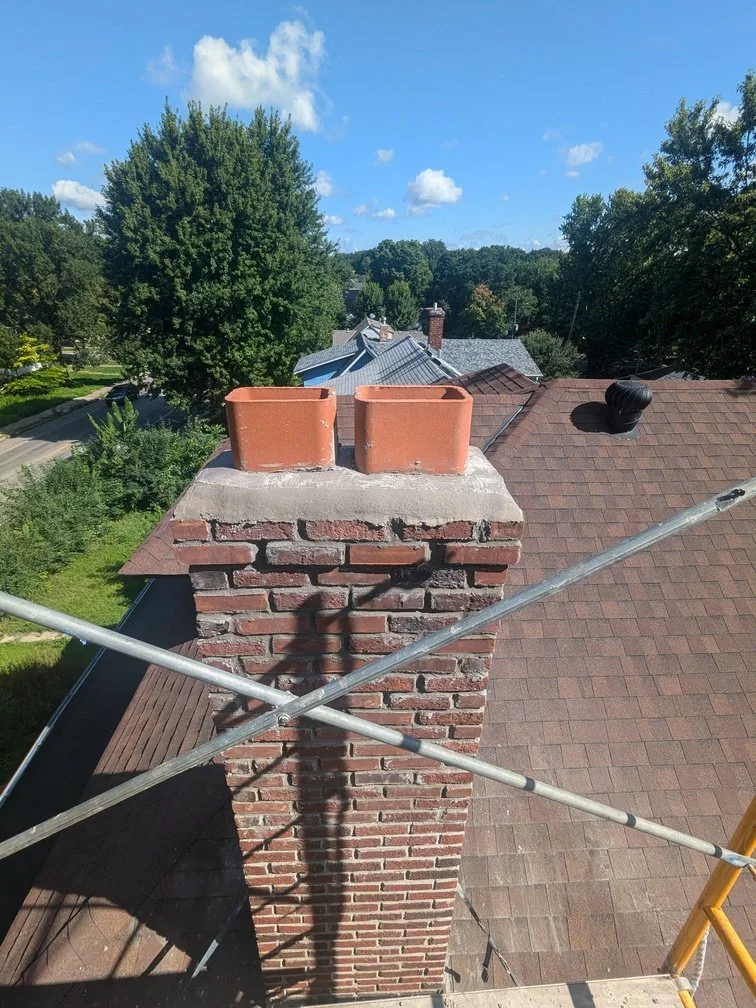
Crown rebuilds and raincaps
Ten thousand houses went up here across two decades, so the crowns are overwhelmingly young. Sealing a sound one is more often the right answer here than in the older suburbs, and it costs a fraction of what a recast costs.
Lintel replacement
Rusted angle out, the opening propped while the brickwork above comes down, new steel set, courses replaced.
Veneer and accent panel repair
Rebuilding the failed patch and no more. Tracking down modern builder brick is a considerably shorter errand than chasing a match for Victorian work.
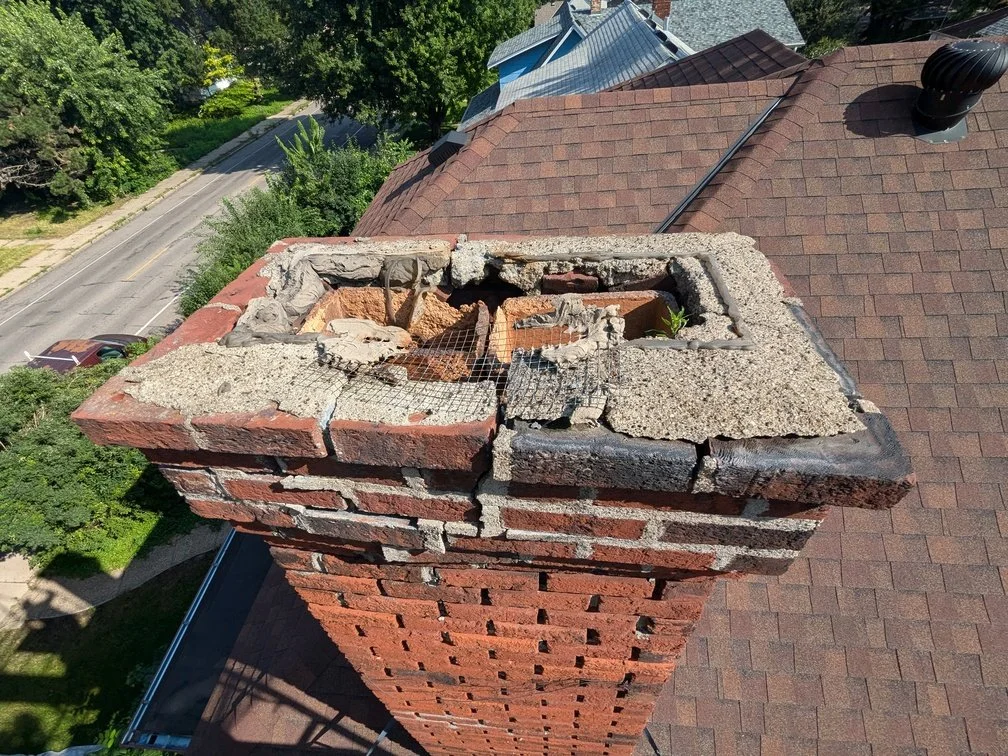
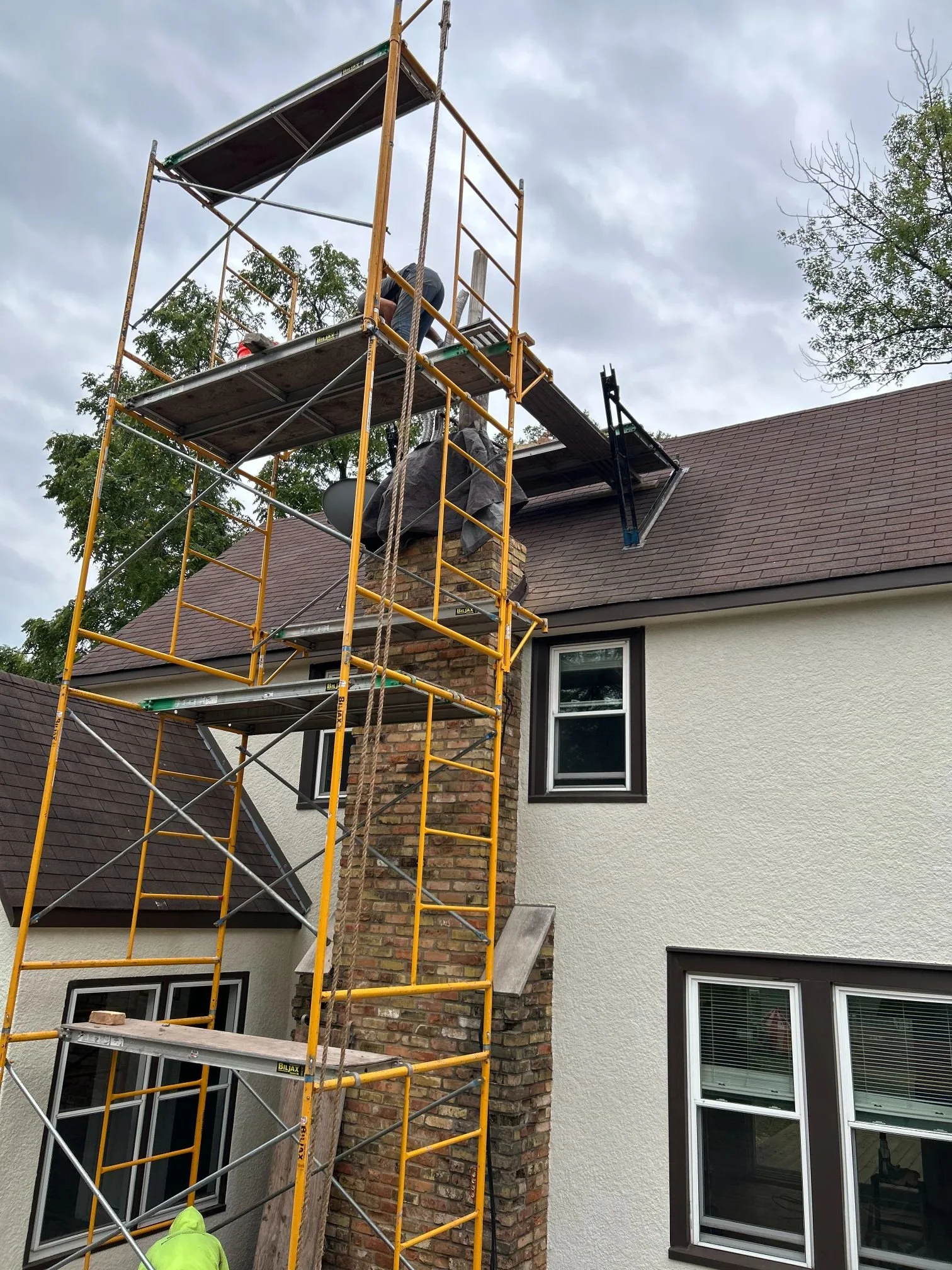
Chimney repair and rebuild
For a stack that has come apart in its body. Across Blaine, the count of failed faces normally stays below the seven to ten spalled faces our rebuild page sets as the line.
Older properties, and there are a few
Blaine holds 286 houses from before 1940 and 3,795 more from the middle decades of the century. Different mortar, different method, different failures. Give us the decade when you ring.
Lake Sand, A High Water Table, And Peat That Gets Taken Away
The sand under Blaine was laid down in a glacial lake. It went down about twelve thousand years ago, and the surface was left pitted where blocks of buried ice later melted out. That is where the hollows came from.
The second is peat. The atlas bothers to map it only where it exceeds about four feet in thickness, and then adds this: in developed areas many of these deposits have been drained and buried under artificial fill, and the organic sediment is commonly removed prior to filling in areas where structures are built (such as in Blaine).
When a state geological atlas reaches for a worked example, it picks this city. What that means in practice is that a meaningful amount of the ground people build on in Blaine is engineered fill sitting where peat used to be. That is fine for a house, which goes on designed footings and gets checked. It is a great deal less fine for a patio, a garden wall, or a front step that somebody set on whatever was there.
There are also six sand pits mapped inside the city limits. The material under this city was worth digging up and selling, which is the plainest statement anybody could make about what your footing is going into.

What It Costs
No travel charge, and no minimum job size.
Opening figures: $3,500 for chimney repair on a single-story house, $5,500 for a recast crown, substantially less to seal one that is sound, and $1,500 for minor brick replacement.
Nothing at ground level carries a figure. Until it is opened, nobody knows what an entry, a patio, or a wall is resting on, and around here the answer is sometimes engineered fill sitting where a bog used to be. Those get quoted at the visit, which costs nothing.
Every one of those figures depends on square footage and on what we find when we look. They are rough guides to help you decide whether to call, not quotes. The exact number comes after the visit, and the visit is free.

What Customers Say
No review anybody has left us specifically names Blaine. What appears below is the live Google feed rather than a testimonial we picked out, so it shows whatever is genuinely on it.
Google review, September 2025Tell us what is going on with your masonry
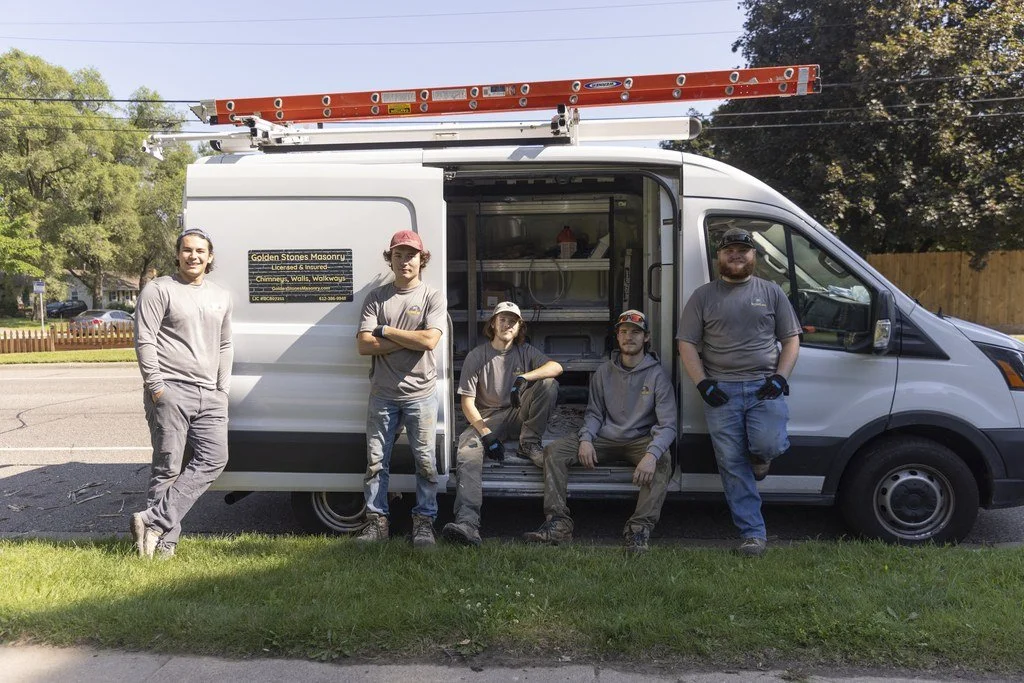
Tell us what you are seeing and attach photos if you have them. Sam comes out himself, and you get the options priced in writing. No charge either way, and no service call fee.

Common Questions In Blaine
Usually yes, until something changes underneath it. On sand with water not far below, and in places on fill put in where peat was taken out, anything set shallow keeps finding its own level. Rebuilding it at the same depth buys you a couple of winters at full price.
Possibly, and the city is the place to ask. Blaine keeps soil information by development because organic soil is common enough here to be worth tracking. Our part of it is simpler. When we dig for a footing, we find out what is actually there, and we tell you.
Because your house was founded by an engineer and your patio very likely was not. Sand sheds water superbly, which is a genuine advantage, and it will also shift under weight when whatever is distributing that weight was never sized for the job.
Commonly inside the top ten feet, though that describes Anoka County as a whole rather than your garden. Blaine falls outside every exception the state lists, which is as close as a county-scale figure gets to being about you. We would rather you knew the difference than took it as a survey.
Interior work does, all of it. Exterior mortar work is weather dependent and we will tell you honestly which side your job falls on instead of putting it in the diary and ringing you in March.
Get A Free Estimate In Blaine
One close photograph and one from a few paces back generally lets us give you a verdict without either of us losing half a day. Please do not climb onto the roof to get it.
If the thing that has moved is at ground level, tell us how much it has moved and how long it took. On this ground, the rate tells us more than the amount does.
(612) 509-0718 · No travel charge, no minimum job size · In-person estimate at no charge