

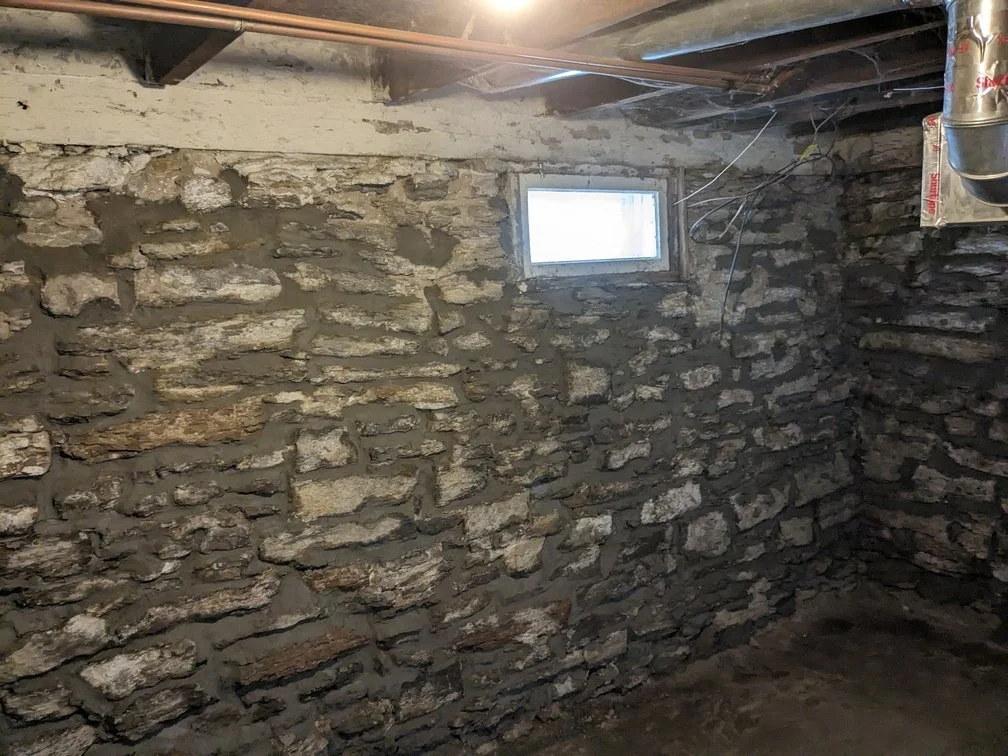
Stone, Fieldstone and Retaining Walls in St. Paul
10 Years
Workmanship warranty, in writing

Retaining walls that hold a slope, garden and boundary walls, columns and piers, planters, and feature stonework, all built new in natural stone and the glacial fieldstone this ground is full of. Working in real stone is the part of the trade Sam took the job up for. Brick walls have their own page now. Stone brings two jobs brick does not: holding ground back with a wall that drains, and building in irregular fieldstone that has to be read and set piece by piece.

Common Stone and Retaining Wall Projects
A slope that has begun to slide toward a path or a patio
Ground on the move wants a retaining wall, and holding ground is a different job from standing a wall up. What goes behind it and under it is where the work really is, so most of the thinking happens out of sight.
A fieldstone wall along a boundary or a bed
The rounded glacial boulder that turns up all over this metro settles into a lot the way milled stone does not. People ask for it by name once they have seen it done well.
Columns or piers at a drive entrance or a gate
A stone column drops a lot of load onto a small base, so what sits under it earns close attention. Get the base right and the column is there for good.
Stone on the front of the house
Stone facing on a front elevation is the rare job here chosen for the look of the house and nothing else. Done in the right natural stone, it settles into the elevation instead of standing off it.
A block retaining wall that failed and you want it done properly
Segmental block walls tip and bulge when the drainage behind them was skipped. We do not rebuild block, but we do build the stone version, drained the way it should have been, if you want the real thing this time.
Planters or raised beds in stone, not timber
A stone bed does not soften and rot from the inside over a few winters the way a timber one does.
What We Build

Stone and fieldstone retaining walls
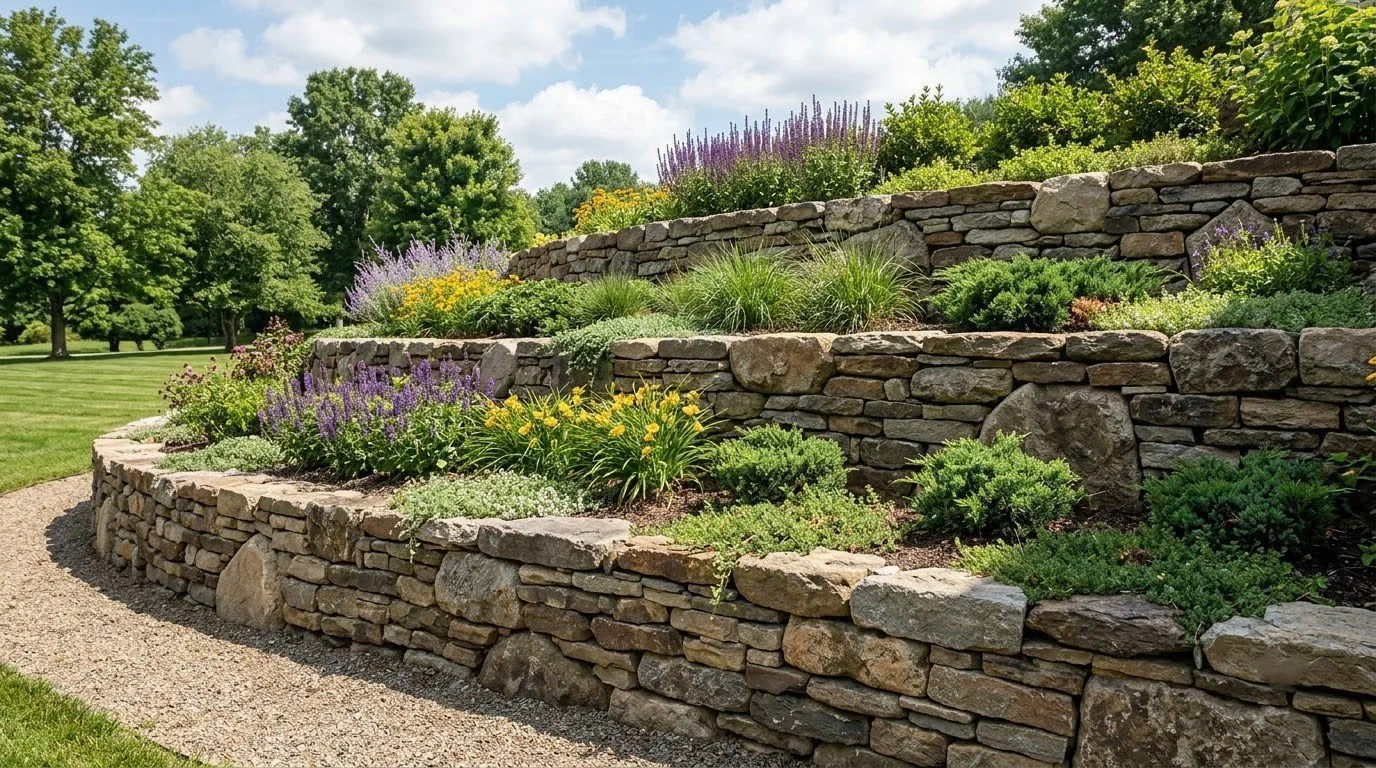
Boulder and natural-stone walls that hold ground back, set on a base built for the load and drained behind so meltwater runs off instead of pushing on the wall each spring. Stone only here: block and interlocking systems we neither install nor repair.
Garden, boundary and screen walls
Free-standing walls in natural stone or fieldstone, footed to depth, capped against water, and given a movement joint on any run long enough to want one.
Fieldstone work by name
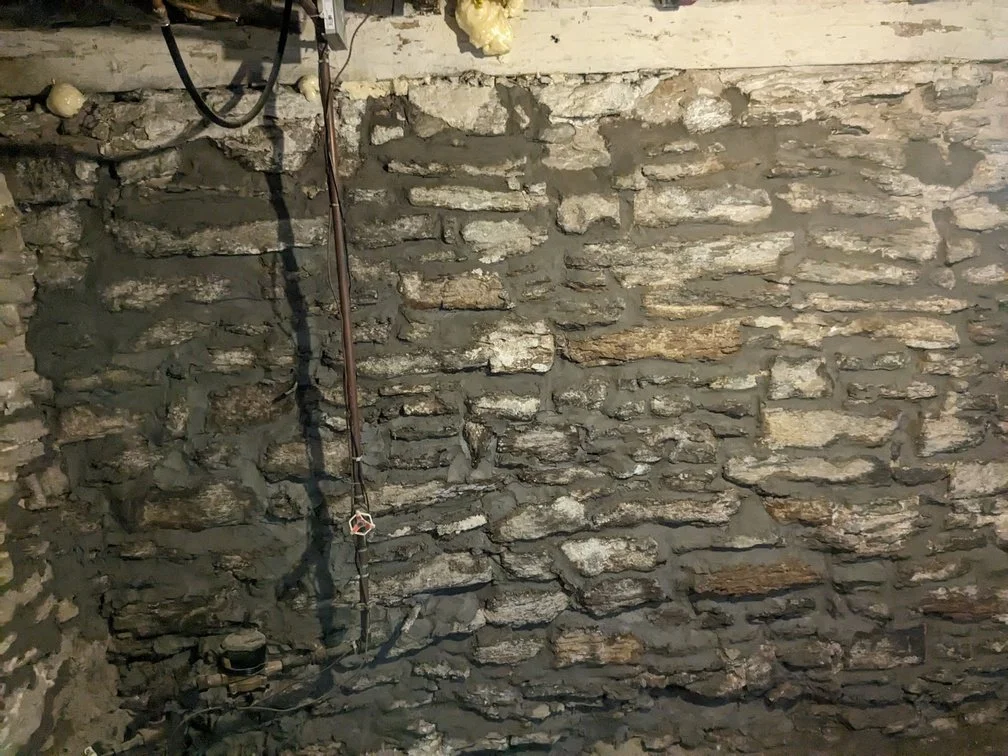
Set to read the way the glaciers left it, which is a hand-sorted job and not a coursed one. It suits an older or a larger lot, and much of the original stonework in this metro was built from it.
Stone columns, piers and archways
Free-standing or load-bearing, in natural stone, each on a base sized for what it carries.
Stone planters and raised beds
Built to hold up for decades, and one of the jobs Sam keeps near the top of his list.
Stone accent walls
Exterior feature walls in natural stone. The indoor version, on a fireplace or a stair wall, lives on our fireplace and interior stone page.
Copings, caps and the top of the wall
How the top is finished sets how long everything under it lasts. It is cheap to do right the day the wall goes up and dear to fix once water has been getting in.
What this job does not include
Brick walls, brick columns, brick planters and full-brick veneer, which have their own page now and should not be quoted from here.
Modular and segmental block, in a retaining wall, a garden wall or edging, and interlocking pavers. Those are a trade of their own, and there are crews in the metro who do nothing else.
Poured concrete walls, except the footing under a stone wall.
Outdoor fireplaces, fire pits and pizza ovens, which we no longer take on.
Fencing, timber and ironwork. We build the stone piers and bed in whatever the masonry has to carry; the gate itself is not our trade.
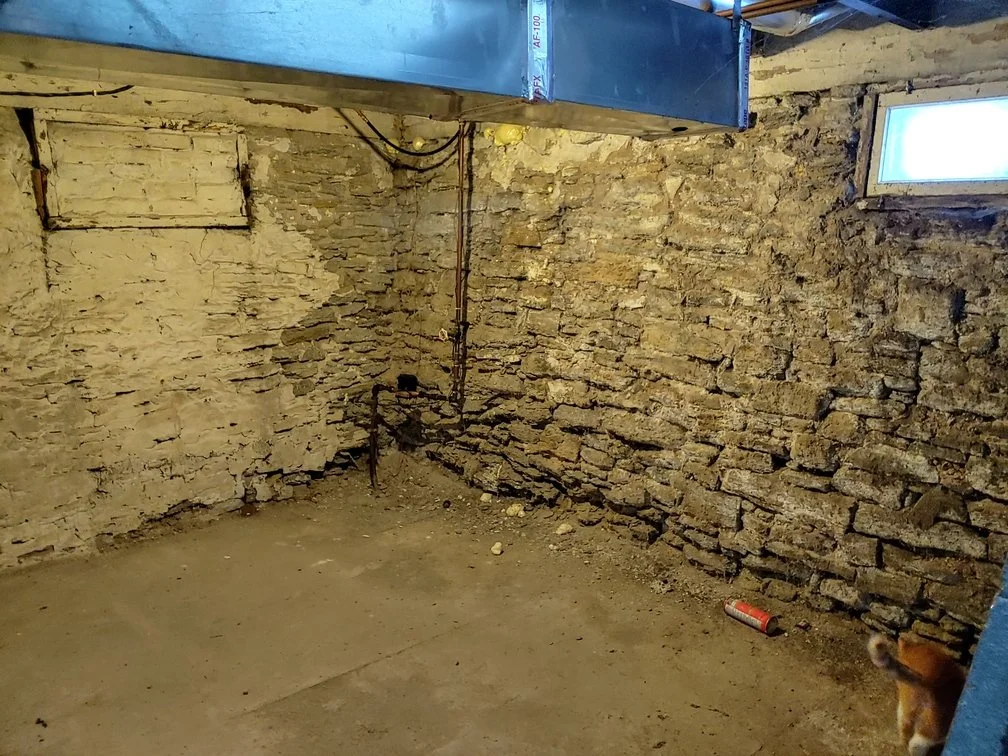

How A Build Runs
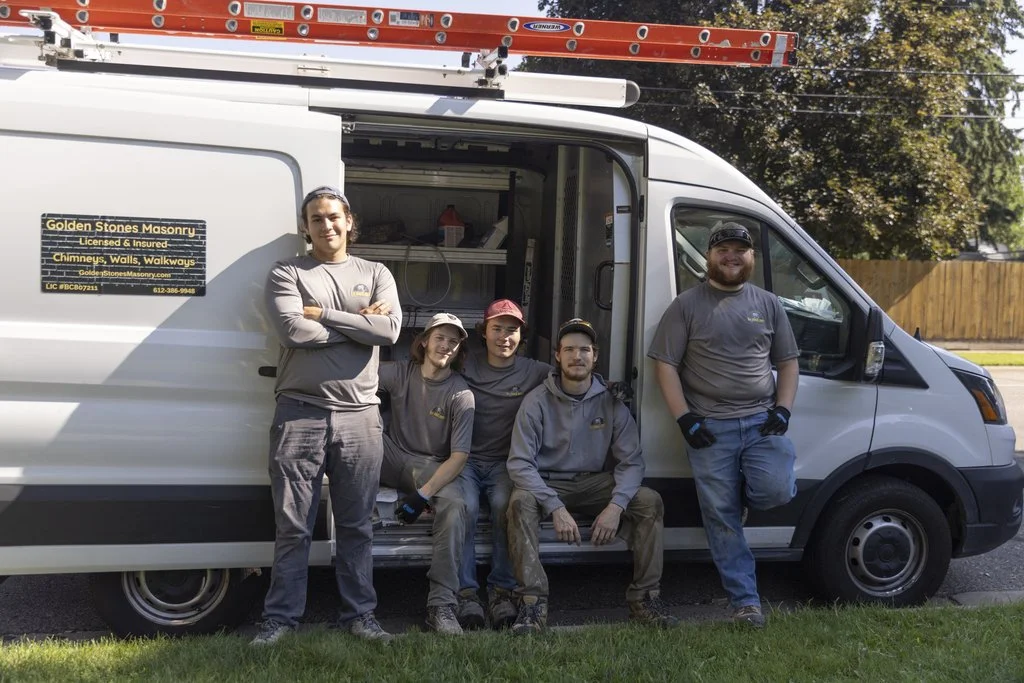
Why Us For Stonework
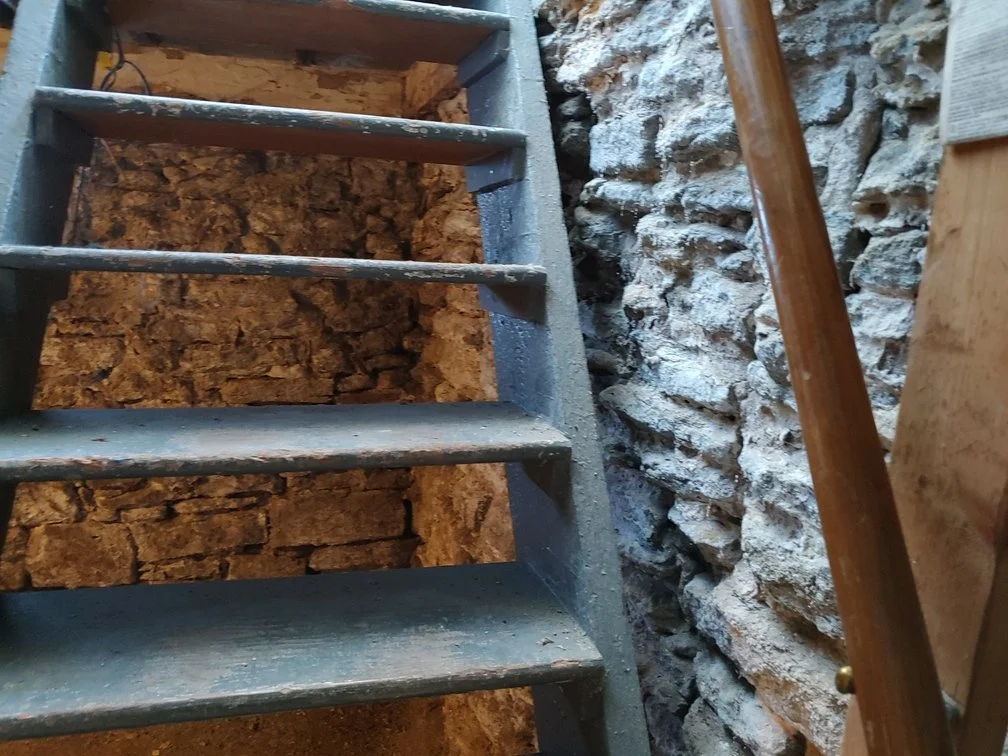
Built to outlast the people who ordered it: Sam's own line is that he likes that some of what they build will outlast him. On a stone wall with a proper base and a proper cap, he means it plainly.
Ten years on the workmanship: It is a workmanship warranty, not a materials one.

The Base, and the Drainage
Two things are buried under a finished stone wall, and both decide how long it stands: the base it sits on, and, on a retaining wall, the drainage it sits against. Neither shows the day the job is done, which is exactly why they are worth asking about before you sign.
The base has to reach below the frost line, for the reason any wall here does, and where the ground makes that digging hard the excavation quietly becomes the largest line on the estimate. Our steps and stoops page has the sharpest example of what that turns into on a tight lot.
The drainage is the half most people never hear about. A retaining wall carries a load a garden wall never does: the ground itself, and the water in it. Hold soil back without giving that water a way out and every freeze drives the saturated earth against the wall until it tips or bellies. The gravel and the drain behind the wall are doing as much as the stone in front, and a cut-price retaining wall is nearly always one where that hidden half was skipped.
So the two questions worth putting to anyone quoting you stonework are how deep the base goes, and, if the wall is holding ground, what goes in behind it to let the water out. A wall that gets both right looks no different on day one from a wall that gets neither. The difference arrives a few winters later.
Common Questions
A garden wall only holds itself up. A retaining wall holds back everything behind it, and the water in that ground, which makes it a bigger and a more particular job. If your wall is keeping a slope in place, it is a retaining wall, and the drainage behind it matters more than the face you see.
Because the soil it holds fills with water, and when that water freezes it pushes on the wall with real force. A drain and a gravel backfill give the water somewhere to go, so it is not leaning on the stone every spring. A retaining wall without drainage is the one you see bulging in a few years.
Yes, in natural stone and fieldstone, and only in stone. We do not build, install or repair modular and interlocking block, in either direction. A stone retaining wall from us is drained behind as it is built.
Yes, and it is worth asking for by name. The rounded glacial boulder settles into an older or a larger lot the way milled stone cannot, and much of the original stonework in this metro was built from it. It is sorted and set by hand, not laid in courses.
Usually close, and with fieldstone the question rarely comes up, since no two pieces match to begin with. For a specific cut stone we source it through our supplier, and you can see it before it is ordered.
Yes. A stone bed lasts for decades and does not rot out from the inside the way a timber one does, which is why people move to it after a timber bed or two.
Job by job, once Sam has walked it. There is no published price for new stone walls, because a boulder retaining wall on a steep bank and a low garden wall on flat ground are nothing like the same job, and one figure cannot stand for both. The repair prices elsewhere on the site do not apply to new work. The look is free.
No. A new wall is nothing but green mortar, and green mortar will not cure once the ground and the air are at freezing. Stone work books ahead regardless, since a build ties the crew up for several days at a stretch. We will still come out in the cold to look, and set a price and a place in the schedule for the thaw.
No, only the masonry. We will build the stone piers a gate hangs from, and bed in anything the stonework has to hold; the gate and the ironwork go to a fabricator.
Ten years, in writing, on cracking or crumbling in the wall we built. Work someone else did that we tie into, or a base another contractor poured, sits outside it. The contract spells out the terms.
Where We Do This Work
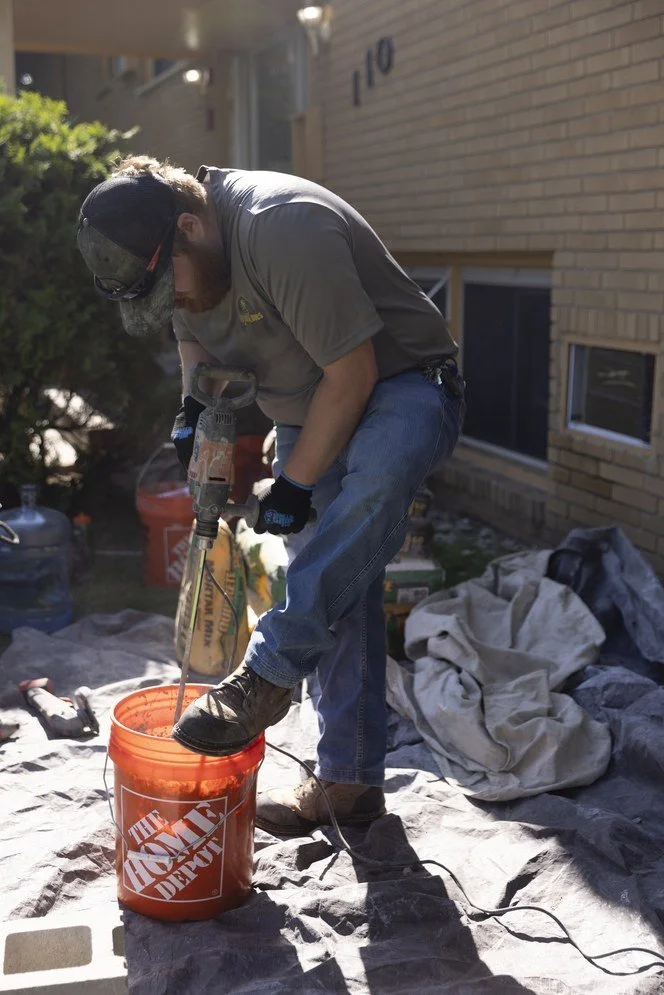
A stone build ties the crew up for several days at a stretch, so we schedule it around geography and the season instead of fitting it between callouts. The cities we cover sit on our service area page. Past about forty-five miles from St. Paul, get in touch early in the year and send photographs of the site first.

What Customers Say
What appears below is our live Google feed rather than testimonials we picked out, so it shows whatever is genuinely on it.
Google review, September 2025Get A Free Estimate
For a retaining wall, the two photos that help most are the slope itself and whatever sits at the bottom of it, because that is what the wall has to hold and where the water ends up. For a free-standing wall, a shot of the line it would run and one from wherever you usually stand to look that way tells us plenty.
Have a clear idea of what you need the wall to do before Sam arrives. He will tell you what that takes in stone, and, on a slope, whether the ground needs a wall at all or just somewhere for the water to go.
Talk to Sam: (612) 509-0718 · Written estimate, options priced · MN BC807211