

Masonry Contractor in Circle Pines
10 Years
Workmanship warranty, in writing

The Census finds no housing in Circle Pines older than 1940, and unlike most such claims, this one has a reason behind it. There was no Circle Pines. The place was announced in May 1946 as a cooperative village on 1,203 acres of what was then Blaine and Centerville township farmland, and incorporated in 1950.
So the masonry here starts at zero and runs forward. 566 homes date from the 1950s and 554 from the 1980s, which between them is more than half the city. Those two groups need entirely different things from us.

What Circle Pines Homeowners Call Us About
A front step or entry that has sunk
Sand with water not far under it, and hollows mapped in the ground itself. Anything bedded shallow settles here. Anything on a footing carried past frost does not.
A brick front leaning out from a house of the founding years
The metal fixings holding a veneer back to the frame corrode and swell, and 566 houses here went up in the decade when that detail was standard. It is one of the few masonry faults that accelerate once they begin.
A cracked crown on a house from the second wave
The other half of Circle Pines. Some 554 houses arrived in the 1980s, which puts their caps at much the same age and much the same point in a crown's life.
A joint line gone crooked over a wide opening
This city installed its steel angles in two waves thirty years apart, and both waves are now old enough to be failing.
A garden or retaining wall leaning on soft ground
Twelve peat bodies are mapped in and around this small city. Peat compresses under load and does not stop. Your house is on designed footings; a garden wall very often is not.
What We Do In Circle Pines
Split the city's development between the founding decade and the 1980s build-out. The last two apply to both.
Brick veneer repair and wall tie replacement
For the founding-decade housing. The failed area of the veneer is taken down, new fixings are installed, and the brick is relaid. This is structural work, and a quote that treats it as pointing has not understood what is wrong.
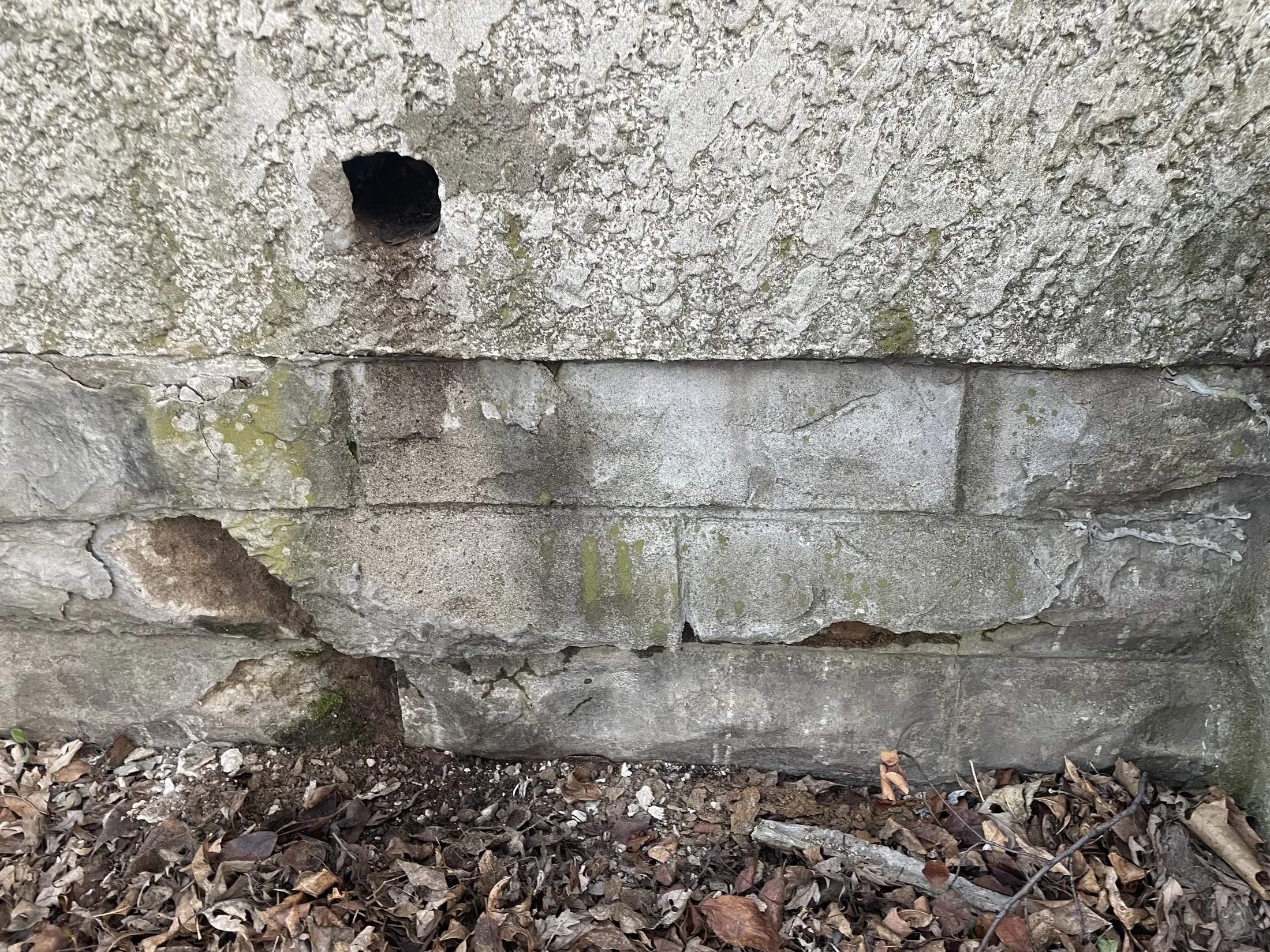
Tuckpointing and mortar repair on the 1950s stock
On the 1950s stock, cutting out the failed joints and refilling to suit the brick of that period rather than to suit whatever is hardest.
Crown rebuilds and raincaps
For the second wave. A cap with fine surface crazing and no structural cracking seals for a fraction of what recasting costs. One that has broken into pieces does not.
Lintel replacement
The failed angle comes out, the opening is propped, and the courses above are relaid over fresh steel.
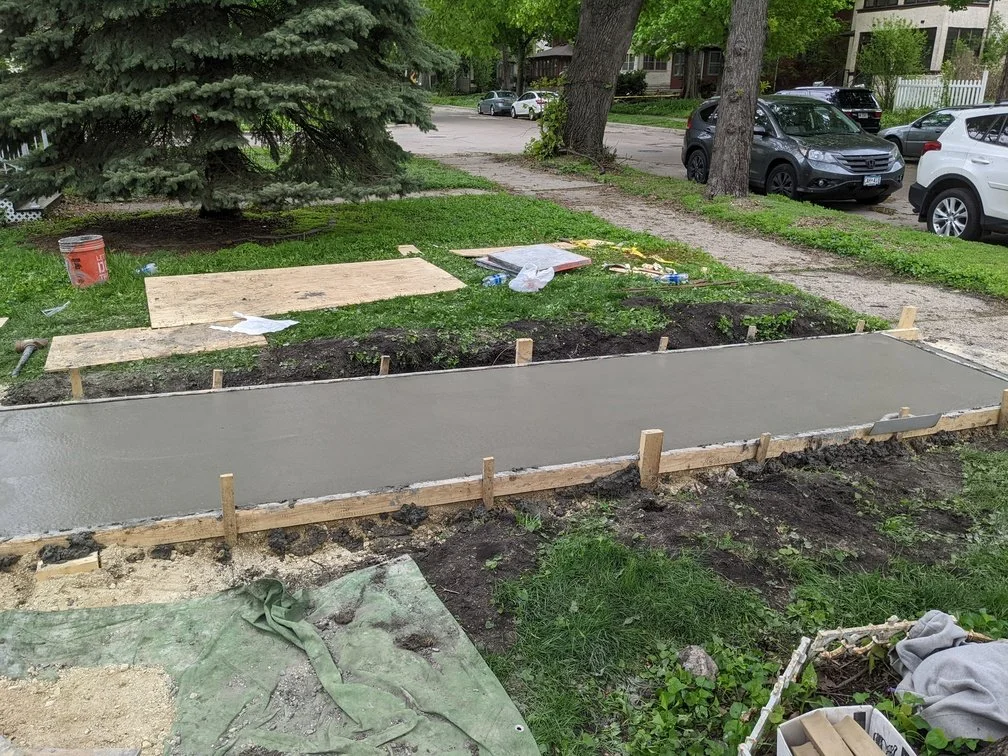
Steps, stoops and entryways
On sand with a shallow water table, the depth of the footing and the base spreading the load are the entire job. Everything above that is finishing.
Retaining walls and garden walls in natural stone
Taken apart, the footing and the drainage behind it corrected, and relaid from whatever stone is still sound. Interlocking block is a separate trade, and we can point you at one.
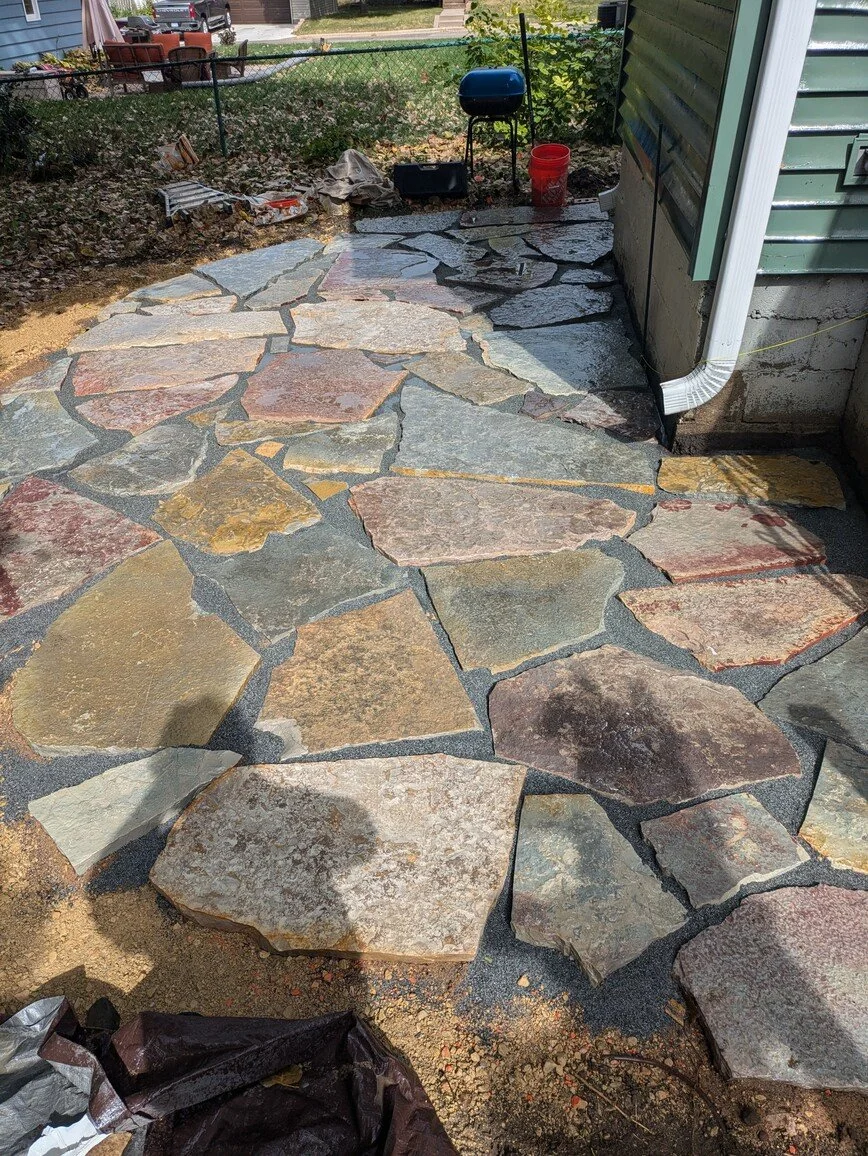
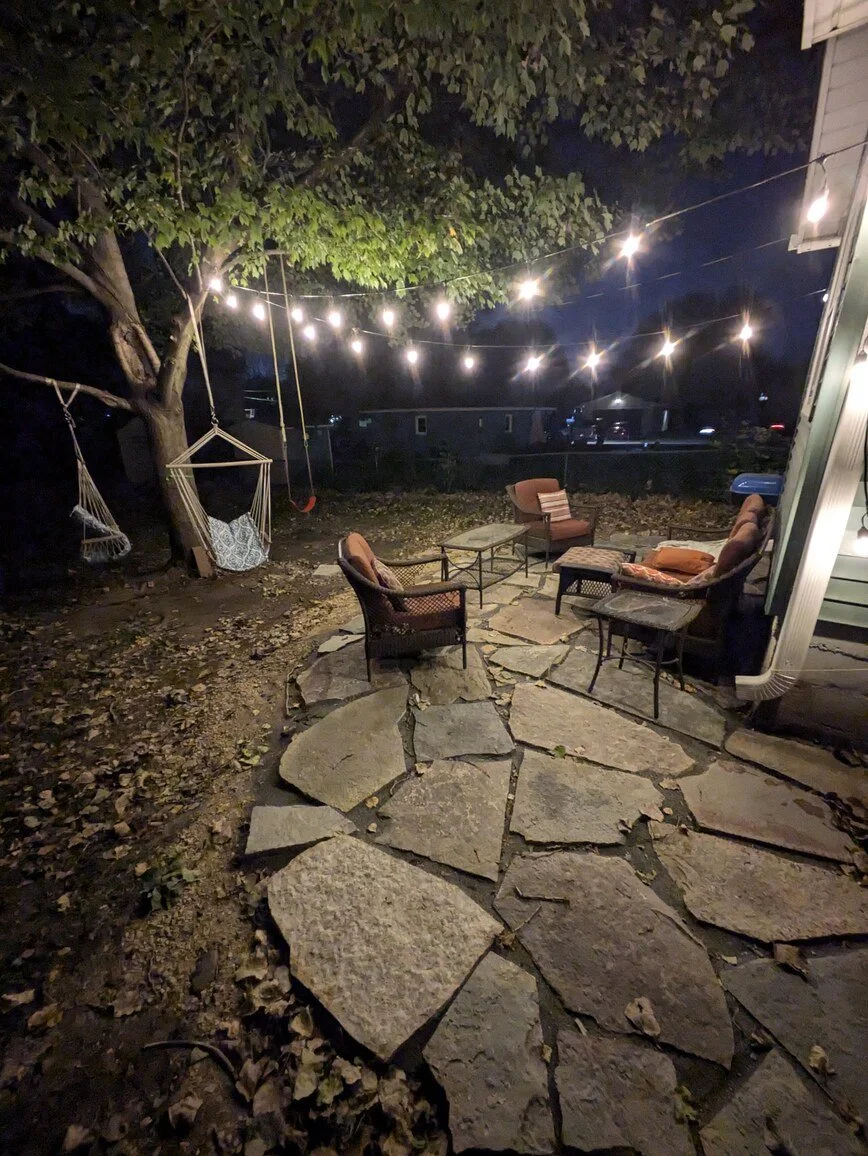
Patios and walkways in natural stone
Flagstone and natural stone. On sand, the base carries everything, and it is where the budget earns its keep.
Chimney repair and rebuild
For a stack that has come apart in its body. Neither of this city's two building waves is old enough for that to be common, and the spalled face count here usually stops short of the seven to ten our rebuild page sets as the line.
The Ten Houses That Did Not Work
The founding association meant to build 500 homes in the first year. It built 84 in three years, and the reason the first ten are worth knowing about is that they were a failed masonry experiment in public.
The lesson in that is the one this whole trade turns on. A wall assembly that works in Texas is not a wall assembly that works here, and the difference is not the wall. It is what happens at the bottom of it when the ground freezes and lifts, every winter, for seventy years.
What is under all of it is sand. The state atlas maps the ground here as glaciolacustrine sand of the New Brighton Formation, laid down in a glacial lake and not washed out by a river, and its own erosion attribute for it is kettled, meaning collapse hollows are mapped in it. The county's hydrogeology volume says a water table within ten feet of the surface is common across Anoka County, and it places Circle Pines in the lake-and-wetland belt, away from the uplands where the water sits deeper. Bedrock is about 201 feet down, and there is no outcrop anywhere near the city.

What It Costs
No travel charge, and no minimum job size.
Chimney repair on a single-story house begins at $3,500 and a recast crown at $5,500, with sealing a sound one costing well under that. Tuckpointing a small area begins at $2,800 and minor brick replacement at $1,500. Steps run $7,500 to $11,500.
Wall tie work and anything at ground level carry no figure. Until a section of veneer is opened, nobody knows how many fixings have gone, and until a footing is dug, nobody knows what it is bearing on. Both are quoted at the visit, and the visit is free.
Every one of those figures depends on square footage and on what we find when we look. They are rough guides to help you decide whether to call, not quotes. The exact number comes after the visit, and the visit is free.

What Customers Say
Nobody has left us a review that mentions Circle Pines by name. What appears below is the live Google feed, not a testimonial we picked out, so it shows whatever is genuinely on it.
Google review, September 2025Tell us what is going on with your masonry
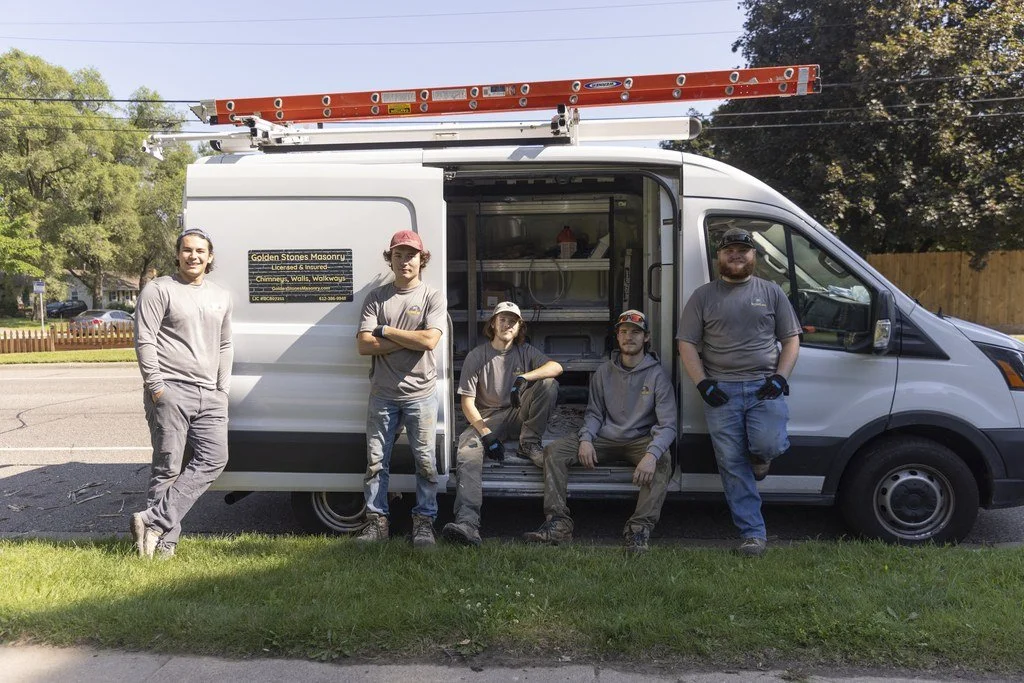
Tell us what you are seeing and attach photos if you have them. Sam comes out himself, and you get the options priced in writing. No charge either way, and no service call fee.
Common Questions In Circle Pines
Effectively, yes, and it is a fact about the city more than about the housing. This was township farmland until 1946 and a village from 1950, so almost nothing here had the chance to get old. The Census finds no units built before 1940 and nine from the whole of the 1940s. Every other city we work in has at least some pre-war stock, and most have a good deal.
What is holding the brick on? The metal fixings buried in the joints corrode, expand, and let the face drift away from the frame behind it, and seventy years is ample time. Stand at the corner and sight along the front wall. A bulge you can see from there is worth a visit.
Very. The cap on the chimney is first, the steel over the garage door second, and anything sitting at grade third. The wall of the house comes a long way after all three.
Not for the house, which was founded and inspected for it. Sand drains beautifully, which is a genuine advantage. What it does do is move under load when whatever is spreading that load was never sized for the job, and that is why steps and patios go before anything else here.
Only if something of yours is sitting on it. Twelve peat bodies are mapped in and around this city, and peat remains soft and continues to compress. Your house is on designed footings. A garden wall may well not be, and that is worth finding out before rebuilding one in the same place.
Interior work does, all of it, and so does fireplace work. Exterior mortar needs weather to cure in, so that part is seasonal, and we will tell you which side your job falls on before anything goes in the diary.
Get A Free Estimate In Circle Pines
Send a photograph of what you have noticed and one from further back so we can see where it sits on the building. That is usually enough for a straight answer on the phone.
Tell us the decade the house went up. Circle Pines put up 566 houses in the 1950s and 554 in the 1980s, so that one number lands you in one of two groups that need almost nothing in common.
(612) 509-0718 · No travel charge, no minimum job size · In-person estimate at no charge