


Masonry Contractor in Minneapolis
10 Years
Workmanship warranty, in writing

Minneapolis has 89,537 homes built before 1940. That is 42.8 percent of the city's housing, and it is more pre-war housing than all the suburbs we work in put together, several times over.
It is also why so much of our week happens on this side of the river. A house of that age is stone below grade and soft brick above it, laid in mortar that was never meant to outlast either of them.
What Minneapolis Is Built On
Bedrock sits unusually close to the surface in the older parts of this city. Under downtown, Nicollet Island, and Northeast Minneapolis, it is between zero and fifty feet down, and along a ridge at 40th Avenue North it is under less than fifteen feet of sediment. South Minneapolis is deeper than that.
That proximity is the reason the city has the foundations it does. Platteville limestone was quarried inside Minneapolis from 1864, often more or less at the building site. It was cheap and to hand, so it went into foundation walls across the city. After the 1880s, it stopped being used for anything anyone would look at, once the railroads brought in better stone. Below grade, nobody cared how it looked, so it kept going in.
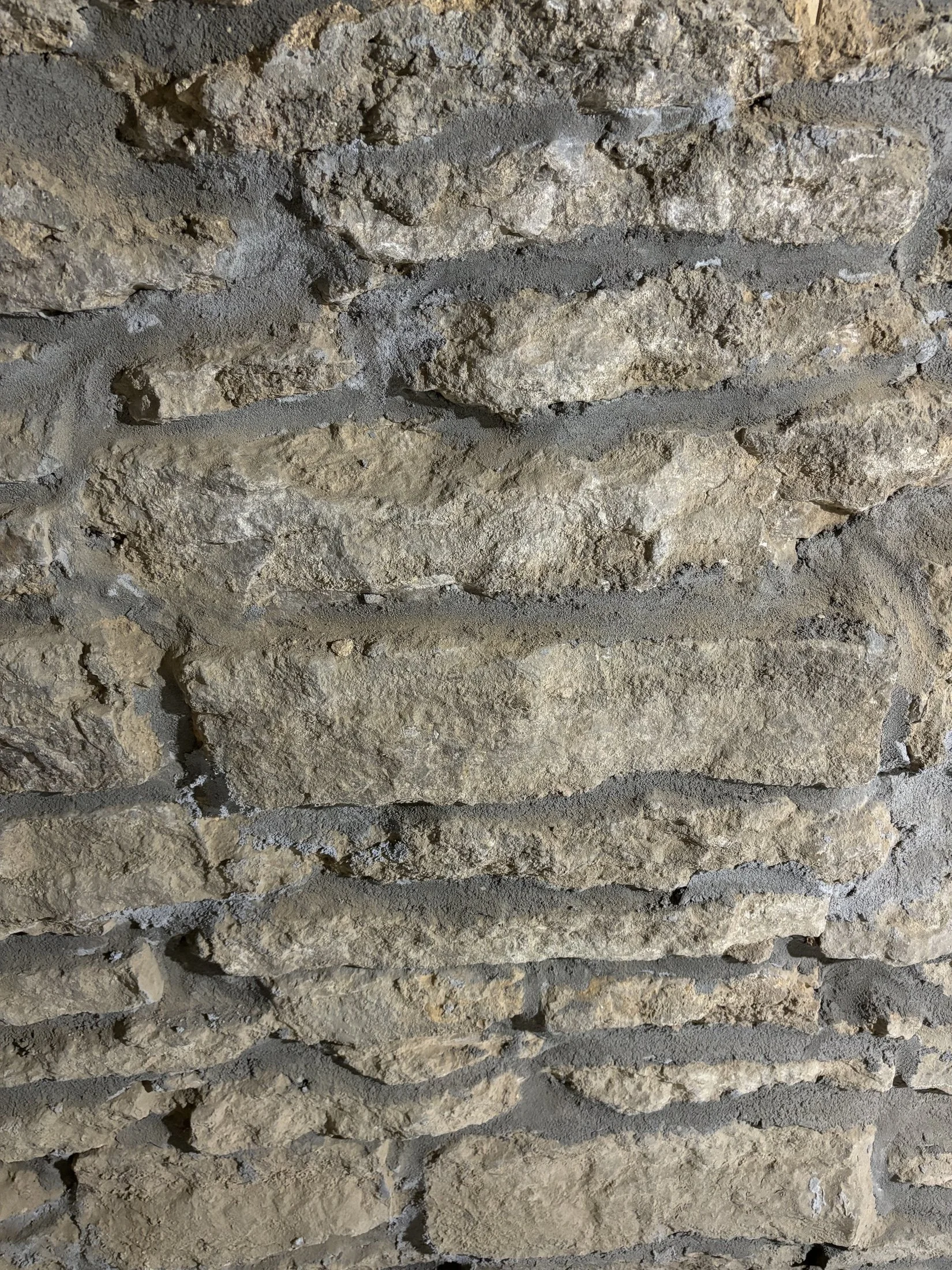
So the foundation under a pre-1890 Minneapolis house is frequently local limestone, and the mortar holding it together is lime-based and softer than the stone by design. On the foundations we open up here, the stone is almost always sound. It is the mortar that has gone, which is the whole reason this is repair work.
The city also has documented sandstone caves and sinkholes, which is a reason not to assume anything about what lies beneath a wall here until someone has looked.

What Minneapolis Homeowners Call Us About
Sandy mortar in a stone basement
The single most common call from this city. On a house from the 1890s or 1900s, you can often pull the mortar out of a foundation joint with your fingers. That is normal for its age, and it is no emergency. What decides the job is whether stones have started to move as a result.
Brick faces flaking off a 1920s wall
Soft brick from that period spalls when water gets behind the fired face and freezes. Minneapolis has a great deal of it, and the failure we get called back to correct is somebody repointing around brick whose faces had already gone.
A chimney on a house that predates the car
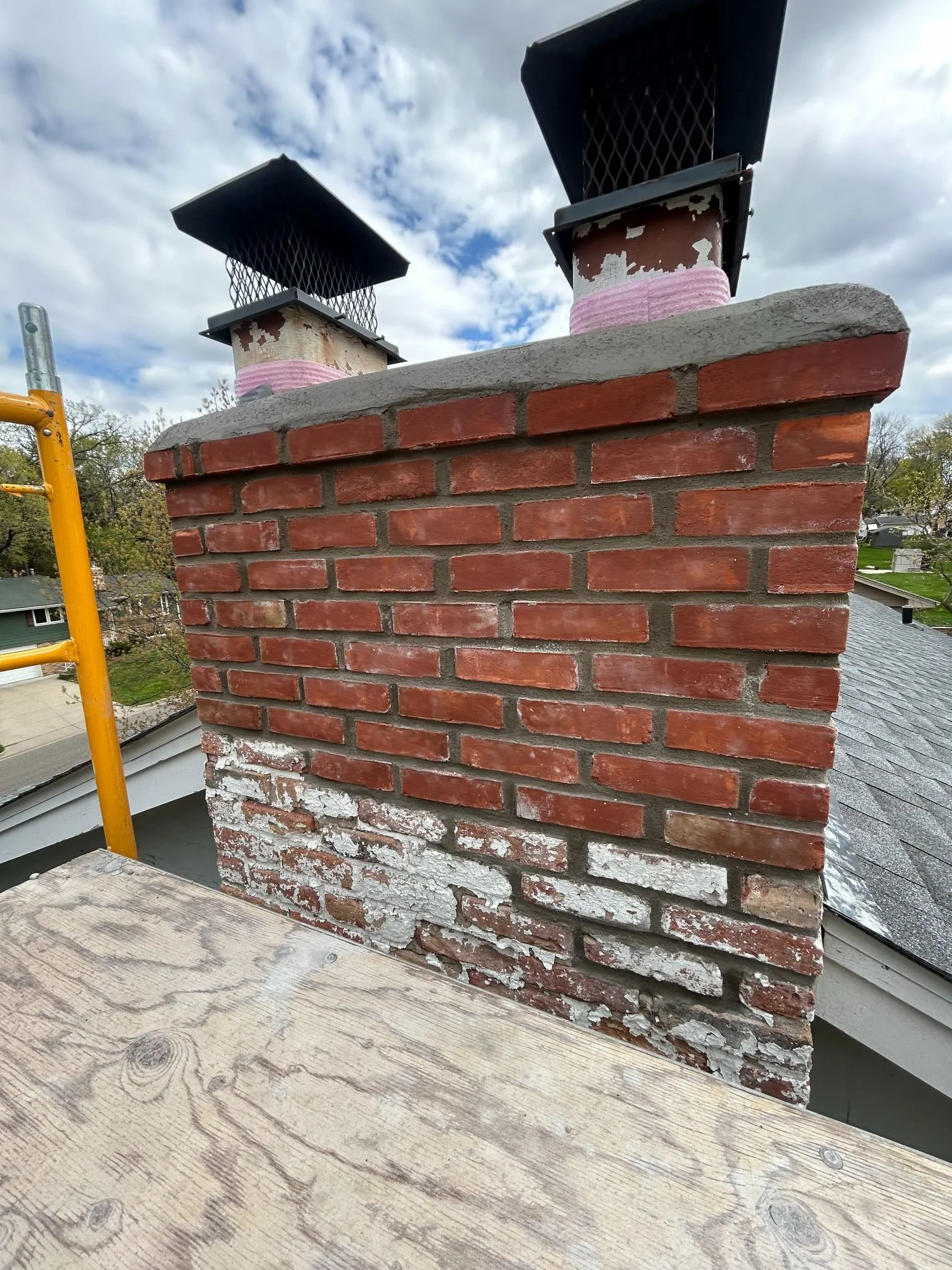
Stacks on pre-1940 housing here have generally had the joints looked at once and the crown never. They are also soft-brick stacks, which changes how hard you can grind and what you bed the new work in.
Stone steps that have gone crooked
Very common on the older streets, where the original stone steps are still in place and whatever they were set on has moved thirty times.
Water in a basement that turns out to be mortar, not drainage
Enough of this city is on old stone that the drainage industry has a large market here. Sometimes drainage genuinely is the answer. Often what is being sold as a water problem is a mortar problem.
What We Do in Minneapolis
These are written for this city's housing. They are not the descriptions on our service pages, because a Minneapolis job and a Lakeville job with the same name are not the same work.
Interior basement and foundation repointing
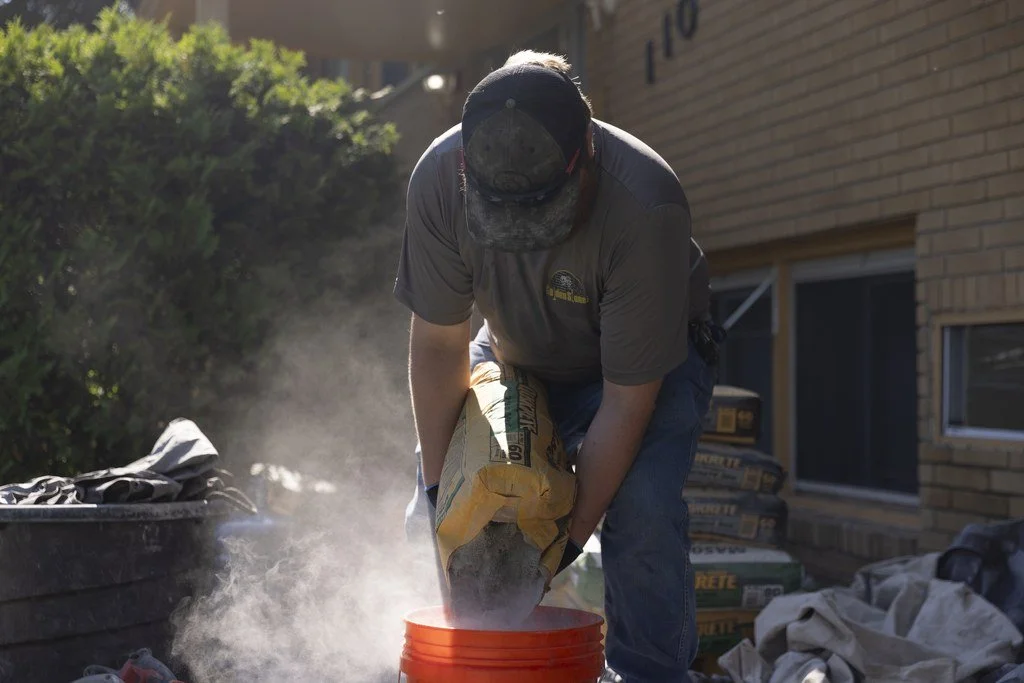
The core of what we do in Minneapolis. Grinding out failed lime mortar from inside a limestone or fieldstone foundation and packing new mortar in, in a mix deliberately kept softer than the stone it sits against. On a pre-1900 wall, that choice matters more than almost anything else we decide, because the stone here is genuinely soft and a hard mix will damage what it was supposed to protect.
Stone foundation section rebuild
Where stones have dropped or rotated, as opposed to joints that have simply washed back. The existing limestone is reused because, on a Minneapolis foundation, it is a better material than anything we could buy, and it already fits where it sits.
Tuckpointing soft brick
Above grade, on 1900s and 1920s brick, ground to depth and repointed in a mix chosen for brick that is softer than most people assume. Minneapolis brick of that era does not tolerate being treated like modern brick, and the failures we get called to fix are usually a hard mortar in an old wall.
Brick replacement where faces have spalled
No patching and no coating. On soft brick, the fired outer face was the waterproof part, and once it has gone, the body of the brick takes on water freely. Matching century-old Minneapolis brick is a sourcing job, not an ordering one.
Chimney repair and rebuild on old stacks
The repair-versus-rebuild rule we publish applies here the same as anywhere, but the count runs against you faster on a soft-brick stack, because more of the faces have taken a century of weather.
Stone step repair and rebuild
Original stone steps lifted, the bed underneath corrected, and the same stone put back. On a Minneapolis street, the treads are usually worth more than the labor to save them.
Honest triage between mortar and water
Free, at the visit. We install no drain tile, no sump pumps, and no exterior membrane, which is precisely why our answer on whether you need them is worth having.
Salt, and Why Minneapolis Notices It
The city uses three different chloride deicers, and it requires its right-of-way sidewalk contractors to be Smart Salting certified. That tells you how seriously the chloride problem is taken here.
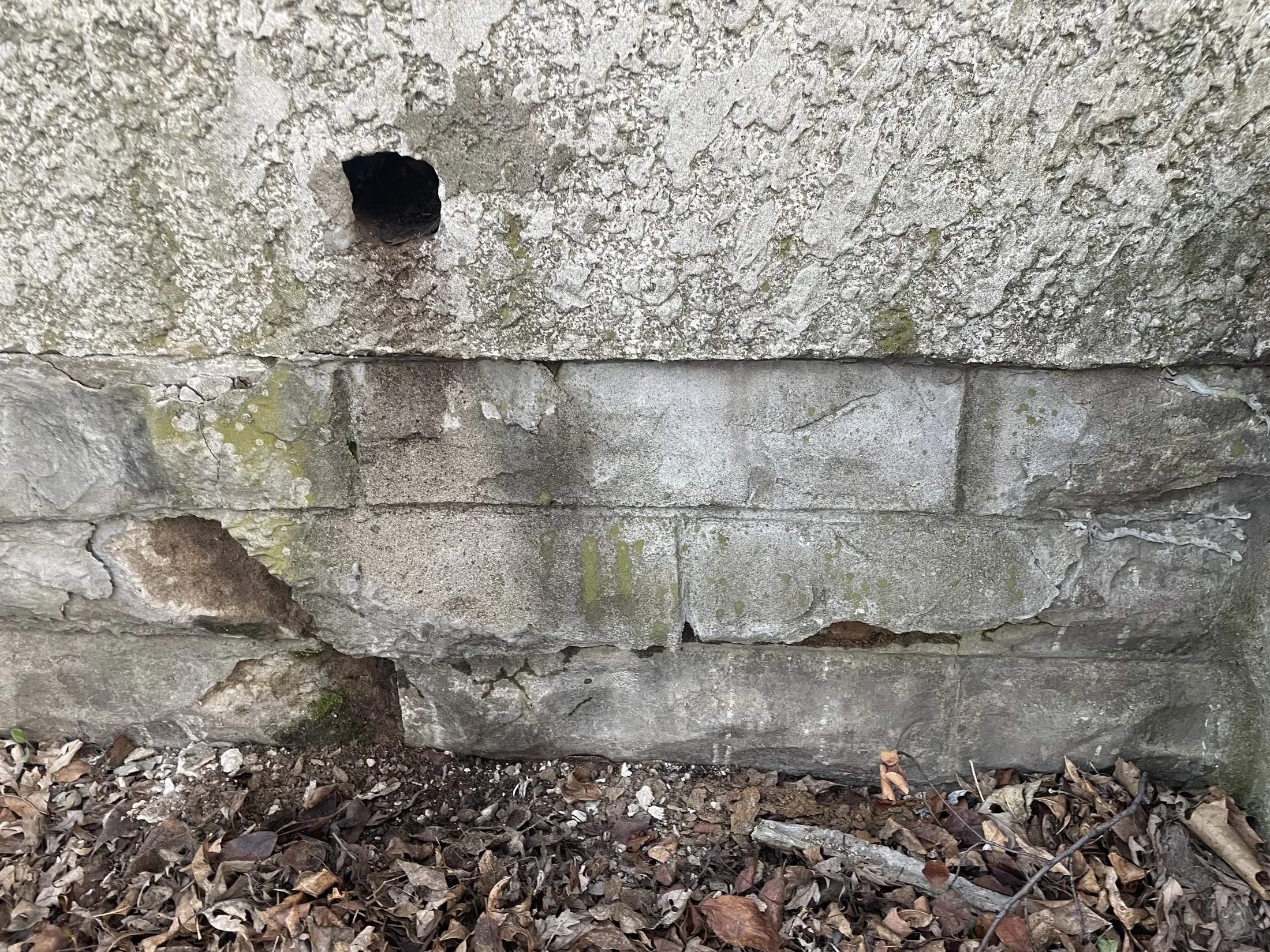
For a masonry company, it matters at ankle height. Salt-laden meltwater soaks into the bottom courses of brick beside a salted path or driveway, and the freeze cycle then works on saturated masonry. On a Minneapolis property with a century-old brick wall running down to a salted sidewalk, the bottom two or three courses are usually a decade ahead of the rest of the wall in terms of damage.
It is worth repairing early because, left alone, it works its way into the foundation and gives water and mice a route in.

What It Costs
The ranges we publish apply here without a Minneapolis surcharge. No travel charge, and no minimum job size.
Interior basement repointing starts at around $2,200 for a wall section and around $6,500 for the entire perimeter. Rebuilding a failed stone foundation section starts around $3,200. Tuckpointing above grade is around $2,800 for a small area and $6,000 to $8,000 for a whole house wall. Chimney repair runs from about $3,500 on a single-story house.
Before you decide
Each of those is a typical starting point, not a quote. The estimate is free; it happens in person, and Sam does it.
Every one of those figures depends on square footage and on what we find when we look. They are rough guides to help you decide whether to call, not quotes. The exact number comes after the visit, and the visit is free.

Real job: stone stairs in Minneapolis
A homeowner needed his stone stairs fixed. What he singled out was that Sam came out and explained what was actually wrong with them before quoting anything, that the quote arrived when it was promised, and that the work was done well and on time. On stone steps, the explanation matters, because whether the structure below has failed is the whole difference between a reset and a rebuild.
Google review, September 2025Tell us what is going on with your masonry
Tell us what you are seeing and attach photos if you have them. Sam comes out himself, and you get the options priced in writing. No charge either way, and no service call fee.

Common Questions in Minneapolis
Because the rock was here. Platteville limestone was quarried inside the city from 1864, often close to where it was used, and it was the cheapest thing available for a foundation. Concrete block came later. If your house predates about 1890, there is a good chance you are standing on local stone.
For a foundation of that age, yes. It is the usual condition rather than a fault. Lime-based mortar was softer than the stone deliberately and was never expected to outlast it. What matters is whether the stones have moved, which determines whether repointing or rebuilding is needed.
Almost certainly not, but it is soft enough that the mortar specification matters. Minneapolis brick from the 1900s and 1920s will be damaged by a mix that is too hard, which is something we are regularly called back to fix on other people's work.
Yes, and from somebody who does not sell drainage. We do not, so we gain nothing whichever way the answer goes. Sometimes drainage genuinely is right. Often what is being described is a mortar problem.
Yes, and in this city that matters more than most, because so much of what we do here is basement and foundation repointing and none of it is governed by the weather. Exterior work is, since fresh mortar will not cure in a hard freeze.
No. There are no travel charges anywhere in our service area, no minimum job size, and Minneapolis is one of the places we work most often.
Get a Free Estimate in Minneapolis
Photographs help more than a description. For a basement, one close enough to see a joint and one showing the whole wall. For brick, one close and one square on from a few steps back.
Sam comes out himself, tells you whether stones have moved, and puts the options in writing where more than one is honest.