


Masonry Contractor in Stillwater
10 Years
Workmanship warranty, in writing

Stillwater has the second-largest share of pre-1940 housing in our service area after Minneapolis: 24.8 percent of its housing was built before 1940, in a city where the median house dates to 1980. Like Bloomington, it was built in two widely separated waves, and unlike Bloomington, the older wave is the interesting one.
It is also one of the very few cities we work in with a masonry history of its own instead of one borrowed from the metro, and one of the very few where the quarry, the brickyard, and the reason both existed are still legible in the streets.
Old Houses And Designated Buildings Are Two Different Jobs
Most of what we do in Stillwater is ordinary masonry on old buildings: a foundation from the 1880s that needs repointing, a limestone retaining wall that has moved, brick that needs matching. That is routine work here, and it is what this page is about.
There is a separate category here that we meet in very few other places. The city has a designated cultural landscape district with an attached preservation framework, and on a designated property, we are the wrong people to call. Sam refers that work to a mason who specializes in it, consistently rather than when it suits him.
The distinction is not about age. A hundred-and-forty-year-old foundation is ordinary work. A protected facade with an attached review process is a different discipline with distinct obligations, and doing it badly is worse than not doing it.
If you are not sure which one you have, ask us, and we will tell you honestly, even where the answer costs us the job.

What Comes Up In Stillwater
A limestone retaining wall that has moved
The Original Town is terraced, and much of that terracing is in nineteenth-century limestone. Walls holding ground back on a slope, through Minnesota winters, for well over a century.
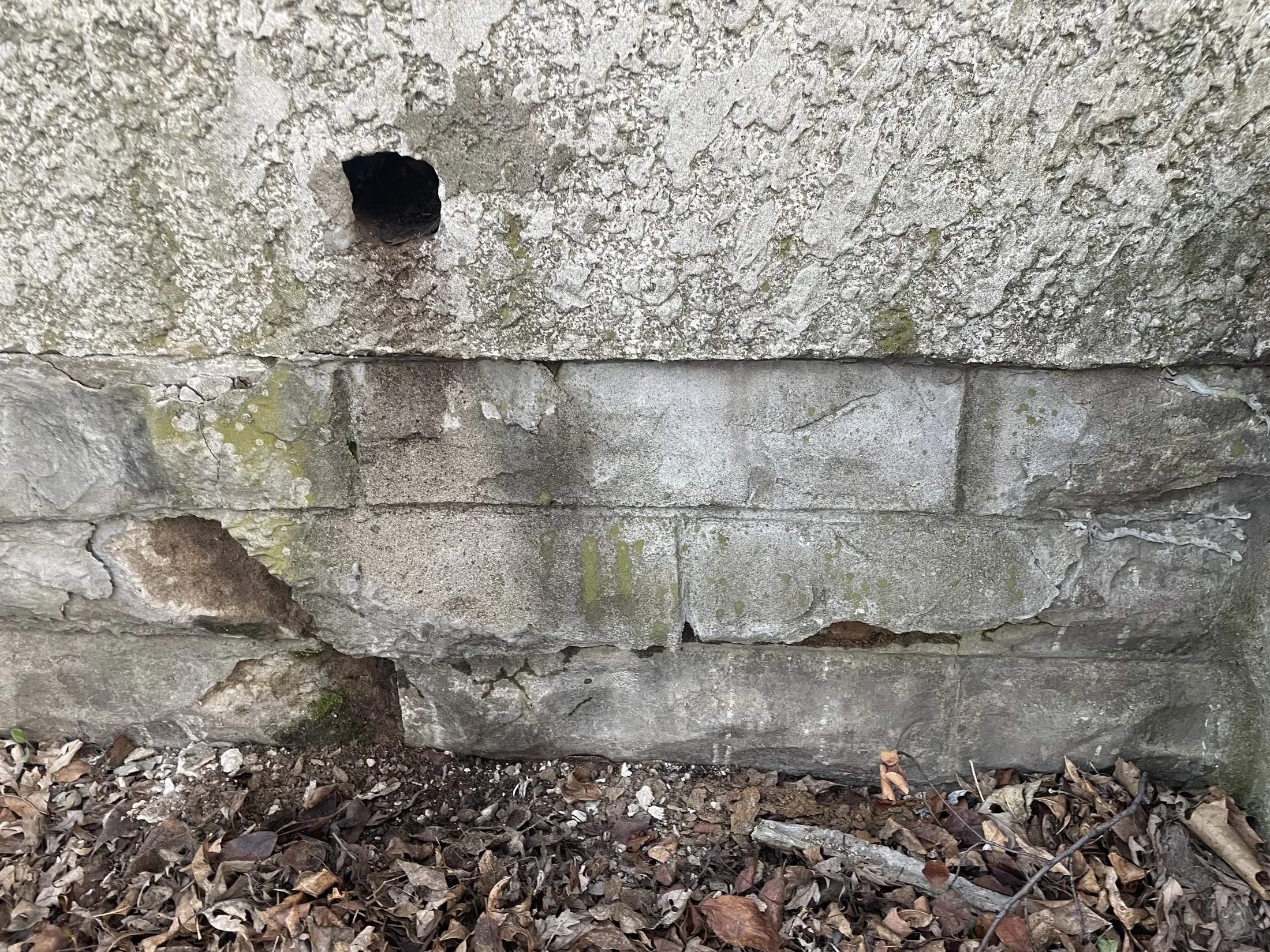
Mortar failing in a stone foundation on the hill
The same underlying condition as Minneapolis, lime mortar going long before the stone does, on stone with a different character and a steeper site.
Brick that needs matching on a period house
The local yellow brick is the complication. It is not something a supplier has on a shelf, and getting close is a sourcing exercise.
Steps and walks set in the original stone
Underpinned by the same quarried limestone, and moving for the same reason everything else does here, which is a hundred and sixty winters.
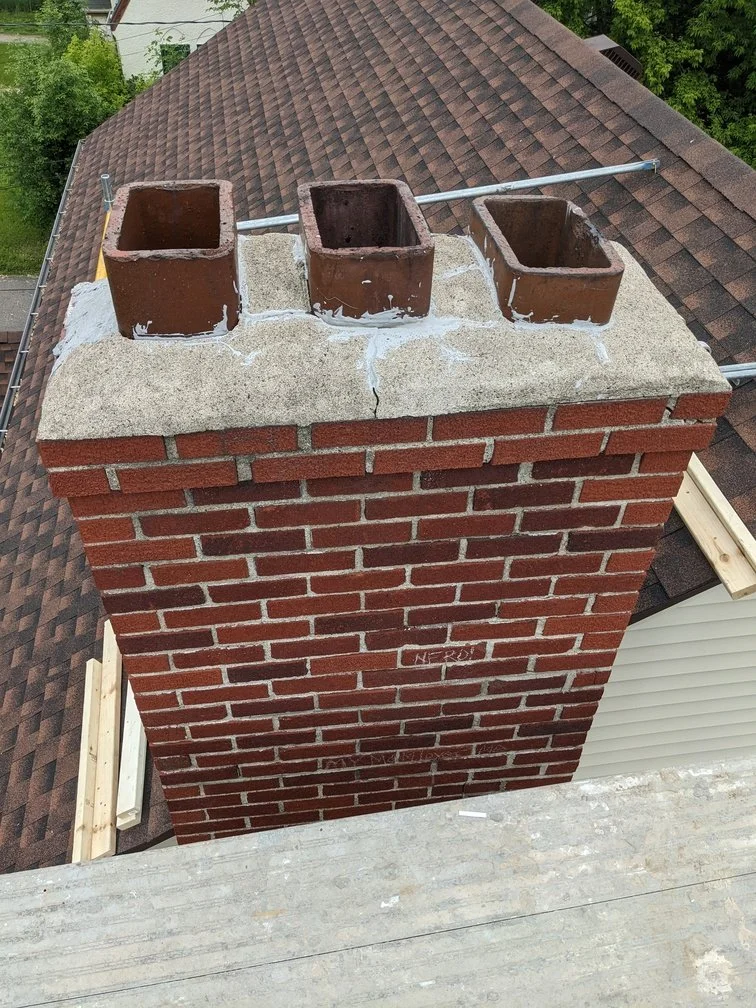
A chimney on a house that predates Minnesota statehood, or very nearly
Soft brick, lime mortar, and a stack that has usually had the joints attended to at some point, but never the crown.
What We Do In Stillwater
Written for a nineteenth-century river town with a modern half. If your Stillwater house is from 1995, the second half of this list is the relevant one.
Limestone retaining wall repair and rebuild
Taking a failed section apart and rebuilding it using the stone that is already there. On an Original Town wall, the existing limestone is irreplaceable in any practical sense, so it goes back. We do not install modular block systems, and on these streets you would not want one anyway.
Stone foundation repointing and section rebuild
Repointing all the damaged joints, rebuilding loose sections individually, leaving the rest. On the hill, the added complication is access and the slope.
Brick repair and matching on period houses
Where a local yellow brick has to be matched, sourcing is required, and we will show you the match before it is laid. On a wall this old, nobody should promise you an invisible repair, and we will not.
Tuckpointing soft period brick
In a mix kept softer than the brick, which on nineteenth-century work is softer than most people expect. In nineteenth-century masonry, a mix that is too strong causes damage rather than preventing it.
Chimney repair and rebuild
The published repair-versus-rebuild rule applies. On a stack this old, more of the faces have taken weather, so the count runs against you faster.
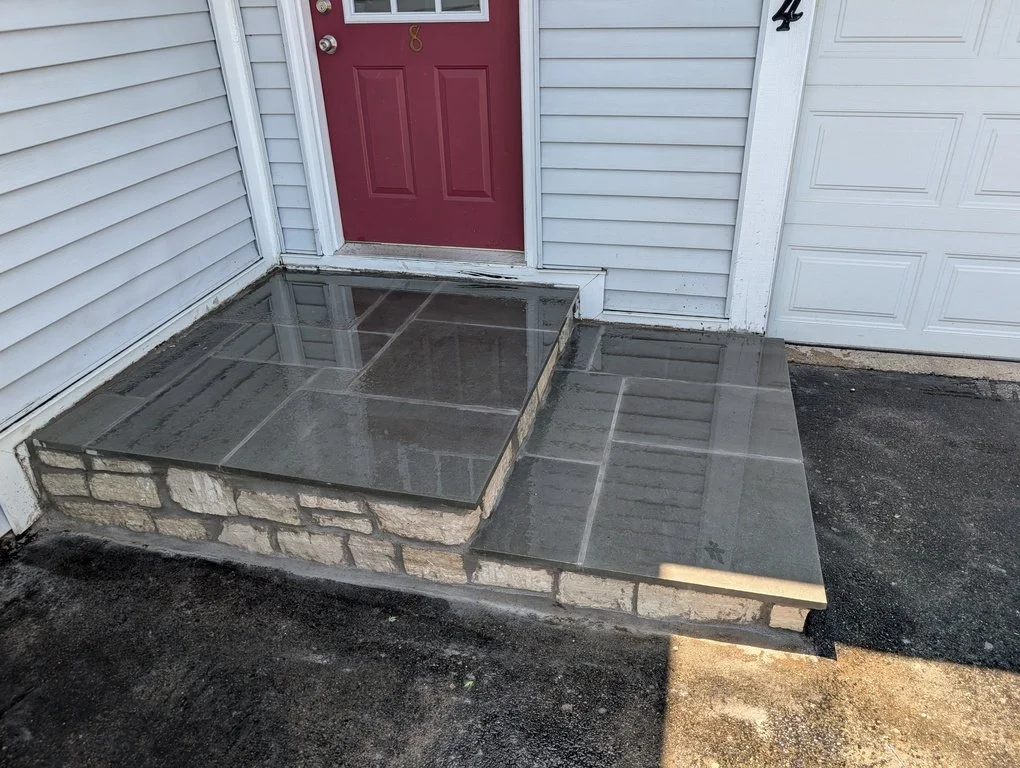
Stone steps and walks
Reset and repointed where what is underneath still holds. Where it does not, they come out and go back on footings dug to depth.
Masonry on the modern half of the city
Nearly two-thirds of Stillwater's housing is post-1970. On those properties, the work is chimney crowns, stoops, veneer panels and retaining walls, and it is priced accordingly.
Stillwater Is Built From Stillwater
Three things make this city genuinely different from anywhere else on our list.
It was quarried on the hill above the town: A quarry opened on the South Hill bluff in the late 1850s, and the city's own cultural landscape survey records that thick blocks of limestone underpin many houses, walks, and retaining walls within the Original Town. When you look at a retaining wall on those streets, you are usually looking at stone that came from a few hundred yards away.
And the brick is local, too: The first brickyard opened in 1859, producing yellow brick from local clay. After the fires of the 1860s, masonry construction was required from 1867, which is why so much of the old commercial core is brick and stone.
For a mason, this matters practically. Matching a local yellow brick is a different problem from matching a common red brick, and a limestone wall built from a bluff quarry up the hill behaves like the rock it came from.

What It Costs
There is no travel charge to Stillwater and no minimum job size.
A wall section of interior repointing starts around $2,200, a whole perimeter around $6,500, and a failed stone section from about $3,200. Above grade, a small area of tuckpointing is around $2,800. Chimneys start at about $3,500 on a single-story.
Retaining walls are quoted after the visit because, on a terraced site with nineteenth-century stone, the variables are too wide for a range to mean anything.
Those are starting points and not quotes. The estimate is free and in person.
Every one of those figures depends on square footage and on what we find when we look. They are rough guides to help you decide whether to call, not quotes. The exact number comes after the visit, and the visit is free.

What Customers Say
There is no Stillwater review to quote. Writing a plausible-sounding local job would be easy, and it would also be a lie, so this space carries the live Google feed instead.
Google review, September 2025Tell us what is going on with your masonry
Tell us what you are seeing and attach photos if you have them. Sam comes out himself, and you get the options priced in writing. No charge either way, and no service call fee.
Common Questions In Stillwater
No, and it is one of the few genuinely local facts about masonry here. The Platteville limestone that went into Minneapolis foundations is absent under Stillwater. The stone in the Original Town came from a bluff quarry above the town, opened in the late 1850s.
Close, with time to source it. Stillwater's first brickyard opened in 1859, making yellow brick from local clay, and that is not a product anybody stocks now. It is a sourcing exercise, so give us notice.
We work on old houses. That is a different thing. Designated historic work with a preservation review attached goes to a mason who specializes in it, and we will tell you which category yours falls into before anyone spends money.
Usually, and it is nearly always the better answer and the cheaper one too. Nineteenth-century quarried limestone is not something you can go and buy, so the stone already in your wall is the most valuable part of what you have.
The fires. Stillwater burned in the 1860s and masonry construction was required from 1867 onward, which is why the old commercial core looks the way it does and why there is so much surviving nineteenth-century masonry here compared with towns of a similar age.
Very likely. The quarry on the South Hill bluff opened in the late 1850s and supplied the town, so a foundation, a retaining wall, and a commercial facade in the Original Town are frequently the same rock from the same hole in the ground.
Yes, with no travel charge and no minimum job size. For a very small job, we may ask whether it can be scheduled alongside something else in the same week. That is us being straight about how a small crew works.
The salt on public roads does not damage your house. What is on your own driveway, path, and steps is, and it works at ground level. If you have masonry within a couple of feet of a salted surface, that is where to look first.
Get A Free Estimate In Stillwater
Photographs of the wall, and one taken from far enough back to show the slope it sits on, tell us a great deal about a Stillwater job before we arrive.
If the property is designated, say so when you call. It will change our answer, and it may change who you should be calling.
Call (612) 509-0718 · Free estimate, in person · No travel charge, no minimum job size