

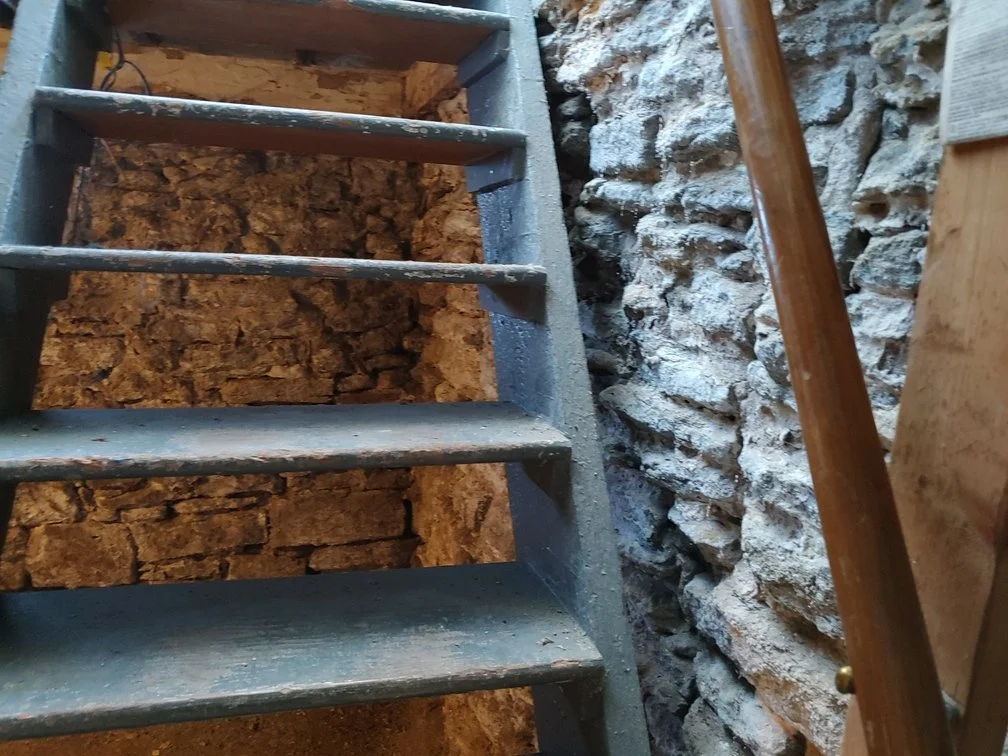
Stone and Block Foundation Repair in St. Paul
10 Years
Workmanship warranty, in writing

The vast majority of older Twin Cities homes sit on stone, and on almost every one of them the mortar has given up long before the stone has. That single fact is what makes most foundation work here repairable rather than catastrophic.
This page is about the structure: rebuilding sections that have failed, resetting stones that have moved, and correctly reading a crack in a block wall. If what you actually have is water coming through the wall, our basement page is the one you want.

Signs Your Stone or Block Foundation Needs Repair
You can pull mortar out of the joints with your hand
On a hundred-year-old stone foundation, this is normal and not an emergency. What matters is how deep it goes and whether the stones have started to move as a result.
A stone has shifted, dropped, or is loose to the touch
One stone moving is a repair. Several stones moving in the same area means the bedding has failed there, and that is the point at which repointing around them is no longer enough.
There is a stair-step crack running through a block wall
Cracking that follows the joints in a staircase pattern is the classic sign of seasonal ground movement in clay soil. It is worth looking at, and it is very often not urgent, which is a distinction most people are not given.
A section of the wall is bulging inward
Different from a crack and more serious. This is lateral pressure, and it needs someone to look at it properly before anybody quotes anything.
A home inspection flagged the foundation before a sale
Common, and usually vaguer than it needs to be. We will tell you in writing what is actually structural and what is a maintenance item, which is generally what the transaction needs.
Somebody has quoted you piers or underpinning
It might be right. It is also a quote we cannot compete with because we do not do it, so we have nothing to gain by telling you whether you need it.
What We Repair

Rebuilding failed stone sections
The failed area is taken down and rebuilt, reusing the existing stone wherever it is sound. On a hundred-year-old foundation, that stone is better material than anything we could buy, and it already fits the stones around it.
Loose stone resets
Individual stones that have shifted are removed, cleaned, and rebedded. Not the whole wall, just the ones that have moved.
Repointing stone and block foundations
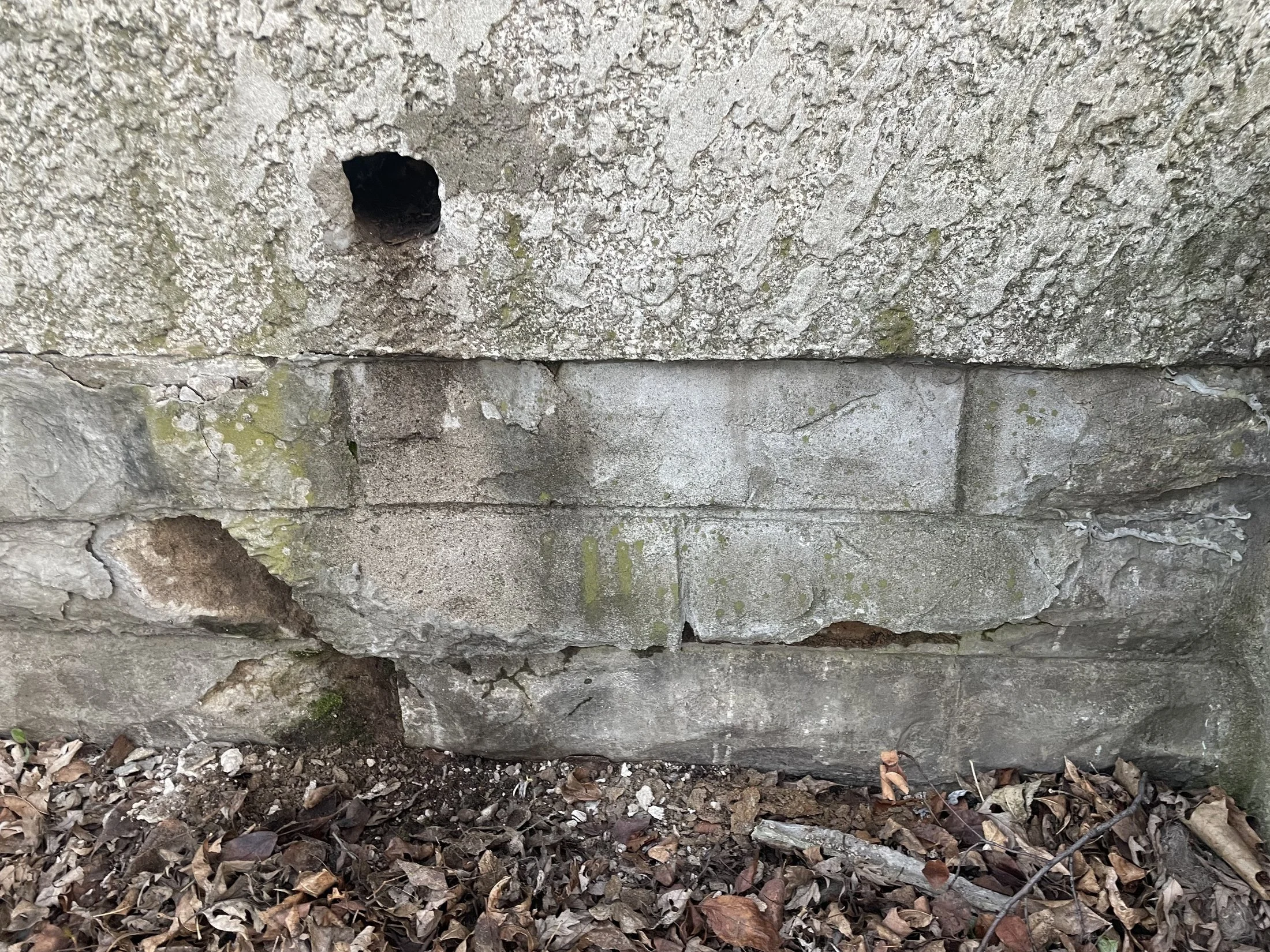
Grinding out failed mortar and replacing it, with the specification chosen for the stone in front of us. Mortar harder than the stone it beds does damage rather than preventing it, which matters more below grade than anywhere else on a house.
Block foundation step-crack repair, and the monitoring that follows
Repointed, then watched. What happens next depends on whether it moves, and we will tell you what to look for.
Parging
A cement coating over stone or block where it is genuinely appropriate. It provides a continuous surface and is useful in the right situation but a waste in the wrong one.
Foundation crack repair
In stone and block. Cut out and rebuilt through the affected area.
A written assessment for a sale or a purchase
Where an inspection report has flagged something vague, a written masonry opinion that separates structural from maintenance is usually what moves the transaction along.
What this job does not include
Piers, helical or push, and underpinning of any kind. If your foundation needs structural support rather than masonry repair, that is a different trade, and we will say so.
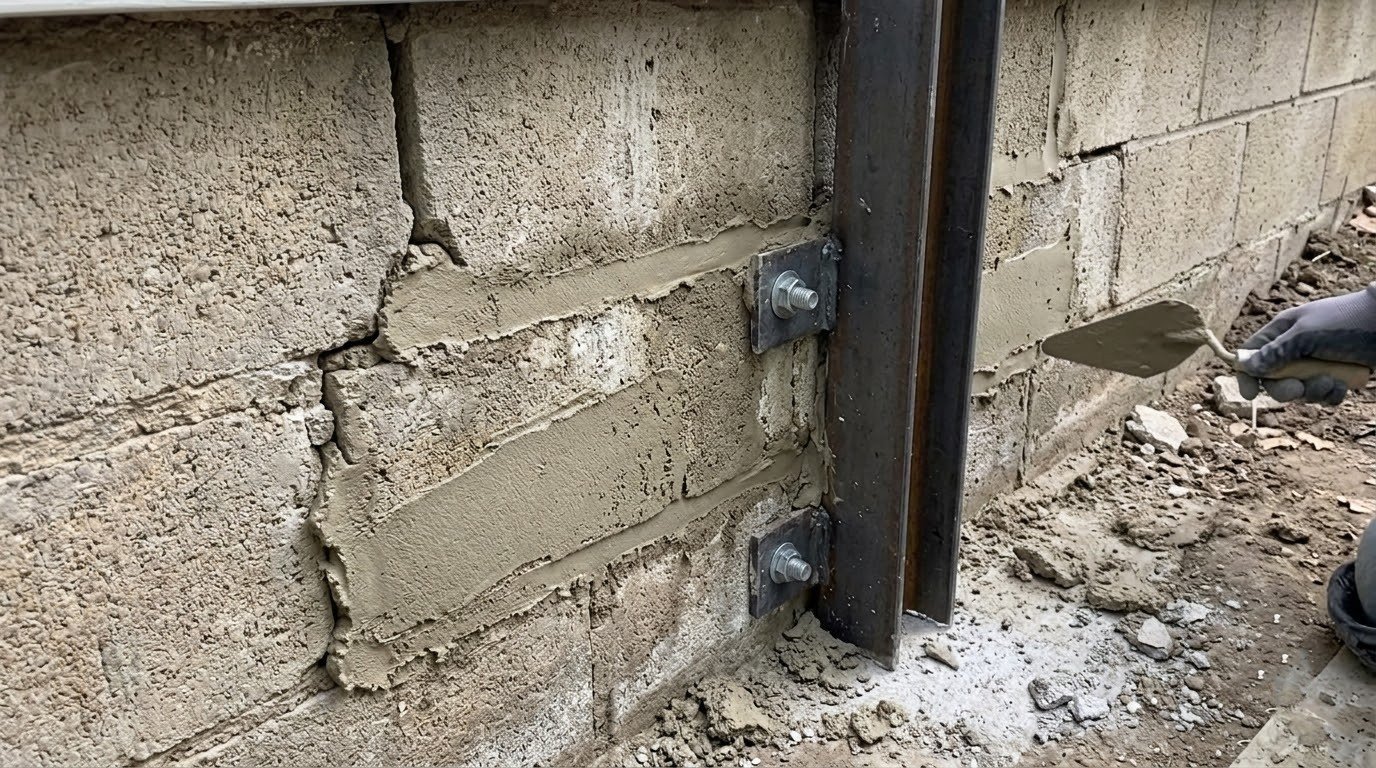
Steel beams, wall anchors and carbon fiber straps.
Epoxy and polyurethane crack injection.
Interior drain tile, French drains and sump pumps.
Exterior excavated waterproofing with a membrane.
Structural engineering. Where a wall needs a designer rather than a mason, we will tell you before anybody spends money.

What It Costs
These are published because a homeowner comparing foundation quotes is usually comparing numbers without knowing whether they describe the same work.
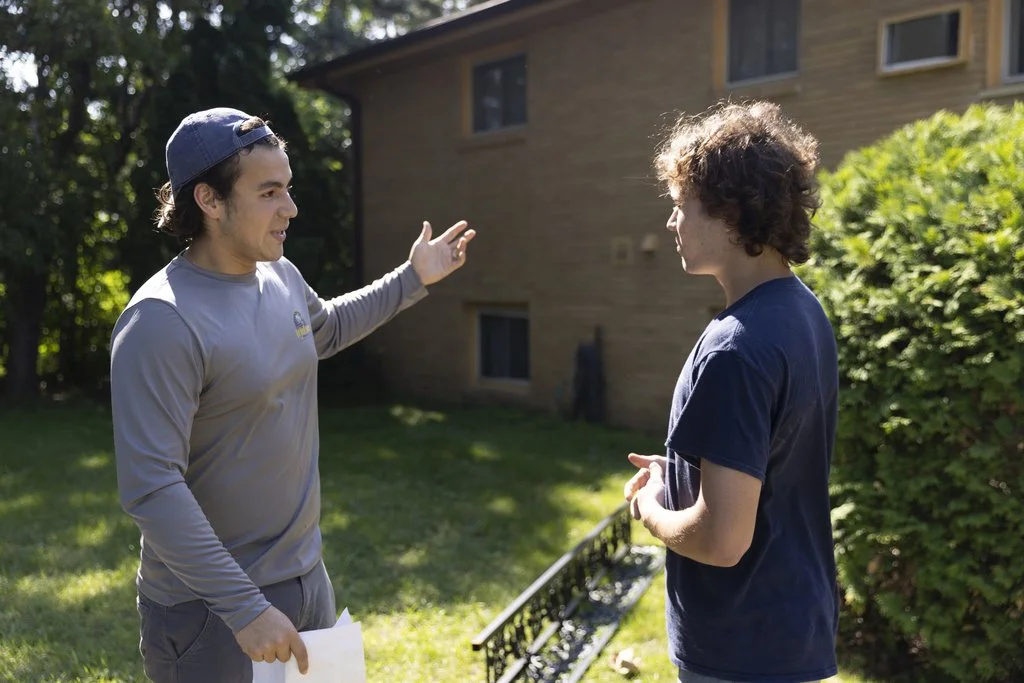
They are starting points for typical residential stone and block work, not quotes. The assessment is free, and Sam does it in person.
What moves the price
How much of the wall has actually moved: Repointing and rebuilding are different orders of cost, and the boundary between them is the rule published further down this page, under Rebuild The Section, Repoint The Rest.
Access: A basement you can carry material into is a different job from one reached through a bulkhead.
Whether the existing stone can be reused: It usually can, and it is the largest single saving available here.
Whether anything has to be supported while we work: Occasionally it does, and that changes the scope.
Interior repointing, priced by wall section and perimeter, along with hydraulic patching for active leaks, is on our basement page because that is a water problem and this is a structural one.
How much of the wall is hidden: Finished basements mean opening things up before anybody can price the masonry properly.
Every figure on this page depends on square footage and on what we find when we look. They are rough guides to help you decide whether to call, not quotes. The exact number comes after the visit, and the visit is free.

How The Work Runs

Why Us For Foundation Work
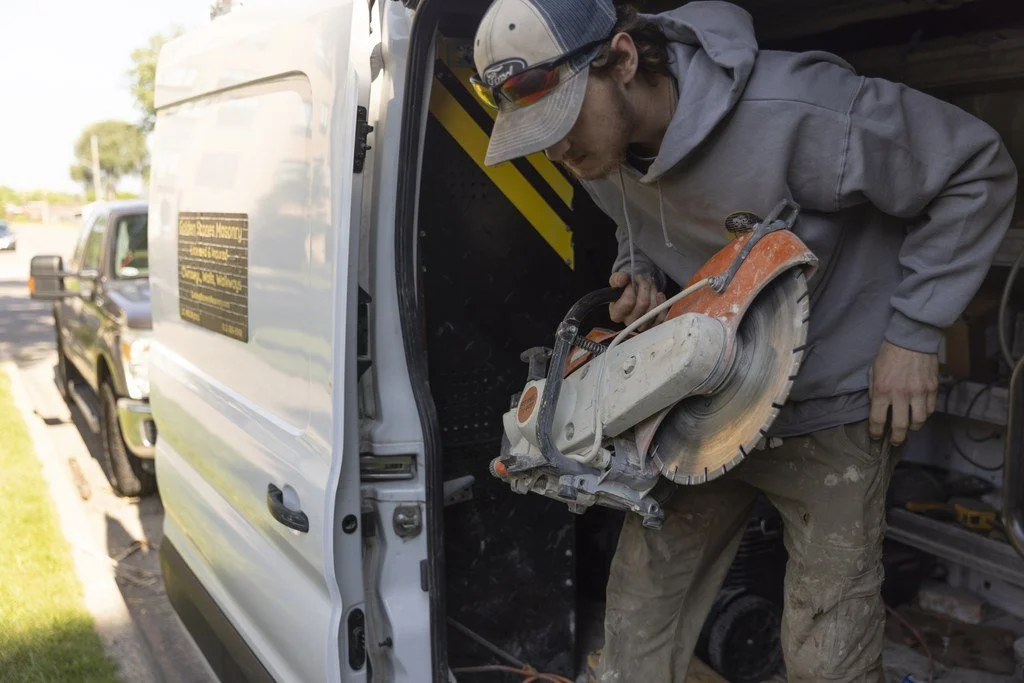
Tuckpoint the damaged joints, rebuild loose sections individually, leave the rest. That rule is set out in full in the section below, in Sam's words, so you can hold our recommendation against it and ask why. It is also the rule that most often makes our number smaller than the one you are comparing it with.
Platteville limestone, Mankato Kasota, fieldstone, and mixed-era rubble are what we work on constantly. A foundation from the 1890s is not a special case; it is Tuesday.
Ten years on the workmanship, in writing. It is not a materials warranty, and the terms are available at the assessment.

Rebuild The Section, Repoint The Rest
Sam's method on a stone foundation is three sentences long, and it is worth publishing in full because it is what determines your invoice.
Tuckpoint all the damaged mortar joints. Rebuild loose sections individually. Leave the rest.
Every word of that matters. All the damaged joints, because leaving three feet of failed mortar next to freshly repointed work simply moves the problem along. Individually, because a foundation almost never fails uniformly, and rebuilding a whole wall on the strength of one bad section is the single most expensive mistake available on this page. And leave the rest, because sound stone bedded in sound mortar does not need anything doing to it, however old it looks.
The judgment call is the point at which a section stops being repointable. The honest test is whether the stones are still carrying load in the position they were built in. Joints that have washed back but stones that have not moved is a repointing job, however dramatic it looks. Stones that have dropped, rotated, or come loose are a rebuild of that area, and no amount of mortar packed around a stone that has moved will hold it.
On block walls the rule is different again, and Sam states it plainly: always repair, meaning repoint, and then monitor. If repointing holds, that's the fix, and you are finished. If it opens again, the useful thing is not another repair; it is a measurement. Measure the total settling distance over a winter, then assess. That sequence costs almost nothing, and it is what separates a wall that is moving from a wall that moved once, years ago, and stopped.
We are not going to be the company that tells you to measure something for a season when we could have sold you a solution instead, and then pretend that is unusual. It is simply what the wall requires.
Common Questions
If a section has moved, yes, and it is the one item that should not wait for the remodel. Framing over a wall that is still moving buys you a second demolition later. Our page on basement wall repair before finishing covers the sequence.
Basic crack repair starts around $1,500. Rebuilding a failed stone section starts around $3,200. Full-perimeter work starts around $5,500. Those are typical residential starting points on stone and block, not quotes.
Usually not in the way people fear. On the foundations we open up, the stone is almost always sound, and the mortar has failed, which is what lime-based mortar was always going to do. What makes it serious is leaving it long enough for stones to start moving.
Rarely, and this is where most of the money gets wasted. The published rule is to rebuild the failed sections individually and repoint the rest. A quote for a whole perimeter should be able to explain, section by section, why.
It is worth looking at, and it is often not urgent. We repoint it and then monitor. If repointing holds, that was the fix. If it opens again, the next useful step is to measure how far it moves over a winter, not another repair.
No. If a foundation genuinely needs structural support rather than masonry repair, that is a different trade, and we will point you to it. It also means we have nothing to gain by telling you that you do not need it.
We do not fit them, so we have no position to sell you. What we can do is tell you whether what you have is a mortar problem, a movement problem, or both, which is the question those products are supposed to answer.
On stone foundations, the answer is usually better than matching: we reuse what is already there. Existing stone from a hundred-year-old wall is superior material, and it already fits with the surrounding stones.
Sometimes, and sometimes not, and that distinction is important enough to have its own page. Our basement page works through when a mortar repair fixes the water and when the problem is drainage, and we are the wrong company.
A cement coating over stone or block that gives a continuous surface. It is genuinely useful in some situations and cosmetic in others. We will tell you which yours is.
Interior foundation work is not affected by the freeze the way exterior masonry is; details are set out on our basement page. Anything requiring outside excavation waits for the season.
A section rebuild is commonly a few days. A full perimeter runs longer, and what stretches it is how much of the wall turns out to need rebuilding rather than repointing.
Get someone to specify in writing what is structural and what is maintenance. Inspection reports are deliberately cautious, and a vague line about foundation deterioration can hold up a sale over something that is a repointing job.
Two things, and neither costs money. Look at where water is arriving at the outside of the house: a downspout discharging against the foundation, or ground that has settled and now falls toward the wall, does more damage than almost anything else, and both are fixable with a spade and an afternoon. And if you have a crack you are worried about, mark each end of it with a pencil and date it. Six months of that is worth more than any opinion, including ours.
It covers workmanship, which is a narrower and more useful thing than it sounds. If a section we rebuilt fails, that is ours for ten years. Stone we did not touch, and materials failing on their own, are separate questions, and we would sooner be precise about that now than argue about it later.

Where We Do This Work
Foundation work means carrying material in and rubble out through somebody's house, so access shapes the job more than the drive does. We work across St. Paul, Minneapolis, and the metro listed on our service area page. About 45 miles past St. Paul, we ask for photographs before booking a visit.

What Customers Say
What appears below is our live Google feed rather than testimonials we picked out, so it shows whatever is genuinely on it.
Google review, September 2025Get A Free Estimate
Photographs of the joints, close-up and one stepped back far enough to show the whole wall, will tell us a great deal before we arrive. If a stone has moved, a shot along the wall from one corner shows it better than a straight-on picture does.
Bring any inspection report or competing quote to the visit. We are happy to be checked against the rule published above.
(612) 509-0718 · Free in-person assessment, no service call fee · MN BC807211