


Brick Repair and Restoration in St. Paul
10 Years
Workmanship warranty, in writing

Brick fails in a small number of predictable ways, and the repair for each one is different. A couple of cracked faces is an afternoon. A garage wall that has started to lean is not a repair at all. Most of the money homeowners waste on brick goes on treating the second problem as though it were the first.
We will tell you which one you have, in front of the wall, before you have paid us anything.

Signs Your Brick Needs Repair
The faces are flaking off, and there is a pile of grit at the bottom of the wall
That is spalling. The face of the brick has come away in layers. It is not cosmetic, because the fired outer face was the waterproof part, and once it is gone the soft inner body of the brick takes on water freely.
A garage or garden wall has started to lean
Free-standing brick has almost nothing holding it upright except its own weight and the mortar, so once it moves it keeps moving. Sam's phrase for these is mini brick walls on garages that lean or heave, and they are among the things he is called out to most often on brick in this metro.
There is a step-shaped crack running through the brickwork
Cracks that follow the joints in a staircase pattern are usually telling you something moved. What matters is not the crack itself so much as whether the movement has stopped.
The wall is bulging outward, usually on a house built between the 1940s and the 1960s
That is usually the wall ties, and it is the one failure mode on this page where there is no small version of the repair. There is a section on it below.
There is white powder on the brick
Efflorescence. Harmless in itself, and it brushes off. What it is telling you is that water is traveling through the masonry and carrying salt out with it, and that is worth understanding before you decide it is nothing.
The brick just above the windows or the garage door is cracked and lifting
Look for the steel angle underneath it. A rusting lintel expands as it corrodes, lifting the brick on it, which is why the cracking is horizontal and always in the same place.
What We Repair, And How
Individual brick replacement
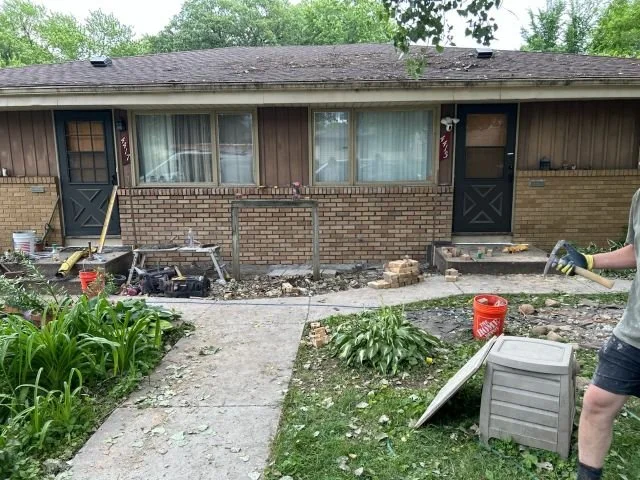
Where one, two or a handful of faces have gone, we cut them out and lay replacements. The old brick is cut out cleanly, never knocked out; the opening is prepared properly, and the new unit goes in on fresh mortar matched to the joints either side of it. This is the cheapest thing on this page, and where the count is low it is the right answer.
Spalling repair
Spalled brick is replaced, not patched and not coated. There is a category of product sold for smearing over a spalled face that hides the problem rather than removing it. Beyond the replacement itself, the question worth asking is why that section of wall got wet enough to spall when the rest did not, because there is usually an answer: a gutter, a downspout, a sill, or a failed joint above.
Salt-spall along grade
The band of destroyed brick in the bottom two or three courses beside a driveway, a path or a set of steps. This is the failure mode Sam is most emphatic about repairing rather than watching, because if you leave it, it eats into the foundation and gives water and mice a way in. Whether it is also sealed afterward is decided during the visit rather than by policy. It is also the failure mode most likely to be dismissed as cosmetic, because it is at ankle height and nobody looks at it.
Leaning and heaving garden and garage walls
Rebuilt. Pushing a leaning wall back does not work. Where a footing has heaved, we deal with the footing, because relaying brick on a footing that moved once is a way of paying twice.
Failed wall ties and bulging veneer
Covered in full in the section below, including why this one is always a rebuild.
Lintel replacement
Where a rusted steel lintel over a window, door or garage opening has expanded and lifted the brickwork, the brick above comes down, the lintel is replaced, and the masonry goes back. It is more work than it looks from the ground because the wall above has to be supported while the steel comes out.
Crack repair in brick walls
Cracks are cut out and rebuilt through the affected area. Filling them is cosmetic. Filling a crack with mortar or, worse, with caulk, hides it until the next season. Where the crack is a sign of ongoing movement, we will say so, and the honest recommendation is sometimes to repoint it and watch it through a winter before committing to anything larger.
Efflorescence and cleaning
We can clean it off. We would rather spend the visit working out where the water is getting in, because the powder otherwise comes back. Masonry cleaning and sealing is work we will take on when we are already on the wall for something else.
Brick and mortar color matching
Offered on request. Custom mortar blending is available and honestly discussed, since Sam's own view is that dyes rarely cure to the shade on the sample.
What this job does not include
Thin brick veneer, the quarter-inch product glued onto an existing wall. That is a different material and a different trade, and it is not work we take on.
Painting or coating brick. Sam lists painting brick with non-masonry paint as one of the mistakes that create the next job.
Caulking cracks in masonry. Caulk is not mortar and does not behave like it.
Brick paver driveways, patios and walkways, and concrete pavers of any kind. Referred out.
Structural underpinning, piers, carbon fiber straps and polyurethane injection. Not our trade and we will point you to someone whose trade it is.
Chimney brick. That is on our chimney repair page, because the diagnosis is different on a stack exposed on four sides.

What It Costs
We publish ranges because arriving at an estimate with no idea of the scale of the number helps nobody, least of all us.
These are starting points for typical residential work, not quotes. The estimate is free, in person, and Sam does it.
What moves the price
How many units have actually failed: The count drives more of the price than the size of the wall does.
Whether anything has moved: Movement turns a replacement into a rebuild, and that is the single biggest step in cost on this page.
Access: Ground-level work on an open elevation is straightforward. Anything needing scaffold, or work over a deck, a hedge, or a neighbor's property, is not.
Matching: Where a close match takes sourcing, that time is real.
Whether the brick can be reused: On a veneer rebuild, it usually can, and that changes the number materially.
Larger scopes are quoted after the visit because, on brick, the spread between a small elevation and a large one is wide enough that a published range would mislead more people than it would help.
Every figure on this page depends on square footage and on what we find when we look. They are rough guides to help you decide whether to call, not quotes. The exact number comes after the visit, and the visit is free.



How A Brick Repair Actually Runs

Why People Hire Us For Brick Work
The rule is published, so you can check our answer against it
The replace-versus-rebuild rule is set out in full in the section below, in the same words Sam uses on site. If we tell you a wall needs rebuilding, you can hold that against the rule and ask us why.
We would rather quote the smaller job that lasts
Sam's position on this is the reason the company exists. If the only thing on offer is the biggest version of the repair, the homeowner was never given a choice.
Ten years on the workmanship
It is not a materials warranty, and it does not cover masonry we did not touch.
Sam is on the job, not just on the estimate
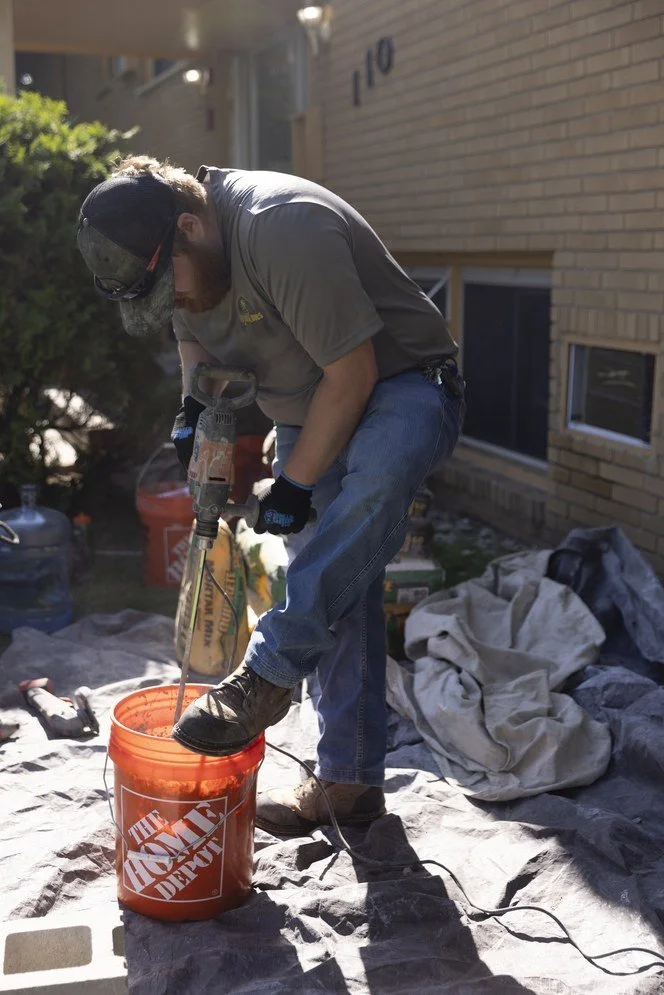
Most of our Google reviews name him personally rather than the company. On a six-person outfit, that is the thing worth knowing about how the work gets supervised.
Replace, Rebuild, Or Leave It Alone: The Rule We Use
The whole of brick repair pricing turns on one question, and it is not how bad the wall looks. It is how many units have failed and whether anything has moved.
Sam's rule, in his words, is that if it is one or two bricks, you replace them individually, and if it is a brick that is leaning, heaving, or cracked all over, you rebuild. There is not much in between, and the reason there is not much in between is that partial measures on a wall that has moved do not hold. Relaying the top four courses of a garden wall that is leaning gives you a straight top while the wall is still leaning.
Sam is blunt: most of the walls he looks at do need a partial rebuild, and he is equally blunt about the opposite error: people trying to tuckpoint spalled brick or patch a wall that needs redoing. The rule cuts both ways, and it is the reason we would rather show you the count than hand you a verdict.
Wall ties are the exception that has no small version. On a brick veneer over a timber frame, which is how a great many mid-century houses in this metro are built, the brick skin is not structural. It is held back to the frame by metal ties bedded into the mortar joints, and those ties rust. When enough of them go, the wall starts to belly outward, usually in the middle of an elevation and usually visible if you sight along the wall from the corner.
You cannot selectively replace ties. Sam's own answer on this was blunt: it is always a rebuild if the ties fail. The brick has to come down, the ties go back in properly, and the brick goes back up. If somebody offers you a cheaper alternative to taking it down, ask them to explain how new ties get bedded into joints that are still buried in the wall.
The one piece of good news is that where the existing brick is sound, it can usually be put back up, and reusing it takes a real cost out of the job while giving you a wall that still matches the rest of the house.
Where cracking is concerned, the useful question is whether the movement is finished. A crack that opened during a wet season, was repointed, and has stayed closed since is a crack. A crack that reopens is movement, and the right response is to measure how far it moves across a winter before committing to anything. We will tell you which of those we think you have, and we will say when we are not sure.

Materials And Suppliers
Brick and stone come from a local supplier we have used for years. Matching is the part of a brick repair you will look at every day afterwards, and it is worth the trouble of sourcing properly.
Mortar is Spec Mix premixed, so the specification stays consistent from batch to batch. Which specification goes on your wall is decided by the brick in front of us. Our tuckpointing page sets out how we choose, and on a repair it is normally the softer of the options available, because mortar harder than the brick it beds transfers stress into the brick.
Mortar dye is available on request. Sam's honest view is that dyes almost never cure to the shade on the sample board, so if color is critical to you, we would rather talk it through at the estimate than surprise you on the day.
Sealer is used on salt-spall repairs at grade and generally not elsewhere. It is a targeted product for a specific failure, not a finish.
Common Questions
Minor replacement of a few faces starts around $1,500. A small wall rebuild is roughly $2,000 to $3,000. Larger elevations are quoted after Sam has seen them, because the spread is too wide for a published range to be useful.
Replaced. There are products sold for coating over a spalled face, and they buy a season. Once the outer face has been fired, the brick underneath takes on water, and covering it up does not change that.
Almost certainly deicing salt. Salt-laden meltwater soaks into the bottom courses, and the freeze cycle does the rest. It is worth repairing early, because left alone it works its way into the foundation and gives water and mice a route in.
No, and we would be wary of anyone who offers to. Repointing around brick whose faces have gone is cosmetic. If the mortar and the brick have both failed, the honest scope is at least a partial rebuild.
The wall ties. On a brick veneer over a timber frame, the brick is held back to the structure by metal ties at the joints, and the ties rust. When enough of them fail, the wall bellies out. Sight along the elevation from the corner and you will usually see it.
No. It is always a rebuild if the ties have failed. Anyone offering to pin, strap or inject a bulging veneer instead is selling you a different thing, not a cheaper version of this one.
Yes, in full brick. That is a real masonry wall laid up course by course and tied back, and it is what most people mean by brick veneer. What we do not do is the thin quarter-inch product that gets glued to an existing wall. Different material, different trade.
Not usefully. Free-standing brick that has moved keeps moving, and the honest answer is a rebuild. Where a footing heaved, the footing gets dealt with first; otherwise, you are paying for the same wall twice.
It is efflorescence, salt carried out of the masonry by water moving through it, and it brushes off. The powder is harmless. What it tells you is that water is traveling through the wall, and that is the part worth looking into.
Usually, the steel lintel underneath is rusting and expanding. Corroding steel takes up more room than it did before, and it lifts the masonry it supports. The repair means taking the brick above down, replacing the steel and rebuilding.
Close, and closer than most, because our supplier is good at it. Identical, no. On an old St. Paul wall, there is often more than one brick and more than one mortar in the elevation already.
Painting, no. Non-masonry paint on brick traps water in the wall, creating a worse problem than the one it hides. Sealing has one good use on this page: salt-spall at grade, and we use it there.
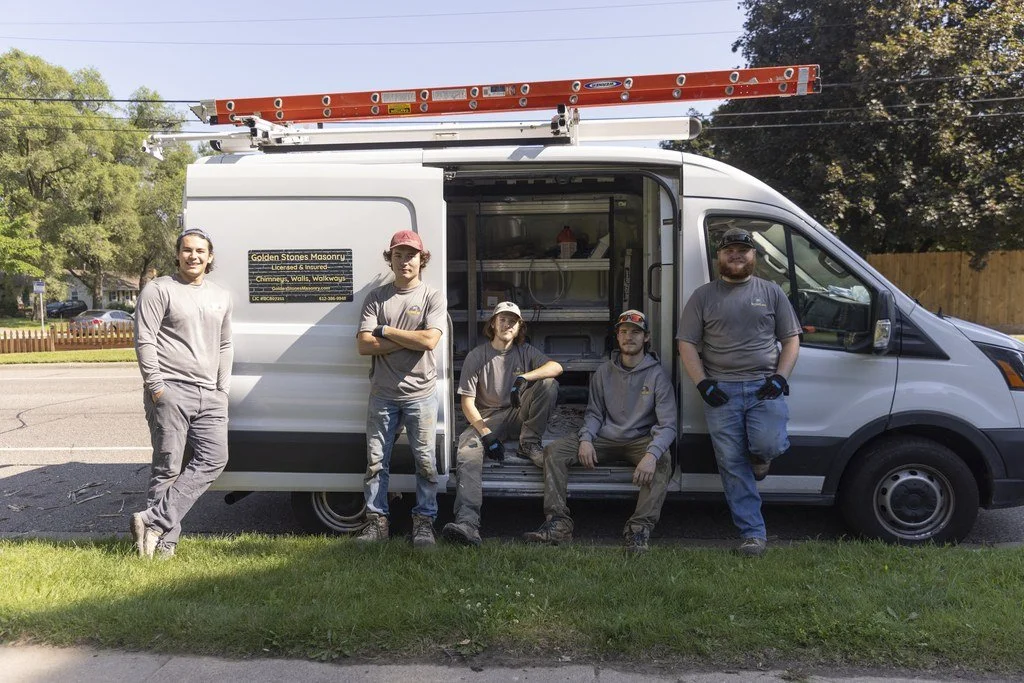
A handful of replacement bricks is often a day. A small wall rebuild is a few days. Lintels take longer than they look because the wall above has to be supported.
Not the laying, no. Mortar needs temperature to cure, and we will not put it into a hard freeze. What we will do in winter is come out, look at it and price it, so the job is ready to go the moment the weather turns.
No, and there is no service call fee either way. Sam does it himself, and you get the options in writing.
Ten years on what we did. What matters more than the number is that you have it on paper before you sign, so ask us for the terms and ask everyone else quoting you for theirs. A verbal warranty is worth what it sounds like.
Where We Do This Work
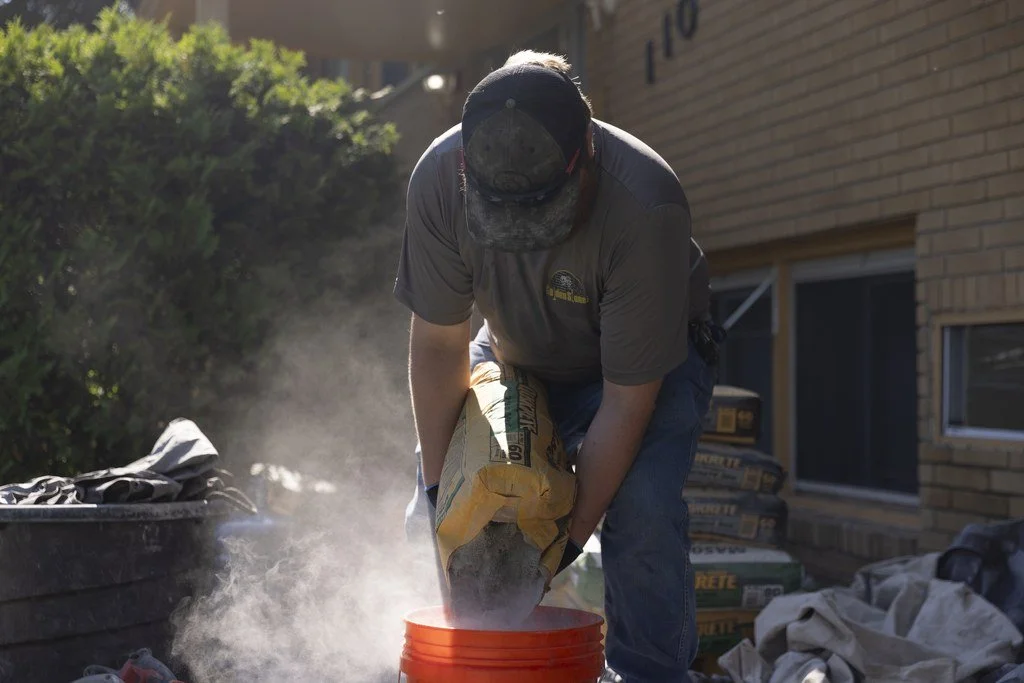
We repair brick across St. Paul, Minneapolis, Bloomington, St. Louis Park, Richfield, Minnetonka, Eden Prairie, Plymouth, Maple Grove, Wayzata, Blaine, Circle Pines, Little Canada, Woodbury, Lake Elmo, Cottage Grove, Stillwater, South St. Paul, West St. Paul, Inver Grove Heights, Mendota Heights, Eagan, Burnsville, Apple Valley, Rosemount, Lakeville, Victoria, North Branch and Big Lake. Further out than about forty-five miles from St. Paul, photographs before the visit, because a wasted trip helps neither of us.

What Customers Say
What appears below is our live Google feed rather than testimonials we picked out, so it shows whatever is genuinely on it.
Google review, September 2025Get A Free Estimate
Photos help more on brick than on almost anything else. A close shot of the damaged area and a wider one of the whole elevation, taken square on, will usually tell us what we are dealing with before we arrive.
Expect to be told the count: how many units have actually failed and whether anything has moved. That is the conversation, and the price follows from it.
Free estimate, in person · Ten years in writing on the workmanship · (612) 509-0718