


Masonry Contractor in Little Canada
10 Years
Workmanship warranty, in writing

Little Canada is one of the shortest runs we make, and one of the first pieces of ground in Ramsey County anybody settled: Benjamin Gervais claimed land here in 1844.
The housing, though, is not old. The median Little Canada home dates from 1979, and about 1,598 of them went up in the 1970s alone, close to a third of the city in one decade. Roughly 188 predate 1940. So a city of under five thousand homes holds three separate building eras, and which one yours belongs to decides the whole job.

What Little Canada Homeowners Call Us About
A front step or entry that has dropped at one corner
The call that best fits this ground. Clay till that changes volume with moisture will move anything set shallow on it, and an entry poured or laid without a footing taken to depth is exactly that.
Stucco cracking, and what is behind it
County records show stucco as the wall material on roughly 289 properties here, compared to 36 in brick, so on properties where the county has recorded a wall material, stucco outnumbers brick by roughly 8 to 1. Cracking is often movement behind the stucco rather than failure of the stucco itself, and it is worth knowing which before anyone patches it.
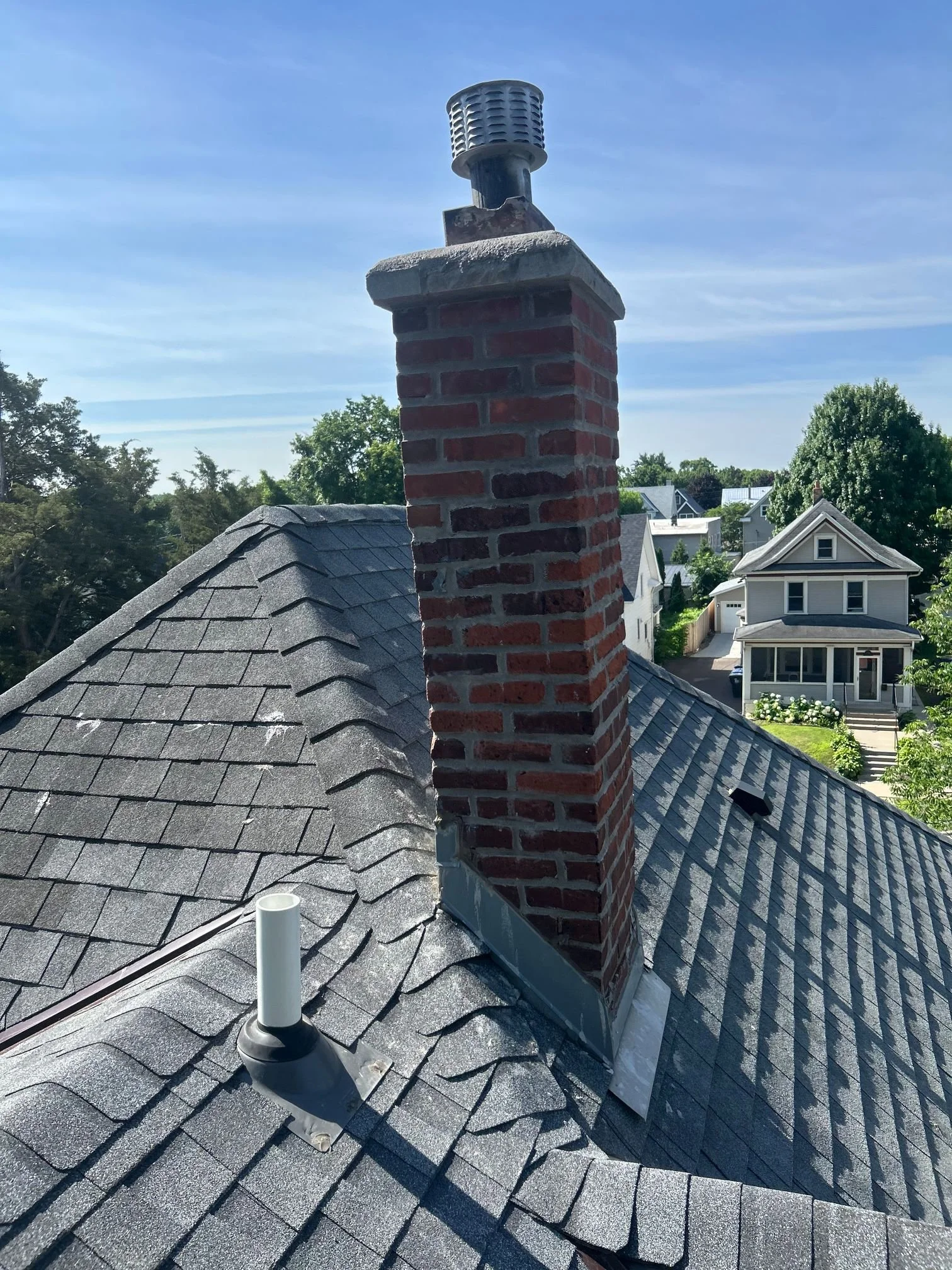
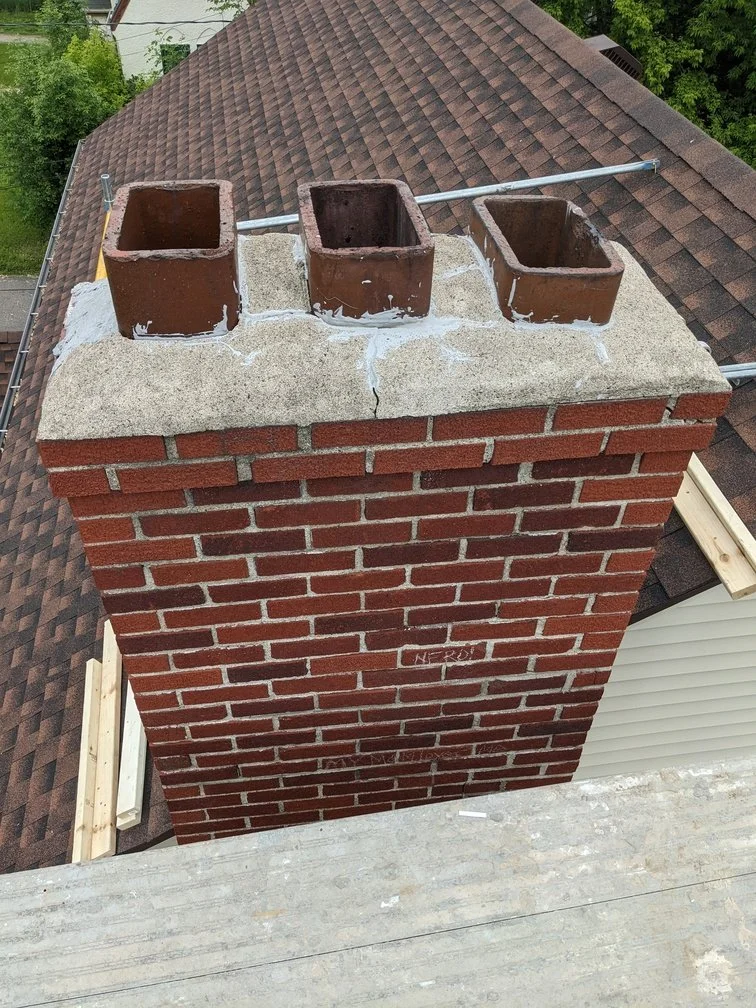
A chimney crown broken up on a 1970s house
About 1,598 homes here went up in the 1970s, close to a third of the city's housing stock in one decade. Their crowns are all arriving at the same age together.
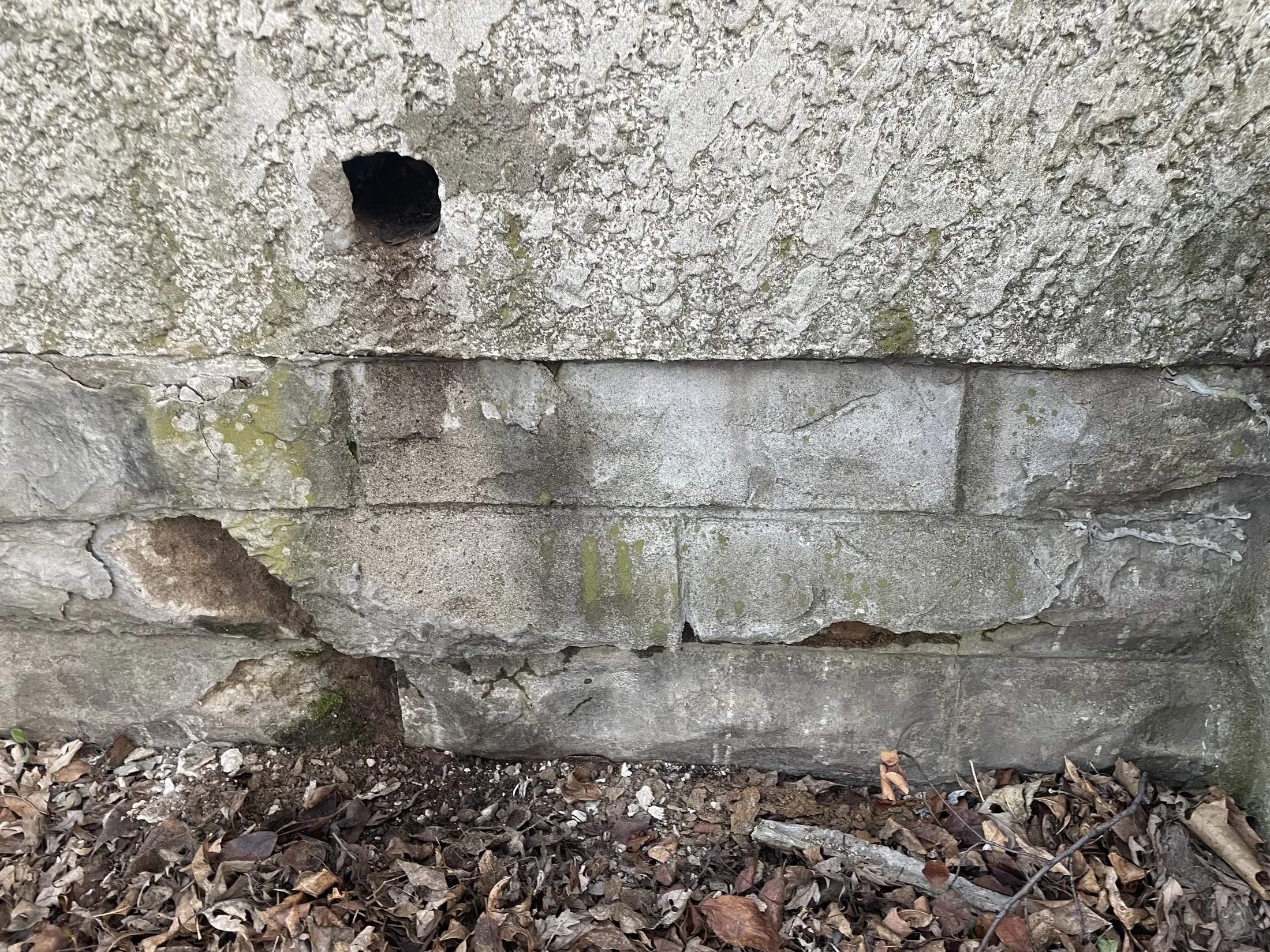
Sandy mortar in an old basement
The pre-war houses here number about 188, so this is a small part of the city rather than its main story. On those walls the mortar goes long before the stone does, and that is normal for the age.
A retaining wall leaning on ground that holds water
Anything holding back clay till that swells when it is wet is carrying a load that changes through the year. Drainage behind the wall matters more here than the stone in front of it.

What We Do In Little Canada
A small city with a wide spread of building years, so the list below is genuinely mixed rather than aimed at one era.

Steps, stoops and entryways
The work this particular ground argues for hardest. Out it comes, down goes a footing beneath the freezing depth, and back it goes. Where the soil changes volume with the weather, depth is not an option on a quote. It is the whole repair.
Chimney crowns and raincaps
The concentration of 1970s housing here means a large number of crowns of the same vintage. Our crown page covers what the work involves, including when sealing a sound crown is the honest answer and when it is not.
Chimney repair and rebuild
Where the stack itself has gone, rather than only its top. On housing of this age, it usually comes out on the repair side.
Tuckpointing and mortar repair
On the older houses, grinding out failed mortar and replacing it in a mix that suits the age of the wall.
Stone foundation repair and basement tuckpointing
For the pre-war group. Interior foundation work carries on through the winter, which matters in a city where the outdoor season is the same as everyone else's.
Retaining walls in natural stone
Taken apart, the footing and the drainage behind it corrected, and rebuilt using whatever of the original stone is still sound. We do not touch interlocking block. That is somebody else's trade, and we know who to send you to.
Brick repair on the smaller brick stock
Spalled units, failed lintels and localized rebuilds. There is not a great deal of brick in this city, and what there is tends to be worth keeping.
What Customers Say
No review anybody has left us names Little Canada. What appears below is the live Google feed, not a testimonial we picked out, so it shows whatever is genuinely on it.
Tell us what is going on with your masonry
Tell us what you are seeing and attach photos if you have them. Sam comes out himself, and you get the options priced in writing. No charge either way, and no service call fee.

What It Costs
No travel charge. Given the drive, there was never going to be one.
Starting figures: $3,500 for chimney repair on a single-story house, $5,500 for a recast crown, $3,200 for a rebuilt section of stone foundation, $2,800 for tuckpointing a small area, $1,500 for minor brick replacement, and $7,500 to $11,500 for steps.
Retaining walls and driveway aprons are absent from that list, and on ground that swells and shrinks with the weather, there is no honest way to put them on it. The bed underneath sets the price, and the bed is invisible until it is dug. Those get a number at the visit, and the visit costs you nothing.
Every one of those figures depends on square footage and on what we find when we look. They are rough guides to help you decide whether to call, not quotes. The exact number comes after the visit, and the visit is free.
Clay Till, And What The City Says About It
The ground under Little Canada is end moraine left by the Des Moines lobe: clayey, calcareous till rather than the free-draining sand you find east and north of here. The city's own planning document is unusually direct about what that means for anyone putting something in it.
It describes the soils across the city in groups. One is limited by the seasonal high-water table and susceptibility to frost action. Another, on the glacial moraine, is described this way: the water table is seasonally high in depressions and lower-lying areas, and moderate volume changes with shifts in soil moisture can cause concern when constructing buildings, roads, or streets. The same document flags large areas of severe soil limitation in the northern and eastern parts of the city.
That is a city telling its own residents that the ground moves with the weather. None of it is a reason to worry about your house, which went in on designed footings and was inspected for exactly this. It is a reason not to assume anything about a step, a wall or a patio until it has been dug. For masonry, it is the whole argument for depth. Anything bearing on soil that swells when it is wet and shrinks when it dries will find its own level, unless its footing has been carried down past where the frost reaches.
The second thing is that we cannot tell you what rock is underneath. Ramsey County's geological atlas dates from 1992 and has never been redone, and none of it is readable as mapping anybody can query. Other counties we work in have been remapped since. Ramsey has not, so we do not know.
Google review, September 2025Common Questions In Little Canada
Quickly. This is one of the shortest runs we make, and there is no travel charge, no minimum job size, and no fee for the estimate.
We work on the masonry behind it and on masonry elements like chimneys, steps, and walls. On the properties where a wall material is recorded, stucco outnumbers brick by roughly 8 to 1 here, and cracking in it frequently points to movement underneath rather than at the finish. Send a photograph, and we will tell you honestly whether it is our job or somebody else's.
Because on this particular ground, everything is decided. The city's own planning document describes soils here that change volume as they get wetter and drier. Something set shallow on soil like that will move. Something set below the frost line on a proper footing will not.
We are not going to invent an answer. Ramsey County's geological atlas dates from 1992 and there is no modern mapping of it anybody can query, which is not true of every county we work in. What we can tell you is what your footing is actually sitting on, once we have dug down to it.
Depends entirely on whether it is sound. A crown with hairline crazing and no structural cracks can be sealed, and that costs a good deal less. A crown that has broken into pieces cannot, and sealing it is money thrown away. Somebody has to look at it.
Possibly, and we have no stake in the answer. We fit no drain tile, no sumps, and no membrane, so when we say a wall needs drainage before it needs mortar, there is nothing in it for us either way.
Get A Free Estimate In Little Canada
Send one photograph of whatever you have noticed and one taken a few steps back so we can see where it sits on the building. That is usually enough for a straight answer on the phone.
Tell us roughly when the house was built if you know. In a city with this much spread between its oldest and newest housing, the year does more to narrow the job than a description does.
(612) 509-0718 · No travel charge, no minimum job size · In-person estimate at no charge