

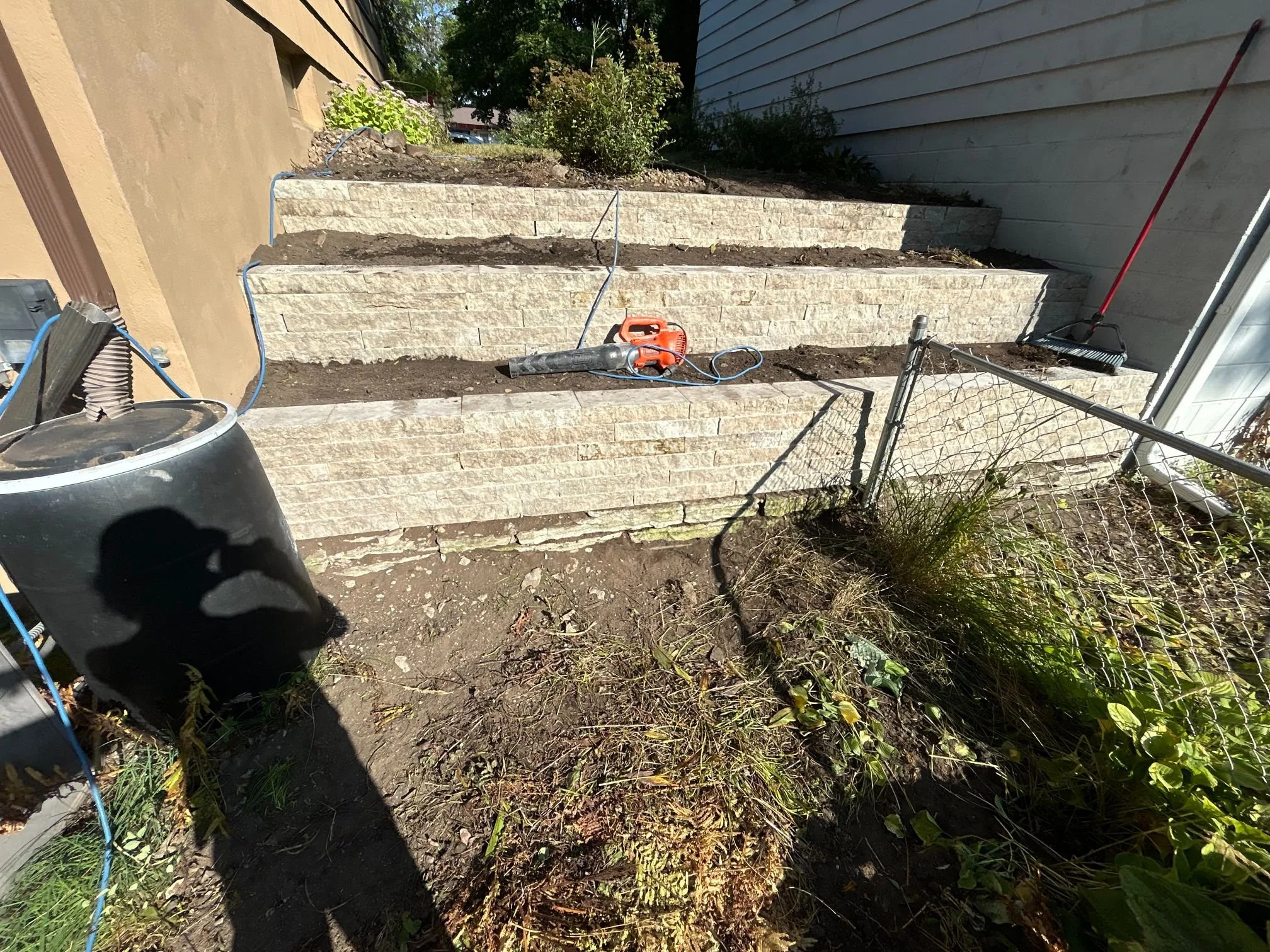
Front Steps, Stoops and Entryways in St. Paul
10 Years
Workmanship warranty, in writing

Front steps are the piece of masonry on a house that everybody touches every day, and nobody looks at until one of them rocks underfoot. We repair and rebuild them in natural stone, brick, and concrete. Most of the calls are repairs to steps that are already there, and most of those steps have failed for the same reason: what is underneath them moved.

Signs Your Front Steps Need Repair
A tread rocks when you stand on it
A single loose stone is often a straightforward reset. It is also the earliest warning that the bed beneath is no longer holding, and it is much cheaper to deal with at this stage than at the next.
The steps have tilted, usually toward the house or away from it
Tilt means movement below, and movement below is almost always frost. Steps that tilt back toward the house are the urgent version because they now deliver water to the foundation rather than away from it.
The stone or brick is bowing outward
The face of the steps is being pushed out by whatever is behind it. It looks cosmetic, and it is not, because once the face goes, the fill behind it starts to come out too.
The mortar between the treads has gone
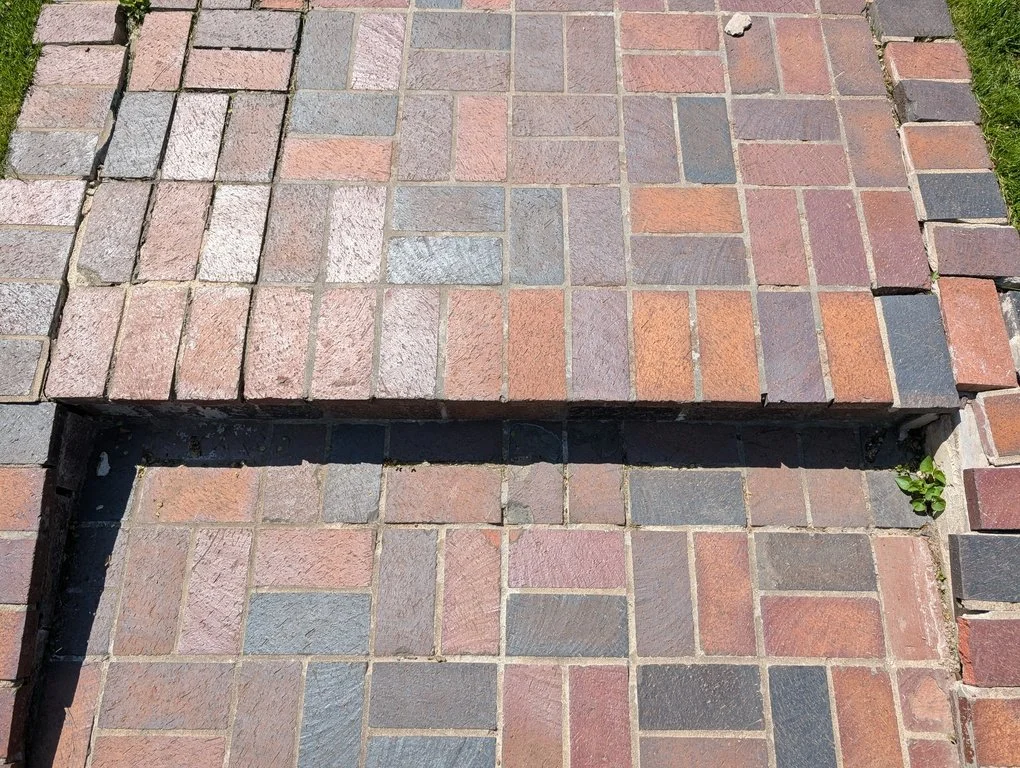
Sandy, missing or washed-out joints let water straight into the core of the steps, where it freezes. On steps, this cycle runs faster than on a wall because steps collect standing water and salt in a way walls do not.
Corners and edges are crumbling away
Usually salt. The edges of treads take the most deicer, the most traffic, and the most freeze cycles, and they go first.
The concrete stoop has cracked right through
Poured concrete entries crack across their width when the ground under them settles unevenly. Depending on how far it has gone, it may be a repair or a rebuild, and the honest answer is not always the second one.
What We Build and Repair

Natural stone step repair and rebuild
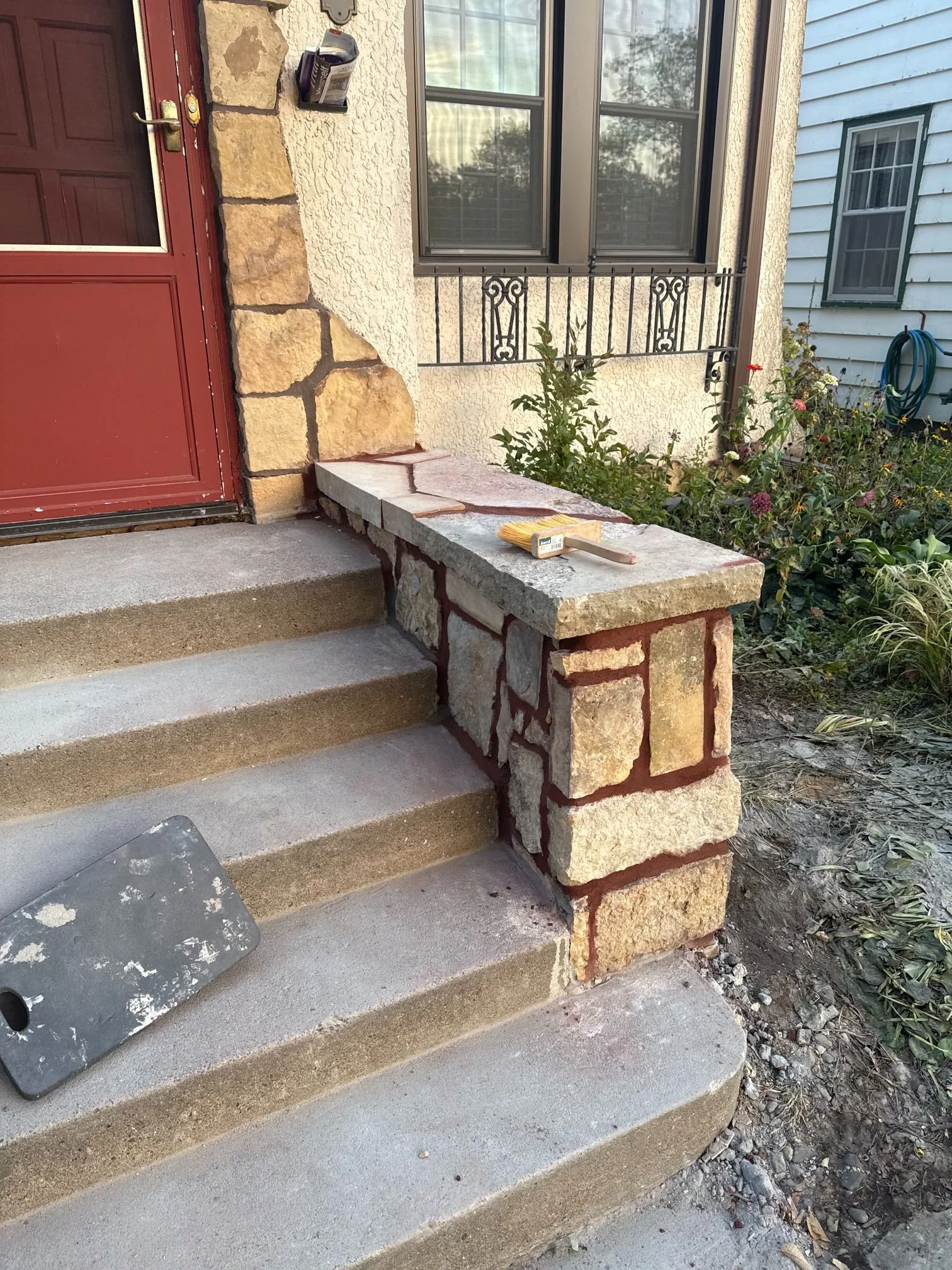
Resetting loose treads, repointing, rebuilding sections, and taking a full set of steps out and relaying them where the structure below has gone. Sound stone is reused wherever possible because, in an older house, the existing stone is usually the best material available and already fits the building.
New natural stone steps
Built new, on proper footings. Natural stone is what we work in. Sam's answer on material preference was one line, and it is the honest one: natural stone, because we do not do anything else.
Concrete steps and stoop repair and rebuild
Front entry concrete is repaired or rebuilt where the house has it. We are phasing out concrete work generally, but front steps and stoops are the exception we keep because they are the entry to the house and people need them done.
Brick steps and entryway brickwork
Repaired, repointed and rebuilt. The low walls flanking the steps are covered on our step side walls page.
Footings
Dug to depth. It is the part of the job you never see, and it is what determines whether the steps will still be level in a decade.
Stone selection and matching
Where treads have to be replaced rather than reset, matching an older stone takes sourcing rather than ordering. We work with a supplier who is good at this, and we will show you the match before it is laid.
Landings
The landings on either side of a set of steps are masonry too, and they get the same attention as the treads do. The low walls flanking the steps, the ones some people call buttresses, now have their own page: see our step side walls page.
Sealing, case by case
On entries that take heavy salt, sealing has a real use. Whether yours gets it is decided at the visit rather than added to every invoice.
What this job does not include
Paver steps and paver entries in interlocking concrete pavers. Not work we take on, and referred out.
Segmental block systems, the modular retaining wall products. Same answer.
Concrete driveways, sidewalks, slabs and mudjacking. Concrete flatwork generally is being phased out, and front entries are the deliberate exception.
Railings and ironwork. Metalwork is not our trade, but we work with someone who does it, and we will give you their number.
Wood or composite steps and decking.

What It Costs, and Why the Band Is Wide
A front step rebuild costs between $7,500 and $11,500. That is a wide band, and it is an honest one.
Steps vary more than almost anything else we do. Two front entries that look identical from the sidewalk can price very differently, depending on whether the existing stone can be reused, how deep the footings have to go, and what is buried in the ground between the sidewalk and the house. The band is wide because the ground under a step influences the price more than the step does, and we would rather publish an honest spread than a tidy number we would have to walk back.
Where in that band you land is decided by the list below. Every price on this site depends on square footage and on what we find, and all of them are rough guides rather than quotes. The estimate is free, in person, and Sam does it, and you get the options in writing.
Stone flatwork repointing is a separate number, $4,500 to $7,500 depending on size, and it is on our tuckpointing page. Steps are not flatwork, and the two should not be read across.
What moves the price
Reset or rebuild: Resetting loose treads and repointing is a different order of cost from taking the steps out and relaying them.
Whether the existing stone can be reused: Usually it can, and it is the single biggest saving available on this work.
Footing depth, and what is in the ground: Services, gas lines, and tight access can turn a day of machine work into several days of hand-digging.
Whether the steps have to stay usable: Front entries on occupied houses sometimes have to be staged, which costs time.
Matching: Sourcing stone for a house from the 1920s takes longer than ordering it.
Every figure on this page depends on square footage and on what we find when we look. They are rough guides to help you decide whether to call, not quotes. The exact number comes after the visit, and the visit is free.


How a Steps Job Runs
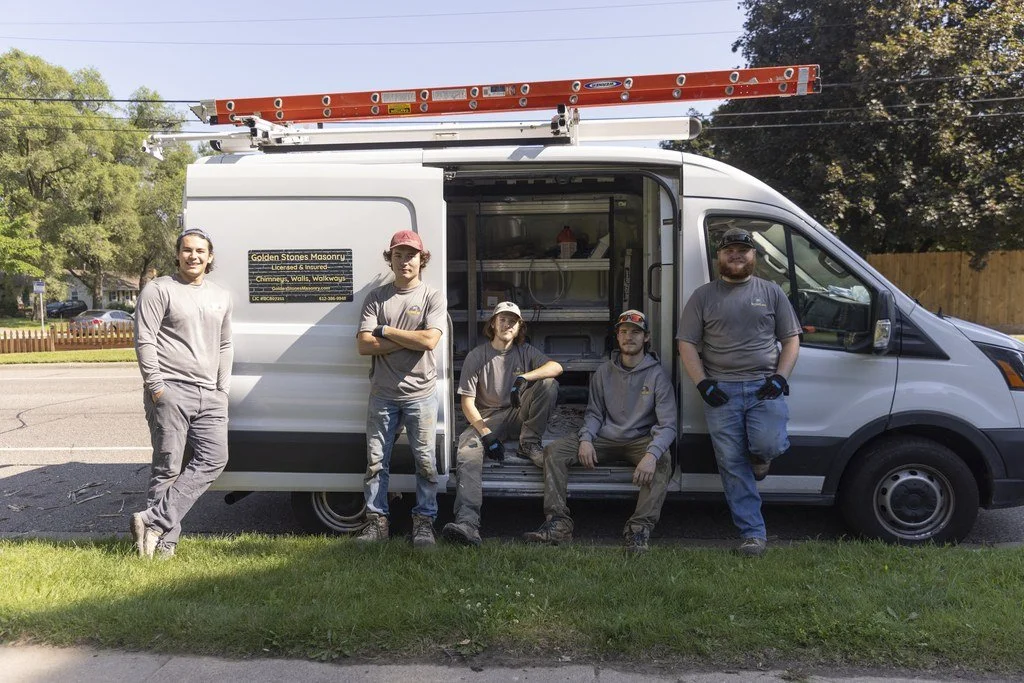
Why People Hire Us For Their Front Steps
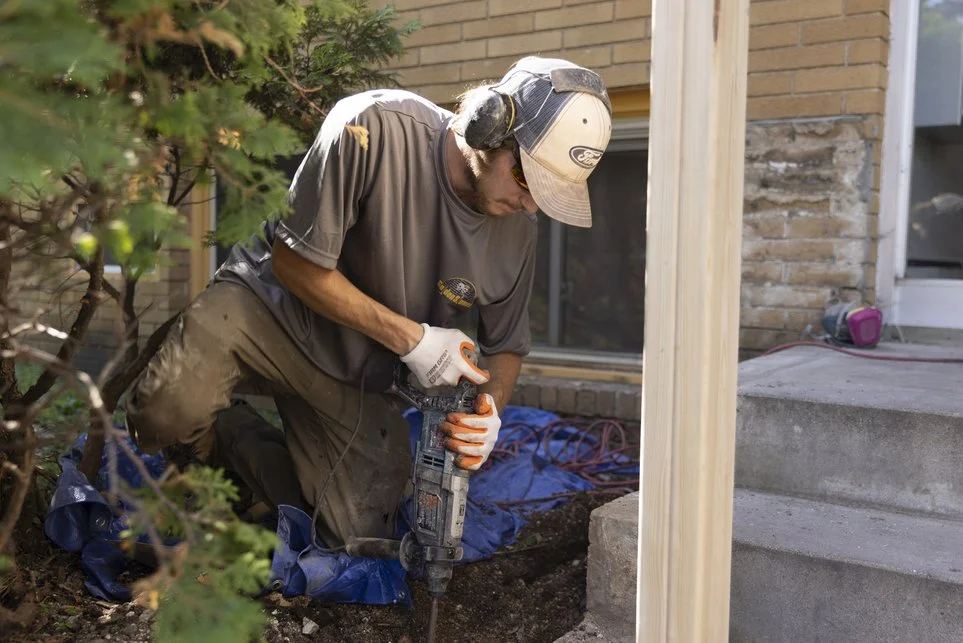
Front steps are a real part of what we do, not a filler job: A good number of our reviews describe front step or stair work, which is a lot for a company whose largest service is chimneys. It is also work we would like more of.
Older houses get treated as older houses: Keeping the proportions and the character of a period entry is part of the job rather than an upgrade. That does not make us a historic restoration company, and we refer out designated historic work, but a 1920s front entry is ordinary work here.
The Part Of A Steps Job That Is Not The Steps
On front steps, almost all the money is in what happens below ground, and almost all the failures come from someone deciding not to spend it.
Steps carry a lot of weight over a small footprint; they sit right where roof runoff and snowmelt collect, and they are the first thing on the property to get salted. Set on compacted fill, they will look correct for a few years and then start to move. Set on footings taken below the frost line, they stay where you put them.
That is not an argument for the most expensive version of every job. Plenty of the steps we look at need the treads reset, and the joints repointed, and that is genuinely the right answer, particularly where the movement has stopped, and the structure below is intact. What we will not do is relay a set of steps onto a base we already know is failing, because that is the version where you pay twice and the second bill is bigger.
The clearest illustration of what that footing work actually involves is a job Sam took on after another mason had agreed to it and then disappeared on the customer. It needed to be excavated five feet down for the base and frost footings. There was a gas line running within a few inches of where the buttresses and steps were going, so after calling for locates, the crew had to hand-dig much of it, which is exactly as slow as it sounds. His own note on it afterward was that he would not recommend it. In his words, the steps will outlast him by a lot.
That is the trade-off on this work in one story. Nobody who walks up those steps will ever see the part of the job that took the longest.
Common Questions
Frost. Water in the ground beneath the steps freezes and expands, lifting them and letting them settle somewhere slightly different in the spring. Repeat that for thirty winters and the steps no longer sit where they were built. Steps set on footings below the frost line do not do this.
Often repaired. A tread or two that has shifted, with the structure below intact, is a reset and a repoint. Rebuilding is the answer when the base has gone, or the whole set has tilted, and we will tell you which you have.
About $7,500 to $11,500, and the section above explains why that band is as wide as it is. Two entries that look the same from the street can be bedded on completely different things, and the number moves once we open it. The estimate is free and in person.
For new work, yes. Natural stone is what we work in, and Sam's answer on that was direct: natural stone, because we do not do anything else. For repairs, we work in whatever the house already has, including brick and concrete.
Yes. We are phasing out concrete work generally, but front steps and stoops are the exception we have deliberately kept, because it is the way into the house.
No. Interlocking concrete pavers and segmental block systems are outside our scope, and we refer them out.
Deicing salt. The edges take the most salt, the most traffic, and the most freeze cycles. It is the same mechanism that eats away at the lower courses of brick beside a driveway.
That is your call, and safety comes first. What is worth knowing is that deicing salt is doing real damage to the masonry underneath, and that on an entry that takes a lot of it, a sealer is worth discussing; whether yours gets one is decided at the visit.
Usually close, and it is a sourcing job rather than an ordering job, so give us time on it. We will show you the match before laying it. Reusing your own stone is the better answer wherever it is sound.
A reset and repoint is often a day or two. A full rebuild with new footings runs longer, and the excavation is what stretches it rather than the masonry.
Usually yes, and where it is not possible we will say so before you book so you can plan around it.
Not the building. Mortar and concrete both need temperature to cure, and a footing wants ground you can actually dig. We will come and look in the winter and have you priced and booked, which is the useful half of it done.
Worth asking at the estimate. A rebuild is the moment to do it if it is going to happen, because the footings are going in anyway. What we would talk through first is proportion, since front steps wider than the entrance they serve tend to look wrong on an older house.
Yes. The failure modes and the work are the same. It is worth checking the side and rear entries while we are there, since that is often where the downspout comes down.
Raise it at the estimate. Railings are metalwork rather than masonry, so we do not do that part ourselves. We have a reliable person, and we will pass you their number. How the posts come out and go back needs to be agreed before the job starts, rather than on the day.
Ten years, in writing, on cracking or crumbling in what we actually built. If we rebuild your steps and the retaining wall beside them fails, that is not our work, and it is not covered. The full terms are in the contract, and they are worth five minutes of your time before you sign.
Where We Do This Work
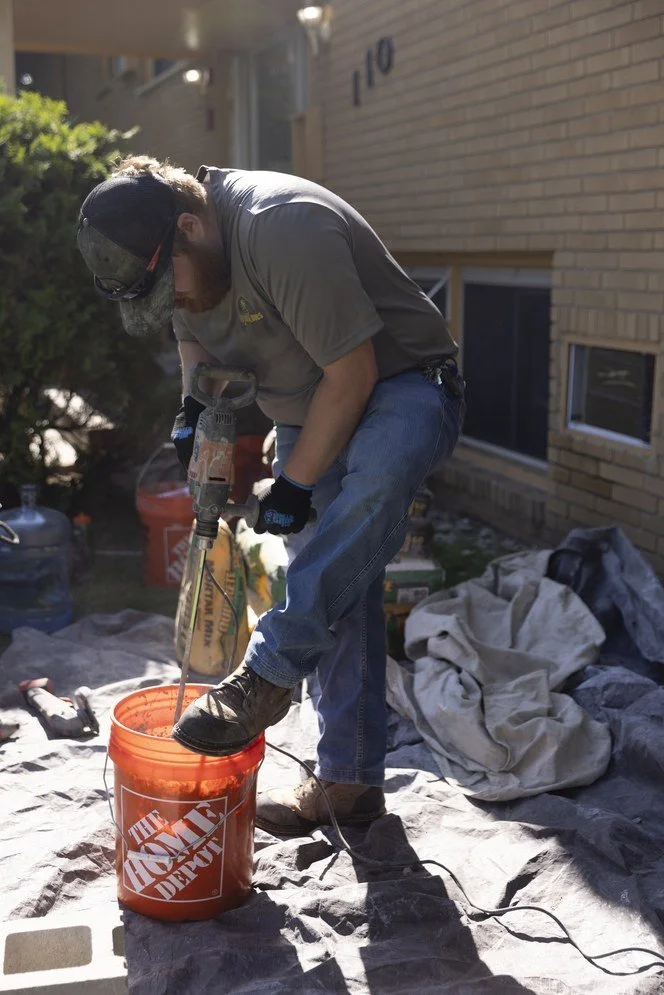
Front steps are one of the few things we get asked about from right across the metro, because everybody has some. The full list of cities is on our service area page. Past about forty-five miles from St. Paul, photographs before a visit.

What Customers Say
What appears below is our live Google feed rather than testimonials we picked out, so it shows whatever is genuinely on it.
Get A Free Estimate
A straight-on photo from the sidewalk, plus one from the side, so we can see whether the steps have tilted, tells us most of what we need before we arrive.
The first thing to establish is whether the steps are still moving, because that decides everything else about the job. Expect that question before you get a number.
Talk to Sam: (612) 509-0718 · Written estimate, options priced · MN BC807211