

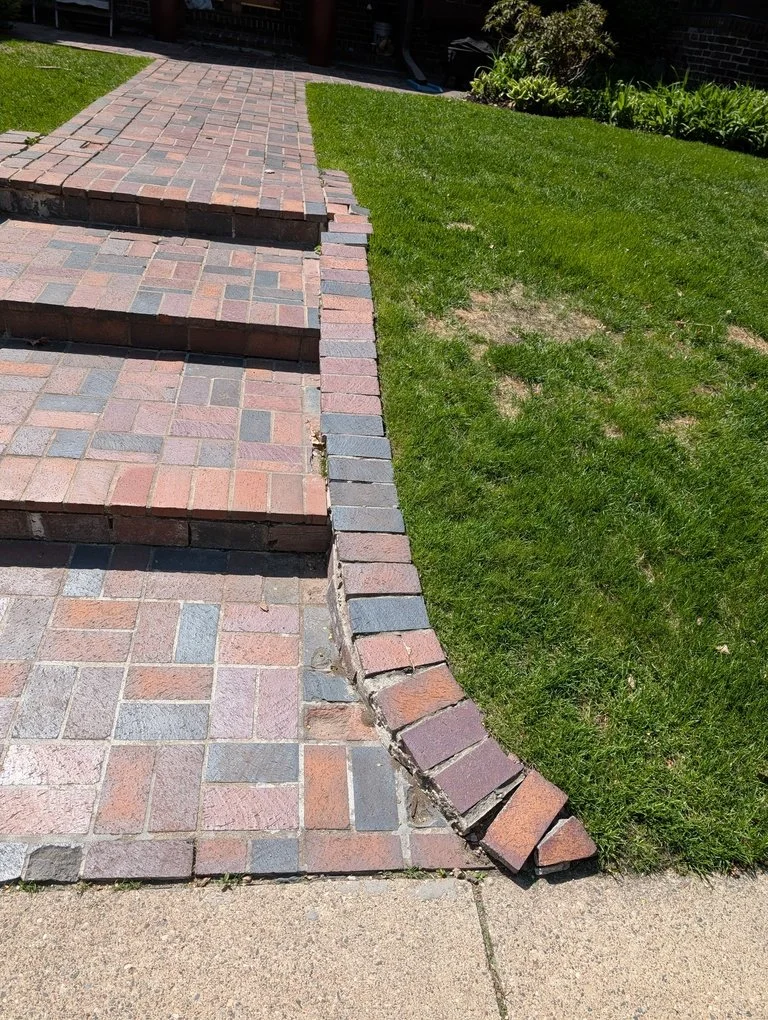
Stone Steps in Minnetonka
10 Years
Workmanship warranty, in writing

Salt, shoes, and standing water, all reach the front edge of a stone step before they reach the rest of it. When that edge rounds off or starts to flake, the tread behind it may be entirely sound or have failed outright, and the work that follows depends on which it is. We read worn treads on Minnetonka entries for that difference and replace the ones that need it in matched natural stone.
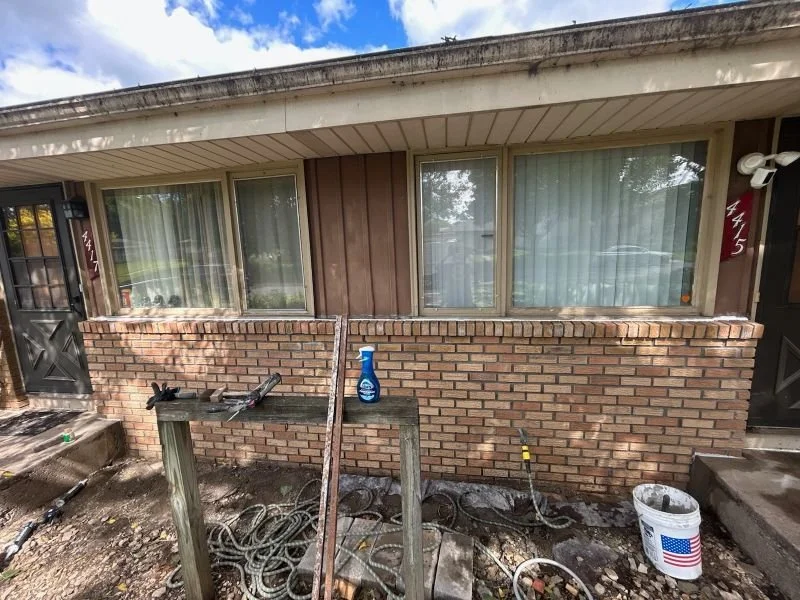
Minnetonka Entries and the Deicer
In Minnetonka, 7,628 homes still standing were built between 1940 and 1969. Where such a house has stone steps at the front door, they may well be the steps it was built with, and they have been salted and walked on longer than almost any entry in the city.
Salt is part of the reason, and our front steps page explains why salty water does more harm to wet stone. The rest is position. The nosing is where a shoe lands and pushes off, where a shovel blade catches, and where water sits before it runs off, so it takes every kind of wear at once. Newer Minnetonka entries wear the same way. On the older ones, the wear has simply had longer to go deep. A worn edge on its own says little about the ground under the steps: it is the stone wearing, not the step moving.
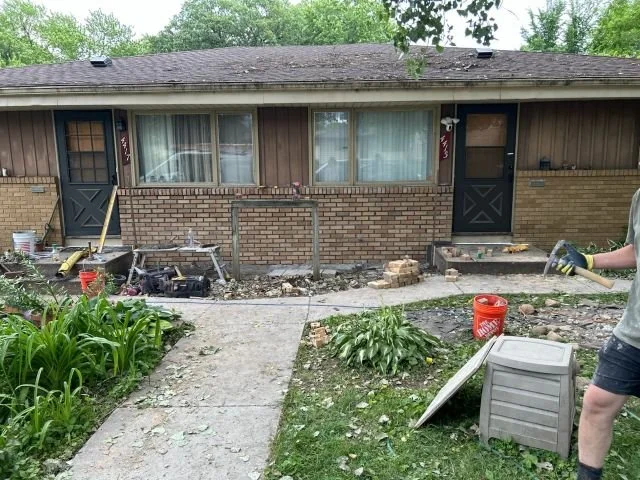
Edges Before Middles
A front edge that has rounded off, so the nosing no longer reads as a crisp line
Flakes or grit collecting on the tread below, shed from the edge of the one above
A crack that starts at the front edge and runs back into the body of the tread
Open joints at the ends of a tread, where it meets the stone beside it
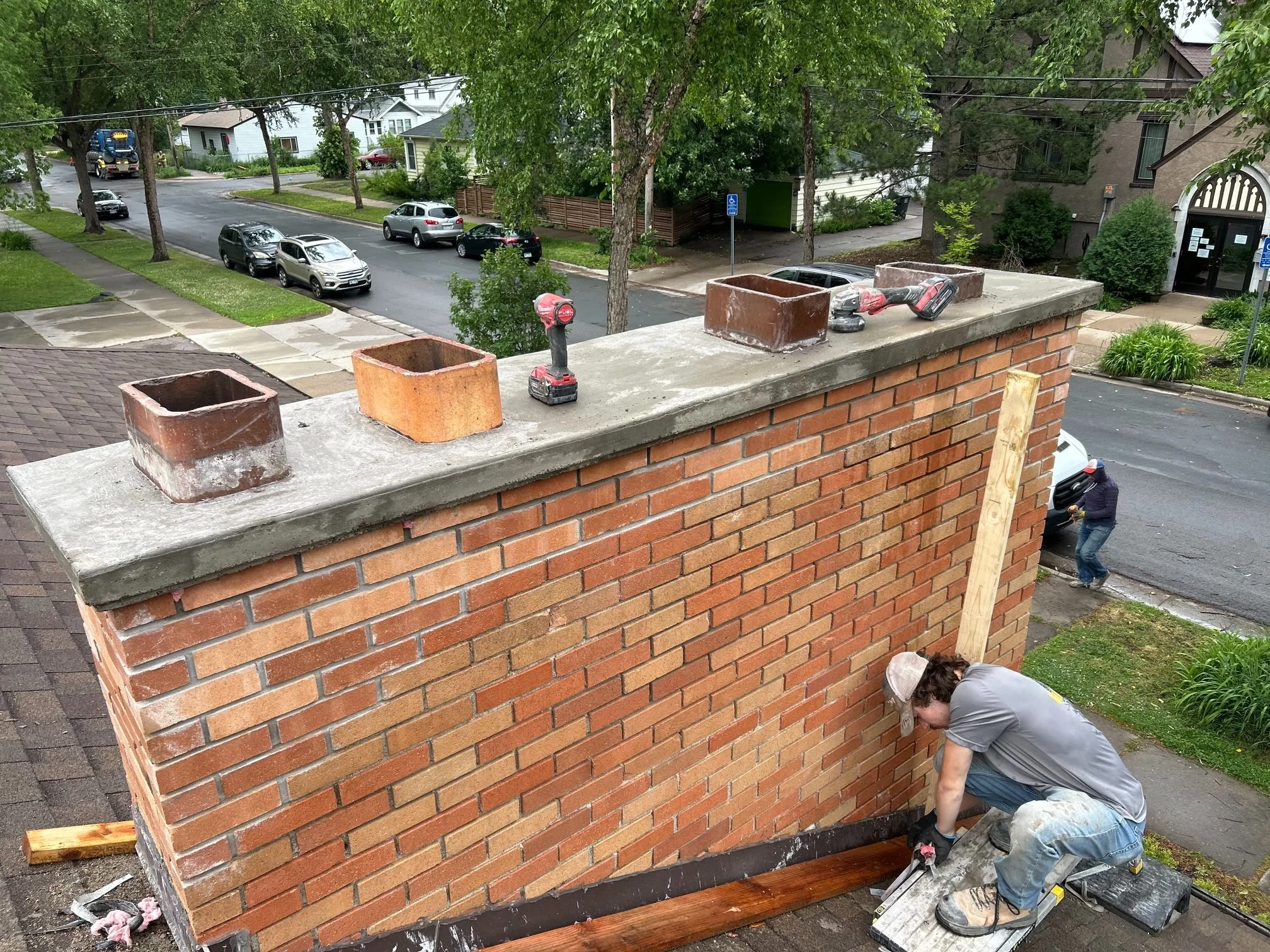
Replacing a Salt-Worn Tread
Edge loss and a failed tread can look alike from the walk. Stand on the stone and look along it, and they separate. A tread with edge loss is still tight in its bed and still whole: its nosing has rounded or flaked back, but the stone behind the edge is hard and flat. A failed tread has cracked through, moves when it takes weight, or has started losing layers across its top and at the front.
Shallow wear on a sound tread may be left where it is. Plenty of old entries carry softened nosings for a long time without the stone behind them giving way, and in that case the useful thing is to know the edge is there and watch it. Deep loss is different. Once the edge has gone back far enough to change how the step meets your foot, or the tread has failed behind it, the stone is replaced.
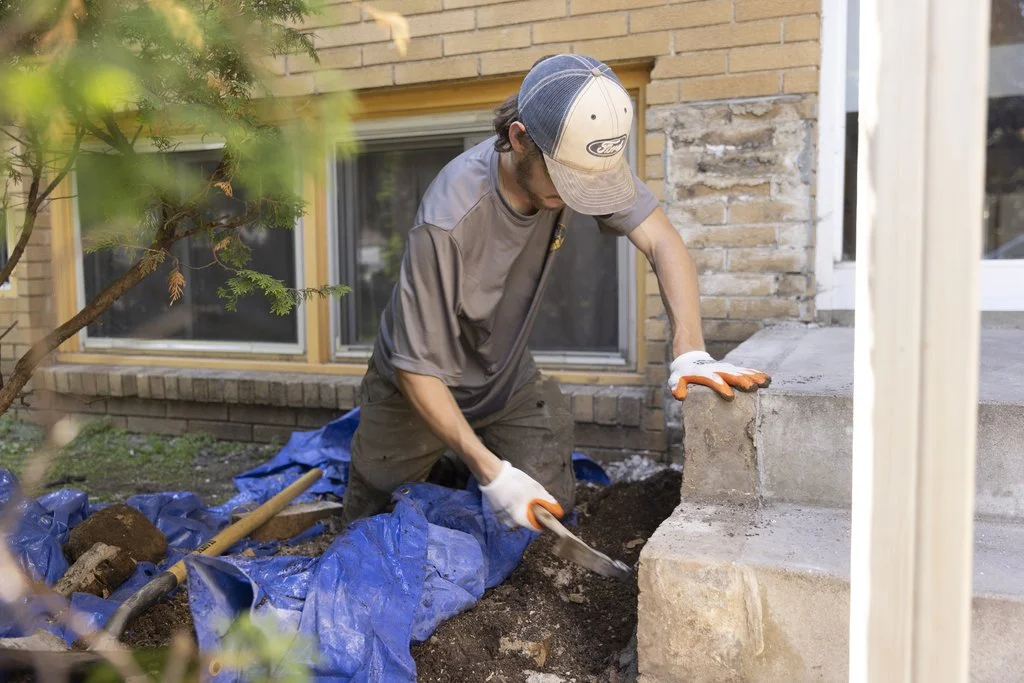
Replacement removes the worn tread and installs a new one in its place. The joints around the old stone are cut free, and it is lifted out; a new piece of natural stone, cut to fit, is bedded on fresh mortar, level with the treads beside it, and its joints are repointed. Finding that stone is the slow part, since an older stone has to be sourced, and our St. Louis Park stone steps page goes into what has to match. Where several treads have worn deep and the flight beneath them has also shifted, the work stops being one stone at a time: the flight is taken up and rebuilt, reusing a footing that is still good and replacing a bad one. On a concrete entry, worn steps are repaired in concrete instead.
Two things are left off. We do not smear a patching compound over a worn edge; the reasons are the same as those our Cottage Grove brick repair page gives for coatings on brick. And sealing a salted entry is decided at the visit, as our Apple Valley brick repair page describes for brick near the ground, with no product promised to stop the wear.
Worn Treads and the Two Lines
No published line names a single worn tread. Replacing one or two is priced after the visit, on the same terms as resetting and repointing, and the band applies to a front entry taken out and relaid in full.
Before you call
Every figure on this page depends on square footage and on what we find when we look. They are rough guides to help you decide whether to call, not quotes. The exact number comes after the visit, and the visit is free.
Nosing Wear, Case by Case
Can the worn edge be patched?+
Not by us. A patch over a salt-worn edge sits on stone that may still be breaking down underneath, and when it lets go it can take a piece of the tread with it. Shallow wear can be left alone; deep wear means a new tread.
Will a sealer stop the edges wearing?+
No sealer comes with that promise. For an entry that takes heavy salt, one may slow the damage; that call is made at the visit, not added to every job.
Does one worn tread mean the whole set is going?+
Not by itself. Edge wear follows salt and traffic, so the most-used treads wear first. A set is going when the base moves, which shows as treads tipping, the flight leaning or its face pushing out, and those signs are listed on our front steps page.
Could the worn tread be turned around?+
Sometimes, if its back edge is sound and square and it sits right reversed in the opening. Ask Sam whether yours does. Where it does not, a new tread in matched stone goes in instead.
What Customers Say
What appears below is our live Google feed, not testimonials we picked out, so it shows whatever is genuinely on it.
The Front Edge, Tread by Tread
What helps on the first call:
- Note these about the worn treads.
- Which treads have worn, and where they sit in the flight
- Whether any of them rocks, or has a crack running back from the nosing
- A photo taken along the nosing from one end, at the height of the tread