

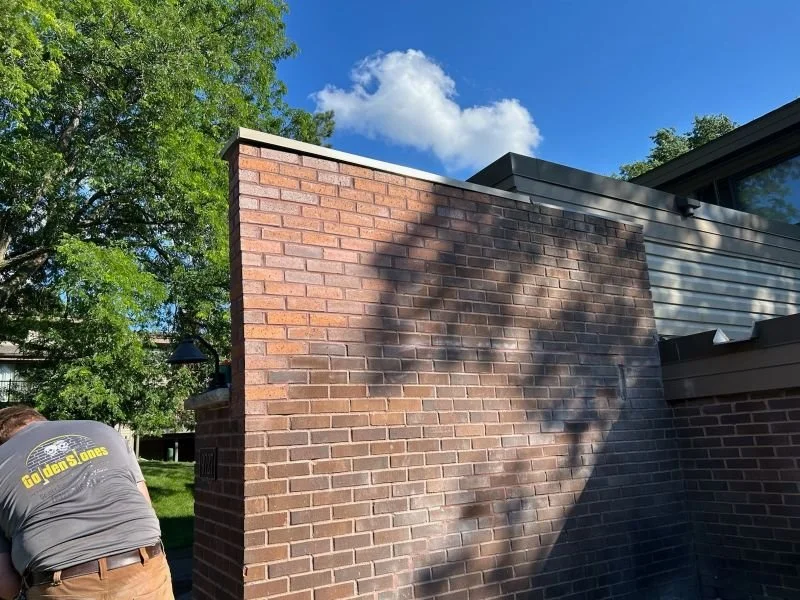
Brick Repair in Cottage Grove
10 Years
Workmanship warranty, in writing

Patch kits, skim compounds, and brush-on coatings are sold to make flaked brick look whole again, and from the street they can manage it. The flaking can carry on behind them. Where that has happened on a Cottage Grove house, the coated units come out, and bare brick chosen to suit the wall is laid in their openings.
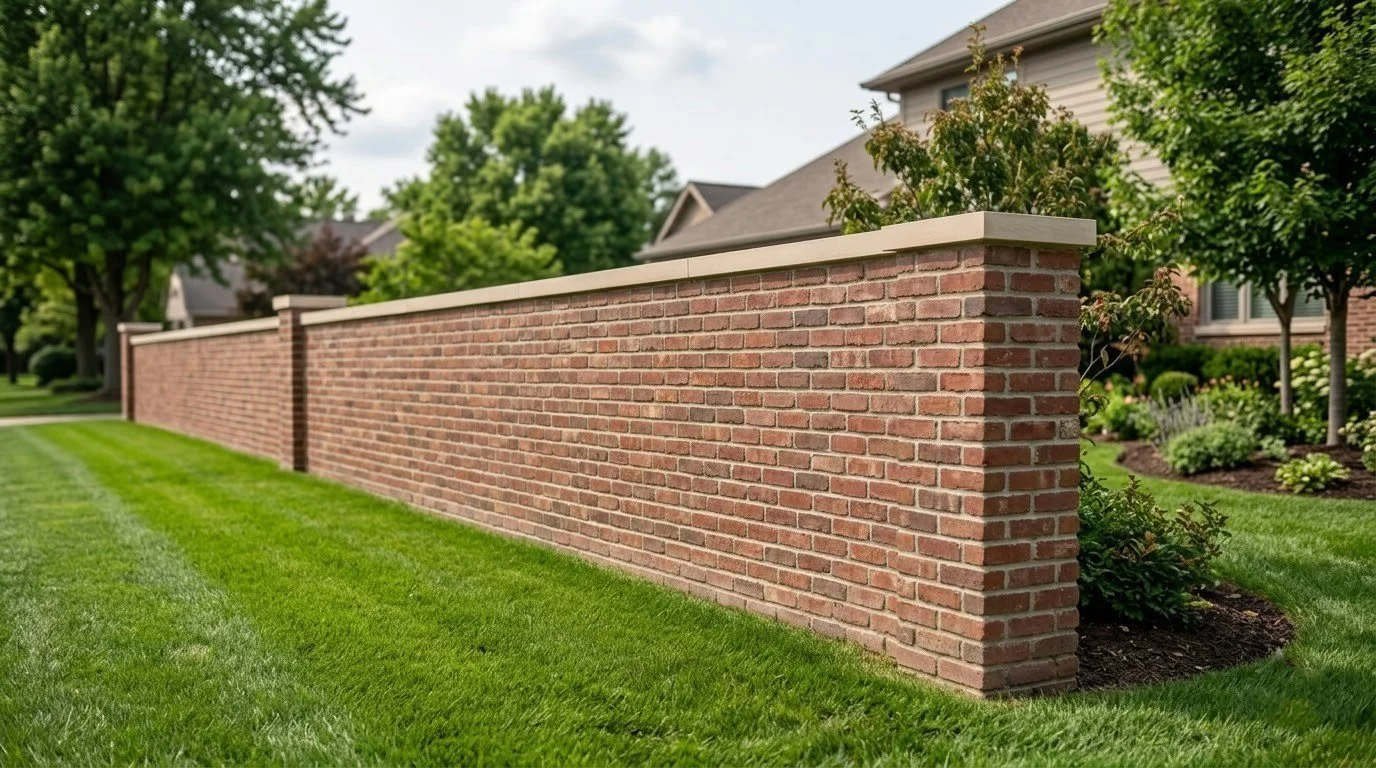
Telltales of a Coated Face
A patch on a brick face that is a different color or sheen from the brick around it
A web of fine hairline cracks across the surface of a patch
The edge of a patch lifting away, with grit or crumbs of brick behind it
A face that sounds hollow when you tap it lightly with a knuckle
A cloudy, darker or glossy film across a stretch of the wall that the plain brick beside it lacks
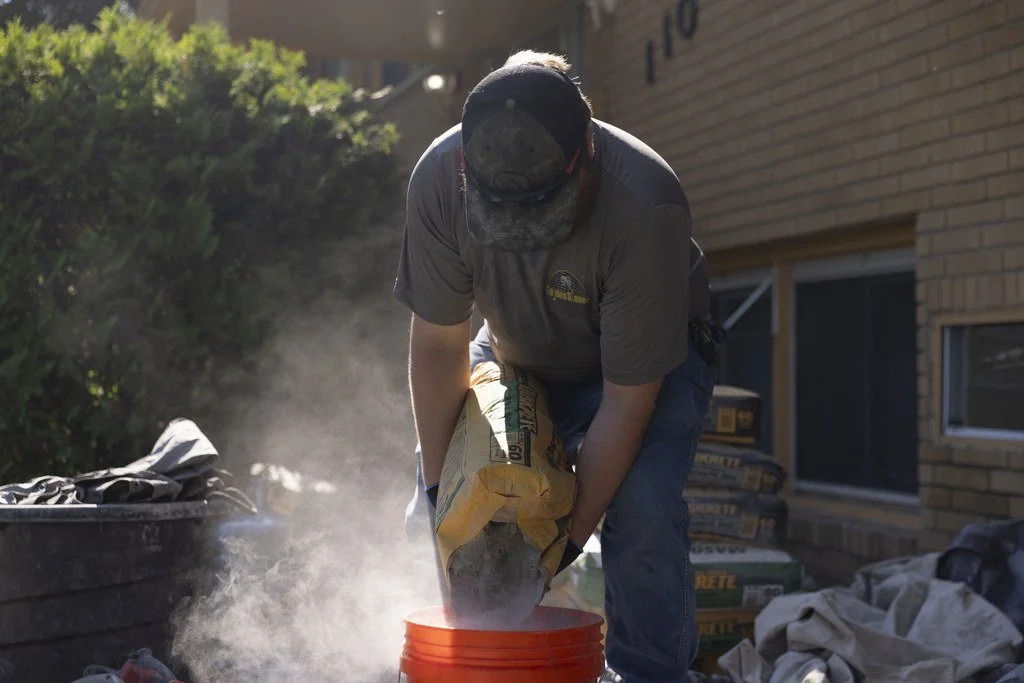
The Damage a Coating Hides
A brick's hard, fired skin sheds most of the water that reaches it. Once that skin flakes off, the softer clay beneath it takes up water, and in a freeze, the water opens it up further. That is spalling, and a coating does not reverse it. The broken face is still under the product, still taking on water from the joints and from behind.
Two kinds of product tend to turn up on flaked faces. A patching or skim compound is troweled on to rebuild the missing face, in a shade that may never have matched; it sits on crumbling clay, so it can let go in pieces and take more of the brick with it. A brush-on coating leaves a thin film over a whole stretch, flaked and sound faces alike. The first hides the loss. The second hides it and can also slow the wall's drying.
A film can make matters worse. Technical Note 6A from the Brick Industry Association, which addresses clear coatings, warns that water inside a brick dries out more slowly through a film on the face. The water held in, and the salts it leaves as it finally dries, can build enough pressure to spall brick. The note advises keeping film-forming coatings off brick where it freezes and thaws, and it lists replacing brick with spalled faces among the repairs a coating should not stand in for.
Our brick repair page says the same in its own terms: spalled brick is replaced, and a product spread over a flaked face covers the damage without removing it. That is why a coated unit whose face has gone comes out whole, coating and all, and a new brick goes in its place.
Where a coating has spread over faces that were still sound underneath, those units are judged at the wall. Some may be left alone. Others may have to come out with their neighbors if the product cannot come off without taking the face with it.
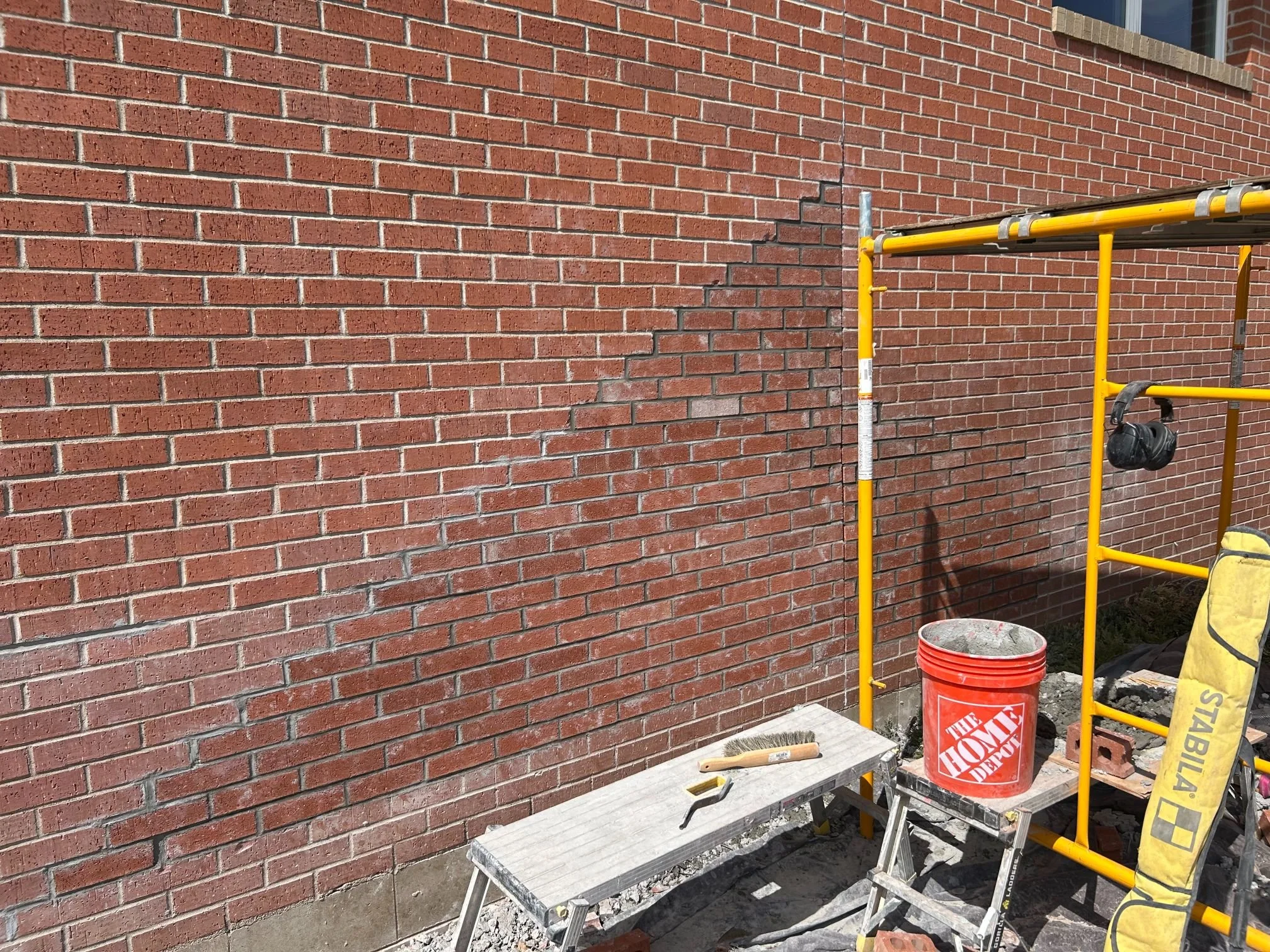
Covered Faces on Older Cottage Grove Houses
Most brick walls in Cottage Grove ask for little, and our Cottage Grove page says as much. This page is for one kind of front that does need work: faces that flaked and were then covered up.
Cottage Grove's pre-1970 houses are nearly all from the 1940s, 1950s, and 1960s, roughly 3,000 of them. A brick front from those decades has had time to flake, and time for an owner or an earlier contractor to reach for a patch kit or a can of coating to hide it. That covered front, with the flaking still going on underneath, needs the repair set out below.
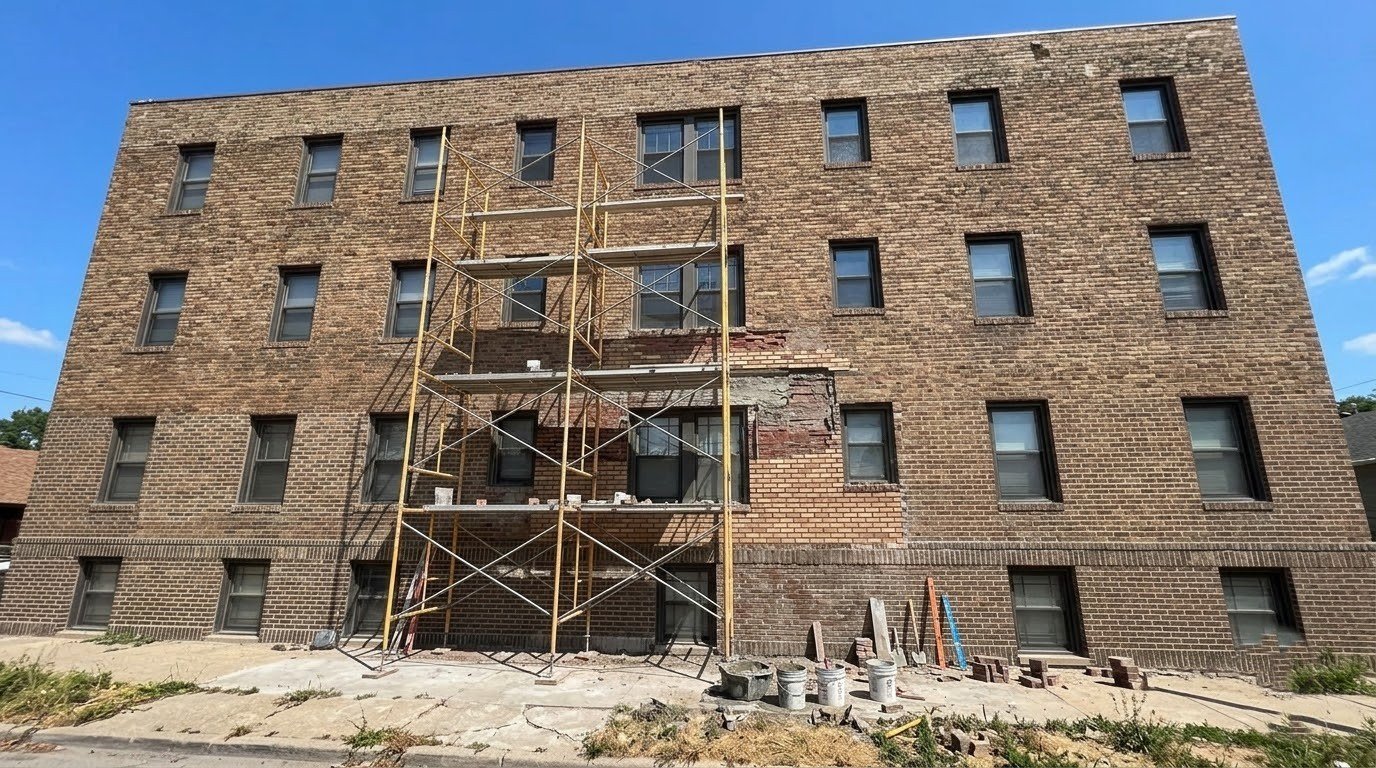
Bare Brick for Coated Brick
Coated faces sorted three ways
At the free estimate, Sam goes along the coated stretch and sorts the units: faces gone under the product, faces still sound under it, and brick that was never coated. The written estimate counts the units to come out and prices the options.
Replacements picked ahead of the cut
New brick is chosen before anything is cut to match the uncoated brick on the same wall; our Minnetonka brick repair page covers how.
Each coated unit is cut out whole
Each coated unit is cut out through its joints with the product still on its face, since the coating comes away with the brick.
New units, left uncoated
The new units are bedded in fresh mortar and go in uncoated. Sealer is considered only where the repair is salt damage at grade, and that is decided at the visit. Exterior mortar work is scheduled for weather mild enough for it to cure.
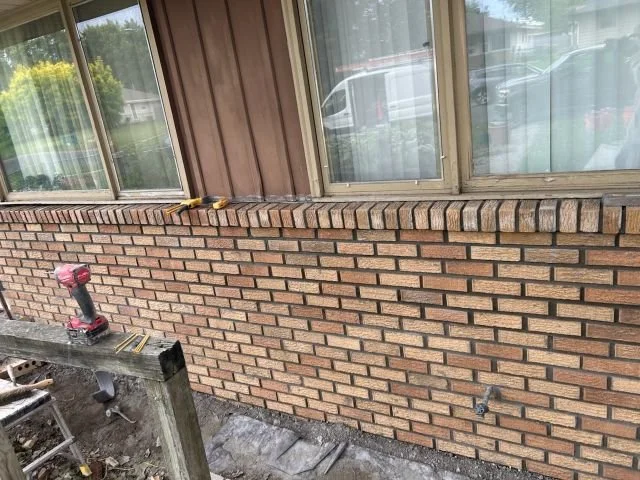
Coated Units by the Count
The coated units marked for removal are totaled on the estimate, and the total is set against these:
Product spread wide over sound faces can push the total up, since some of those faces may come out with it. If part of the wall has shifted as well, that stretch is priced as a rebuild.
Before you call
Every figure on this page depends on square footage and on what we find when we look. They are rough guides to help you decide whether to call, not quotes. The exact number comes after the visit, and the visit is free.
Coatings, Sealers and Patch Kits
Is a clear sealer the same as a coating?+
Not quite. Some clear products soak into the brick, and some leave a film on it. We generally use a sealer in one place, on salt-damaged brick at grade, and only when the visit finds a reason for it. Our Apple Valley brick repair page goes through that decision.
Can the product be scraped off and the brick kept?+
Sometimes, on a face that was still sound even when covered. Where the face has already flaked, the brick beneath the product is the damaged part and is generally replaced.
We used a patch kit on the front ourselves. Is that a problem?+
No. Tell Sam what went on and roughly where, and those units are sorted the same way as the rest.
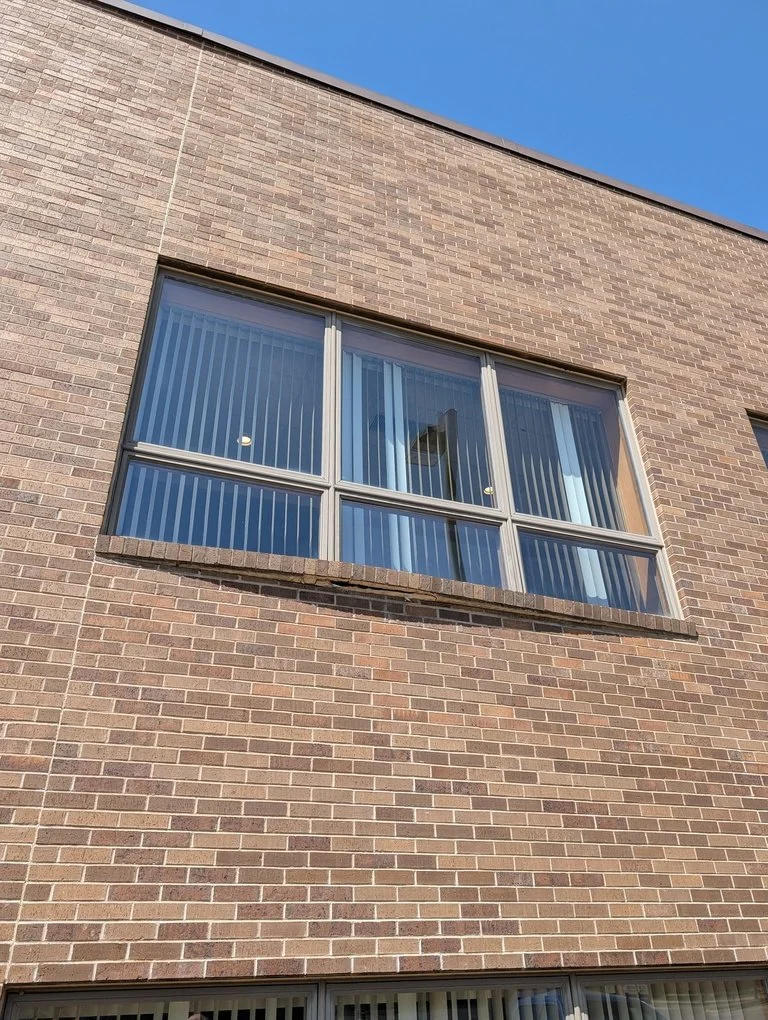
What Customers Say
What appears below is our live Google feed, not testimonials we picked out, so it shows whatever is genuinely on it.
Tell Sam What Went on the Wall
What helps on the first call:
- If you know what the product was, send its name along with a close photo of the coated faces.
- If it was on the brick before you bought the house, the product's name may be lost, and that is fine: a photo of a spot where it is lifting or cracking tells Sam more than a label would.