

Stone Steps in Maple Grove
10 Years
Workmanship warranty, in writing

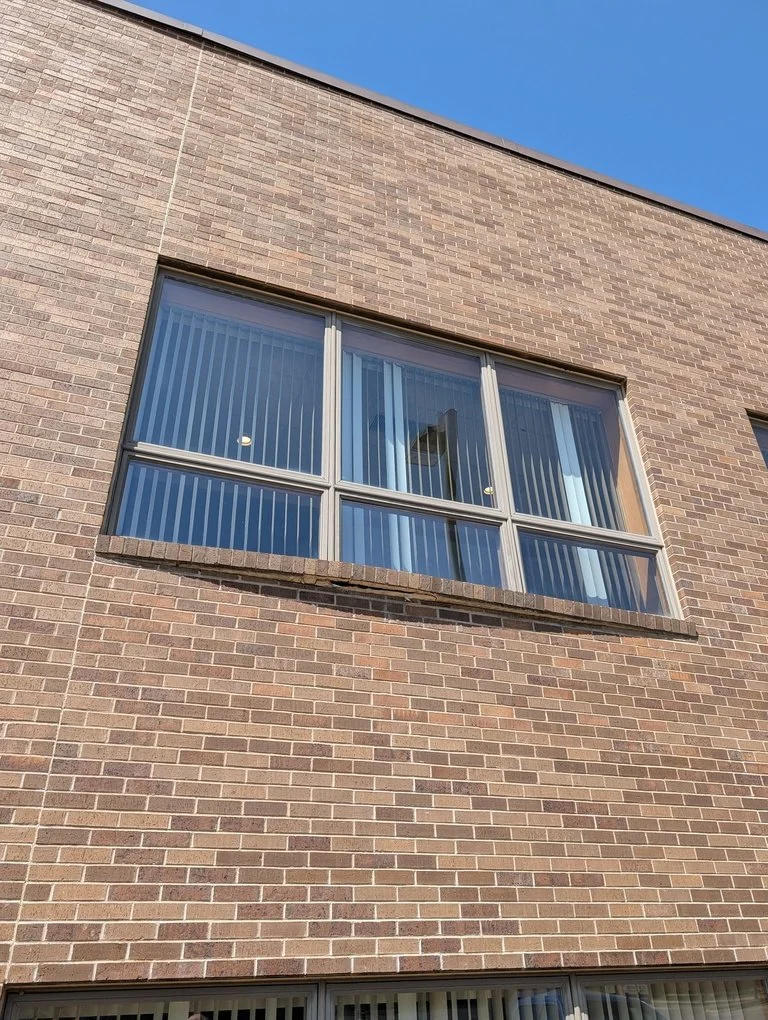
A riser that has pushed out of line on a Maple Grove entry says more about the inside of the steps than the outside. Something behind the face has moved and is pressing on it. When a stone or brick step face bows, we take the bowed part down, deal with what pushed it, and lay it back up true.
Bulges, Open Joints and Loose Facing Stones
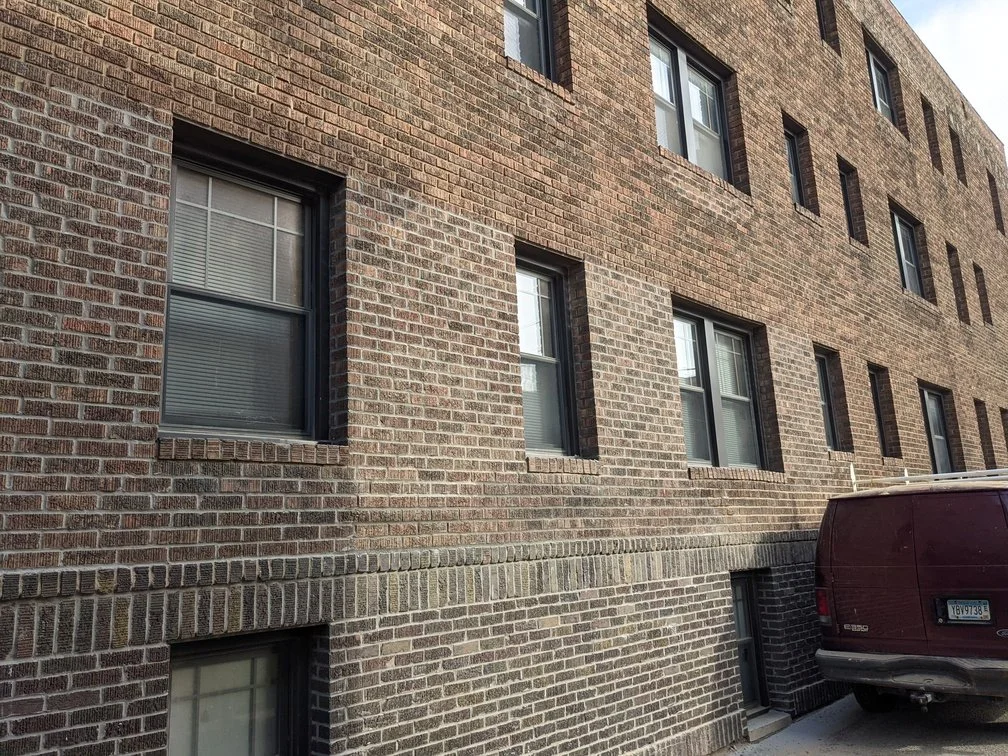
A riser bellied out of line with the ones above and below it
A run of joints opening one above the other up the face of the steps
One facing stone or brick that has come loose while its neighbors still sit tight
Grit, sand or crumbs of fill collecting at the foot of the steps
A gap opening between the face and the tread that sits on top of it
A Box of Fill Behind a Stone Face
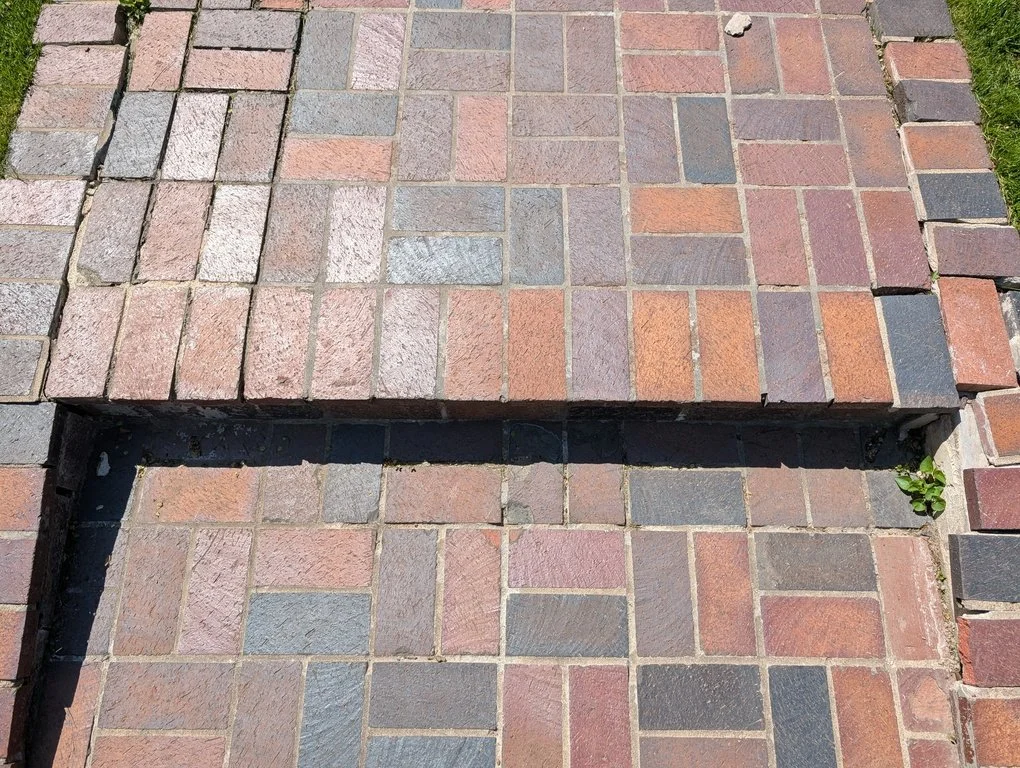
A set of masonry steps is built in two parts. The part you see is a face: the risers and, on many entries, the ends of the steps as well. Behind it sits a core that carries the treads, which may be filled with gravel, rubble, or a block of poured concrete. The face is laid to look right and to keep the core in place, and it is not meant to hold back a core that is pushing on it.
Two things usually start the push. Water seeps into the core through open joints and failed treads, and the ground beneath the steps moves, taking the core with it; our stone steps page covers why that ground moves. Either way, the core swells or shifts while the face stays put, until the face gives.
A bulge rarely stays a bulge. Once the face opens, the fill behind it can start to come out through the gap, the treads above lose what they sat on, and a small bowed patch can turn into a rebuild of the whole set.
Pushing a bowed face back into line, or pinning it where it stands, is not usually the answer. The core that moved is likely still loose behind it. The bowed section comes down instead, the core behind it is cleared and made sound again, and the face goes back up. Facing that is still sound is laid again where it can be. The low side walls that flank some entries are their own job, covered on our Minneapolis step side walls page.
Stone and Brick Facing Across Maple Grove
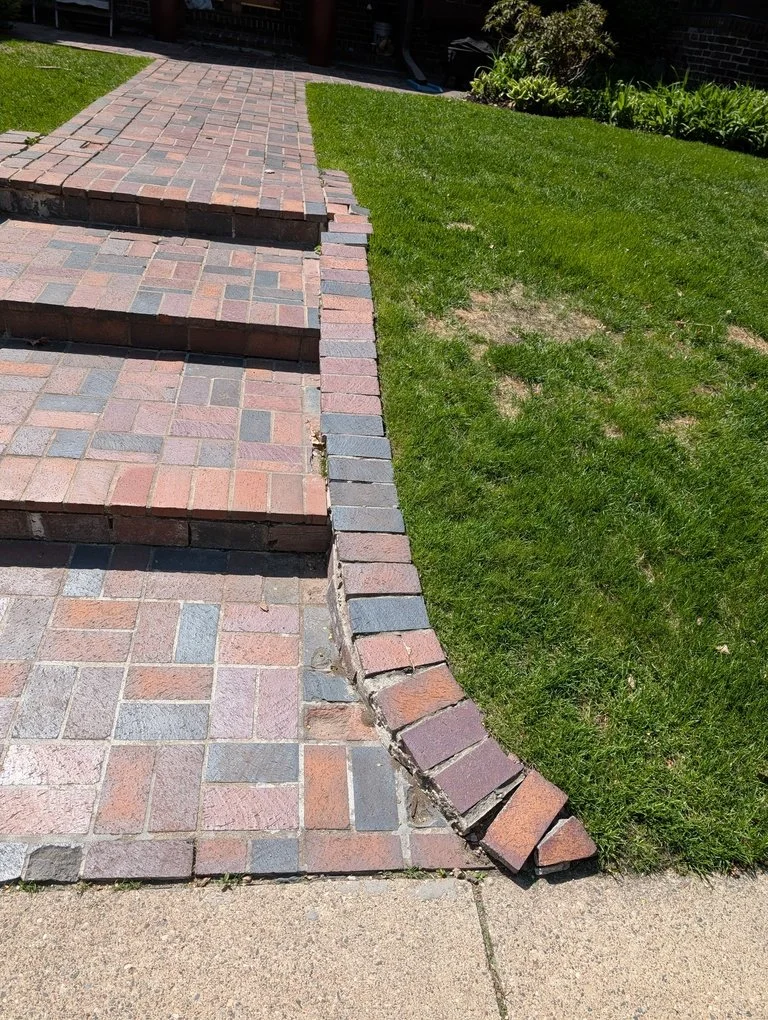
On a Maple Grove house of the 1980s or 1990s, the entry can come in more than one build. The stoop may be a poured concrete block with stone or brick laid over its face, or a masonry set built up around fill. From the walk, the two can look alike, and a bulge shows on either. The brick on such an entry can match the brick used across the front, and the stone may be a sawn or a split face. Whichever it is, the face that comes down goes back up in that same material.
On a faced concrete stoop, a bulge can come from the face letting go of concrete that is still sound, or from the concrete itself moving and carrying the face with it. Sam will lay brick or stone on a sound slab, and our Plymouth stone steps page covers that kind of facing. Which case an entry is in comes out at the visit.
Taking Down a Bowed Face
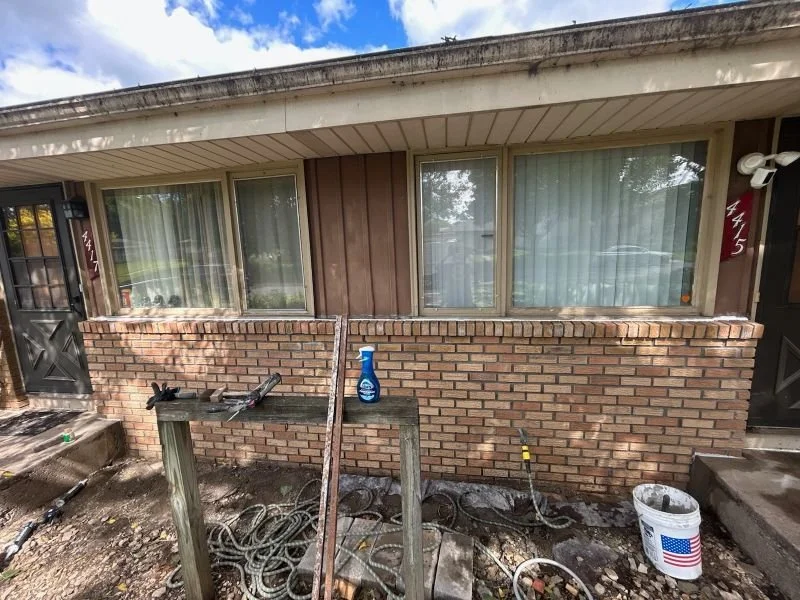
1. Sam looks at the bulge from the side and from the front, and at whatever the face is wrapped around where a loose stone or open joint lets him see it, to judge how far the core has moved and whether it is still moving.
2. The written options cover taking down and relaying the bowed section, or a full rebuild where the core or the base under it has gone. Where both would hold up, both are priced.
3. The bowed part of the face comes down, with the sound pieces set aside. The core behind it is cleared and rebuilt as what turns up calls for, and under a full rebuild an old footing in good shape is kept, while a failed one is dug out and renewed.
4. The face is relaid on fresh mortar, true to the risers beside it, with joints finished to suit the rest of the entry, so the repaired stretch lines up with the face around it.
Section or Whole Entry
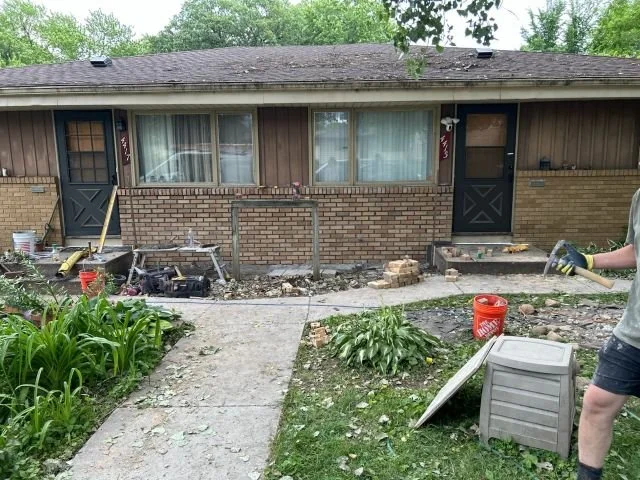
Where the bulge means the whole entry comes out and goes back up, that falls on the rebuild band. A bowed section taken down and relaid on its own has no published figure and is priced after the visit.
A reset seldom answers a bulge, since the trouble sits behind the face. The second line is there for a tread that has worked loose on steps whose face has held its line.
Before you call
Every figure on this page depends on square footage and on what we find when we look. They are rough guides to help you decide whether to call, not quotes. The exact number comes after the visit, and the visit is free.
Behind and Beside the Face
Can the loose facing stone just be mortared back in?+
Not usually on its own. A single loose stone in a bulge is the sign, and setting it back alone leaves whatever pushed it out still pushing.
Is the concrete under our stone face the problem?+
It may be, and the visit settles that. If the concrete itself has moved, putting it right is concrete work, which we take on at a front entry.
Do the side walls come down too?+
Only if they have moved as well. Side walls that still stand true can stay while the steps between them are rebuilt, and one that has shifted is priced separately.
What Customers Say
What appears below is our live Google feed, not testimonials we picked out, so it shows whatever is genuinely on it.
Three Photos of the Bulge
What helps on the first call:
- 1. Down the length of the risers, with the camera held at one end of the steps
- 2. The bulge from a step or two away, with a straightedge or level laid against it
- 3. Close on the joint that has opened the most