

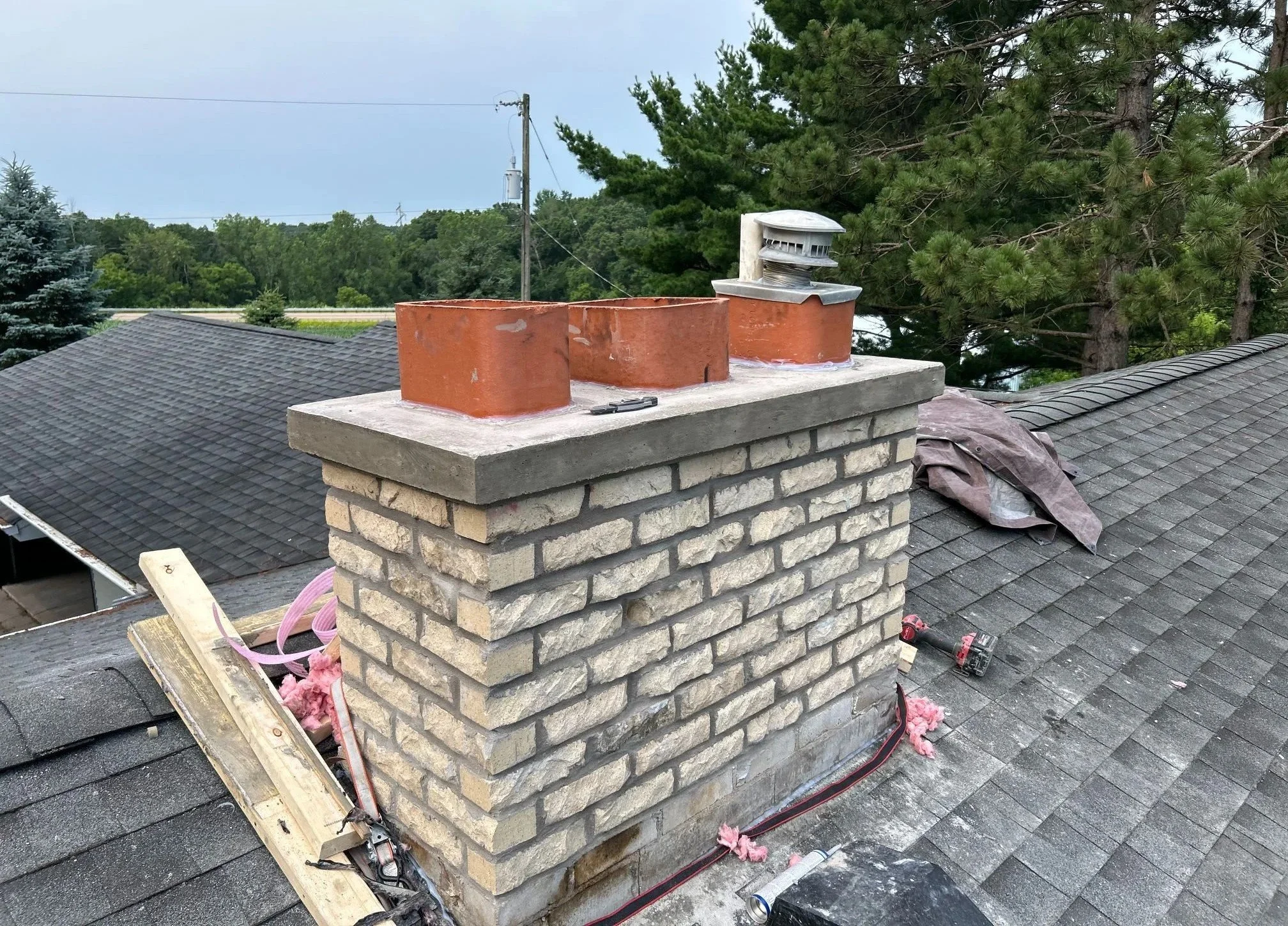
Chimney Repair in Minneapolis
Walk a block of prewar houses in Southwest or Nokomis and count the brick. On a lot of them, what you see is stucco from the foundation to the eaves and, if the house still has one, a single column of brick coming up through the roof.
10 Years
Workmanship warranty, in writing

A Stucco City With Brick Chimneys
Only about one prewar Minneapolis house in nine has brick walls today. Sort them by build year, and the share in stucco climbs steeply. Houses recorded from 1901 to 1909 are nearly as often brick as stucco. Among 1920s houses, three in four are clad in stucco today, and barely one in 16 are clad in brick.
Half of all prewar houses now clad in stucco date from the 1920s. So, a large share of prewar Minneapolis is 1920s-era frame houses in stucco, many of them bungalows or Period Revival houses.
It is not spread evenly. In Southwest and Nokomis, nearly two prewar houses in three are stucco, followed by Camden and Longfellow at a little over half. In Phillips, it is just over one in four. In the first group, the brick a homeowner has to look after may be the chimney alone.
Stucco From the Start, and Stucco Added Later
Stucco is not a recent cover in this city. In 1940, the census counted that more than five Minneapolis residential buildings were faced in stucco for every one in brick. Prospect Park's 2014 National Register nomination dates the rise of stucco over a wood frame for new houses there to about 1915, and cites a 1937 study of the Twin Cities that discussed how popular stucco was here, compared with cities of similar size elsewhere.
The same nomination records a second way stucco arrived: as a replacement for wood siding on older houses, to cut upkeep or to look up-to-date. Its inventory includes Prospect Park houses built in 1901 and re-clad in stucco in 1934 and 1936. On a house like that, the build year on the record usually dates the chimney, and the stucco around it can be 30 years younger. So, on a stucco house, the brick is judged on its own.
What a Stucco House Changes About Chimney Repair
It gets noticed late
A stucco bungalow does not look like a masonry house, and with no fireplace in use, there is little reason to look up at the stack. On a story-and-a-half house, the chimney can pass through the rooms under the roof, so the first sign can be a stain on a ceiling up there, beside the chimney. By then, water may have been coming in for a while.
A stain there is not always the chimney. The Center for Energy and Environment, a Minneapolis nonprofit, says story-and-a-half homes are prone to ice dams because of their design, and that an ice dam can cause water to leak into the ceilings below. A stain that appears only in winter, with snow on the roof, may be caused by an ice dam. One that also appears after summer rain cannot.
It may still be venting a boiler
Sixty-three percent of prewar Minneapolis houses have no fireplace on record, so where one is present, it was probably built for the heating plant. More than a third are still recorded with hot-water boiler heat. That makes the first question at the visit a practical one: is anything still going up this chimney in January?
It meets the stucco at the roof and the wall
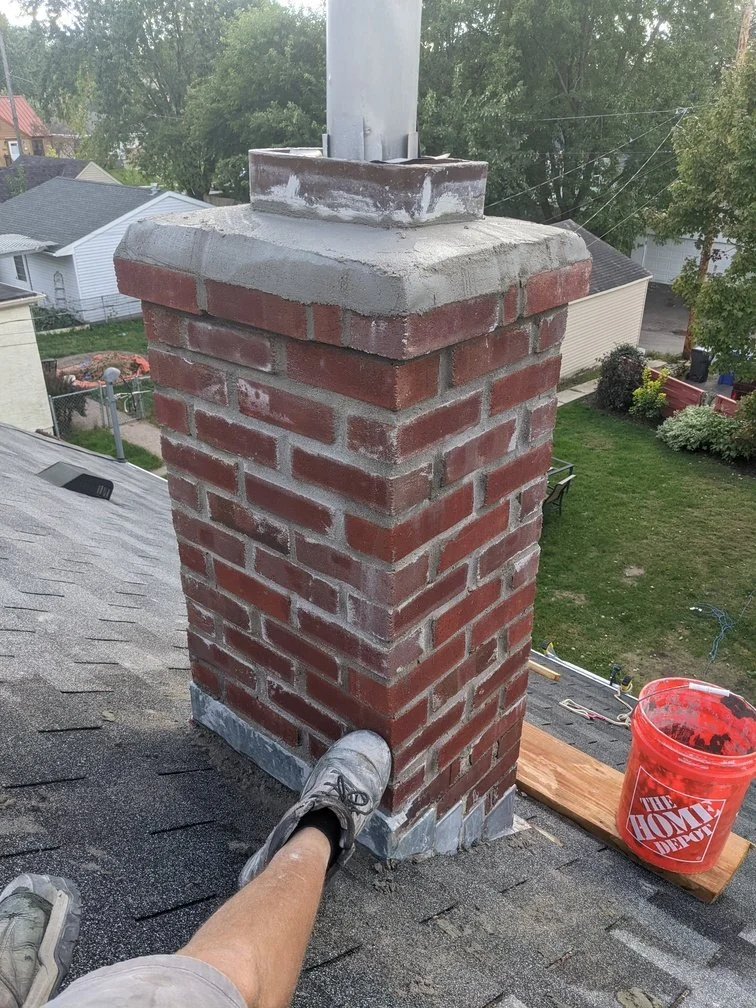
Where the chimney comes through the roof and runs up an outside wall, brick meets stucco at a joint. A crack along that line deserves a look, because it can mean the chimney and the wall have moved differently.
A Chimney Built for Coal
When these houses were new, the chimney most likely carried coal smoke. Of the Minneapolis homes with central heating in 1940, seven in 10 burned coal or coke, and close to two in three were heated by steam or hot water. The heating plant usually stood in the basement, so the stack rises from there to the roof.
That gives a repair two ends to look at. The top takes the wind, rain, and freezing, and is checked from the roof. The base stands in the basement beside the heating plant, where loose bricks and open joints are visible without a ladder.
Through the Slope or Up the Gable End
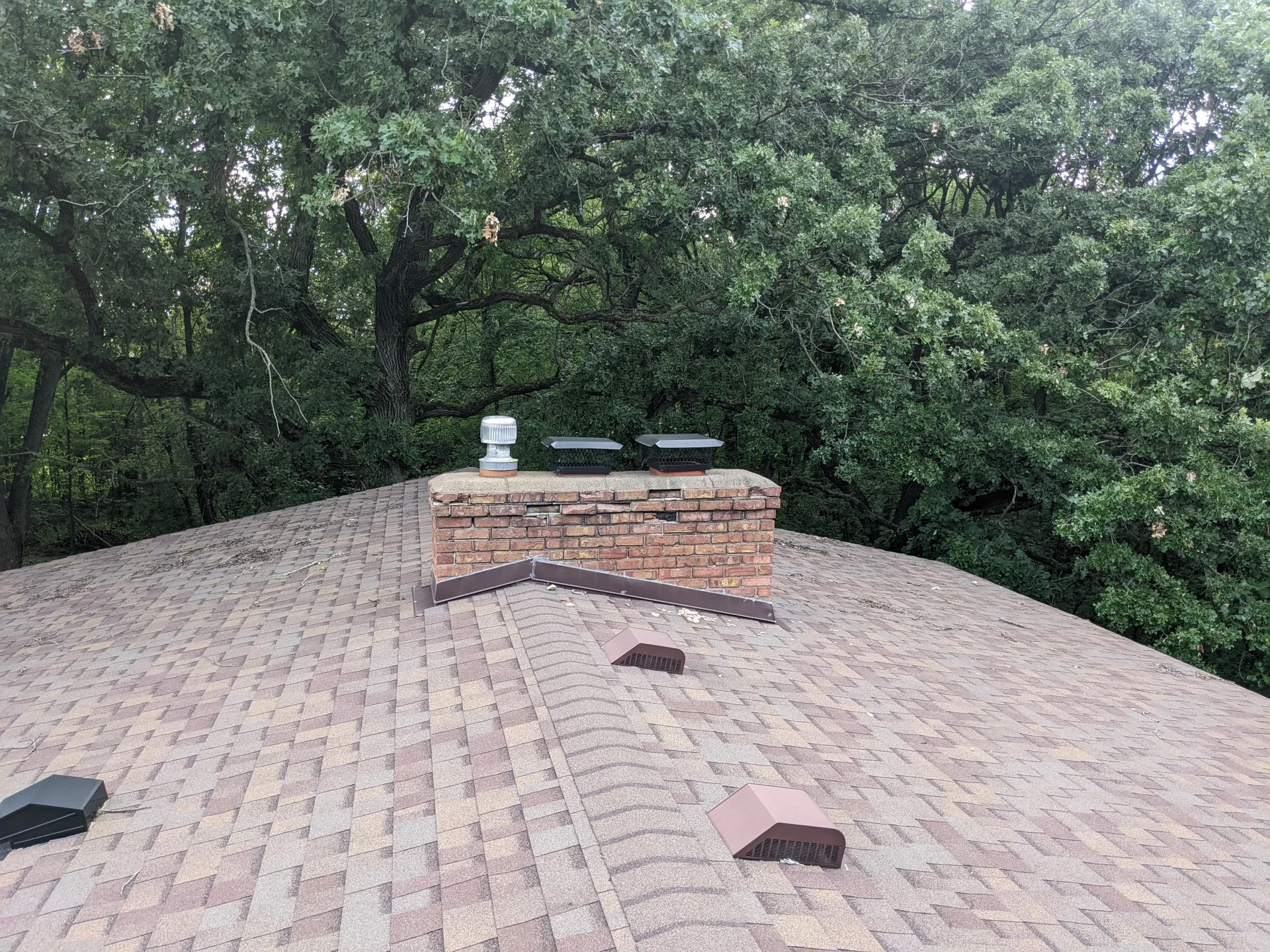
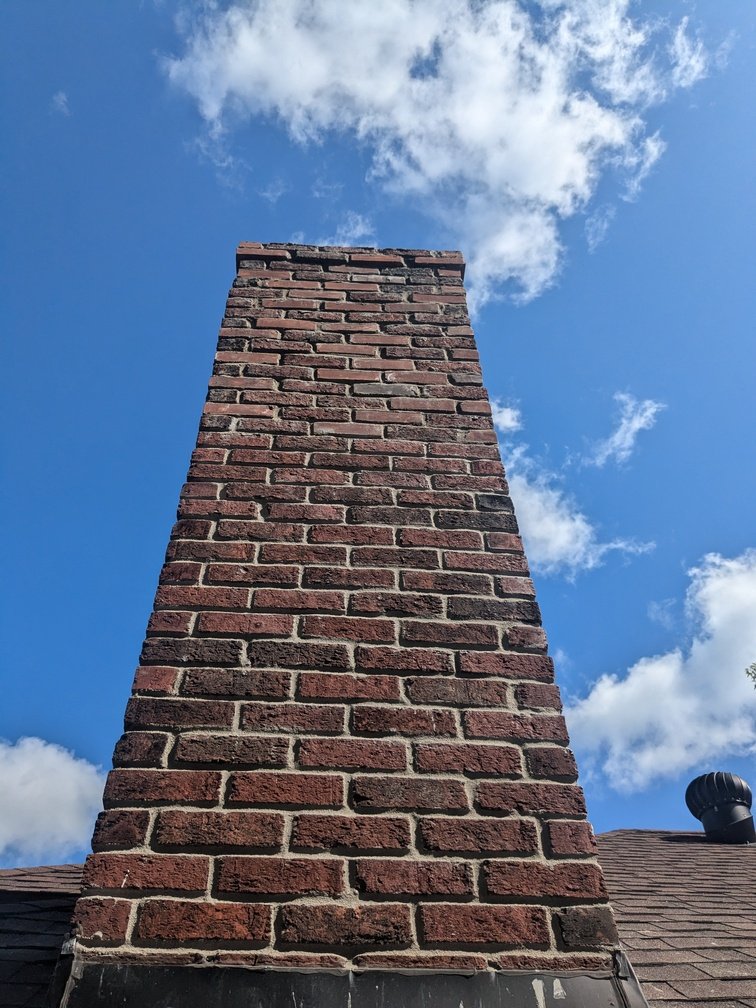
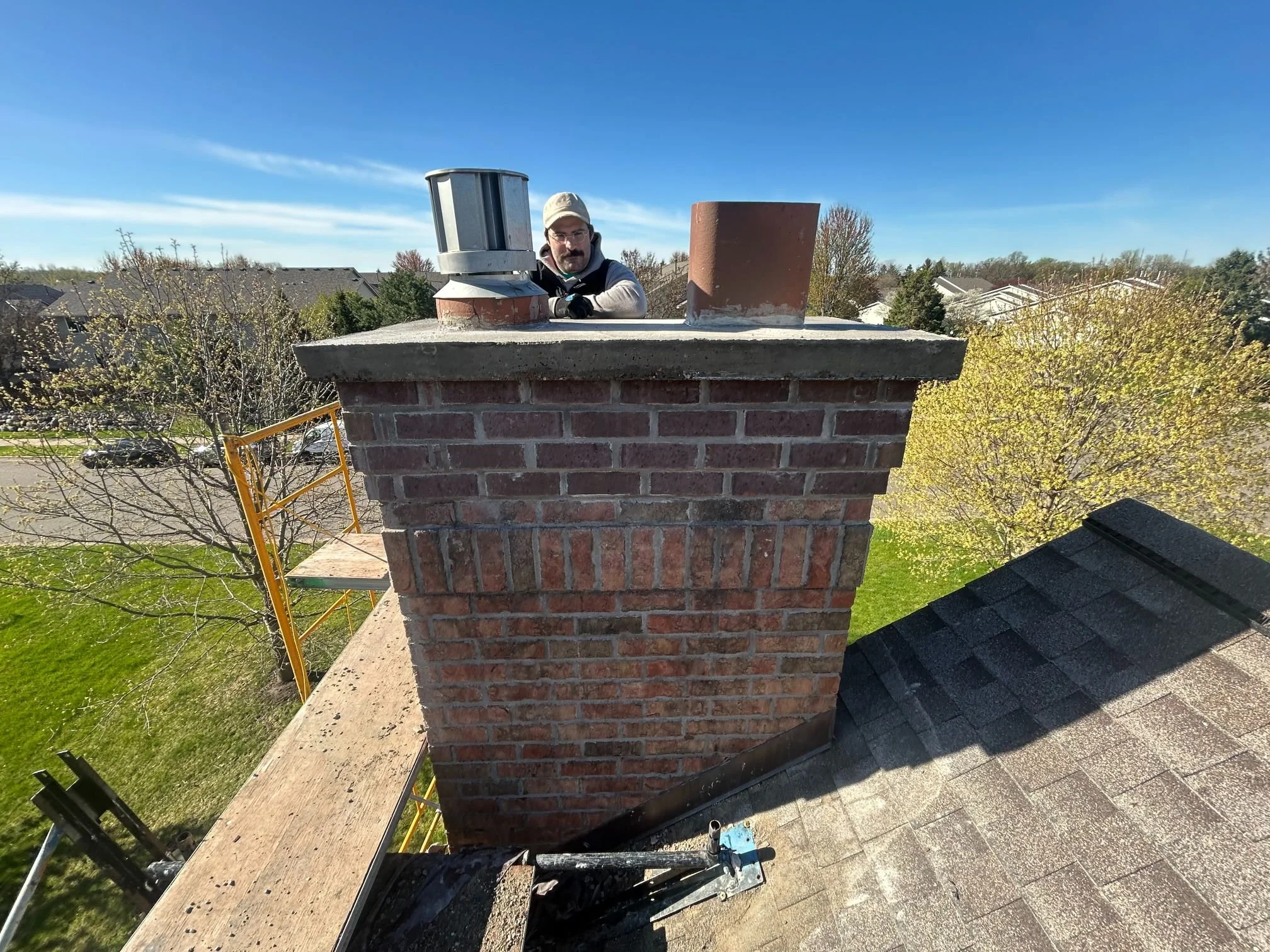
On a gable roof, the shape most prewar Minneapolis houses have, the chimney either rises through the slope or climbs the gable end, and the two wear differently. A stack that comes up through the slope shows only its top few feet to the weather, and the part inside the house is sheltered from rain and snow. A stack on the gable end is outside the house, at its full height, and exposed to wind-driven rain from top to bottom.
So an outside-wall chimney may require joint work well below the roof, along its entire run beside the stucco.
Pitch matters as well as position. Prospect Park's nomination describes an English Cottage variation built from 1920 to 1935, faced in stucco with fieldstone trim and often steep-roofed, and Tudor Revival houses often faced in stucco and brick under intersecting gables. On a roof that steep, reaching the stack is part of the job.
What We Do on the Stack
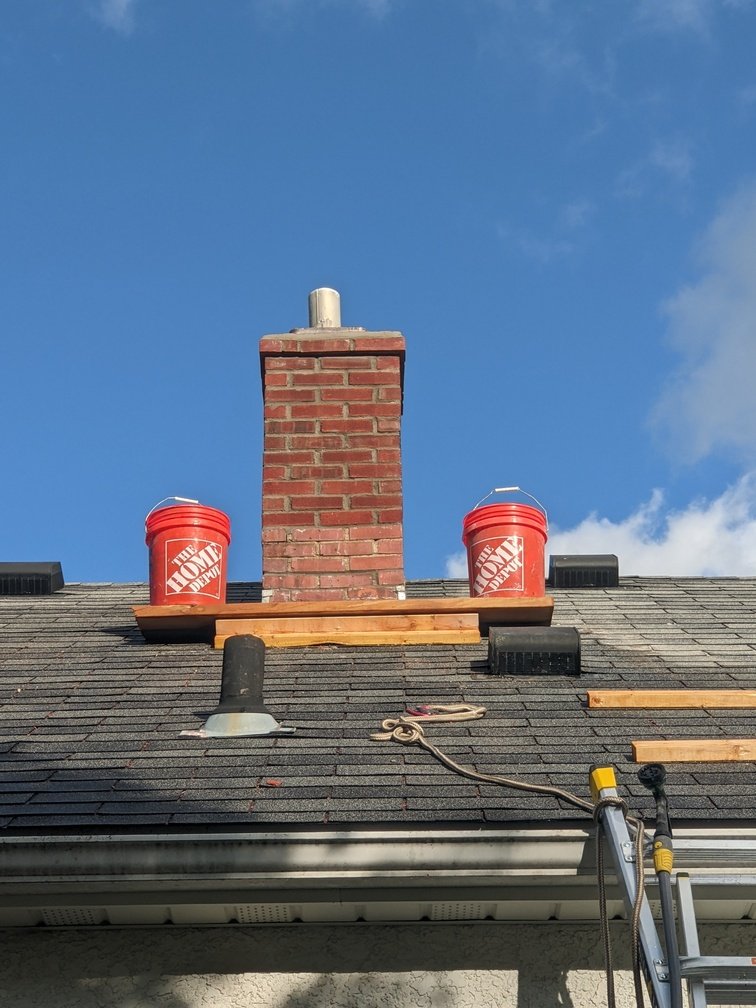
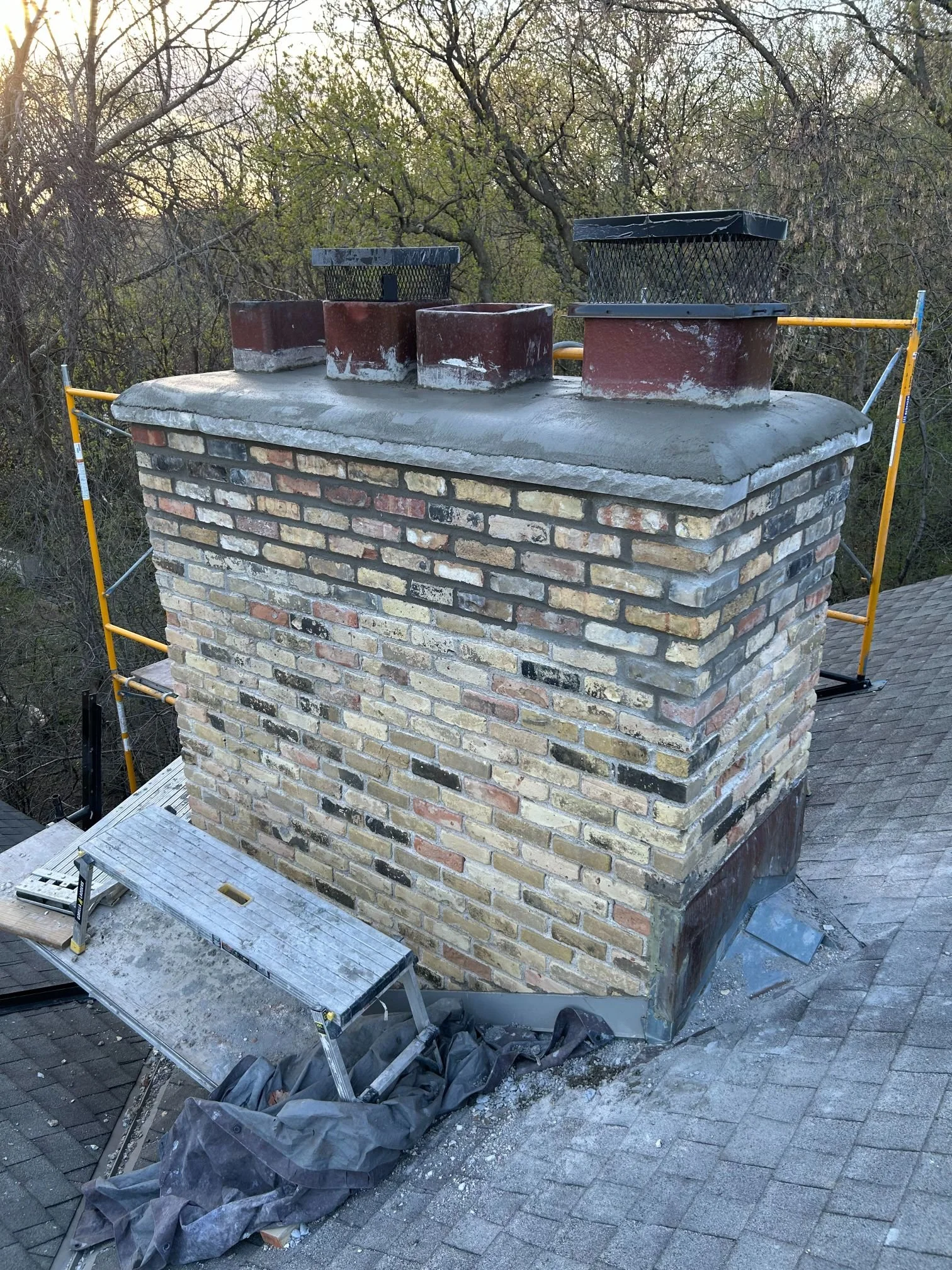
On a stucco house, replacement brick is matched against the chimney itself, because there is no other brick on the house to compare with. We sheet the stucco and the roof below the stack before work starts.
Sweeping, creosote, flue liners, dampers, gas inserts, and wood stoves go to a chimney sweep or installer.
Chimney Prices on a Minneapolis House
Many prewar Minneapolis houses have a half story under the roof, and that is the case Sam prices on site.
Before you call
Every figure on this page depends on square footage and on what we find when we look. They are rough guides to help you decide whether to call, not quotes. The exact number comes after the visit, and the visit is free.
What Sam Asks First
Questions on Boilers, Stucco and the Warranty
Our boiler still vents up the chimney. Can the work happen in winter?+
The estimate can happen in winter. The mortar work waits for milder weather. For a working chimney, we settle the timing with you and with your heating contractor for the boiler before a date is set.
The chimney is stuccoed over along with the house. Is it still a masonry job?+
Underneath, it is usually still brick and mortar, and the crown and cap remain exposed. Taking the stucco off the stack and putting it back is another trade's work.
Does the warranty cover the stucco around the chimney?+
It covers the work we did. The 10-year workmanship warranty applies to cracking or crumbling brick and joints in that work, on the terms set out in it. Stucco is not work we do, so the stucco around the stack sits outside it, as does brick we were not asked to touch.
Other Masonry Work in Minneapolis
Foundation repair in Minneapolis shows how to tell what your basement walls are made of, and tuckpointing in Minneapolis is written for houses with brick walls. The city as a whole is on our Minneapolis page.
What Customers Say
What appears below is our live Google feed rather than testimonials we picked out, so it shows whatever is genuinely on it.
Getting a Stucco-House Chimney Priced
For active leaks, we work evenings and weekends, and urgent scheduling costs more, which we tell you before you agree. Exterior mortar work is scheduled for weather mild enough for it to cure.