

Tuckpointing in Minneapolis
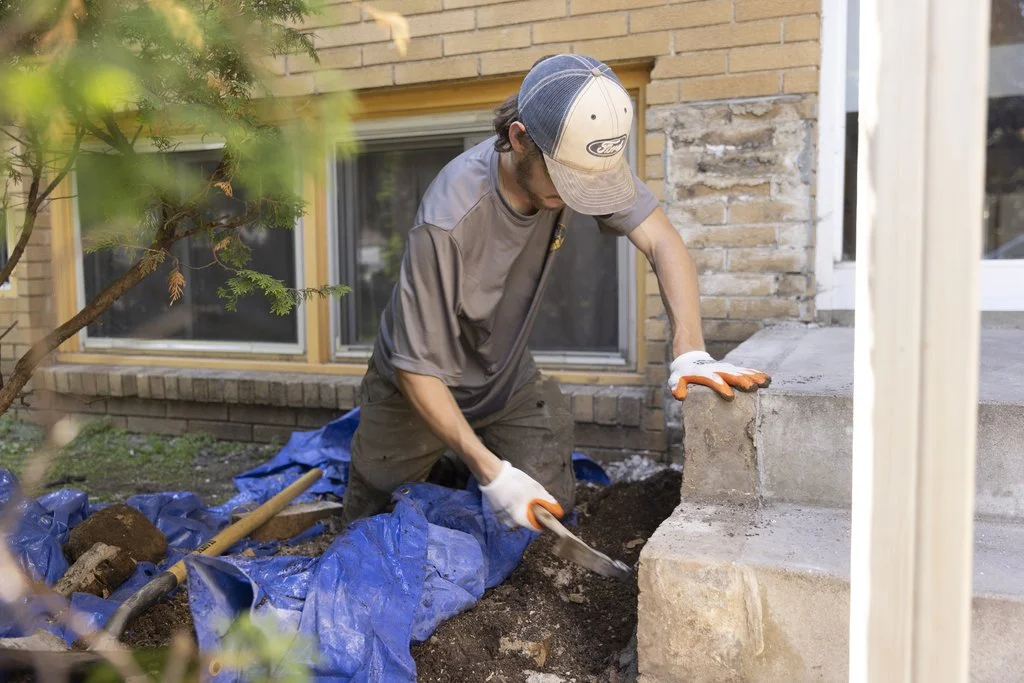
Some Minneapolis neighborhoods are brick, and some barely are. In Lowry Hill East, about one prewar house in three has brick walls. In Standish, it is closer to one in 15. In brick neighborhoods, tuckpointing is part of owning a house, and the neighborhood you are in says a good deal about the job before anyone even sets up a ladder.
Grinding out failed joints and packing in new mortar is the same job everywhere, and our main tuckpointing page covers it, mortar choice included.
10 Years
Workmanship warranty, in writing

Which Neighborhoods Are Brick
The brick neighborhoods sit around the lakes, near downtown and by the university. Lowry Hill East, Prospect Park, Lowry Hill, East Isles, East Bde Maka Ska and Whittier are the places where a quarter to a third of the prewar houses are brick. Linden Hills has a lower share, but with 380 prewar brick houses, it has more than any other neighborhood.

Tall Brick Houses Around the Lakes
Brick houses are not the same height across the city. In Lowry Hill, 87 percent of the prewar brick houses are two and a half stories or taller. In East Isles, Lowry Hill East and East Bde Maka Ska, it is more than half. In Linden Hills it is 13 percent, and in Prospect Park 20 percent, close to the citywide figure of about one in five.
A two-and-a-half-story wall changes how the job is set up and priced. The upper courses and the gable are reached from staging, and the staging for a side wall goes up in whatever gap there is between two houses. In Linden Hills, where the typical brick house is under two stories, more of the wall can be reached from low staging.
Brick on the Slopes of Lowry Hill and Prospect Park
Two of the brick neighborhoods are built on hills. Lowry Hill is a glacial moraine, marked on an 1839 map as the "Devil's Backbone." A 2006 historic context study of neighboring East Isles records that its north face near Hennepin Avenue was once described as "too steep to climb," and that every street opened on its slopes involved cutting and filling. Prospect Park sits on another moraine, with Tower Hill at one of the city's highest points.
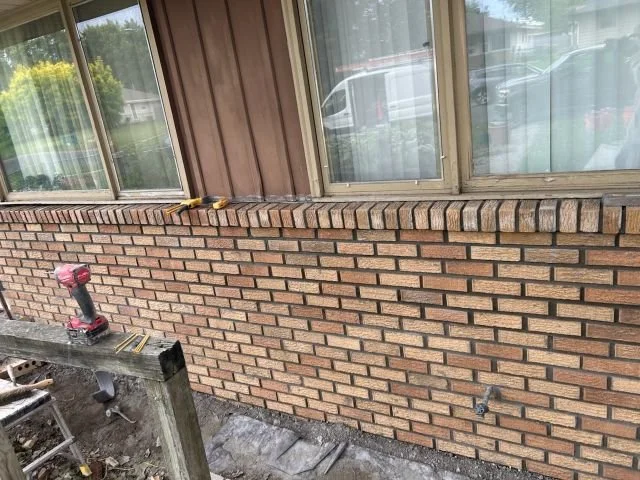
On a sloping lot, the story count on the record can understate the wall. The downhill side of a house can be taller than the uphill side, with more of the foundation showing above ground, so the wall to be pointed is longer than the house's height on paper. The staging under that wall stands on the slope and is built up level from the low side. Prospect Park's 2014 National Register nomination notes that on lots with steep slopes, houses are set well back from the street, so the staging and materials there are brought up the slope from the curb.
The Brick Is a Different Age in Each Neighborhood
The brick houses around Lowry Hill, East Isles, Lowry Hill East and East Bde Maka Ska are almost all from before 1910: roughly nine in 10 in each. Linden Hills and Prospect Park have many more brick houses from later decades: more than 40 percent of their brick houses were built after 1910.
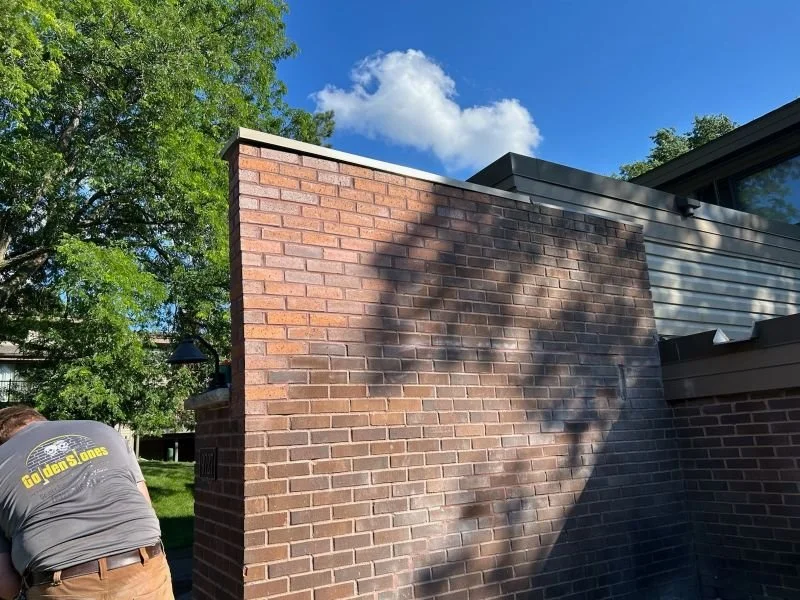
Age matters for the mortar and for matching. A wall from the 1890s and one from 1928 can have different brick in them and decades of different weathering. So the mix Sam chooses and how closely a replacement brick can be matched start with which of those walls you have. In Linden Hills it could be either, so the build year helps.
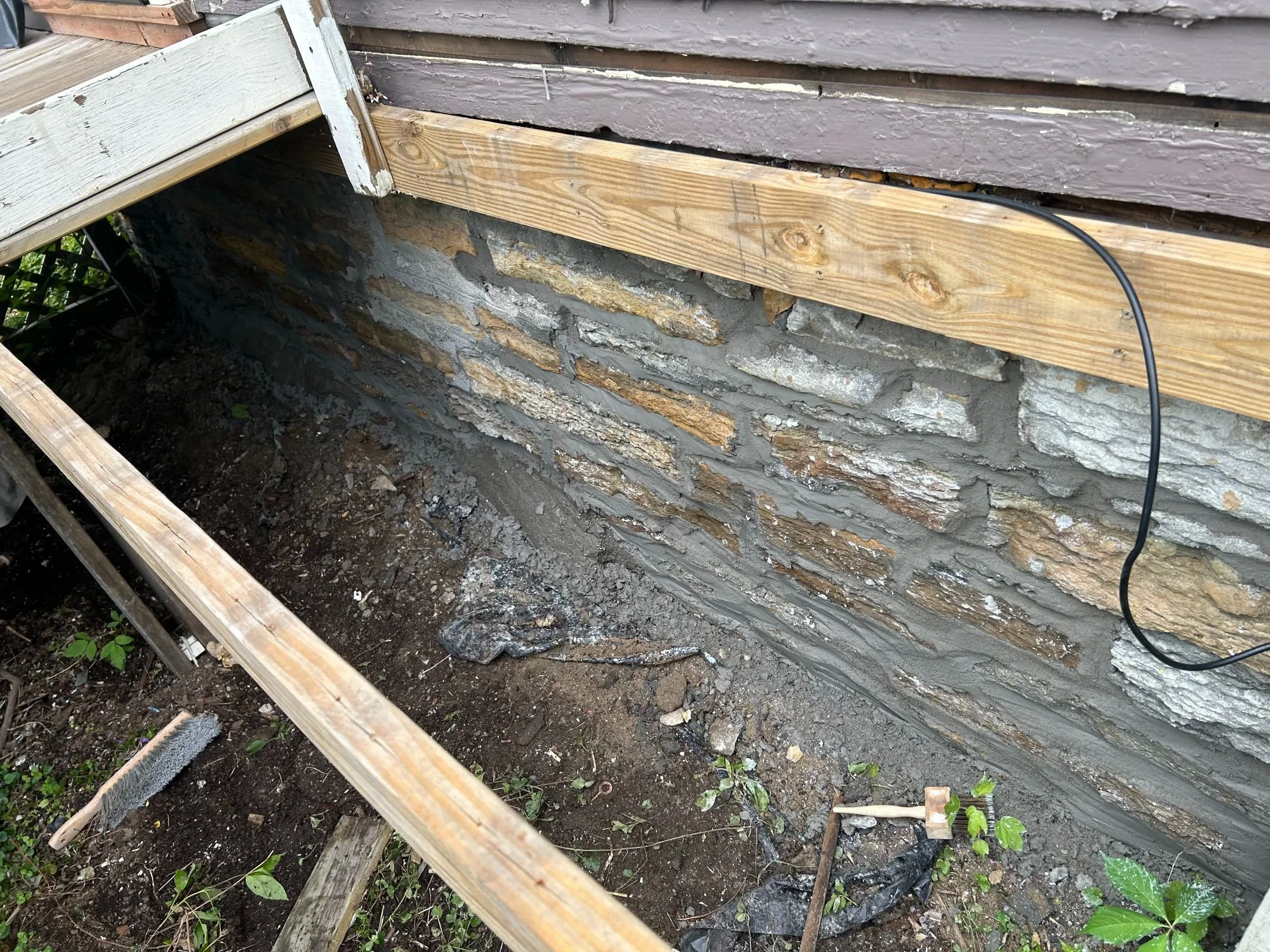
Some of the oldest walls are only partly brick. The East Isles study describes the neighborhood as built up with large turn-of-the-century brick- and stone-faced houses, with construction at its peak by 1915. On a stone-faced house, or a brick one on a stone base, the stone joints can be pointed in the same job as the brick, in a mix chosen for the stone.
King Field, Powderhorn Park and Seward
South Minneapolis has fewer brick houses as a share, but a lot of them in number. King Field has 299 prewar brick houses, Powderhorn Park 242 and Seward 199, somewhere between 13 and 18 percent of the older houses in each. They are a different kind of brick house from the ones around the lakes: lower, with half or more of them under two stories, mostly single-family, and most recorded as built before 1915.
For tuckpointing, that combination means old brick on a lower wall. Access is simpler than on a tall Lowry Hill house.
Duplexes in Whittier, Houses in Linden Hills
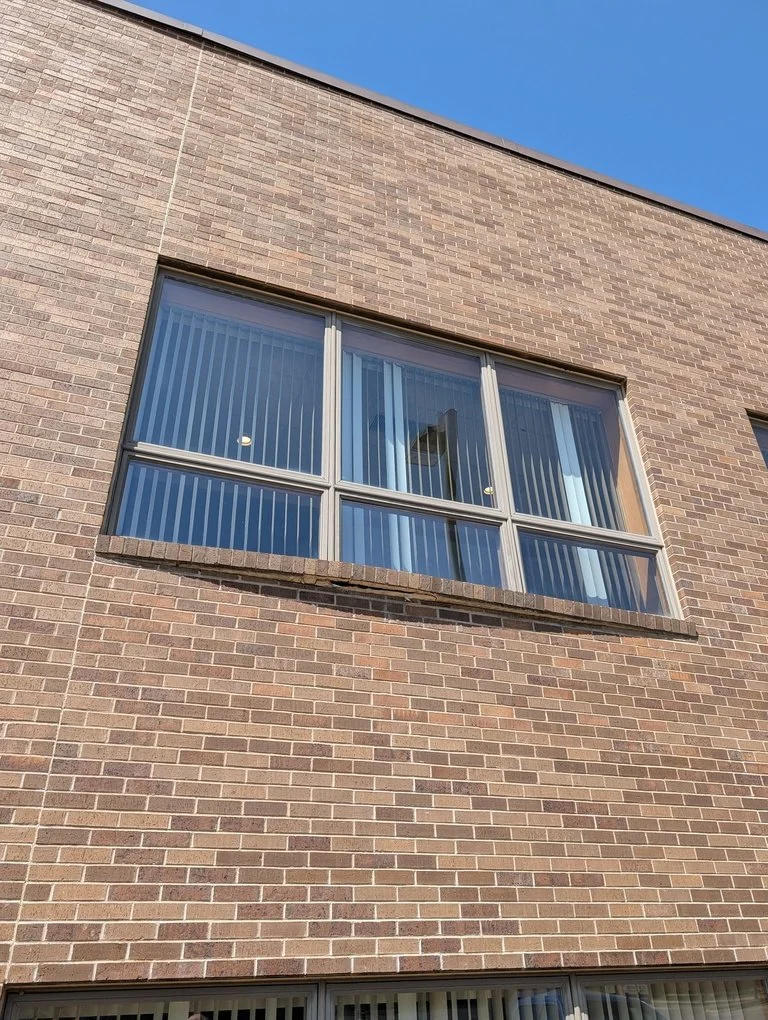
In Whittier, 84 of the 189 older brick houses are duplexes or triplexes, and in Lowry Hill East, 61 of 175. In Linden Hills, it is 14 of 380, so almost every brick house there is a single-family home.
On a duplex, the staging plan has to work for both households and the shared side yard.
The Blocks We Refer Out
If your house is in a City historic district, we refer the work out, and in the brick neighborhoods the districts cover only a few blocks. The residential ones near the brick streets include:
None of the City's 20 districts is in Lowry Hill, East Isles, Linden Hills or Prospect Park. A house can also be designated on its own, outside any district, so if you know yours is, we will point you to someone who does that work.
Before you call
Every figure on this page depends on square footage and on what we find when we look. They are rough guides to help you decide whether to call, not quotes. The exact number comes after the visit, and the visit is free.
Staging and the Base Range
From about $2,800 for a small area, and around $6,000 to $8,000 for a whole-house wall. For the two-and-a-half-story houses around the lakes, expect staging on the upper stories. A story-and-a-half wall in Linden Hills or King Field is more likely to fall inside the base range.
Every figure on this page depends on square footage and on what we find when we look. They are rough guides to help you decide whether to call, not quotes. The exact number comes after the visit, and the visit is free.
Questions We Get About Minneapolis Brick
Will the staging need to stand near our neighbor's side?+
On a narrow city lot, it sometimes does. At the estimate, we will show you where the staging needs to go, so you can have the conversation with your neighbor, or the household you share a driveway with, well ahead of the work.
Do you tuckpoint the garage too?+
Yes, if it is brick. Most brick houses in these neighborhoods have a garage, and a brick one is included in the same estimate as the house.
Our front terraces are held up by old stone walls. Can those be pointed too?+
Yes, if they are stone and still standing straight. Open joints in a terrace wall are repointed like the house and priced on the same estimate. A wall that has leaned or bulged usually needs rebuilding, which is a separate job and a separate price. We take on terrace walls in stone only. Brick and concrete terrace walls are outside our work.
What Customers Say
What appears below is our live Google feed rather than testimonials we picked out, so it shows whatever is genuinely on it.
Pricing a Minneapolis Brick House
Call with your neighborhood and the number of stories.
Talk to Sam: (612) 509-0718 · Written estimate, options priced · MN BC807211
See Also
- Minneapolis, the whole city: our Minneapolis page
- The chimney on a stucco house: chimney repair in Minneapolis
- The basement under a 1920s house: foundation repair in Minneapolis