

Foundation Repair in Minneapolis
Near Lake Nokomis, a study the City published in 2022 found that a wet basement wall can be the symptom rather than the fault: water held in the ground against the wall. Across most of the city, our Minneapolis page traces a wet stone wall back to failed mortar. Near the lake, it can go the other way.
It is a live question in houses from the 1920s, the decade that built more of the city's surviving prewar houses than any other. Those houses can stand on stone, block, or poured concrete. So before any foundation masonry repair in one of these basements, the first thing to settle is what the walls are made of, and the second is where the water is coming from.
10 Years
Workmanship warranty, in writing

Sand, With Exceptions Near the Lakes
The Minnesota Geological Survey's Hennepin County atlas maps the ground under the 1920s neighborhoods. Across Nokomis, Southwest, Longfellow, Camden, and Powderhorn, the mapped surface is sand: gravelly outwash left by the glaciers, river-terrace sand, and, in Camden, a silty fine sand laid down in a glacial lake. The glacial till mapped in other parts of the metro does not appear under any of them at the points we checked.
Sand drains. So in these neighborhoods, a basement wall that stays wet for months is less likely to be explained by the general ground and more likely to be something local: filled land near a lake, a pocket of peat, ground that has settled to slope toward the house or a downspout emptying against the wall. The atlas also maps filled ground next to the lakes and several patches of peat around Nokomis and south Powderhorn.
What the City Found Near Lake Nokomis
Between 2014 and 2018, during the wettest stretch on record in the Twin Cities, 21 property owners in three areas southwest of Lake Nokomis reported water problems to the City: wet basements, wet backyards, sinkholes and problems with private sewer lines. The City, the park board, the watershed district, the state DNR, Hennepin County and the U.S. Geological Survey studied it and published the results in 2022.
Nearly 60 percent of the area's wetlands had been filled, and the park board dredged wetland and peat soil from the lake between 1914 and 1918, using it to fill low ground around it. Much of the area was then built up during the driest stretch on record in the Twin Cities, 1920 to 1959. The 2010s brought nearly 100 more inches of rain and snow than the decades when most of those homes were built. Most of the wet basements sat 5 to 19 feet above the regional water table, so the water table had not risen to meet them. For West Nokomis, the study concluded the record rain had been trapped by peat soils in small local pockets; along Nokomis Parkway, homes were built within the lake's former basin.
The City's recommendations were grading away from the house, installing gutters, installing sump pumps, and replacing the sewer line. Those are not our work. Near the lake, repointing alone may not keep water out of a wall when water is held against it. At the visit, Sam will look at whether the wall has failed, whether the water is the bigger problem, or both.
What Your Basement Walls Are Made Of
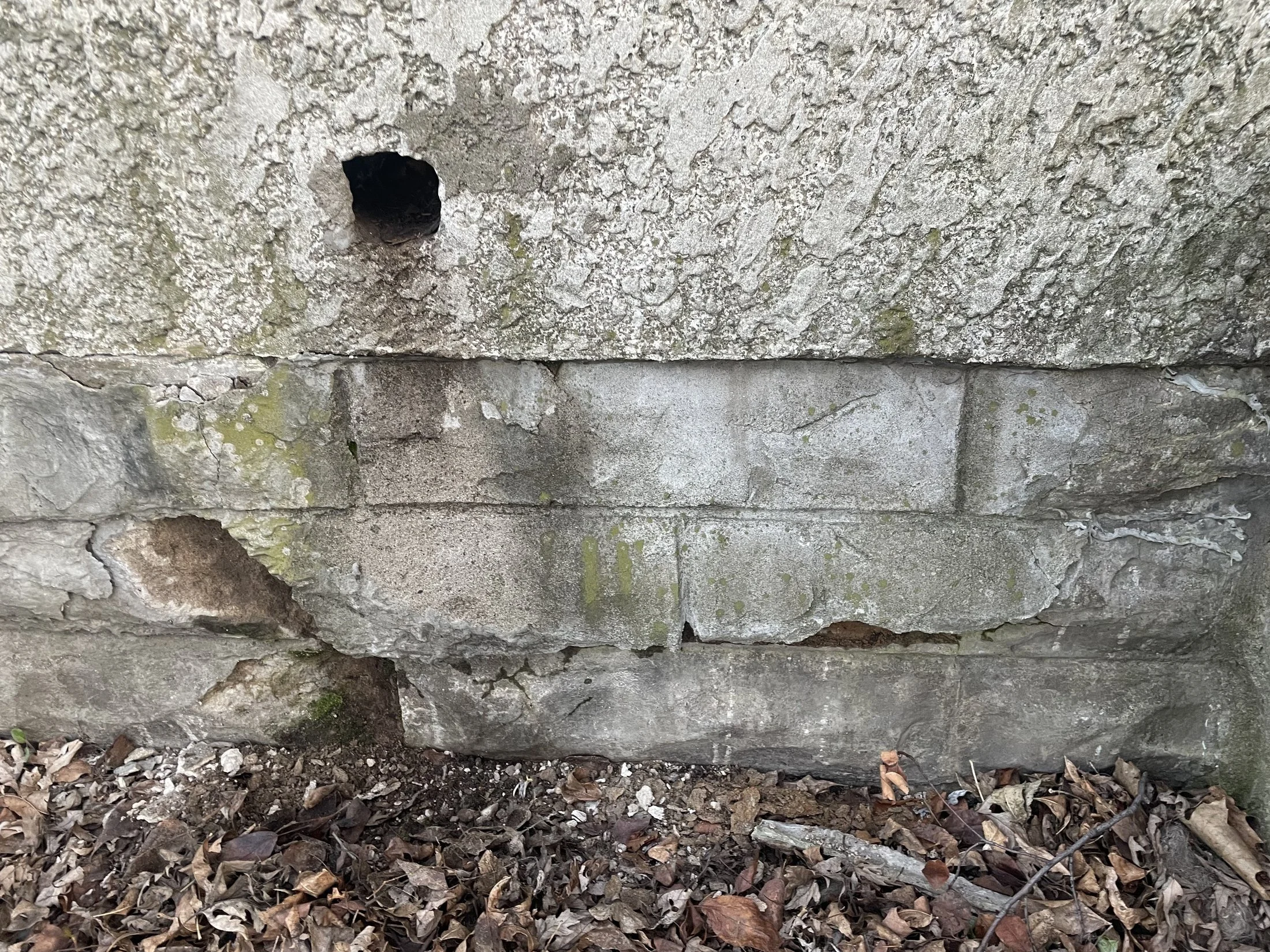
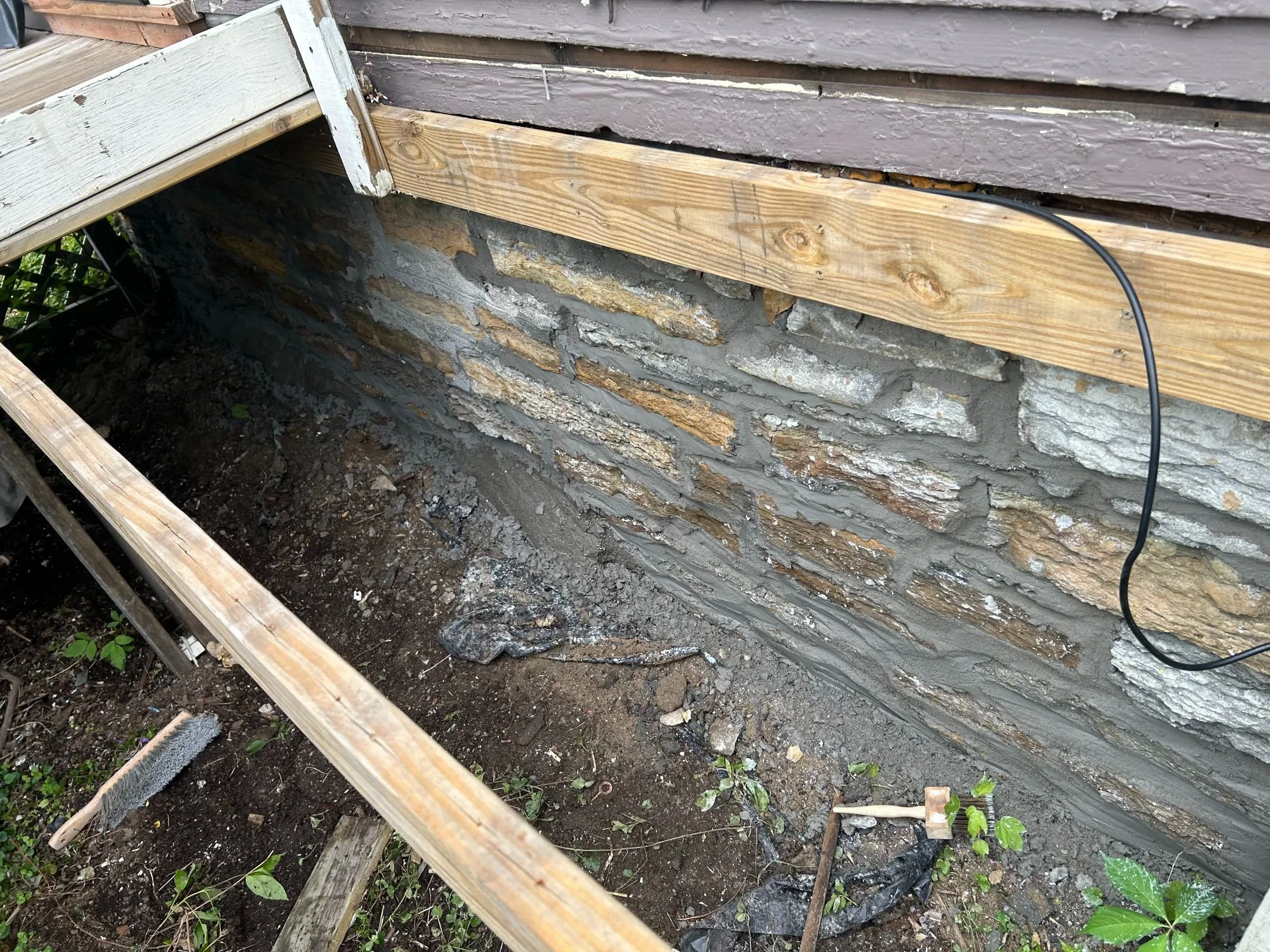
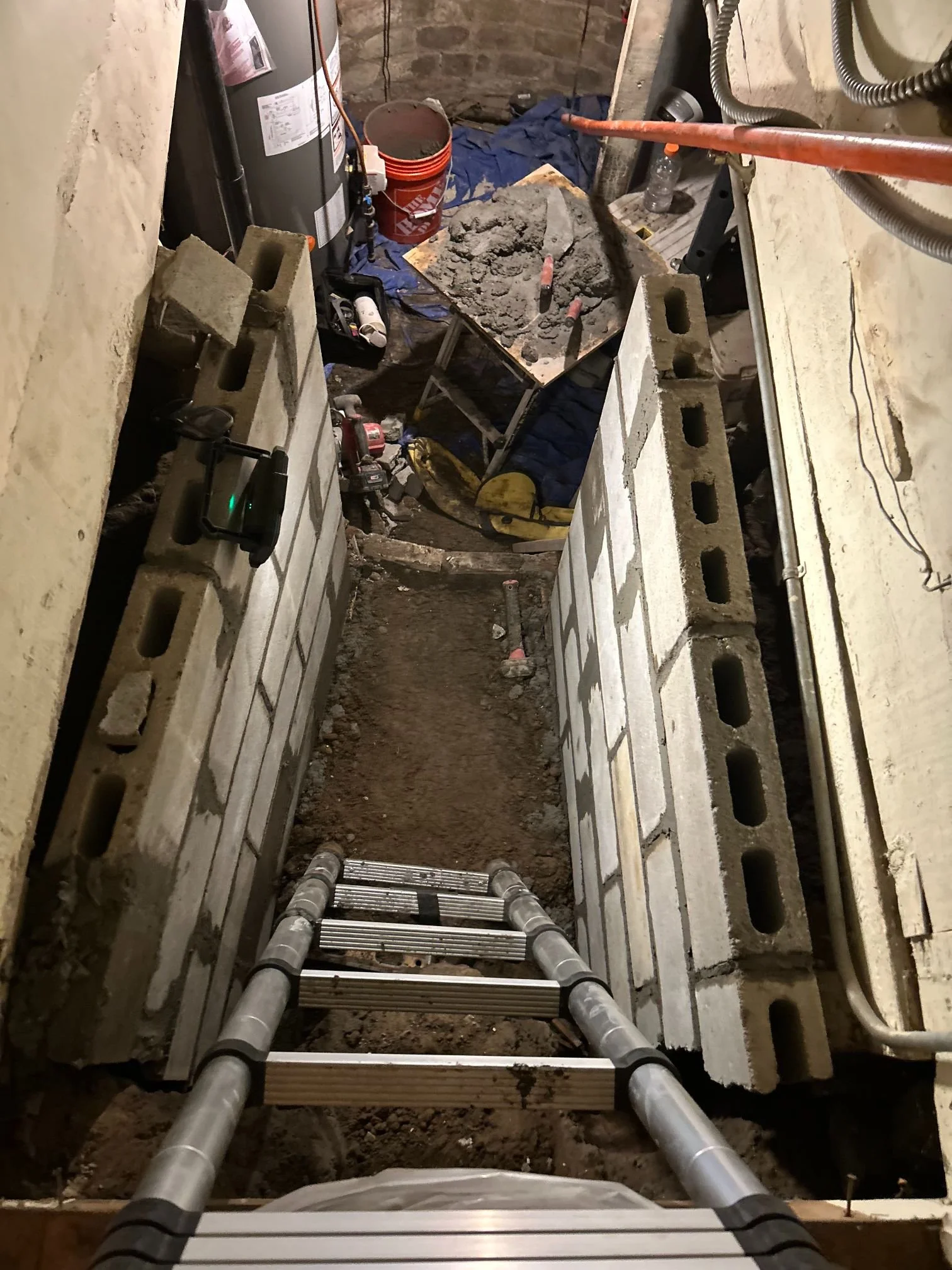
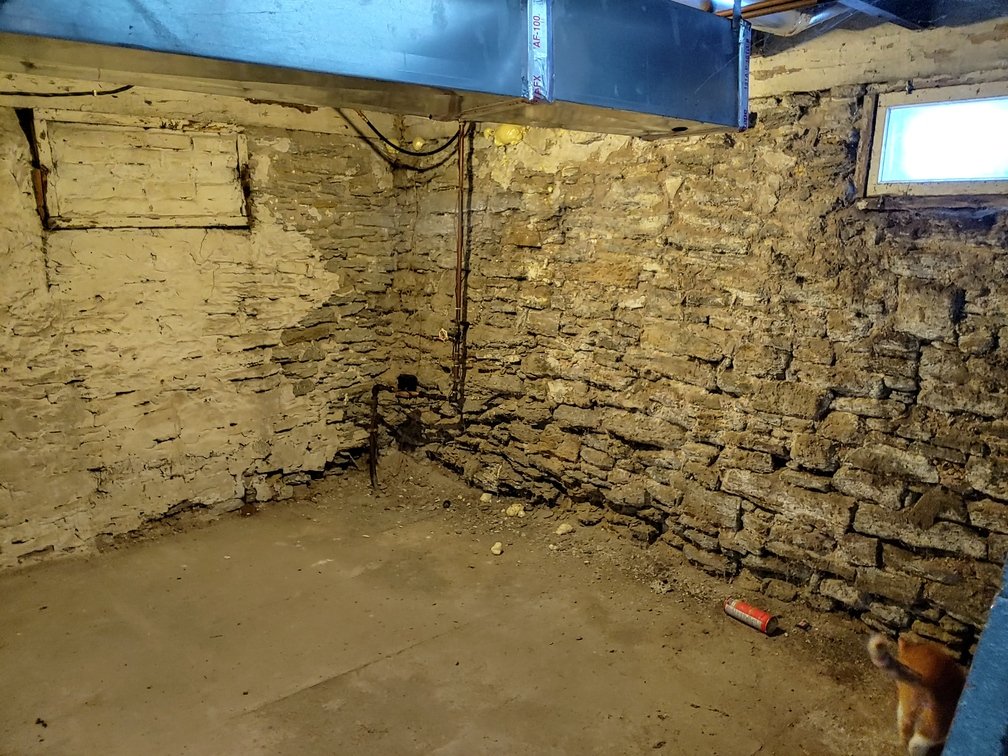
Stone, block, and poured concrete each look different wherever the wall face is visible, so start by finding a bare stretch of it: the mechanical room, under the stairs, or behind the water heater.
What the Build Year Says About the Wall
The 2014 National Register nomination for Prospect Park outlines the sequence in which the neighborhood's foundations changed. Until about 1900, houses were built of locally quarried limestone. Rusticated concrete block, cast with a rough face by local firms and marketed as a substitute for stone, caught on in the early 1900s and was widely used until about 1920. Poured concrete foundations followed in the 1920s, and the nomination notes that they were often paired with stucco that was carried almost down to the ground. By the 1930s, smooth-faced standard block had become the preferred choice.
Those dates come from one neighborhood, but they match the three walls above and show why the 1920s are the hardest decade to call. A house from the early 1920s may sit on rock-faced block that passes for stone at a glance, and one from later in the decade on poured concrete. So the build year narrows the question, and a bare stretch of wall answers it.
The same order helps read a wall that has been worked on. Smooth-faced block points to the 1930s or later, so a run of it set into a stone or rock-faced wall likely marks a part that was rebuilt or added after the house went up.
Repairing rock-faced block
Most of the rough-faced units came from local firms a century ago, so a new unit with the same face is unlikely to be found. Where a few units have cracked but sit firm, the joints around them can be repointed and the units left in place. Where one has to come out, the replacement may not carry the same face. In a basement, that matters little. For the courses that show above ground, it weighs the choice between a repair and a rebuilt section.
Buying a 1920s House
If you are buying one, look in the basement before closing if you can: at what the walls are made of, any stair-step crack through the joints, any stone that is loose or has dropped, and any patch of fresh paint on an otherwise old wall, which can hide what the rest of the wall shows. If the house is near Lake Nokomis, check the foot of every wall for old water stains, and read the City's study.
Asked Near Lake Nokomis
We live near Lake Nokomis. Does the City's study mean our basement will leak?+
Not by itself. It says nothing certain about any one house, including yours. A basement that stayed dry through a wet spring tells you more than the study can.
What You Get in Writing
Where the wall can be seen, a plain answer to what it is made of. If the work is ours, a written scope and a written price.
What Foundation Masonry Repair Costs
Before you call
Every figure on this page depends on square footage and on what we find when we look. They are rough guides to help you decide whether to call, not quotes. The exact number comes after the visit, and the visit is free.
Get a Free Assessment
Send one photograph of a bare stretch of basement wall, the year the house was built, and whatever worries you.
What Customers Say
What appears below is our live Google feed rather than testimonials we picked out, so it shows whatever is genuinely on it.