
Why Are My Stone Steps Cracking or Bowing?
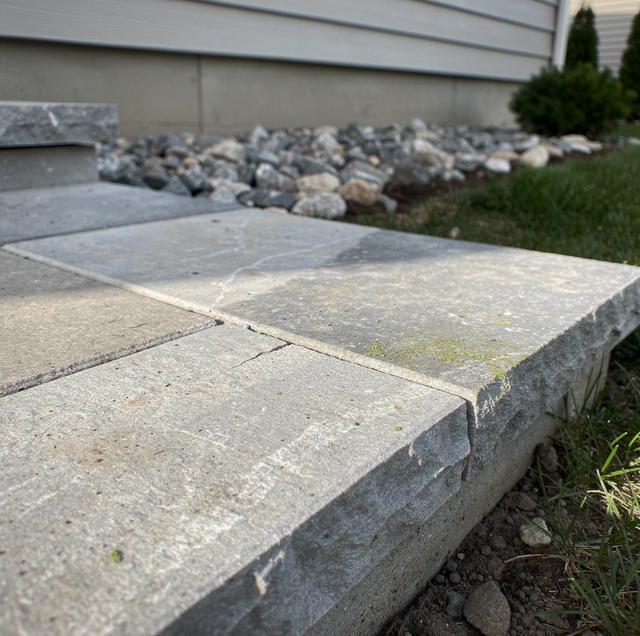
You climb the same stone steps every day without thinking about them, until the day one rocks under your foot or a crack runs clean across a tread. Stone steps look permanent. They are cut from the same material that endures for centuries in buildings, so a crack or a lean feels like it should not happen. But steps sit exposed to weather and ground movement in a way that few other parts of a house do, and that exposure catches up with them eventually.
Cracking and bowing are not random. Each pattern points to a specific cause happening underneath or around the stone, and figuring out which one is at work tells you whether you are looking at a cosmetic patch or a step that needs to come apart and go back together correctly.
Freeze-Thaw Cycling Is the Most Common Culprit
Stone and the mortar that holds it together are both porous. Rain and melting snow soak into tiny pockets in the material, and when temperatures drop below freezing, the trapped water turns to ice and expands by roughly 9%. Stone and mortar have almost no give, so the expansion has to go somewhere. It pries open hairline gaps that were already there and widens them bit by bit.
A single freeze does very little. The damage builds because the cycle repeats. Water gets in, freezes, expands, and cracks a fraction wider. The ice melts, more water fills the wider gap, and the next freeze pushes further. Over a normal winter with dozens of freeze-thaw swings, this quiet repetition can turn a hairline seam into a crack you can slide a coin into, or lift a tread just enough that it rocks underfoot.
Steps take this cycle harder than a wall does. A vertical wall sheds most of the water off its face, but a horizontal tread holds standing water and snowmelt for far longer, so it absorbs more moisture before every freeze. That is also why mortar joints between treads and risers tend to fail before the stone itself does: mortar is more porous and absorbs water faster, so it is usually the first thing to crumble or wash out between the blocks.
Settling and Base Erosion Beneath the Steps
Stone steps are only as stable as what sits under them. Most outdoor steps rest on a compacted base of gravel or crushed stone, sometimes over a poured footing, sometimes not. If that base was never compacted properly, or if water has been working its way underneath it for years, the ground beneath one section of the steps can settle lower than the rest.
Once the base loses volume in one spot, the stone above it no longer has even support. A tread that used to rest flat now has a void under one corner, and every time weight lands there, the stone flexes slightly against the unsupported edge. Flex a rigid material enough times in the same spot, and it cracks, the same way a plate cracks when you press down on one edge while the rest hangs off a countertop.
Erosion is often the hidden driver behind settling. Water running off a roof, down a hill, or along a poorly graded path can carry fine soil particles out from under a step year after year without any visible sign on the surface. You will not see the erosion happening. You will only see its result: a step that leans, rocks, or sits noticeably lower than its neighbors, sometimes years after the erosion started. Bowing along the front edge of a set of steps, where the whole run curves outward rather than sitting in a straight line, signals that the base below has shifted rather than the stone simply cracking from weather alone.
Poor Original Drainage Sets the Whole Problem Up
Many step failures trace back to a decision made when the steps were first built, long before any crack appeared. If the steps were installed without a way for water to drain away from the base, every rain and every melt cycle would send water straight down into the ground the steps rest on instead of shedding to the side.
Good step construction slopes the base slightly so water drains away, and often includes a layer of coarse gravel that lets water pass through rather than pool. Steps built without that grading, or built on soil that does not drain well to begin with, end up sitting in a wet base far more often than they should. Saturated soil beneath a footing is prone to both freeze-thaw expansion and the gradual erosion described above, so poor drainage rarely causes damage on its own. It multiplies the damage from the other two problems by keeping the ground under the steps wetter, longer, than it was ever meant to handle.
You can sometimes spot this cause from the surface. Water pooling on a landing or lower tread after rain, moss or algae building up in the same spot every season, or a persistently damp patch of soil beside the steps long after the rest of the yard has dried out are all signs that water is not draining away properly.
Tree Roots Push, Pull, and Lift From Below
Roots grow toward moisture and loose soil, and the base under a set of steps often offers plenty of both compared with compacted lawn or hardscape nearby. As a nearby tree matures, its root system can spread directly beneath the steps and grow thick enough to physically lift the base from underneath.
Unlike freeze-thaw damage, which tends to scatter across several joints, root movement usually produces a specific pattern: a section lifted or tilted along one line, often following the root's direction, with the rest of the run largely unaffected. A tread that pops up noticeably higher than the one beside it, or a crack running in a fairly straight diagonal rather than a random spiderweb pattern, points to a root working underneath rather than general weathering.
Root damage is also progressive in a way weather damage is not. Freeze-thaw cracking can slow if water is kept away from the joints. Root growth does not stop on its own; a root that has already lifted a step will keep growing until it is addressed or the steps are rebuilt on a base that accounts for it.
Reading the Cracks: What the Pattern Is Telling You
Because these four causes leave different fingerprints, the shape and location of the damage is often the fastest way to narrow things down before anyone touches the steps.
Thin, scattered cracks through mortar joints across several treads, worse after a hard winter, usually point to freeze-thaw cycling working on saturated mortar. A single tread that rocks, sits lower than its neighbors, or has a wide crack at one corner points toward settling or an eroded base under that spot. A gradual outward curve along the entire front edge, where the structure appears to be bowing rather than just cracking, suggests the base has shifted broadly rather than failed in one location. And a tread lifted noticeably along one line, with a fairly straight crack running toward a nearby tree, points toward a root pushing up from below.
None of these patterns are exclusive. A base that was never properly drained can settle from erosion and take on more freeze-thaw damage at the same time, which is why neglected steps often show more than one pattern at once by the time anyone takes a closer look.
Why Small Cracks Do Not Stay Small
A hairline crack in stone or mortar does not heal, and it rarely stays hairline for long. Every freeze-thaw cycle that follows has a slightly larger opening to work with, so the same amount of water does slightly more damage each time. A crack that started as a cosmetic line in the mortar can, within a season or two, become a gap wide enough that the stone above it loses support and starts to rock.
Rocking treads and bowing edges are a safety issue, not just a maintenance one. A step that shifts under weight is a trip hazard on the very surface used to move safely in and out of a home, and that risk climbs in wet or icy conditions. Catching the early signs- a hairline crack, an uneven tread, standing water that should not be there- is far easier than waiting until a step has visibly failed.
When It Is Time to Call in a Professional
Surface patching can mask small cosmetic cracks for a season, but it does not fix settling, erosion, poor drainage, or an active root, and patched mortar over a moving base tends to crack again quickly. If a tread rocks, if a crack keeps widening season to season, if you notice bowing along the front edge, or if a nearby tree has grown large enough to reach the base of the steps, the cause needs to be assessed before any repair will hold.
That assessment usually means checking what is happening below the surface: whether the base is compacted and dry, whether water has a path away from it, and whether roots have reached the footing. A proper repair may mean repointing failed joints, resetting treads on a rebuilt base, regrading to move water away, or removing a root and rebuilding the base it disturbed. Which one applies depends on which cause is at work, which is why the pattern of damage matters before deciding on a fix.
Frequently Asked Questions
Freeze-thaw damage tends to appear as multiple thin cracks scattered across mortar joints, often worse after a particularly cold or wet winter, with no clear direction. Root damage tends to show up as a single tread or section lifted or tilted along a fairly straight line, often pointing toward a nearby tree, with the rest of the steps unaffected. If you can trace a crack back toward a tree trunk, root growth is the more likely cause.
Hairline cracks in mortar joints that have not affected the stability of any tread are generally still safe to use day-to-day, though they should be monitored and addressed before winter deepens the damage. A step that visibly rocks, tilts, or has a wide gap under one edge should be treated as a trip hazard until repaired, since a small crack only widens with the next freeze-thaw cycle.
Adding mortar or filler under a loose tread without addressing what caused the void underneath it usually fails again within a season, because the settling, erosion, or drainage problem that created the gap is still there. A lasting repair generally means resetting the tread on a properly compacted and graded base rather than filling the visible gap on top.
Not always. In some cases, the base can be rebuilt with a root barrier, or the affected root can be pruned by an arborist, depending on species, root depth, and how close the trunk sits to the steps. When a root is large, near the surface, or likely to keep growing back into the same space, removal may be the more lasting fix. Either way, the root should be evaluated alongside the step repair rather than treated separately.
A base can look solid on the surface while still holding excess moisture underneath, especially after a wet season, and that moisture is exactly what accelerates both freeze-thaw cracking and gradual erosion. Improving grading or adding drainage around the base of the steps is one of the more effective ways to slow future damage, even on steps that have not yet shown obvious problems.
Late fall, once the ground has dried out but before the first hard freeze, and early spring, once the ground has thawed and any winter damage has shown itself, are both good windows. A fall look lets you fix small issues before a full winter of freeze-thaw cycling gets to work on them, while a spring check catches whatever that winter left behind.
Schedule a stone steps inspection — get a clear read on whether you are dealing with weather damage, a settled base, drainage, or roots before it becomes a bigger repair. Golden Stones Masonry serves St. Paul and the Twin Cities. Call (612) 509-0718.
