
What Causes Foundation Cracks After a Hard Winter?
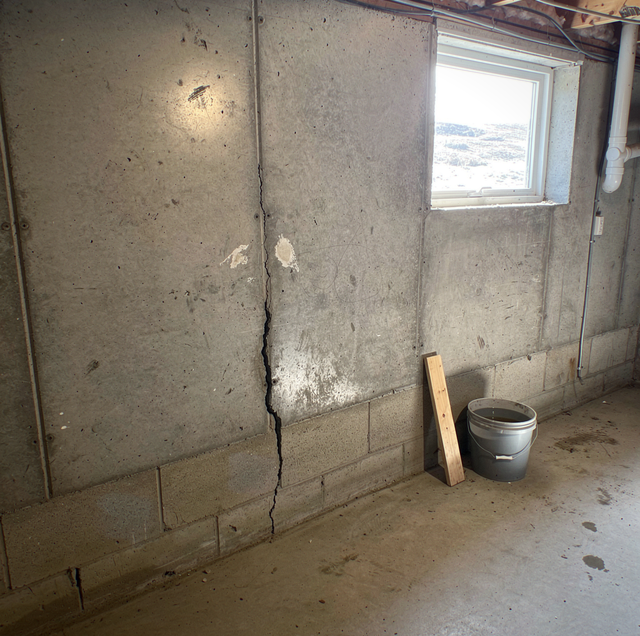
Quick Answer: A hard winter cracks foundations through two main forces: frost heave, where freezing soil expands and pushes upward and outward on footings and walls, and hydrostatic pressure, where water from thawing ground has nowhere to drain and presses against the foundation from outside. Clay-heavy soil makes both worse, since it holds more water and swells more than sandy soil does. Repeated freezing and thawing over a single cold season, not just a single deep freeze, usually turns a hairline stress point into a visible crack.
You walked past that corner of the foundation all fall without giving it a second look. Then the snow melts in spring, and there it is: a crack that wasn't there before, running along a wall that was solid a few months earlier. Nothing hit it, nothing shifted the house, and no one dug near it. The ground itself did the work, and it did that work slowly, one freeze and one thaw at a time, over a winter that was colder or wetter than the ones before it.
The Ground Moves More Than People Expect
Soil isn't a fixed, inert material sitting under your house. It holds water between its particles, and the amount it holds when the temperature drops determines how much the ground itself expands and contracts over the course of a season. In a typical winter, that swing is small enough that a foundation barely notices it. In a hard winter, with deeper cold, less insulating snow cover, or a wetter fall that left more moisture in the ground going into the freeze, that swing gets a lot bigger, and a foundation built to handle ordinary movement ends up under stress it wasn't built for.
Frost Heave Pushes Up and Out From Below
When water in the soil freezes, it expands by roughly 9% in volume, and that expansion has to go somewhere. As the freezing front moves through the ground, it doesn't just freeze the water already in place. It actively draws additional moisture up from the unfrozen soil below toward the cold layer, feeding the growth of ice layers within the soil itself. Those layers of ice can grow thick enough to measurably lift the ground above them, sometimes by an inch or more in soil with high water content during a deep, sustained freeze.
That lifting force is frost heave, and it doesn't act evenly across your yard. Soil composition varies from one side of a foundation to another, drainage varies, and shade and sun exposure change how deep the frost reaches in different spots. A footing that's pushed upward on one side more than the other gets tilted, twisted, or flexed in ways poured concrete and mortar joints aren't designed to absorb without cracking.
Thawing Ground Adds Pressure From the Side
Frost heave is a vertical force, but a second mechanism works horizontally, and it's arguably the more damaging one for basement and foundation walls. As frozen soil starts to thaw, the ice within it turns back into water faster than the water can drain away, especially when the soil deeper down or off to the side is still frozen solid, blocking any downward path. That trapped water saturates the soil next to your foundation wall and presses against it, the same kind of force a wall feels when someone leans their weight into a door from the other side.
Engineers call this hydrostatic pressure, and a foundation wall is a poor match for it compared to the vertical loads it's designed to carry. Loads from above get channeled straight down through a wall's mass. Lateral pressure from saturated soil pushes against the flat face of the wall instead, in a direction the wall resists mainly through its own bending strength, and mortar joints and any existing weak points in that wall are exactly where that strength runs out first.
Clay Soil Turns Up the Volume on Both Forces
Not all soil responds to freezing and thawing the same way. Sandy or gravelly soil drains quickly and holds relatively little water between its particles, so freeze-thaw cycling moves through it with little drama. Clay-heavy soil is a different story. Clay particles hold onto water tightly, so clay soil around a foundation carries far more moisture into winter than sandier ground would, and that extra moisture is exactly what feeds frost heave and hydrostatic pressure once the temperature swings start.
Clay also swells and shrinks with its moisture content, even without freezing, expanding as it absorbs water and contracting as it dries. Add a freeze-thaw cycle on top of that existing swell-shrink behavior, and a foundation sitting in clay soil is dealing with two separate sources of movement stacked on each other rather than one, which is a large part of why the same winter can crack a foundation on a clay lot and leave a neighboring foundation on sandier ground untouched.
One Cold Snap Rarely Does the Damage Alone
A single hard freeze followed by a single thaw puts one round of stress on a foundation, and most foundations shrug that off. What actually produces a crack is usually dozens of those cycles compounding across a season: the ground freezes overnight, softens during a milder afternoon, refreezes that night, and repeats through weeks of temperature swing rather than one long, steady deep freeze.
Each cycle acts on whatever small weakness already exists in the concrete or mortar. Once a hairline crack exists, freezing water inside it behaves almost exactly like a wedge being driven and pulled out over and over. Ice forming in that narrow gap expands and pries the crack open slightly wider; the next thaw lets it close partway, but rarely all the way back to where it started. By the time a cold season with many freeze-thaw swings is over, a crack too small to notice in November can be wide enough to catch your eye in March.
Where Post-Winter Cracks Tend to Show Up First
Frost heave and hydrostatic pressure don't distribute themselves evenly around a house, so the damage they cause tends to cluster in a few predictable spots. Corners are one where two foundation walls meet, and soil movement on each side pulls in slightly different directions, concentrating stress right at the joint. Attached slabs, like a garage floor or a porch stoop, are another, since they are frequently poured on shallower footings than the main foundation and sit closer to the surface, where frost reaches soonest and hardest.
Any stretch of foundation near a downspout that empties too close to the wall, or a section of yard that grades toward the house instead of away from it, is also a common trouble spot, since more water collects and freezes there than anywhere else along the same wall. Those are the places worth checking first after a rough winter.
A Fast Thaw Can Be Its Own Kind of Stress
It isn't only deep cold that causes trouble. A sudden warm spell in the middle of winter, especially one paired with rain on top of existing snowpack, can send a large volume of meltwater into ground that's still frozen a few inches down. That water has nowhere to go, so it pools and saturates the top layer of soil fast, spiking hydrostatic pressure against a foundation wall in days rather than building gradually over a season. Then the temperature drops again, that saturated layer refreezes, and the cycle restarts with even more water in the system than before. A winter with several thaw-and-refreeze swings often does more damage than one that's simply cold the whole way through.
How This Differs From Ordinary Settling
Not every crack that shows up after winter is a freeze-thaw crack, and the timing is one of the clearer clues. A crack tied to frost heave or hydrostatic pressure tends to appear or noticeably widen within the same cold season, and it's often traceable to a specific stretch of severe weather rather than to years of gradual change. Some freeze-thaw cracks also ease slightly once the ground fully thaws in late spring, as the soil around the foundation relaxes and the pressure that opened the crack partly lets up, something a crack from long-term settling generally doesn't do, since settling isn't tied to a seasonal cycle in the same way.
If you're not sure whether a crack is new or one you'd simply never noticed, mark its tip and width with a pencil line and a date. Checking it again after a few weeks tells you whether it's still moving or whether the winter's stress has already run its course.
Reducing the Load Before the Next Hard Winter
You can't stop the ground from freezing, but you can reduce how much water is available to freeze against your foundation. Grading the soil so it slopes away from the house, rather than toward it, keeps rain and melt from pooling where frost heave and hydrostatic pressure do the most damage. Downspout extensions that carry roof runoff several feet clear of the foundation do the same job for water from your gutters, and clearing those gutters before the first freeze matters too, since an overflowing gutter along the foundation line puts water exactly where you don't want it. In an unheated crawlspace or around an uninsulated foundation perimeter, adding insulation can also keep the frost line from reaching as deep against the wall.
When a Post-Winter Crack Needs a Professional Look
A hairline crack that shows up after a rough winter and holds steady through spring is usually a candidate for monitoring rather than immediate repair. A crack that's still widening once the ground has fully thawed, one that runs horizontally across a wall, or one paired with a wall that's started to bow inward is a different situation, since those patterns point to pressure that hasn't finished working on the foundation. Getting an assessment while the cause is still fresh in your mind, and while you can point to exactly which parts of last winter's weather likely triggered it, makes it easier for whoever inspects the wall to connect the crack to its cause rather than guessing at it months later.
Frequently Asked Questions
Footings are normally set below the typical frost line for their region so ordinary winters don't reach them, but an unusually cold or low-snow winter can push frost several inches to a foot deeper than average. Once frost extends past that typical depth, it starts acting directly on soil beneath or beside footings that were never meant to take on that load, which is part of why an especially hard winter causes damage a normal one wouldn't.
Yes. A foundation can sit through years of ordinary winters with no visible change and still develop a crack the first time a season brings deeper frost penetration, heavier snowmelt, or more freeze-thaw swings than usual. The prior mild winters didn't strengthen the foundation against this kind of stress; they simply never tested it as hard.
It does, and in a counterintuitive direction. A layer of snow acts as insulation over the soil, slowing the amount of heat that escapes into the air above it. Bare, exposed ground loses heat faster and lets frost penetrate deeper than the same ground would under a foot of snow, so a cold but low-snow winter can sometimes drive frost deeper than a snowier winter with milder air temperatures.
Yes. Saturated soil around a foundation doesn't drain instantly when temperatures rise, so hydrostatic pressure against a wall can persist for a stretch after the coldest part of winter has already passed. A crack tied to that lingering pressure sometimes doesn't appear until several weeks into a thaw, once the water has had time to fully work its way through the soil.
They can. A footing drain routes groundwater away from the base of a foundation wall before it has a chance to build up against it, and a properly connected window well drain does something similar for water collecting around a below-grade window. Both reduce the volume of water sitting against the foundation, which is the same water that would otherwise freeze, expand, and add to hydrostatic pressure during a hard winter.
Poured concrete resists the pressure differently rather than simply resisting it better. A poured wall is a single continuous slab, so it distributes stress across its entire surface and tends to crack near its structurally weakest point, such as a utility opening or a window well corner. A block foundation is built from smaller units joined by mortar, and mortar joints are typically the first thing to give way under the same freeze-thaw pressure, so cracking in a block wall often follows the joint pattern instead of crossing through the block itself.
Request a foundation assessment — find out whether last winter's freeze-thaw cycles left cracks or pressure damage that need attention before the ground freezes again. Golden Stones Masonry serves St. Paul and the Twin Cities. Call (612) 509-0718.
