
Signs Your Retaining Wall Is Failing (And What They Mean)
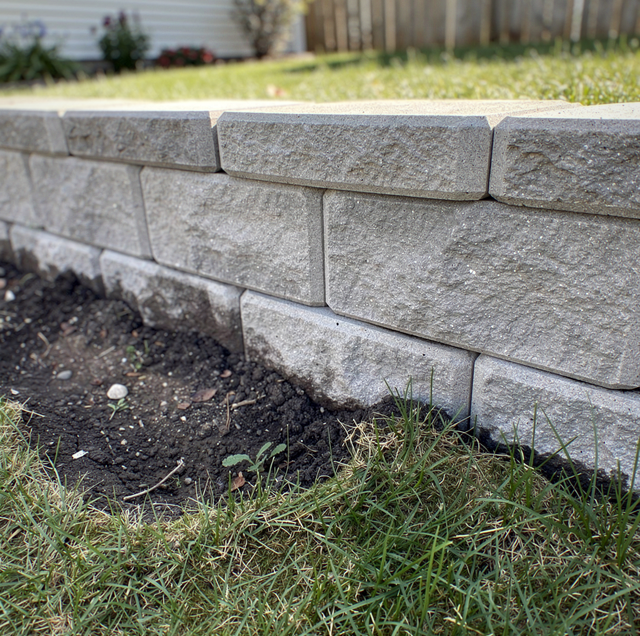
A retaining wall does not fail all at once. By the time a section leans far enough to notice from across the yard, or a block breaks loose and topples into the space below it, the real problem has usually been building for months or longer. Retaining walls hold back a slope's worth of soil around the clock, and the forces working against them rarely announce themselves until the wall has already lost a fight it was quietly losing all along.
That slow timeline works in your favor if you know what to look for. Nearly every failure leaves a trail of smaller signs first: a lean that was not there last year, a crack that used to be a hairline, a patch of soil that never quite dries out. Distinguishing cosmetic signs from structural ones is the difference between a modest repair now and a full rebuild later.
When A Slight Lean Is The First Real Warning
Most retaining walls are built with a small forward or backward tilt, called a batter, so a wall that has always looked slightly angled is not automatically in trouble. What matters is change: a wall that used to sit flush against a string line and now bows outward in the middle, or a wall whose top course has crept forward while the base has not, is telling you the soil behind it is pushing harder than the structure can hold.
Bulging in the middle, rather than a uniform lean top to bottom, usually means that section is bearing more load than the courses above or below it, often because it has less reinforcement or sits over a spot where drainage has quietly failed. A lean concentrated near one end often points to a corner or return wall that was never tied back into the main structure as firmly as the rest of it.
Segmental block, poured concrete, and boulder walls show this differently. Interlocking block tends to shift course by course, so individual blocks can step out of line before the whole face leans. Poured concrete moves as one rigid piece, so by the time it visibly tilts, the soil behind it has already shifted a great deal. Either way, the direction to watch is forward, toward the lower side of the slope.
Cracks Are Not All The Same Problem
A crack in a retaining wall is a symptom, not a diagnosis, and reading it correctly means looking at where it runs and how it behaves over time, not just that it exists.
Cosmetic cracks: Thin, hairline cracks in the mortar joints between blocks, especially near the top of a wall, are often just shrinkage during curing or minor movement due to temperature swings. These tend to stay narrow, do not widen much season to season, and do not run in a straight line across multiple courses.
Structural cracks: A horizontal crack that runs the length of a wall at roughly the same height, or a crack that widens noticeably from one season to the next, is a different story. A horizontal line often means the wall is bending under sideways pressure at that exact point, the way a board bows before it snaps. A stepped or diagonal crack running up through several courses toward a corner can mean one section of the wall is settling faster than the section beside it.
The simplest way to tell them apart without guessing is to mark a crack's ends with a pencil and the date, then check it again after a season of weather. A cosmetic crack from curing will look the same months later. A crack tied to ongoing soil movement will have grown past your marks, and that growth is the real warning sign, more than the crack's width on any single day.
Water Pressure Behind The Wall Is The Root Mechanism
Almost every serious retaining wall problem traces back to water, specifically the pressure that saturated soil puts on a wall that dry soil never would. Soil that has absorbed rain or snowmelt weighs far more than dry soil and, unlike dry soil, cannot compress to relieve that added weight. The result is called hydrostatic pressure, and it pushes directly against the back of the wall with a force that a wall's original design may never have accounted for.
A properly built wall handles this with drainage working quietly behind the scenes: gravel backfill that lets water move rather than pool, a perforated pipe at the base that carries it away, and weep holes that let remaining pressure vent out front instead of building up. When any part of that system clogs with fine soil, gets buried under years of mulch, or was left out of the original build, water has nowhere to go but into the wall itself.
Freeze-thaw cycling adds another layer to this. Water trapped in saturated soil behind a wall expands when it freezes, then contracts as it thaws, and that repeated swelling and settling gradually loosens whatever holds the wall in place. Shifting clay-rich soil compounds the effect further, since clay expands and contracts more dramatically with moisture changes than sandier soil does, putting an uneven, seasonal stress on a wall that a drier, more stable soil type would not create.
Gaps Opening At The Base
A gap opening at the base of a wall, whether it is a widening seam between the bottom course and the soil in front of it or a visible sliver of daylight between the base blocks and the ones stacked above, usually means the wall is sliding rather than simply leaning. Leaning is a rotation; sliding is the whole base shifting forward while gravity and soil pressure work on it from behind.
This distinction matters because sliding tends to progress faster than a slow rotational lean. Once the base loses its grip on the ground beneath it, even a small amount of movement opens a path for more water to reach the base, softening the soil further and allowing the next round of movement to occur more easily than the last. A gap at the base is also one of the more reliable places to see backfill, gravel, or eroded soil spilling out through the wall face, a clear sign the structure behind it is no longer contained the way it was built to be.
If the base sits below or beside a patio, walkway, or paver surface, watch that joint too. A widening gap there often shows up before the wall itself looks out of place, because rigid paving reveals movement that a flexible lawn or bed would hide.
Why The Damage Looks Sudden When It Is Not
Retaining wall failure feels sudden because the visible stages compress toward the end of a much longer process. Early movement is small enough that it barely changes how a wall looks: a fraction of an inch of lean, a hairline crack, a slightly damp patch of soil nobody thinks twice about. None of that looks urgent on its own.
The trouble is that each small change makes the next one easier. A hairline crack lets in a little more water, which softens the soil a little more, which lets the wall move a little further, which opens the crack wider and lets in even more water than before. Each stage of that loop reduces the wall's remaining resistance, so the same rainfall or freeze-thaw cycle causes more damage later in the process than at the start. A wall can look fine for years and then show dramatic movement within a single wet season, because it was working through the early, quiet stages of that same loop the whole time.
This is also why patching a visible symptom rarely holds on its own. Filling a crack or resetting a few blocks addresses where damage showed up, not the water pressure or soil movement that caused it, and the same loop tends to pick back up soon after.
Weighing Repair Against Rebuilding
Not every wall showing early signs needs to come down and go back up. One with a hairline crack, no measurable lean, and no gap at the base may only need its drainage restored: clearing or adding a drain pipe, regrading the soil above it so water runs away instead of into it, or opening weep holes that were buried or blocked. That kind of fix targets the water pressure driving the problem and can add years of service to a wall that has not yet lost its footing.
A wall with a measurable, progressing lean, a widening structural crack, or a gap at the base has usually moved past what drainage repairs alone can fix. At that point the soil, and often the footing, has shifted enough that a partial repair fails again within a season or two. Rebuilding that section, sometimes with reinforcement the original wall never had, actually resets the structure rather than patching around a problem still in progress.
Deciding between the two comes down to how far the movement has gone and whether it is still active or already settled. A wall that stopped moving after an old, one-time event is a different case than a wall still shifting today, and that distinction is worth an in-person look rather than a guess from the driveway.
Frequently Asked Questions
There is no single number that applies to every wall, since height, material, and design all factor in, but many masons use a rough field check: holding a level or plumb line against the face and measuring how far the top has crept out of line relative to the wall's height. A shift that has grown noticeably since the last check, more than the raw measurement on any single visit, is the stronger warning sign.
Temporary bracing can sometimes buy time on a small, low, ornamental wall, but it is not a fix for one that is holding back a real soil slope. Taller or structural walls are often built with buried horizontal anchors, called deadmen, or geogrid fabric layered into the soil to tie the wall back and resist overturning. A stake driven into the front face does not replace that anchoring and can mask movement still happening behind it.
Weep holes let water that reaches the back of a wall vent out through the face rather than build pressure behind it, and most modern designs include them. Older walls, or ones built without much attention to drainage, often do not. Missing weep holes can sometimes be retrofitted by core-drilling openings through the face or adding a drain line behind the wall, rather than rebuilding the whole structure.
A cosmetic crack in a mortar joint, one that stays the same width season after season, can sit for years without progressing as long as the wall's drainage is working. What changes that timeline is efflorescence, the chalky white mineral deposits that form when water moves through the material and evaporates at the surface. Efflorescence around a crack means water is actively passing through that spot, so the crack is more likely to widen than one without any staining.
A deadman is a buried horizontal anchor, often timber, geogrid strip, or a concrete deadblock, set back into the soil mass to resist the wall tipping forward under load. Taller segmental and timber walls typically include one because added height increases the risk of overturning. Older walls built before this reinforcement was standard practice often were not given one, which is part of why older short walls sometimes lean sooner than newer, taller ones.
Right after a heavy rain or a thaw, saturated soil puts the most pressure on a wall and reveals movement that a dry stretch can hide, since dried soil shrinks slightly and can make a wall look more stable than it is. Checking a wall right after a wet stretch, rather than only during a dry spell, gives a truer read on how much it is actually moving.
Schedule a retaining wall inspection — get a clear read on whether the movement is cosmetic or a structural problem before it turns into a full rebuild. Golden Stones Masonry serves St. Paul and the Twin Cities. Call (612) 509-0718.
