

What Causes Brick Spalling and Can It Actually Be Fixed?
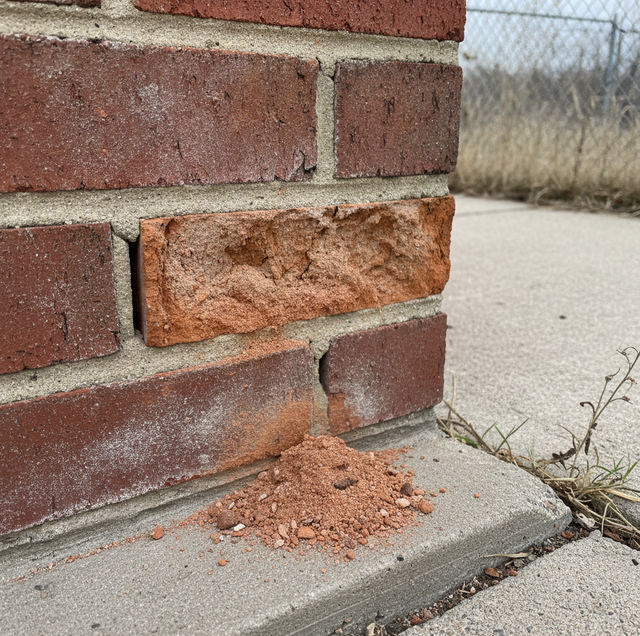
Quick Answer: Brick spalling is caused by moisture soaking into porous brick and then being forced back out destructively, most often by freeze-thaw cycling and by salts crystallizing just under the surface. It can usually be fixed by stopping the water source, cutting out and replacing the spalled bricks with matching units, and repointing with the correct, softer mortar. The moisture has to be corrected first, or the new brick spalls too.
If chips, flakes, or crumbling faces are appearing on your brick, you are looking at spalling. It shows up as thin scales peeling off, a chalky powder collecting at the base of a wall, or whole face pieces popping off to reveal the rough, unfired-looking interior underneath. It looks like the brick is simply wearing out, but that is almost never the real story. Spalling is a moisture problem wearing a masonry coating, and once you see the mechanism, both the cause and the repair make sense.
How Spalling Actually Works
A brick is not as solid as it looks. It is a fired clay body full of tiny pores, and those pores drink water. On its own, that is fine, because a healthy brick also dries back out. The trouble starts when water gets in faster than it leaves, or gets trapped and cannot leave at all.
Once the pores are saturated, two forces act on the brick from within. The first is freeze-thaw cycling. Water expands by roughly 9% when it freezes, so every time the temperature drops below freezing, the water locked in the outer layer of the brick swells and pushes outward against the face. Thaw, refreeze, repeat. That is a small movement each time, but masonry does not shrug off small movements repeated a few hundred times a winter. Eventually, the outer skin fractures, and the face flakes or pops off.
A sealed water bottle left in the freezer shows the same thing: the ice expands and the bottle bulges and splits at its weakest point. In a brick, the outer face is the weakest point, and it splits outward.
The second force is salt. Groundwater and rainwater carry dissolved salts into the brick. When the water evaporates, the salt is left behind as crystals. If those crystals form on the surface, you get efflorescence, the harmless white haze many homeowners recognize. The damaging version is subflorescence, in which the salt crystallizes just below the surface. Growing crystals exert real pressure, and, like ice, they push the surface away from behind. This is why spalling keeps working year-round, not only in winter. Freeze-thaw is one stressor among several, and salt and trapped moisture keep grinding away in the warm months too.
What Keeps the Brick Wet in the First Place
Since saturation is the root of the problem, the real culprits are whatever keeps a brick soaked. On older homes, these are the usual suspects:
- Failed or missing flashing and drip edges- These metal details are supposed to shed water away from the wall. When they fail, water runs straight down the face and into the brick.
- A cracked or clogged chimney crown- The crown is the sloped cap on top of a chimney. When it cracks or a downspout-style drainage path clogs, water sits and soaks down into the brickwork below.
- Sprinklers and ground splashback- Irrigation heads that hit the wall, or rain bouncing off hard surfaces onto the lowest courses, keep the base of a wall permanently damp. That is why spalling so often starts within a foot or two of grade.
- Rising damp- Ground moisture wicks up into the brick that lacks a working moisture break, saturating it from the bottom.
Two more causes are self-inflicted, and they matter because homeowners often create them while trying to help the brick.
The first is the wrong mortar. Older brick tends to be relatively soft, and it was originally laid with soft lime-based mortar. A joint is supposed to be the sacrificial part of a wall: softer than the brick, so it absorbs movement and lets moisture escape through the joint rather than the brick. When someone repoints old soft brick with a hard modern Portland-heavy mortar, that logic gets inverted. The joint is now stronger than the brick, so movement and salt migration get forced into the brick face instead. The joints stay crisp and intact while the surrounding bricks spall. Matching mortar hardness to the brick is not a nicety here; it is the core of the whole repair.
The second is aggressive cleaning and coatings. Fired brick has a harder, denser skin on its outer surface, formed in the kiln, and that skin is much of what keeps water out. Sandblasting or heavy pressure-washing strips away skin and exposes the soft, thirsty body underneath. A brick that was fine for decades can start to drink water and spall within a year or two after being blasted clean. Similarly, painting or sealing brick with a non-breathable film traps moisture behind the face. The brick can no longer dry outward, so freeze-thaw and salt get to work on water that has nowhere to go.
The Signs, and Why They Get Worse
Catching spalling early is worth it because the damage compounds. Watch for:
- Thin flakes or scales lifting off the face
- A fine powder or grit collecting at the base of the wall
- Faces that have popped off cleanly, leaving shallow craters
- A rough, matte, coarse texture where the smooth face used to be
That last sign is the one that matters most. Once the hard outer skin is gone and the porous interior is exposed, the brick absorbs even more water than before. More water means more freeze-thaw and more salt action, which strips more skin, which absorbs still more water. Spalling accelerates itself. Left alone on a wall or chimney, enough face loss thins the masonry, works into the joints, and can eventually undermine the structure it supports. A spalling chimney in particular is worth prompt attention because it sits fully exposed on all sides and takes the worst of the weather.
Can Spalling Be Fixed?
In most cases, yes, and rarely does a whole wall need to come down. But the repair has to happen in the right order, because skipping the first step guarantees the fix fails.
Stop the water first- Repair the flashing, add or restore drip edges, seal or rebuild a cracked chimney crown, aim sprinklers away from the wall, correct grading and splashback. If the moisture source is still feeding the brick, any brick you replace will spall on the same schedule as the last one.
Replace the spalled bricks- Where the damage is limited to individual faces, the standard fix is to cut out the damaged units and set matching replacements. This is surface-level repair, distinct from a structural rebuild, which is what widespread damage or a leaning wall would call for instead.
Repoint with the correct mortar- Any repointing around the repair should use a softer, lime-appropriate mix matched to the original brick, so the joints stay sacrificial and the new work behaves like the old.
Let the wall breathe- If any coating is used at all, it should be a breathable one that still lets the brick dry outward. The goal is a wall that drinks less and dries fully, not one sealed in plastic.
This is skilled, hazardous work. Chimney and upper-wall repairs mean heights and scaffolding, and cutting or grinding masonry throws silica dust that requires proper respiratory protection and dust control. Matching brick and mortar correctly takes a trained eye. This is a job for an experienced mason, not a weekend project.
Frequently Asked Questions
Water trapped in the pores is forced back out destructively, most often by freezing and by salt crystallizing just under the skin, and each cycle lifts a little more of the face. Because it is driven by how wet the brick stays, spalling concentrates in predictable spots: the weather-facing walls, usually the north and west sides that get the least sun and dry the slowest, and the courses near grade where rain splashback off the ground keeps the brick wettest. The sheltered, sun-warmed faces of the same building often stay sound while those wet zones flake.
A joint is meant to be softer than the brick, so it accommodates movement and allows moisture to escape through the joint rather than the brick. Soft historic brick wants a lime-rich mortar, a Type O or Type N, so the joint stays the sacrificial part and gives way before the brick does. Repoint it with a hard Type S or Portland-heavy mix, which cures far stronger, and the relationship flips: now the joint is harder than the brick, so movement and migrating salt get forced into the brick face while the joints stay crisp. You end up watching the bricks crumble between perfectly sharp lines, which is why matching the mortar type to the brick matters more than a neat-looking joint.
Yes, and it is one of the more common causes people bring on themselves. Fired brick has a hard protective skin, the fire skin, formed in the kiln, and blasting or a high-pressure tip grinds it off and opens the soft body beneath. The threshold is lower than people assume: even a washer running around 1,500 PSI or more can erode the fire skin and scour out the joints on soft brick, well below the 3,000-plus PSI tip people reach for on concrete. That is why masons clean historic brick with low-pressure, or soft, washing and a gentle masonry detergent instead. Clean it too hard, and a wall that stood fine for decades can start spalling within a year or two.
A non-breathable film usually makes it worse, because the brick has to dry outward through its face, and a trapped supply of water just feeds freezing and salt from the inside. What decides it is the sealer chemistry. A penetrating silane or siloxane repellent soaks into the pores and beads out liquid water while still letting water vapor escape from behind, so the wall keeps drying. A film-forming acrylic coating or ordinary paint lays a skin over the surface that stops both, trapping moisture against the face. If anything goes on at all, it should be the breathable penetrating kind, never the film.
Usually, the individual spalled bricks are cut out and replaced with matching units, so a full wall rarely comes down, but two things have to be right. The replacements are bedded and repointed with a matching soft, lime-appropriate mortar so the joints stay sacrificial, and the wall's actual water source, the failed flashing, cracked crown, or bad grade feeding it, is fixed first. Set fresh brick into a wall that is still getting soaked, and the new units spall within a season, on the same path the originals took.
You match size and color, but absorption rate and hardness matter most: a replacement denser than the soft original sheds water sideways onto its neighbors instead of taking its share, pushing spalling into the surrounding brick. The set matters as much as the unit. A good mason tooths the replacements in one at a time and rakes and repoints the joints around them, so the patch keys into the existing bond and blends in rather than reading as an obvious rectangular block of new brick.
Get a spalling brick or chimney inspected before the damage spreads — protect the structure while the fix is still small. Golden Stones Masonry serves St. Paul and the Twin Cities. Call (612) 509-0718.