
Weep Holes in Brick: The Gaps You Should Never Seal
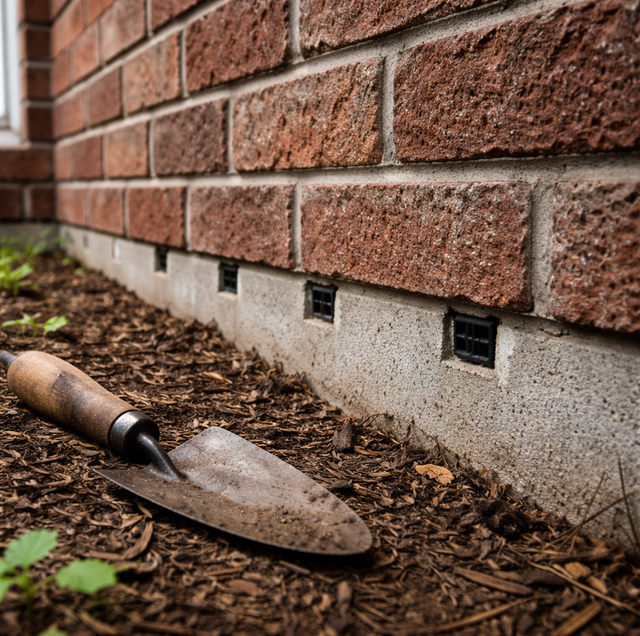
Quick Answer: Weep holes are small openings in the bottom course of a brick veneer wall. They let water that has seeped into the air gap behind the brick drain back out, and they let air circulate to dry the cavity. Sealing them traps moisture against the wall's structure, which leads to rot, corroded ties, mold, and spalling brick.
Walk along the bottom course of almost any brick house, and you will spot them: small openings spaced evenly near the foundation, sometimes empty, sometimes fitted with a little plastic grate. They look like something the mason forgot to fill. They are the opposite. Those gaps, called weep holes, are one of the few things standing between the inside of your wall and slow water damage, and sealing them is one of the most common well-meaning mistakes a homeowner can make.
To understand why they matter, you have to drop one assumption first: a brick wall is not waterproof.
Brick Veneer Is Not a Waterproof Skin
Most brick homes built in recent decades are not solid brick. They are brick veneer, meaning a single wythe (one brick thick) of masonry standing in front of a structural wall made of wood or metal framing, sheathing, and a moisture barrier. The brick is the visible face, not the load-bearing wall behind it.
Brick and mortar are porous. In a hard, wind-driven rain, water soaks into the face of the brick and passes through the mortar joints. Some of it reaches the back side of the veneer. This is expected and by design. The wall is not built to stop every drop at the surface. It is built to catch the water that gets through and send it back outside before it can do harm.
That catch-and-drain system is called a drainage cavity, and weep holes are its exit door.
How a Drainage Cavity Actually Works
Behind the brick veneer there is a deliberate air gap, usually about one inch wide, between the back of the brick and the moisture barrier on the framing. At the very bottom of this gap sits through-wall flashing: a waterproof membrane that runs under the first course of brick and turns up the back of the cavity.
When water gets behind the veneer, gravity pulls it down the cavity until it hits the flashing. The flashing acts like a gutter tipped toward the outside, collecting the water and directing it to the weep holes, which sit just above the flashing line. The water drains out through the holes and drips harmlessly down the face of the wall.
Take the weep holes away, and the flashing has nowhere to send its water. The cavity fills like a bathtub with no drain. Trapped moisture then goes to work on everything it touches: it rots the wooden sheathing behind the barrier, corrodes the metal ties that anchor the veneer to the frame, and feeds mold growth in a space no one can see. On the brick itself, it produces efflorescence, the chalky white salt bloom that appears when water carries mineral salts to the surface, and spalling, where the face of the brick flakes and crumbles as absorbed water expands.
Why the Holes Exist and Where They Go
Weep holes do two jobs. The obvious one is drainage. The second, quieter one is ventilation. Open weep holes near the base of the wall, paired with vents higher up, let air move through the cavity. That airflow carries away humidity and helps the gap dry between rains, which matters as much as drainage over the long life of a wall. A cavity that drains but never dries stays damp enough to grow mold.
Masons build weep holes a few different ways. The simplest is an open head joint, where the vertical mortar joint between two bricks is left unfilled to leave a clean gap. Others use a rope or plastic tube weep, a wick set into the mortar joint that draws water out. The most visible option is a vented plastic insert, a small louvered or honeycomb grate that fills the joint while still letting water and air pass.
Spacing follows a rough rhythm. Weep holes typically sit every 24 to 33 inches along the base of the wall, which works out to roughly every fourth or fifth brick. They also appear above openings, wherever flashing sits over a window head, a door, or a lintel, because those spots collect water too. They always sit directly on top of the through-wall flashing, never below it, so the flashing can deliver water to them.
A useful way to picture it: A weep hole works the same way as the little slots at the bottom edge of a car windshield or a sliding-door track. Water that collects where it is not wanted runs to the low point and escapes through a small opening, instead of pooling and backing up into places it can rot or stain. Block that slot and the track fills; block a weep hole and the wall does.
Why People Seal Them, and Why That Backfires
Two instincts drive most homeowners to close weep holes. The first is aesthetic and logical: the gaps look like unfinished work or a defect a previous mason skipped, so filling them seems like a repair. The second is pest-related. The openings are just big enough for insects, wasps, or the occasional mouse to explore, and the fix that comes to mind is to plug them.
Both instincts are understandable, and both cause damage. Sealing a weep hole with mortar, caulk, expanding foam, or paint converts a working drain into a dam. The water that was leaving the wall now stays in it. The irony is sharp: the homeowner seals the holes to protect the wall and instead starts the exact rot, corrosion, and mold cycle the holes were built to prevent. Damage from a blocked cavity is slow and hidden, so by the time interior walls feel damp or brick starts spalling, the problem has usually been running for a while.
Keeping Weep Holes Doing Their Job
Weep holes fail quietly, often without anyone touching them on purpose. A few things to watch for:
Mortar droppings: During construction or repointing, wet mortar can fall down the cavity and pile up on the flashing, plugging weep holes from behind. A careful mason keeps the cavity clear as the wall goes up, but older or rushed work sometimes leaves blockages.
Paint and caulk: Repainting trim or sealing around the base of a wall can bridge over weep holes without anyone noticing. A bead of caulk run along the bottom course to tidy the look will quietly close every weep it crosses.
Mulch and soil: Landscaping is a frequent culprit. Piling mulch, raised beds, or regraded soil up against the wall can bury the weep line entirely. Keep mulch and soil several inches below the weep holes so water can exit into open air, not into wet ground.
Added insulation or foam: Blown-in insulation or spray foam pushed into the cavity from inside during an energy retrofit can block drainage and ventilation at the same time. This is a hidden defect that will not show from the outside, so it is worth flagging to any contractor working on the wall.
If pests are the real concern, the answer is a weep-hole screen or cover, not a plug. These are small stainless steel, plastic, or mesh inserts sized to fit the joint. They keep insects and rodents out while leaving the opening free to drain and breathe. The rule is simple: whatever goes into a weep hole must still let water and air pass. Anything solid is a mistake.
Keep mulch and soil several inches below the weep holes so water can exit into open air, not into wet ground. If pests are the concern, use a weep-hole screen or cover rather than a plug, because whatever goes into a weep hole must still let water and air pass.
Signs Your Drainage Is Already in Trouble
A wall usually tells you when its cavity is not draining, if you know the signals. Efflorescence, the white powdery staining on the brick face, points to water moving through the masonry and evaporating at the surface. It is common in small amounts, but heavy or recurring blooms near the base suggest water is lingering where it should be leaving.
Damp or musty interior walls along an exterior brick wall, especially near the floor, can mean moisture is crossing from a saturated cavity into the framing. Spalling brick low on the wall, where the face flakes, pits, or crumbles, is another base-of-wall clue, because absorbed water expands and contracts, breaking the brick apart from the inside. In cold months, water trapped in the brick freezes and expands in a freeze-thaw cycle that accelerates spalling, while in warmer months, driven rain keeps refilling a cavity that cannot drain. Both push water into the wall year-round, from opposite directions, which is exactly why a working drain matters in every season rather than just one.
If you see these signs, resist the urge to patch the brick face and call it done. Spalling and efflorescence are usually symptoms of a drainage or flashing problem behind the wall, and cosmetic repairs on the surface leave the real cause running. Flashing repair and cavity work sit behind the brick and involve removing and rebuilding courses, so this is work for a masonry professional rather than a weekend fix.
Frequently Asked Questions
Pour a small amount of water into the top of the cavity through a vent or an open joint above, or check the base of the wall an hour after a heavy rain. Working weeps will show damp trails or active dripping at the openings. If the surrounding wall is soaked but the weep holes stay bone dry, water is being trapped rather than drained, and something below or behind them is likely blocked.
Traditional solid masonry walls, common on early-century homes built two or more wythes thick, generally were not built with weep holes because they rely on sheer mass to absorb and slowly release moisture rather than a drainage cavity. Weep holes are a feature of cavity and veneer construction. If an older solid-brick home was retrofitted with an interior wall or insulation, though, its moisture behavior changes, which is one reason work on historic walls needs a mason who understands both systems.
Cutting new weep holes into an existing veneer is not a simple drill-and-done job. A weep hole only works if it sits directly on top of properly installed through-wall flashing that collects and channels the water to it. Drilling holes into a wall with no flashing, or above the flashing line, can let water in without giving it a path out, making things worse. Assessing the existing flashing and adding drainage correctly is professional masonry work.
That is a rope or tube wick weep, a length of cotton rope or plastic tubing set into the joint so one end sits in the cavity, and the other hangs outside. It draws water out by capillary action and wicking, similar to how a lamp wick pulls fuel. It drains more slowly than an open joint but resists pests better on its own. If a wick looks packed with dirt or has been painted over, it has stopped working and should be cleared or replaced.
The speed depends on how much water gets into the cavity and how well it can dry, but the mechanism is reliable. Mold needs moisture, organic material, and time, and a blocked cavity supplies all three by keeping the wooden sheathing damp in a dark, unventilated space. Problems often stay hidden for a season or more before damp interior walls or a musty smell appear, which is what makes blocked weeps so damaging: the failure is invisible until it is advanced.
A quick visual pass once or twice a year is enough for most homes, ideally after landscaping changes and after any exterior painting, repointing, or foundation work, since those are the moments weeps most often get blocked. Look for holes buried by mulch, sealed by caulk or paint, or clogged with debris or insect nests, and confirm the mulch and soil line still sits below the weep holes. Catching a blockage early is far cheaper than repairing a rotted wall later.
Have a brick wall that is spalling, staining, or hiding blocked weep holes — get it looked at before the damage spreads. Golden Stones Masonry serves St. Paul, Minneapolis, and Eagan. Call (612) 509-0718.
