

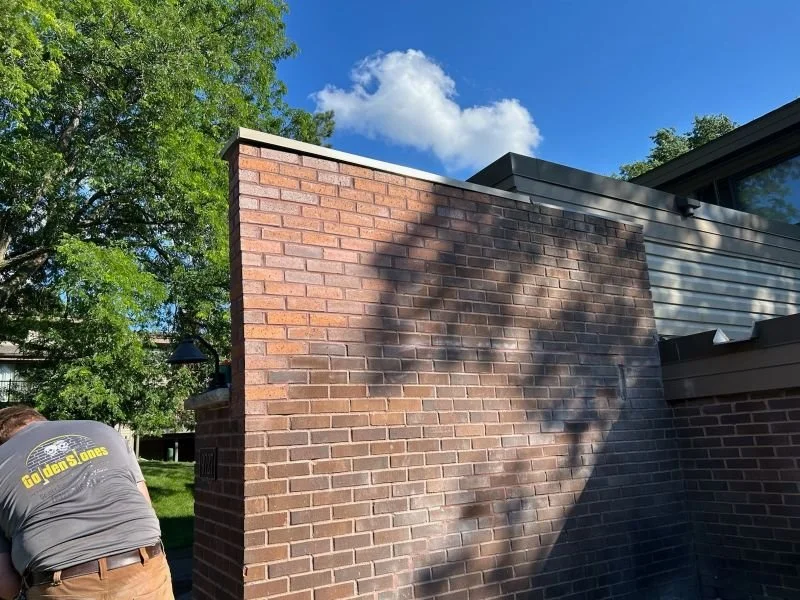
Vehicle Impact Masonry Repair in Minneapolis
10 Years
Workmanship warranty, in writing

A car has left the street and hit the brick wall in your front yard. A delivery truck has backed into a gate pier, or someone has cut the turn out of the alley too tight and taken the corner off the garage. Across Minneapolis, that struck brick and stone is ours to rebuild, and Sam's photographs and written estimate become the record of the damage that you pass to your insurer.
The bricks to find are the ones that moved without falling. They can sit well past the ones lying on the ground, and Sam traces them along the wall before the estimate is written.
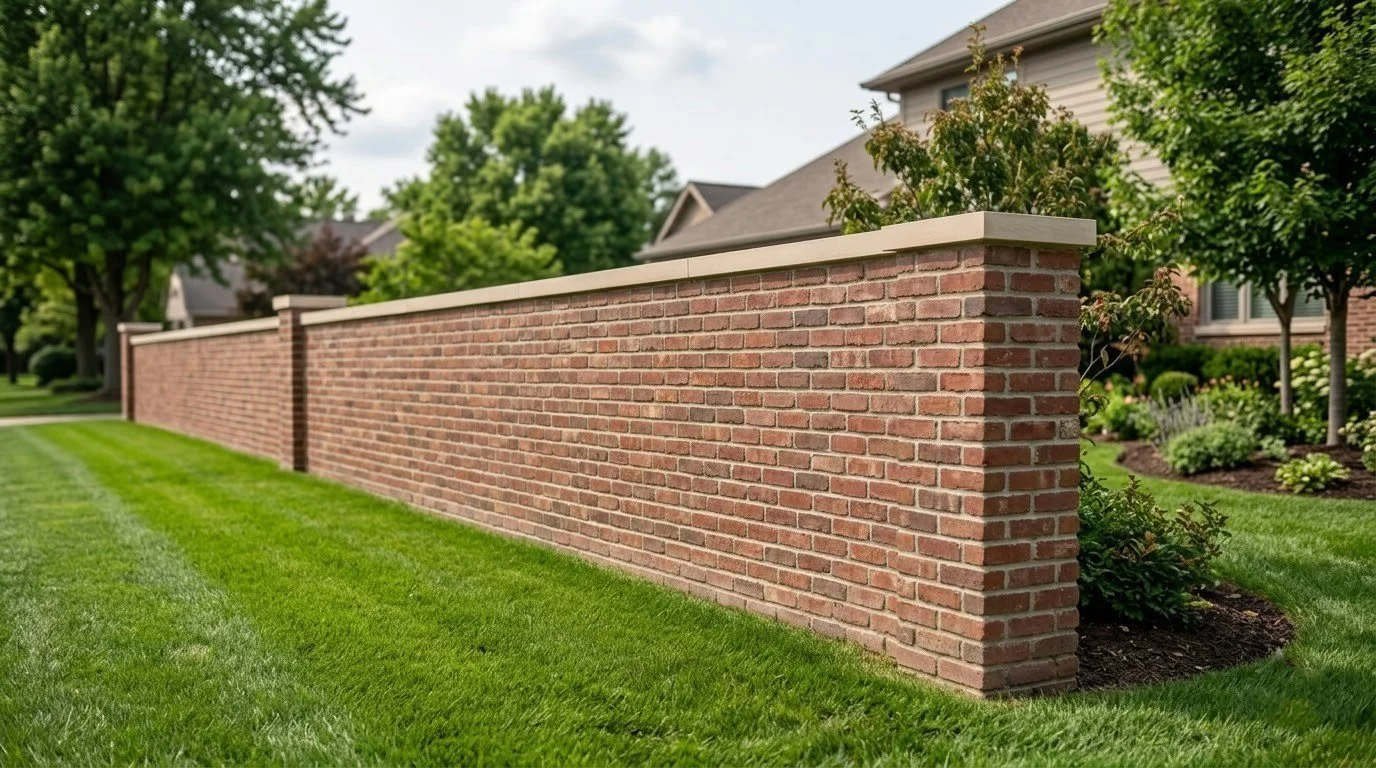
Five Checks That Show How Far a Strike Reached
You can make these checks yourself while you wait for the visit, from a step back and without pushing or leaning on anything the strike has moved, and each one tells Sam something the gap alone does not.
Look at a column or gate pier from two sides
Stand back from it, then look again from a quarter turn around, comparing each face with a door frame or a house corner behind it. A pier that took a glancing blow can stand upright at the top yet still sit twisted at its base. If either view shows a lean or a twist, the pier is taken down and rebuilt on a base that has been checked first.
Sight along the top of a garden or boundary wall
Stand at one end and look along the top of the wall. If the line kinks or bellies near the gap, the courses on either side were pushed too, and they come down with the gap so the new section meets straight brick.
Look back from a clipped garage or house corner
At a corner, the bricks alternate between the two walls, and that interlock ties them together. Once a few are knocked loose, the tie weakens along both faces, so look along each wall for brick standing proud of its neighbors. Sam checks the same thing well back from the dent.
Look at the foot of a brick mailbox or entrance pillar
A mailbox is a small rebuild, but the crack you can see may not be where it broke. Look along the bottom course without touching it: if the mortar there has cracked open or crumbled, the break is at the base, and the pillar comes down to that point.
Walk to the far end of the wall
A fine crack several courses from the point of impact, or a joint that has opened where the wall ends, can come from the same strike. Photograph it before anyone touches the wall, because it belongs on the written estimate.
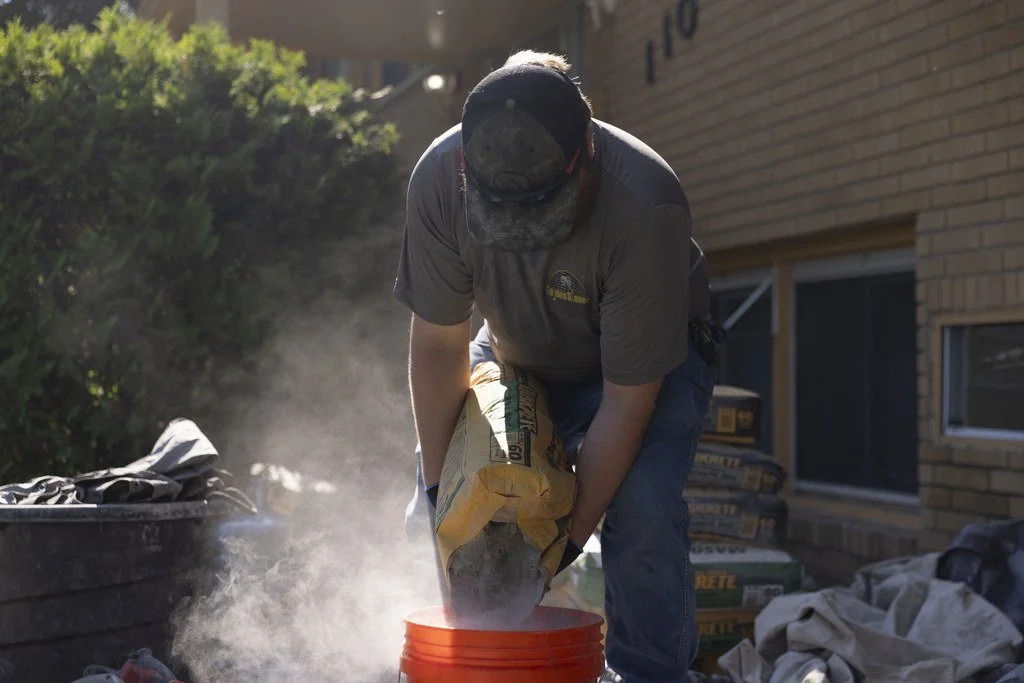
What We Rebuild After a Vehicle Strike
Brick garden and boundary walls, taken down to sound work and rebuilt to line and level
Entrance columns, piers and gate pillars, taken down to a solid base and relaid, with the footing reset first where the strike moved it
Brick mailboxes and the small pillars beside a drive, rebuilt from the break down and matched to the original brick
Struck corners on brick garages and houses, rebuilt into both walls so they bond together again
Cracked or broken units in an existing concrete block garage wall, cut out and replaced
Stone walls, columns and piers, assessed the same way and rebuilt in natural stone
For stone, our stone walls page goes further; for why a brick wall that has moved is taken down and relaid, see our brick walls page.
What the job leaves to others
The insurance claim itself. The claim is yours to run with your insurer; our part is the record described below and the rebuild.
Fences, gates and railings in steel or wood. A hinge pin or bracket set in the masonry goes back in as we rebuild, and the gate, fence or railing itself goes to a fence or metalwork trade.
Bollards, guard posts and concrete barriers. A masonry wall is not built to stop a car, and barriers are another trade's work.
Concrete slabs and driveways, the overhead garage door and its tracks, and thin stick-on brick veneer.
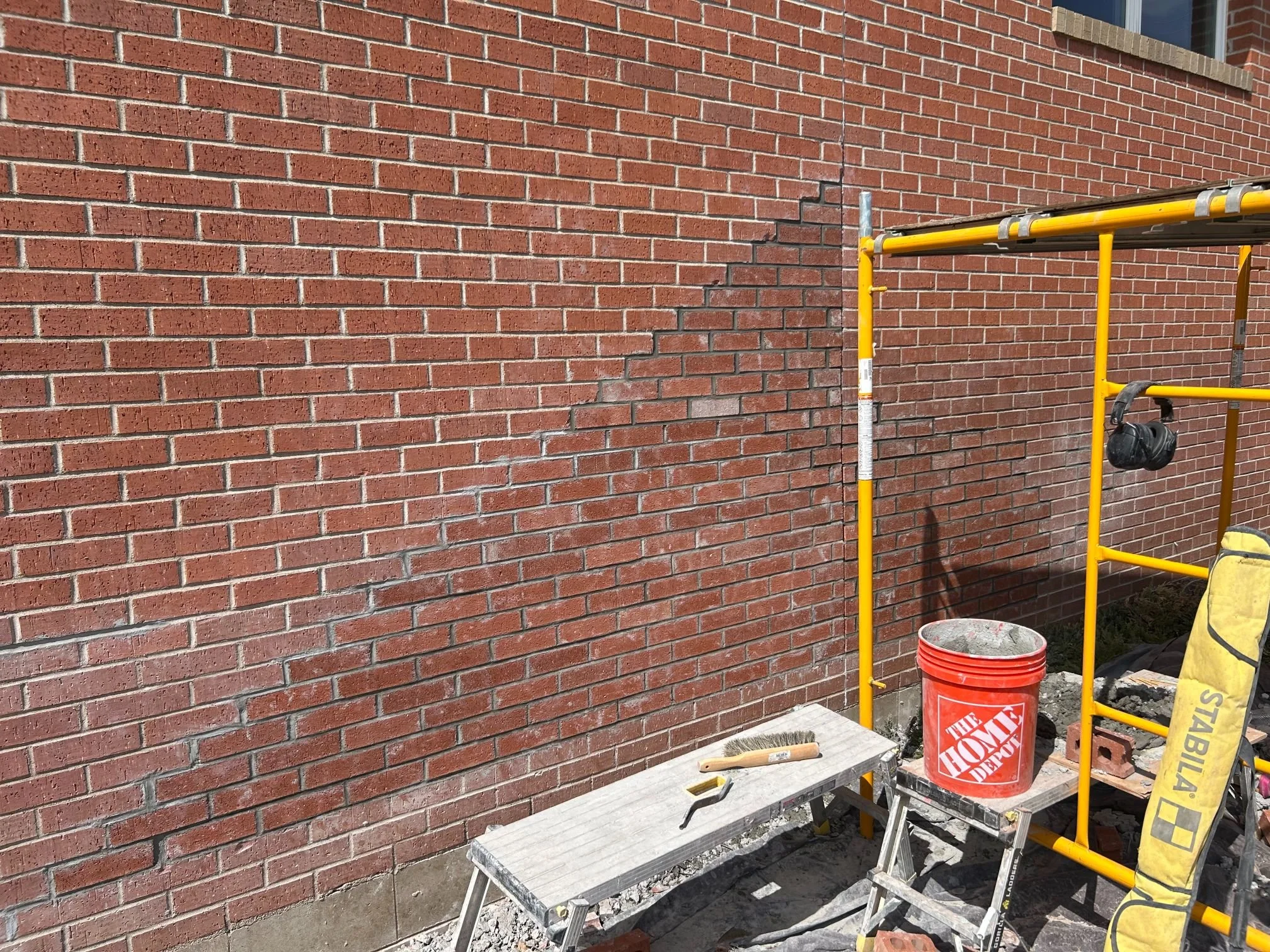
Rebuilding Struck Brick on an Older Minneapolis Lot
On the city's older lots, a front wall, gate pier, or garage may be made of soft old brick laid in lime mortar, which changes how a struck section goes back up.
The rebuilt section has to sit with the wall around it. Its mortar is mixed for brick of that age. Replacement brick is sourced to match the units around the gap in color, size, and face, and on a wall that old, a small difference can still show. Sam tells you how close the match will come before any brick is laid, and our brick repair page covers the limits of matching old brick.
That is why the bricks that came down are worth keeping. Whole bricks from the original wall already match it, so once you have photographed the damage, gather the sound ones that lie clear of the wall and set them aside, away from mowers and cars, and Sam will judge at the visit which can go back in.
Alley Garages and Walls at the Sidewalk
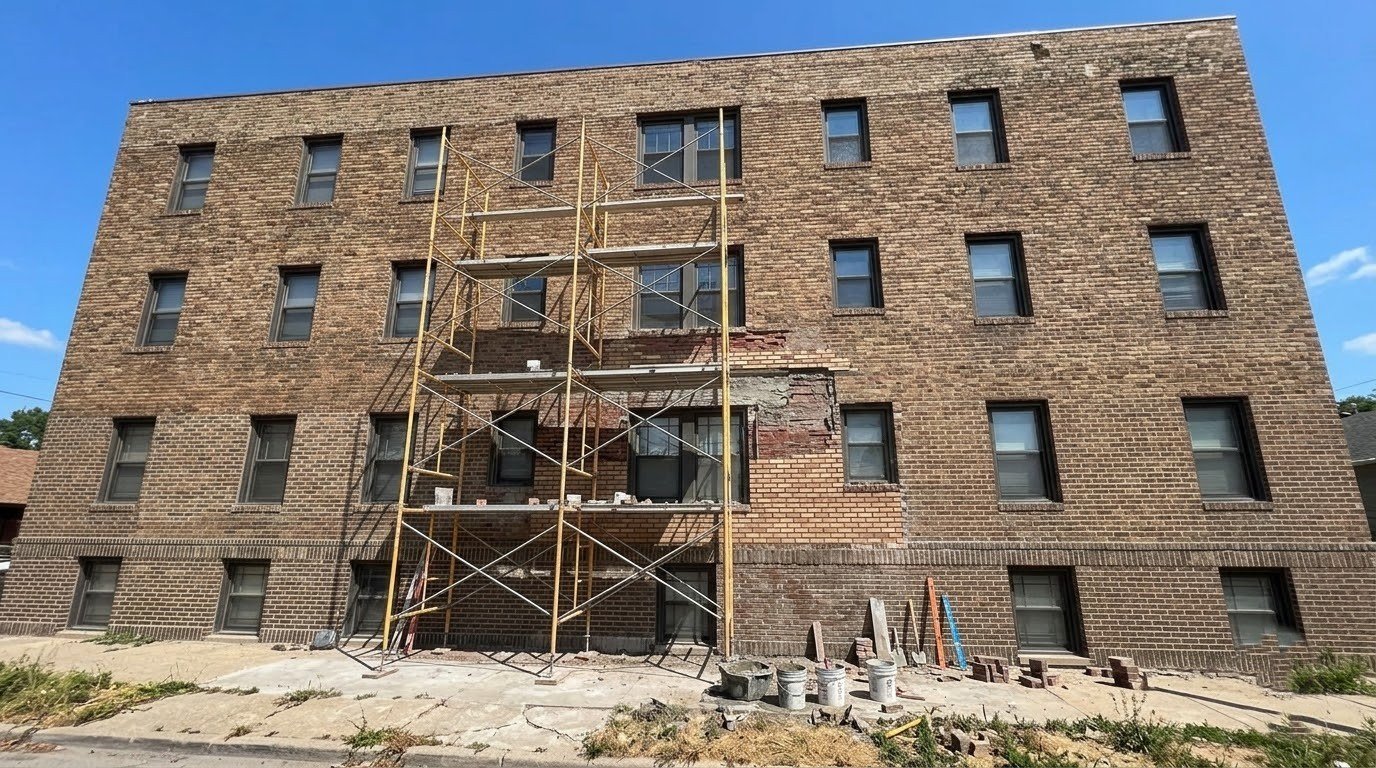
Where a Minneapolis garage opens onto an alley, a car backing out of a stall has little room to spare, and it meets a garage corner or a brick pier at the alley edge. On an alley garage, photographs taken from the lane show the side the car came from.
A garage whose brick or block failed without a strike, from salt or a footing that moved, is covered on our Minneapolis garage masonry page.
At the front of the lot, a car that hits a wall beside the public sidewalk can also break the sidewalk. The City gives owners two routes for that panel: its own hired contractor or an insured sidewalk contractor, and either way it is a separate job from the wall.
A Written Record for Your Insurer
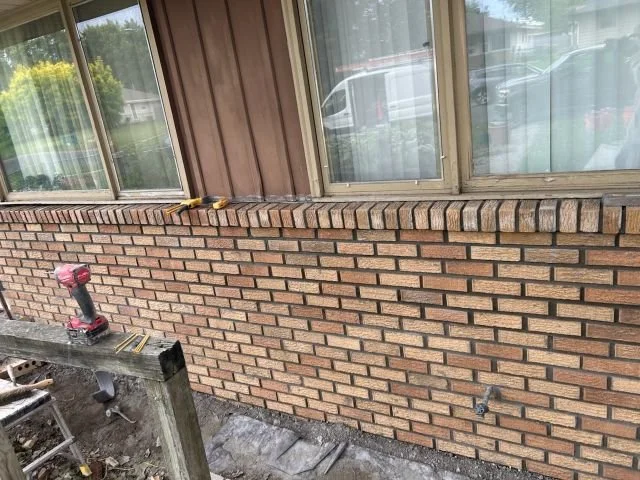
Sam starts the record at the first visit, photographing the damage as he finds it, before any of it is rebuilt. It has three parts:
Photographs of the strike up close and of the whole wall, column or corner
Photographs of any shifted courses or cracking away from the point of impact
A written estimate listing what comes down, what goes back up and why, in terms someone who has not seen the wall can follow
The record describes the wall and the repair. Talking with the adjuster and any questions about what your policy covers stay with you and your insurer.
How an Impact Repair Runs
The visit
Sam comes out promptly. He looks past the break for the movement around it, and the estimate and photographs follow in writing.
Bracing or taking down
Where a section has fallen partway, or a column leans over a walk or a drive, anything loose enough to come down is removed or braced before the rebuild is scheduled.
Taking it back and rebuilding
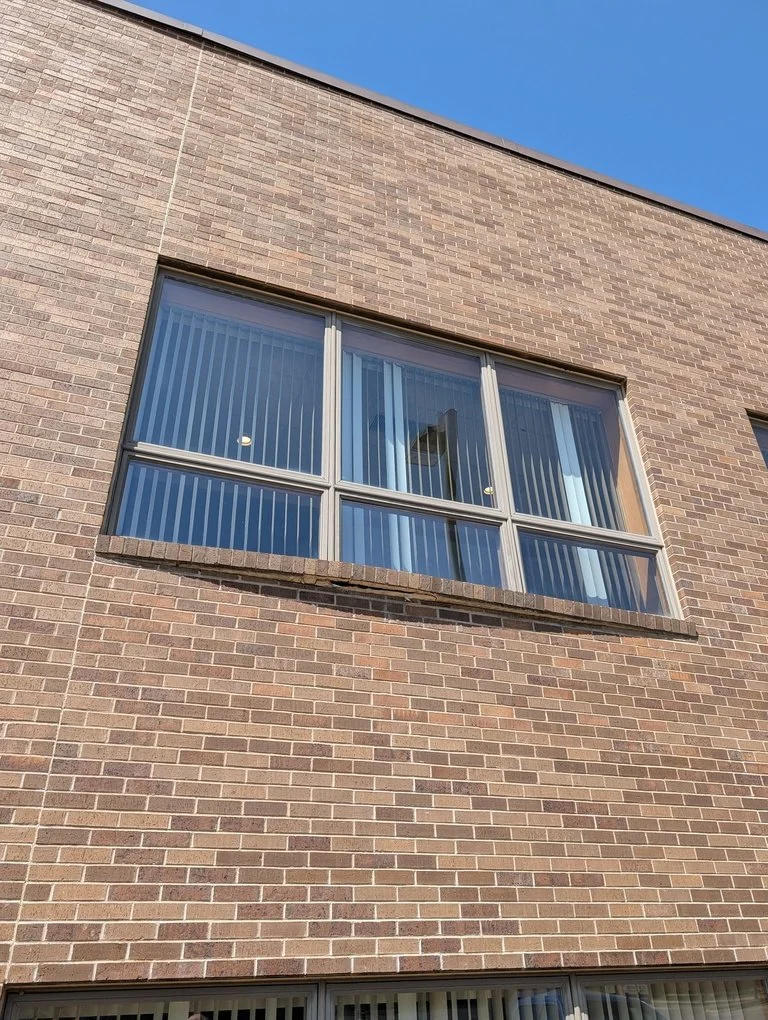
Once the brick or stone is sourced, we take the damaged masonry back until we reach brick or stone the strike left in place, which can be some way past the break. A footing the strike moved is reset first. The section then goes back to line and level, its joints finished the way the old ones were. Fresh mortar needs weather mild enough to cure, and the rebuild is booked around that.
What Sets the Price of an Impact Repair
We publish no figure for impact repair because two strikes that look alike can leave very different damage. The estimate is free, in person and in writing. What moves it:
How far the wall or column moved beyond the visible break
Whether the footing shifted and has to be reset
Brick or stone, and how much sourcing the match takes
Access, such as a garage corner tight to an alley or a pier between a drive and a neighbor's fence
Height, and anything bedded in the masonry, such as a gate hinge or a mailbox door
Questions After a Vehicle Strike
Can you look at the damage before the adjuster does?+
Yes. Sam's photographs show the wall as it stood when he arrived, so the record exists whatever happens to the site afterward. Whether to wait for the adjuster before any rebuilding is a question for your insurer.
We rent. Can the estimate go to our landlord?+
Yes. The written estimate and photographs can go to a landlord, an adjuster or anyone else answerable for the property, and they describe the wall and the repair the same way for each reader.
What Customers Say
What appears below is our live Google feed, not testimonials we picked out, so it shows whatever is genuinely on it.
Photos That Help Before the Visit
What helps on the first call:
- Photos taken before anything is moved help both Sam and your insurer. Send:
- The damage up close, with a tape measure or a shoe in the frame for scale
- The whole wall, column or corner from across the yard or drive
- A shot sighted down the wall from one end, to show whether the run bows
- Anything the checks above turned up, such as a lean or a kink in the top line
- Whether the struck wall faces the street, the alley, or a drive