

Tuckpointing in Minnetonka
10 Years
Workmanship warranty, in writing

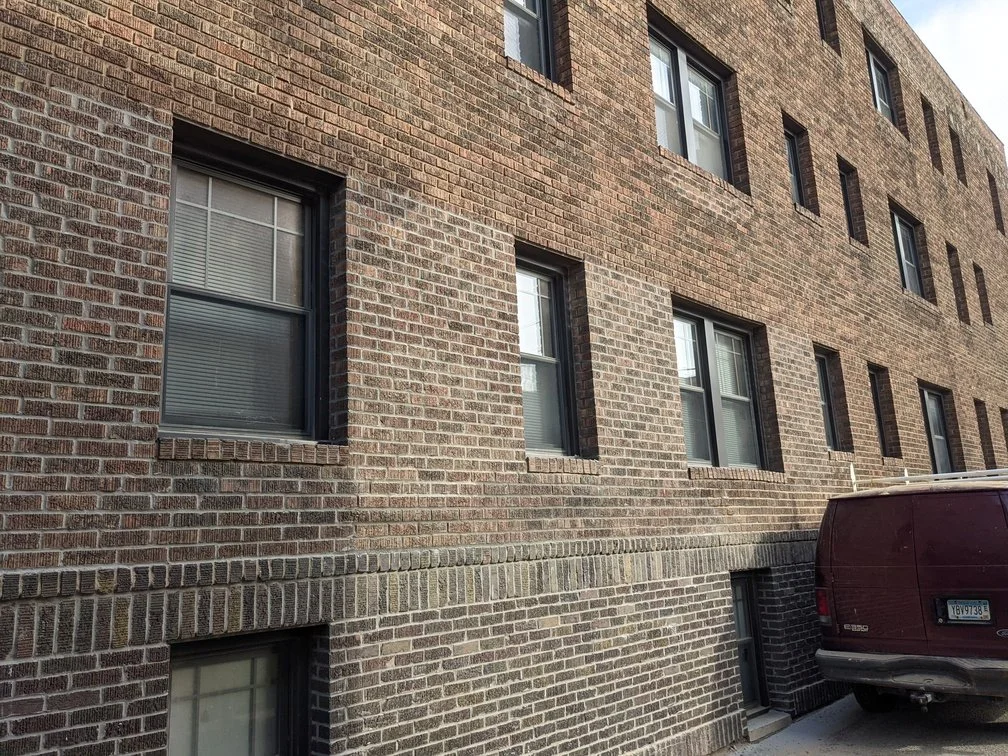
A brick front can need new mortar and still be the wrong wall to repoint. On a wood-framed Minnetonka house from the 1950s or 1960s, the brick is a single layer held to the frame by metal ties set in its joints. When enough of those ties rust through, the face starts to move, and fresh joints packed into a moving wall tend to crack along the same lines again.
So on an older front, the wall is checked before the joints are quoted. Where it stands true, the job is tuckpointing by the grind-and-pack method on our tuckpointing page. Where it has moved, the joints wait for the rebuild.
Minnetonka's Postwar Brick
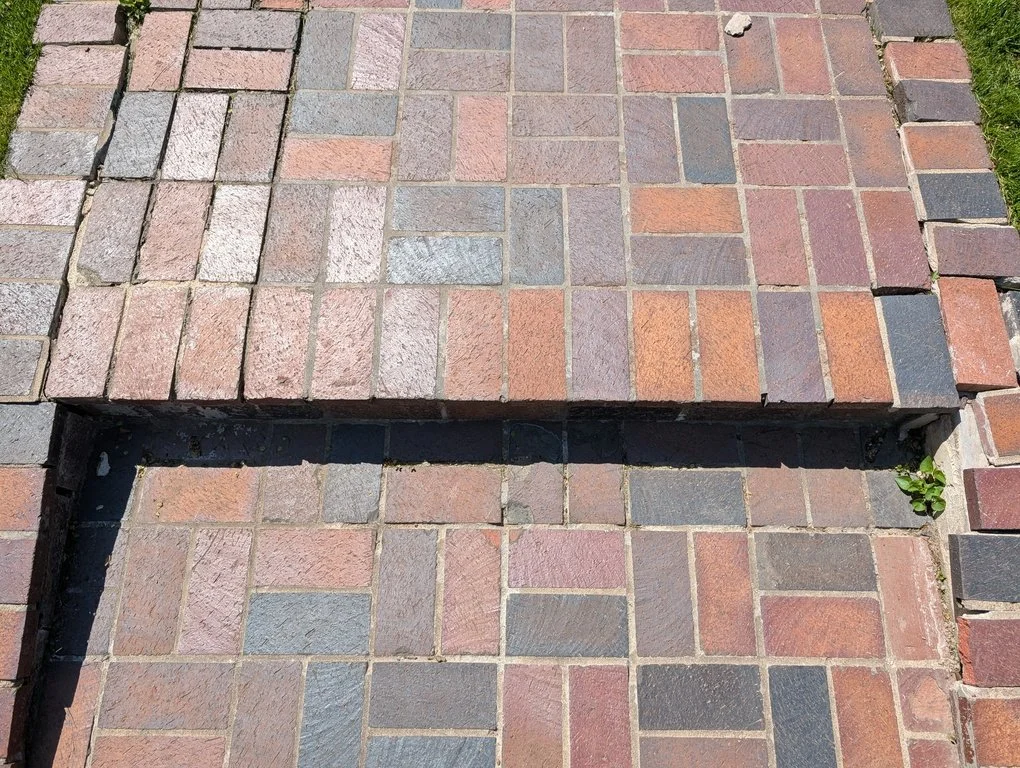
Minnetonka's older brick fronts belong to a postwar surge. Between 1940 and 1956 the township's population more than doubled, from 6,466 to about 15,600, and in 1956 its voters made it a village, as the City's history notes. That stretch from 1940 through 1969 accounts for 7,628 of the homes standing today, by current housing estimates. For houses of that age with brick, the brick is most likely the veneer described above. The 616 homes built before 1940 are a separate case, each wall judged on its own brick.
Is the Front Still True? The Check Before the Quote
A wall tie is a short strip of metal with one end fixed to the frame and the other bedded in a mortar joint. It is hidden from outside, and so is the rust on it. What shows is the brick face responding as the ties give way, which is why Sam looks at the wall as a whole before he looks closely at any joint.
Movement on a veneer tends to show in a few ways. The face no longer runs straight along its length or plumb from the ground to the eaves, and a section bellies outward. Cracks step or run sideways across the face, following the shape of the bulge. A gap opens along the top of the brick under the soffit, or beside a window frame where the brick has pulled away from the wood. One joint band is open while the courses above and below it are tight.
Finding any of that changes what the joints are worth. Replacing ties means taking that brick down and laying it back up in fresh mortar, as our brick repair page explains, and Sam has not yet opened a 1950s veneer and found its ties sound. Repointing first would mean paying for joints that come out with the brick, then paying for them again in the rebuild.
If the face is straight and tight, the joints are an ordinary tuckpointing job, and only the stretches that have failed are priced.
Joint Failure on a Sound Veneer
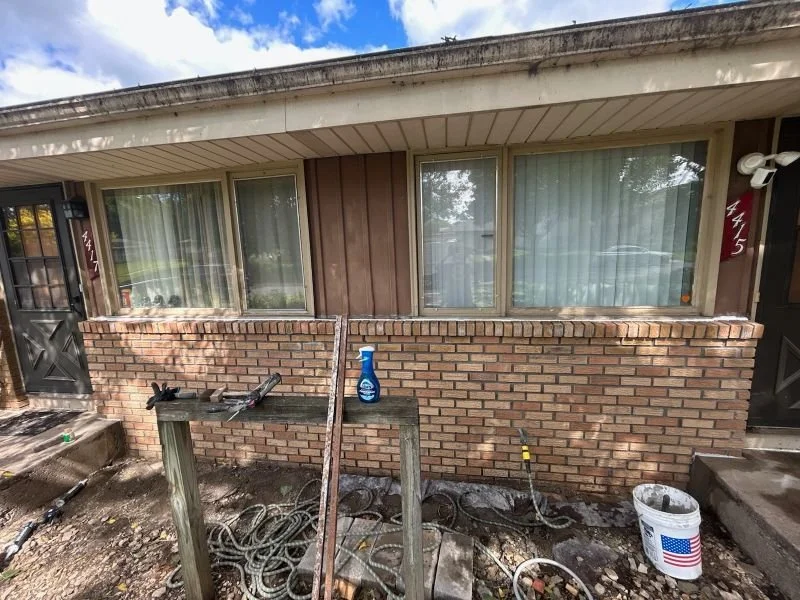
Joints worn back behind the brick, worst under a window sill or beside a downspout
Holes in the head joints, the short upright joints between neighboring bricks
Open joints at the corners and around window and door openings, where the edges of the wall take the weather
Mortar gone from around a hose bib, a dryer vent or a light fixture set into the brick
Cracked joints around a railing, awning or mailbox bracket anchored into the face
On a straight front, any of these marks a stretch for repointing. On a front that has moved, they are read together with the movement.
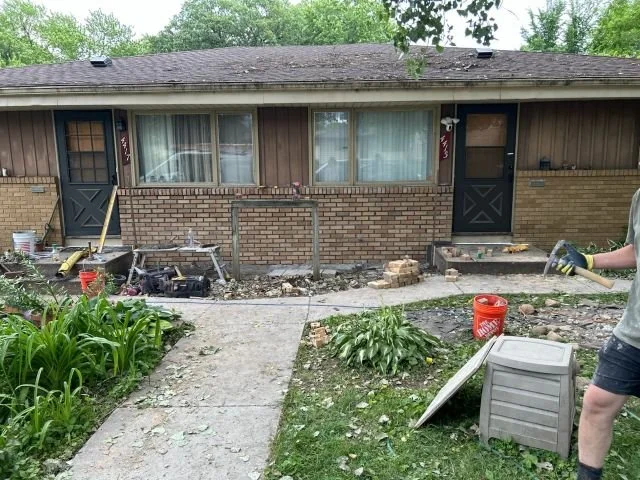
Scope on a Minnetonka Front
Fronts that passed the check
Failed joints ground out to depth and repacked, finished to match the joints left in place, on only the stretches that need it.
Chimneys
Stack joints go with any crown or brickwork up there, on the chimney price lines. Our Minnetonka chimney repair page covers the rest of the stack.
Garage and garden walls
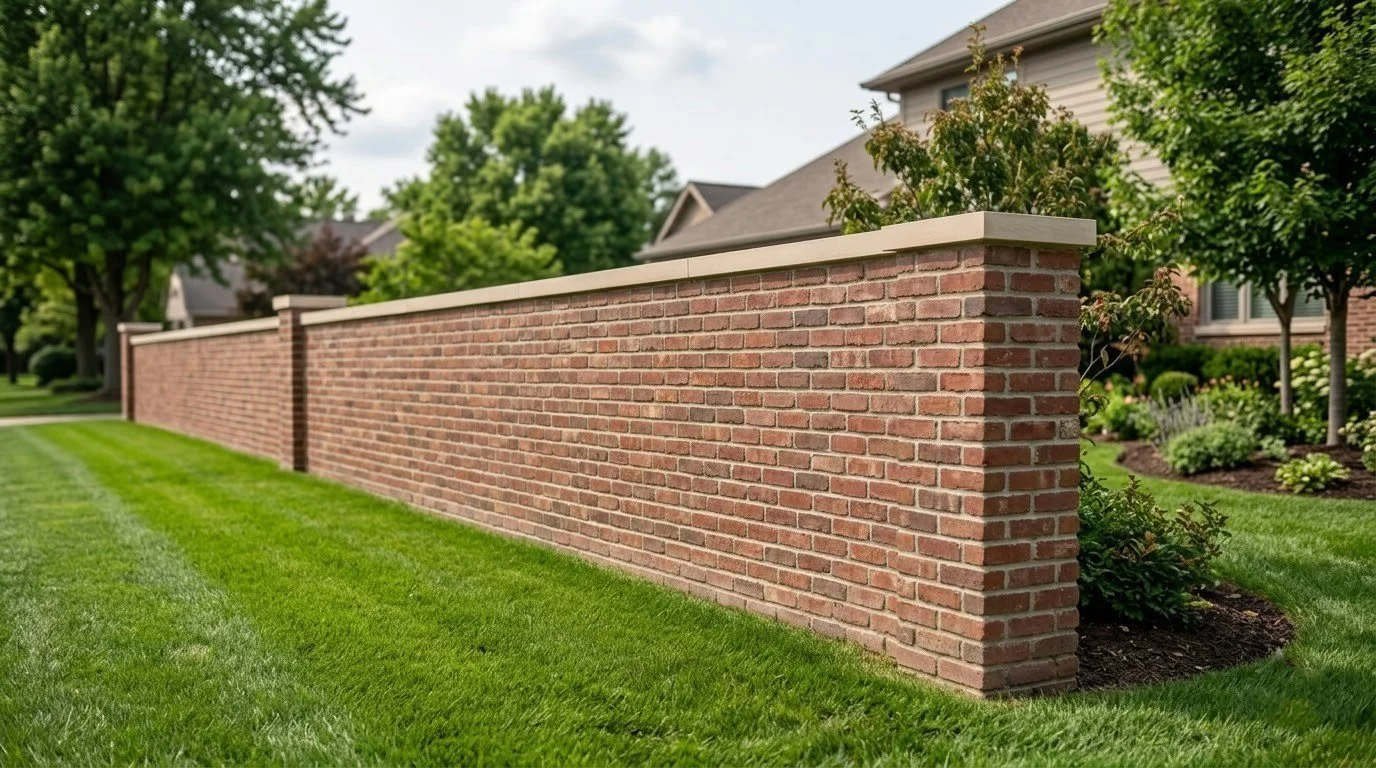
Brick or stone walls on the lot with failed joints. A stone wall that has moved or lost stones is a rebuild, covered on our Minnetonka stone walls page.
Not part of a repointing job
A veneer that has moved, which goes to a tie rebuild first. Brick with spalled faces, caulk in place of mortar and painting or coating brick. Officially designated historic work is referred out.
Joint Prices and Tie Prices
A tie rebuild carries no published figure. What sits behind the brick decides it, so Sam prices it once he has seen the wall. Joints on a front standing true are priced on our tuckpointing lines.
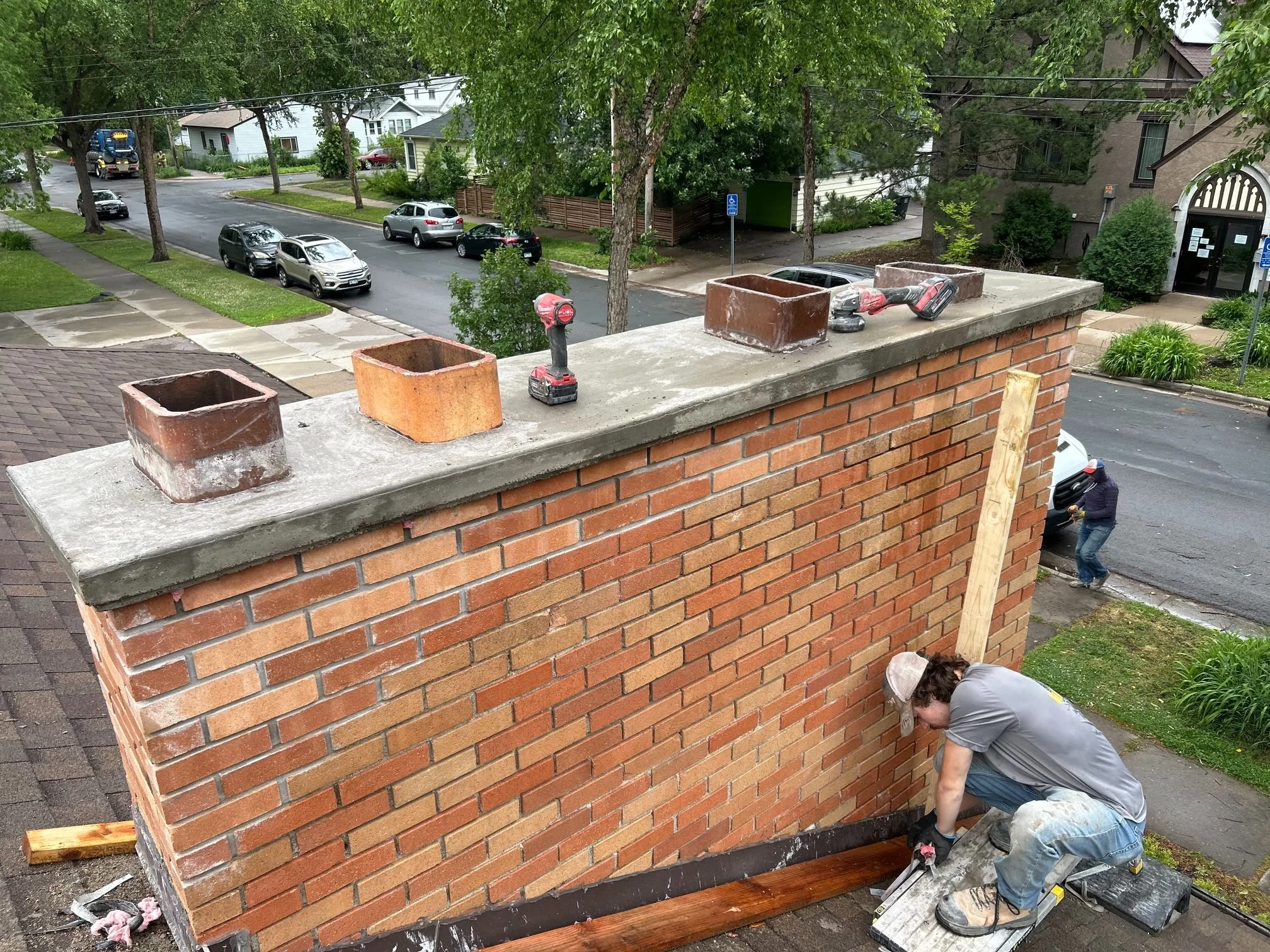
Up to about a 10 by 10 patch of brick: from about $2,800
One whole brick wall, top to bottom: around $6,000 to $8,000
A group of walls, up to the full perimeter: from there upward
The chimney: on the chimney repair lines, with the chimney work
A front needing ties: priced after the visit
Every figure on this page depends on square footage and on what we find when we look. They are rough guides to help you decide whether to call, not quotes. The exact number comes after the visit, and the visit is free.
Once the Face Has Been Read
1. Face first
The free estimate opens with the movement check above, and the joints come after it.
2. Two prices if the wall has moved
The failed stretches are named. If part of the front has moved, the tie rebuild is priced as its own option, and the joints in that part are left to it.
3. Sheeting and a boundary
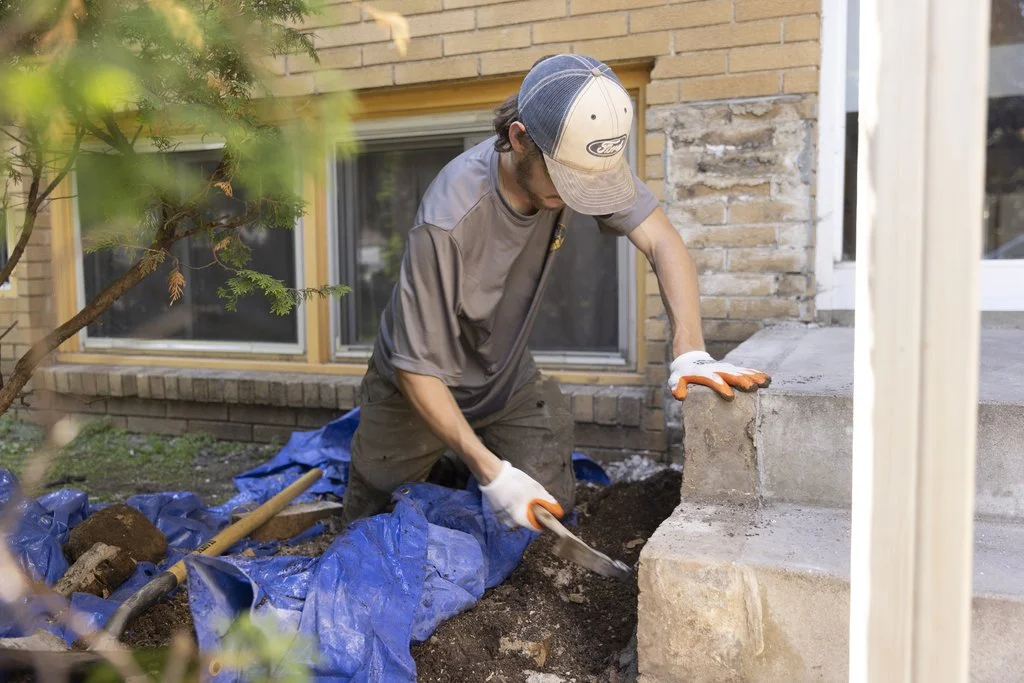
Plantings, windows, and the walk are sheeted, and any section left for the tie rebuild stays outside the grinding.
4. Cut back and packed
Each failed joint is cut back to depth, with the blade kept inside the joint, then packed in layers as our tuckpointing page describes.
5. Struck to match
Each new joint is struck to the old profile. Exterior mortar work is scheduled for weather mild enough for it to cure.
Tie and Joint Timing
Can the joints be done now and the ties later?+
Where one wall has moved, and another has not, the sound wall can be repointed now and the other rebuilt as a separate job. On the same stretch of wall, no.
The house next door is the same age, and its front was rebuilt. Does ours need the same?+
Its ties are the same age as yours, so a look is worth having. Whether your front has started to move is a separate question, and only your wall can answer it.
What Customers Say
What appears below is our live Google feed, not testimonials we picked out, so it shows whatever is genuinely on it.
The Shot That Shows a Bulge
What helps on the first call:
- Note roughly when the house went up.
- Take one photo at a low angle down the length of the brick, which shows a bulge better than a straight-on shot.
- Add a close-up of the worst stretch of joints.
- From those, Sam can tell whether the front needs the movement check before any joints are quoted.