

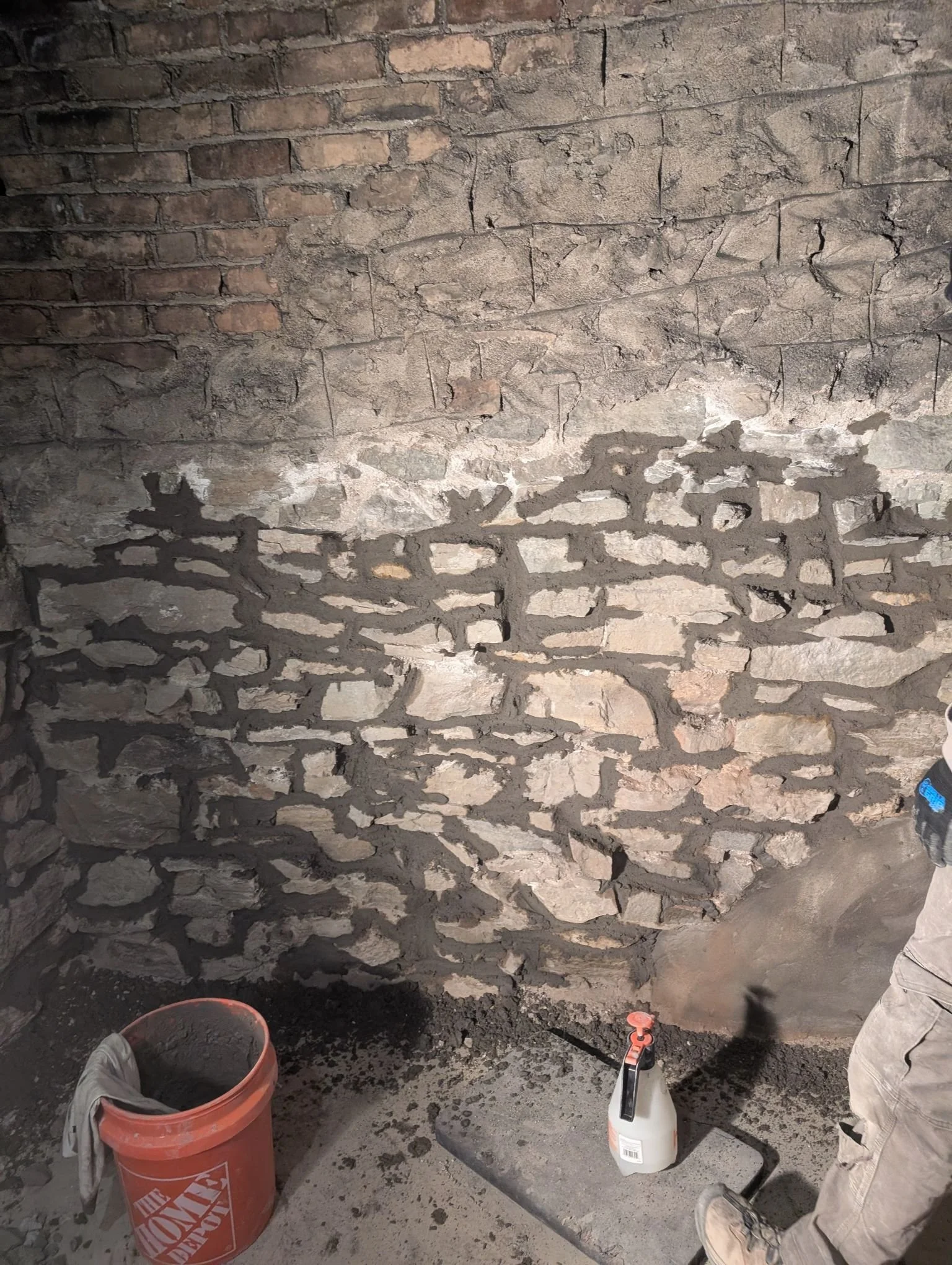
Stone and Retaining Walls in Minnetonka
Before the first stone of a Minnetonka wall is set, it has to get from the truck to the wall line. On a lot here, that trip can cross a lawn, a planted bed, and the roots of big trees, and it is part of the job.
10 Years
Workmanship warranty, in writing

From Where the Truck Stops to Where the Wall Goes
Hennepin County's parcel records show that about six in 10 of Minnetonka's residential parcels are half an acre or more. On a lot that size, the wall line can sit a long way back from the drive: across a rear slope, down a boundary at the back, or beside a bed at the edge of the woods.
Stone for a wall is heavy and can arrive by the load, set down wherever a truck can stop. From there every piece has to travel to the line, along with everything else the build needs, and if a machine does the digging, it makes the same trip. The length of that haul, what it crosses, and how wide the way through gets at its narrowest point all shape how the build runs.
A gate, the gap between a garage and a spruce, or a steep run of lawn can decide how the stone moves. We can get through a pretty narrow gap, and if we have to, we wheelbarrow the stone in by hand.
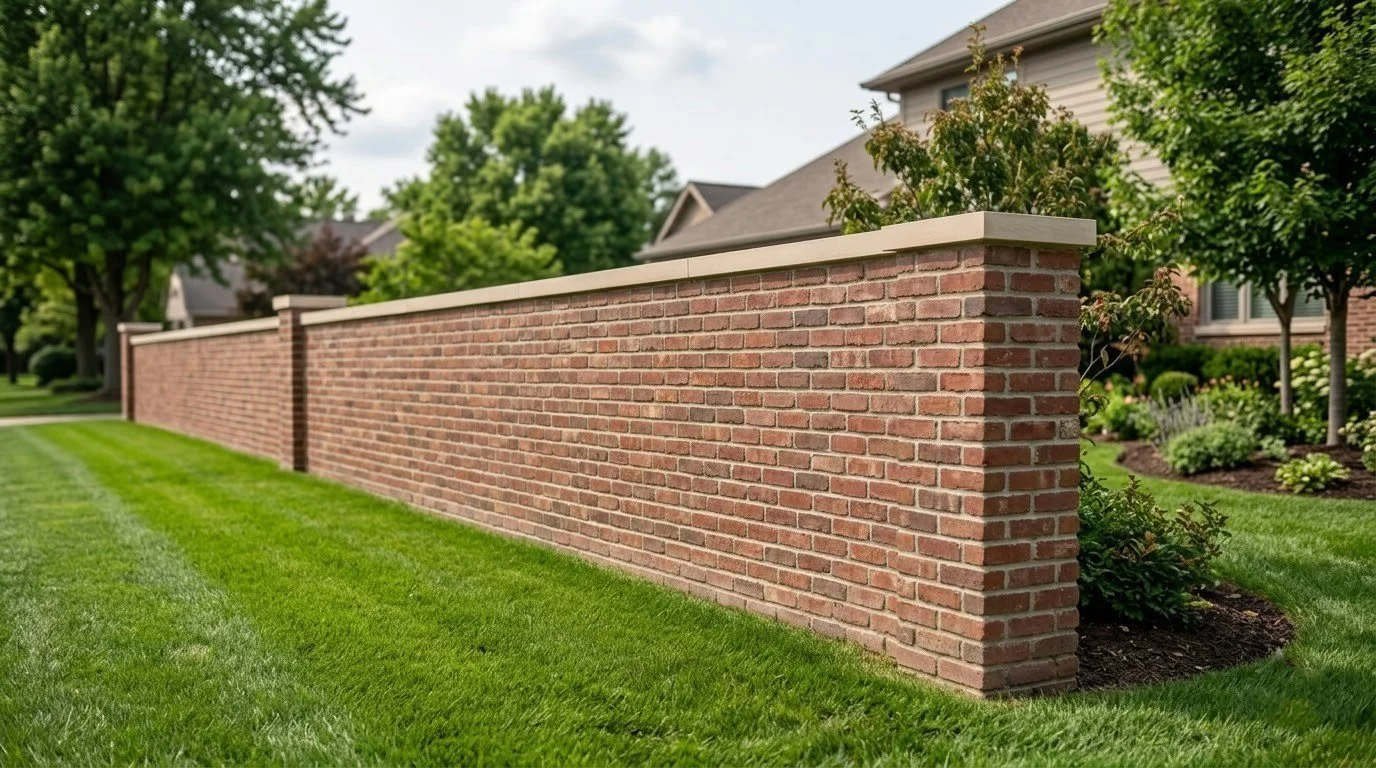
The Trees Between the Drive and the Wall
A wall on a wooded lot can meet roots in three places. The footing trench runs the full length of the wall. A retaining wall also needs digging behind it, and that reaches roots too. And the stone pile, with the roots out to the line, presses down on whatever lies under them.
That last point is in the City's own construction guidance. Its Natural Resources Division lists stone by name among the heavy supplies that, when stored in a yard, pack down the soil over roots, and notes that roots may reach well beyond a tree's outermost branches. It also gives owners a rule of thumb for the root zone: a foot and a half for every inch of trunk width, so a tree 20 inches across has a root zone reaching 30 feet out.
The ground within 30 feet of a tree that size can take in the drop spot or the wall line itself. Knowing where those root zones fall can change where the pile goes and which way the stone travels, and it may change where you want the wall to run.
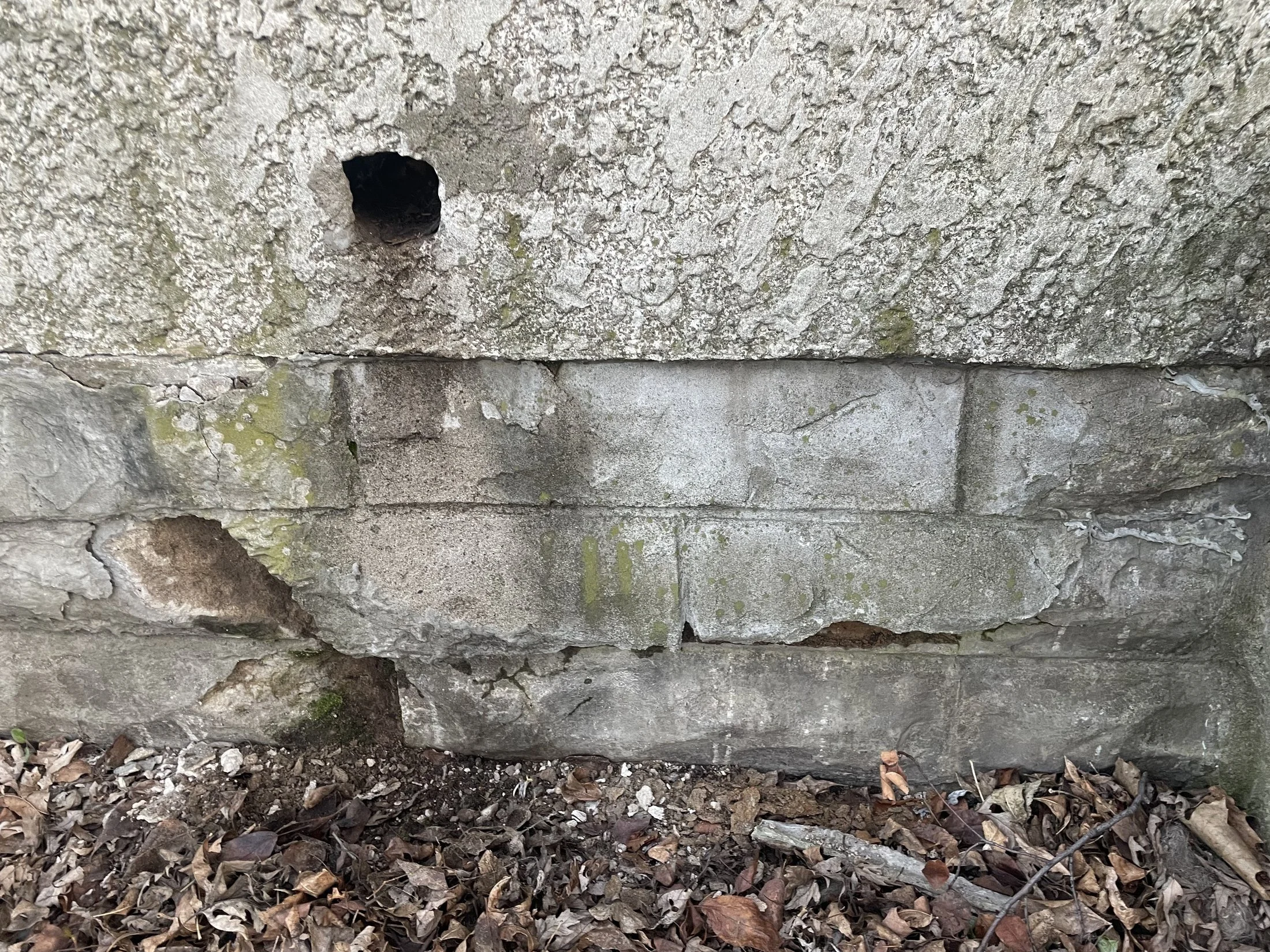
An older wall with a tree grown up beside it
A yard tree put in near an older garden or boundary wall may have had years to send roots toward it. If that wall is due for rebuilding, the old line and the tree beside it may not both fit, and the choice between moving the line and keeping the tree is yours. It is easier to make before the price is written.
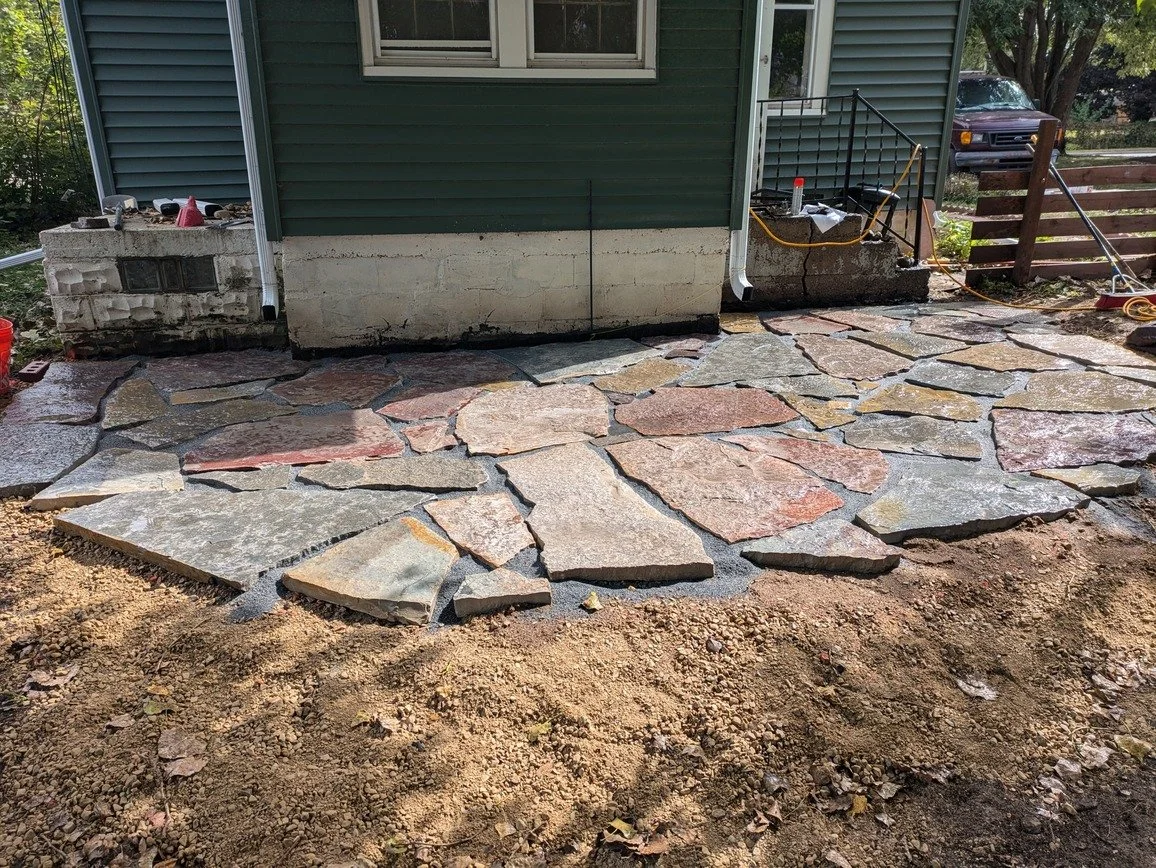
Oaks and Ash Along the Route
Minnetonka's forestry team, noting that oak wilt kills large numbers of Minnesota oaks each year, asks owners to check the oak wilt risk status before pruning or wounding an oak. Once April arrives, the City says, pruning should stop, and any wound that cannot be avoided should be covered right away with latex-based paint and shellac. November through March is the stretch it calls safe, citing the University of Minnesota Extension.
An estimate visit can happen in winter, inside that safe stretch. Exterior mortar work is scheduled for weather mild enough for it to cure, so the build itself may fall outside that stretch. On a wooded lot, a trunk scraped by a loaded barrow at the narrowest point on the route can be the kind of wound the City means. If a prized oak stands right at the gap, the stone can take another way in, and a winter estimate leaves time to settle that route before anything is delivered.
Ash is the other tree to know about. The City says emerald ash borer reached Minnetonka in 2019 and is now widespread, and its advice for an untreated ash is to plan for removal, since dead ash quickly becomes brittle. If an untreated ash stands beside the wall line, having it down before the wall goes up keeps the felling away from new stone.
The Wall, the Route and the Price
The price follows the wall's length, height and stone, and Sam walks the way to it, from where the truck stops to the wall line.
Before you call
Every figure on this page depends on square footage and on what we find when we look. They are rough guides to help you decide whether to call, not quotes. The exact number comes after the visit, and the visit is free.
Questions About a Back-of-Lot Wall
The easiest way to the wall is through our neighbor's yard. Can the stone come that way?+
Only with your neighbor's agreement. If you have it, mention it when you call.
Can you promise the work will leave our oak unharmed?+
No, and nobody can promise that about a tree. If you want a tree specialist's opinion, get it before the estimate so Sam can see it too.
What Customers Say
What appears below is our live Google feed rather than testimonials we picked out, so it shows whatever is genuinely on it.
Start a Wall Estimate From Your Driveway
Tell us:
- A photo taken from where a truck can stop, looking toward the wall line
- A photo of the narrowest point on the route: a gate, a side yard, the gap between the house and a tree
- The big trees near the wall line or the route, with a rough trunk measurement for each, and which are oaks or ash
- Which of those trees you want kept above all
- Whether the route crosses anything soft or planted, such as lawn, beds or a slope