

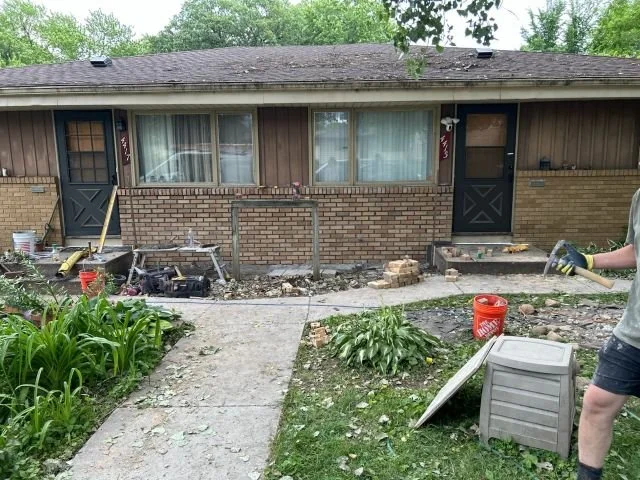
Stone Steps in Cottage Grove
10 Years
Workmanship warranty, in writing

In a wall, a brick turns one narrow face to the rain. In a step, bricks lie flat underfoot and carry the whole household in and out of the door. We repair, repoint, and rebuild brick steps and stoops in Cottage Grove, and the repair stays in brick.
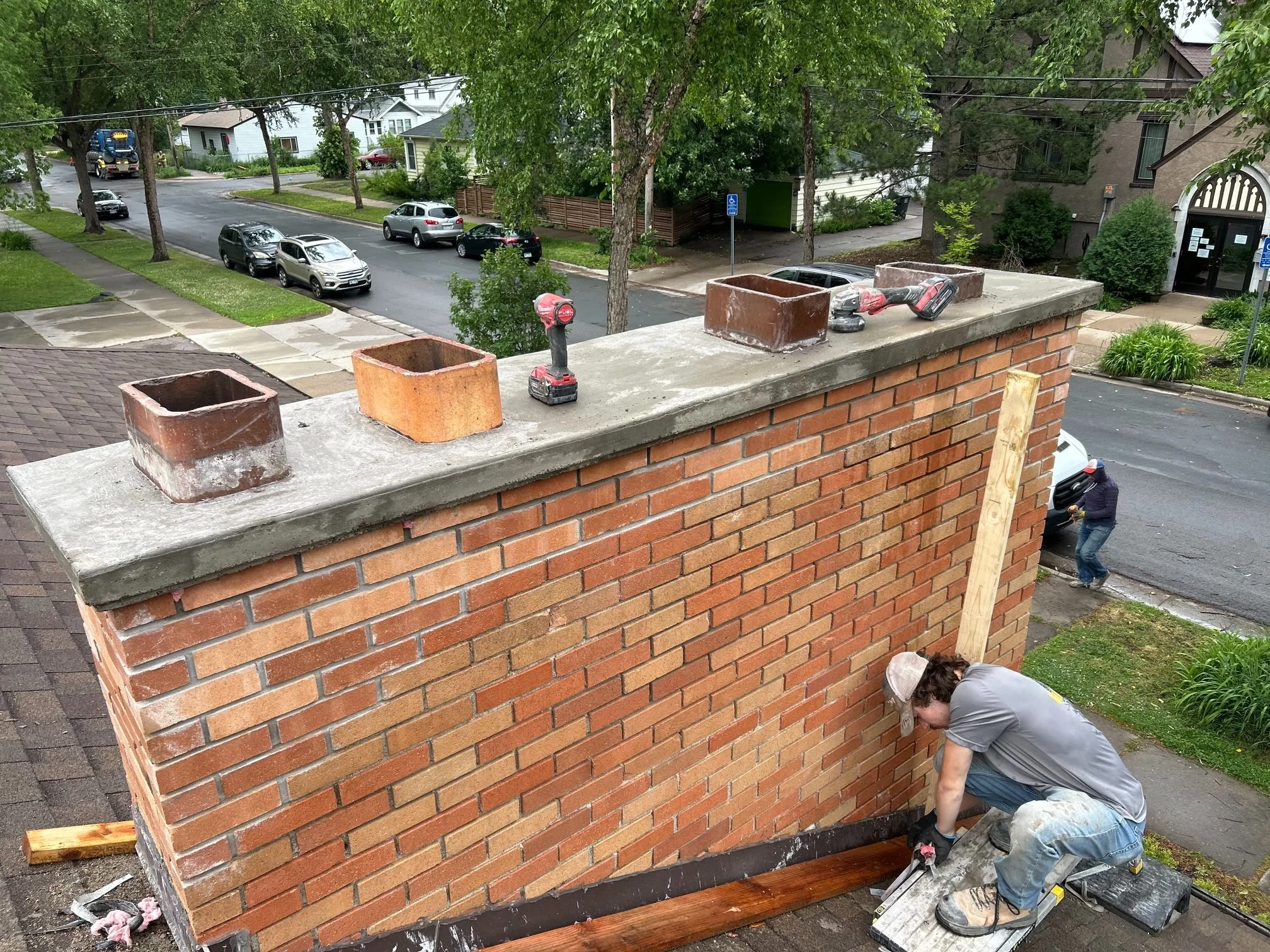
Trouble Underfoot in a Brick Stoop
Tread bricks whose hard outer face has flaked away, leaving the softer body showing
Joints between the bricks of a tread or riser that have gone sandy, cracked, or hollow
A brick at the front edge of a step that moves when you stand on it
The edge course, where the bricks may be set on end or on edge, lifting or working loose as a run
A stoop that has dropped at one corner or tipped back toward the house
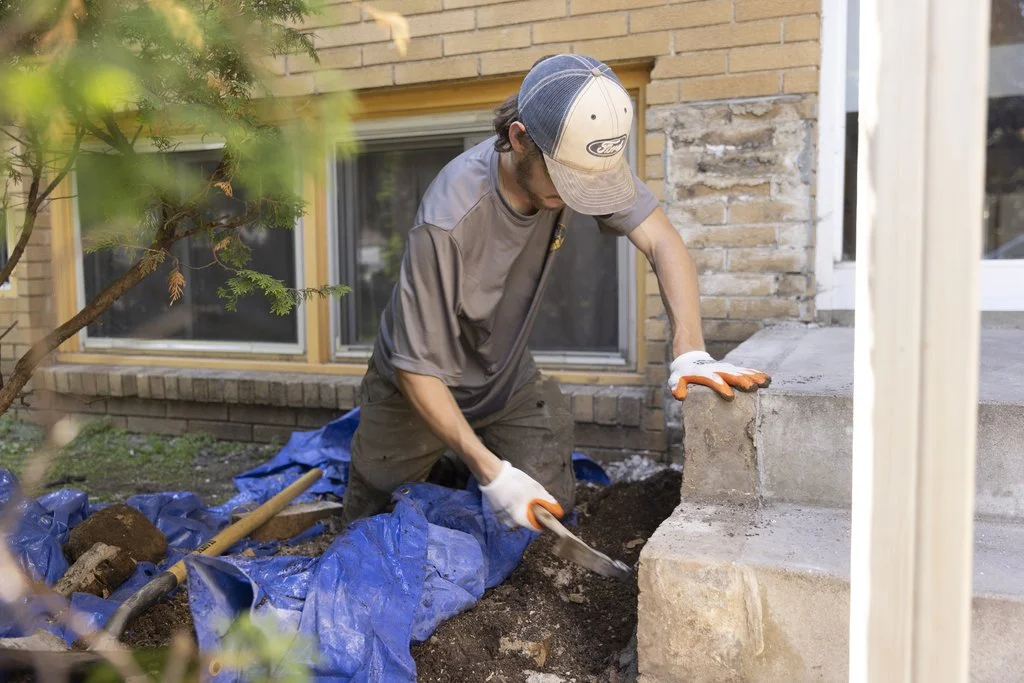
Where Cottage Grove Laid Its Steps in Brick
Many of Cottage Grove's older houses date from the 1960s, and an entry from that decade may be brick, stone, or concrete. Where an entry was laid in brick, it may be the same brick as the front of the house, and it has worn as long as the house has stood. These entries are often short, a few steps up to a stoop at the door, and some have been patched, faced or painted since, which is worth knowing before the visit.
What a brick stoop of that era rests on is part of what decides the job, and it cannot be seen from the walk. It may be built over a poured core, a block core, or fill, and that base is often the reason one stoop on a street stays level while the next one drops. The brick on top is repaired where the base has held. Where it has not, the brick can go back only after the stoop is rebuilt in brick from its base.
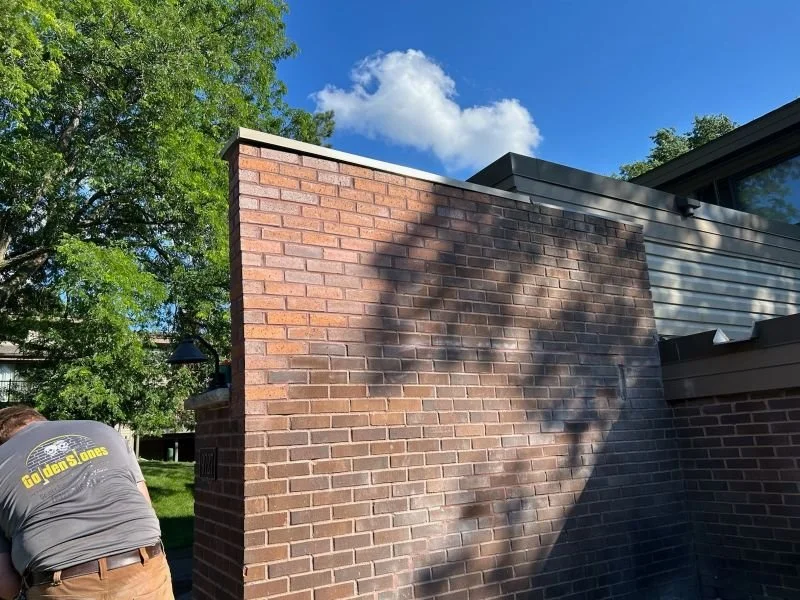
Repairing Brick Where People Walk
A tread brick takes water on its top face, salt from the household's deicer, and grit from every step. Once its fired outer face flakes off, the softer body underneath wears quickly, and an open joint beside it lets water into the core of the step, where our front steps page explains what the freeze does to it.
Treads and risers do not wear alike. A riser stands upright like a short length of wall and sheds most of its water, so its bricks tend to hold their faces longer and fail at the joints first. A tread holds water on its face and takes the salt and the scuffing, so it spalls first, and the bricks along its front edge, struck by heels, go before the ones at the back. That pattern shapes the repair: the treads and the edge course may need new units while the risers need only their joints repointed.
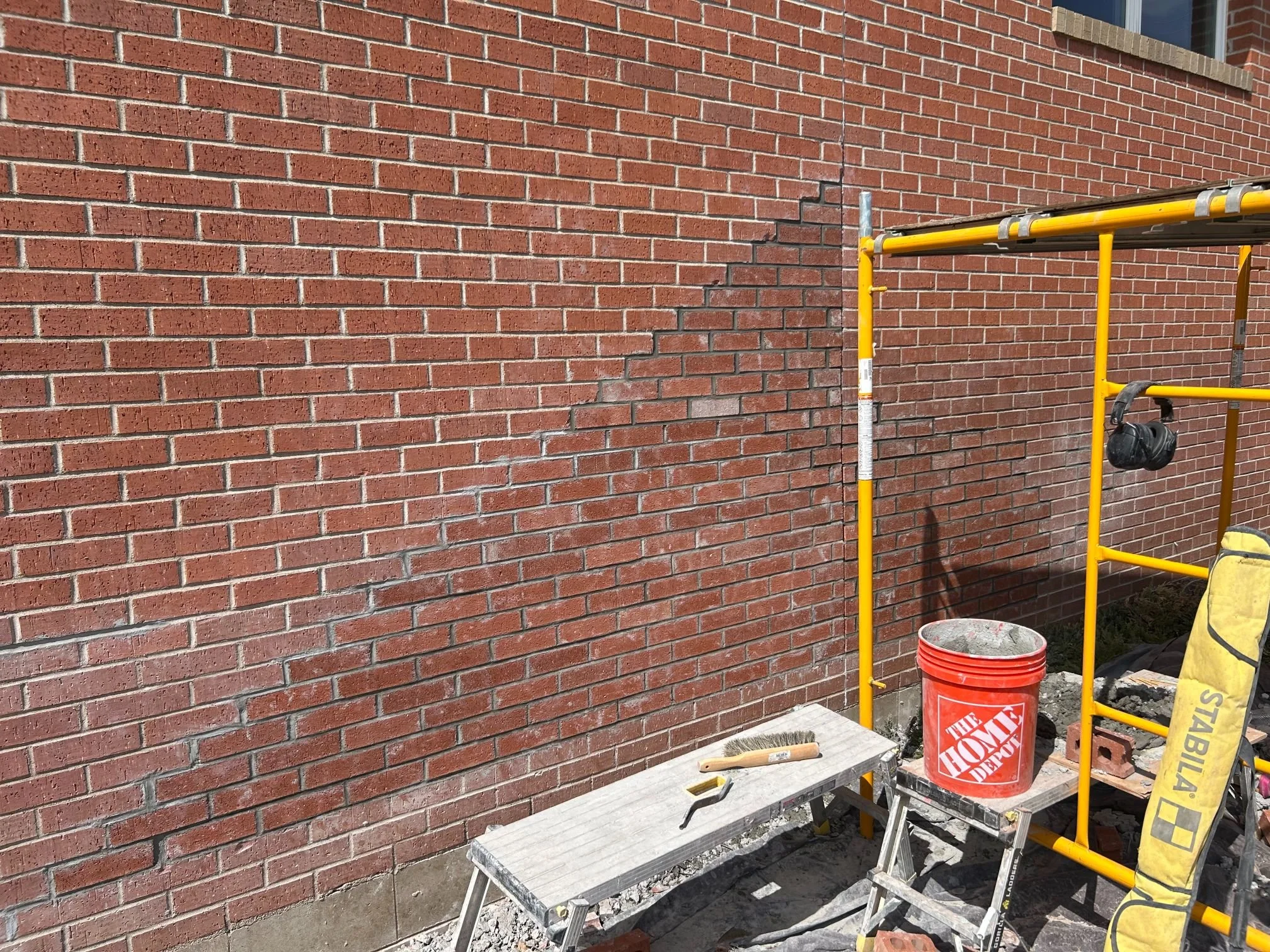
Repair works one unit at a time. A spalled or loose brick is cut out cleanly, its opening is cleared, and a replacement chosen to suit the entry is bedded on fresh mortar. Failed joints across the treads and risers are cut back and repointed. Where a run along the front edge has come loose, that run is typically taken up and relaid on a fresh bed, since resetting one brick in a loose row tends to cause the rest to move.
Repair stops making sense when the base has moved. A stoop that has sunk at a corner, tipped toward the house, or pushed its face outward has failed below the brick, and new units set over that base leave the cause where it was. Then the stoop is taken down and rebuilt in brick, and the footing under it is either reused, where it is good, or replaced.
Replacement brick has to suit the entry twice over. The search for a close color is described on our Minnetonka brick repair page, and fitting a brick of the right size on our St. Louis Park one. Brick stays brick: we do not turn a brick stoop into concrete, and if you would rather have new steps in another material, ours are built in natural stone.
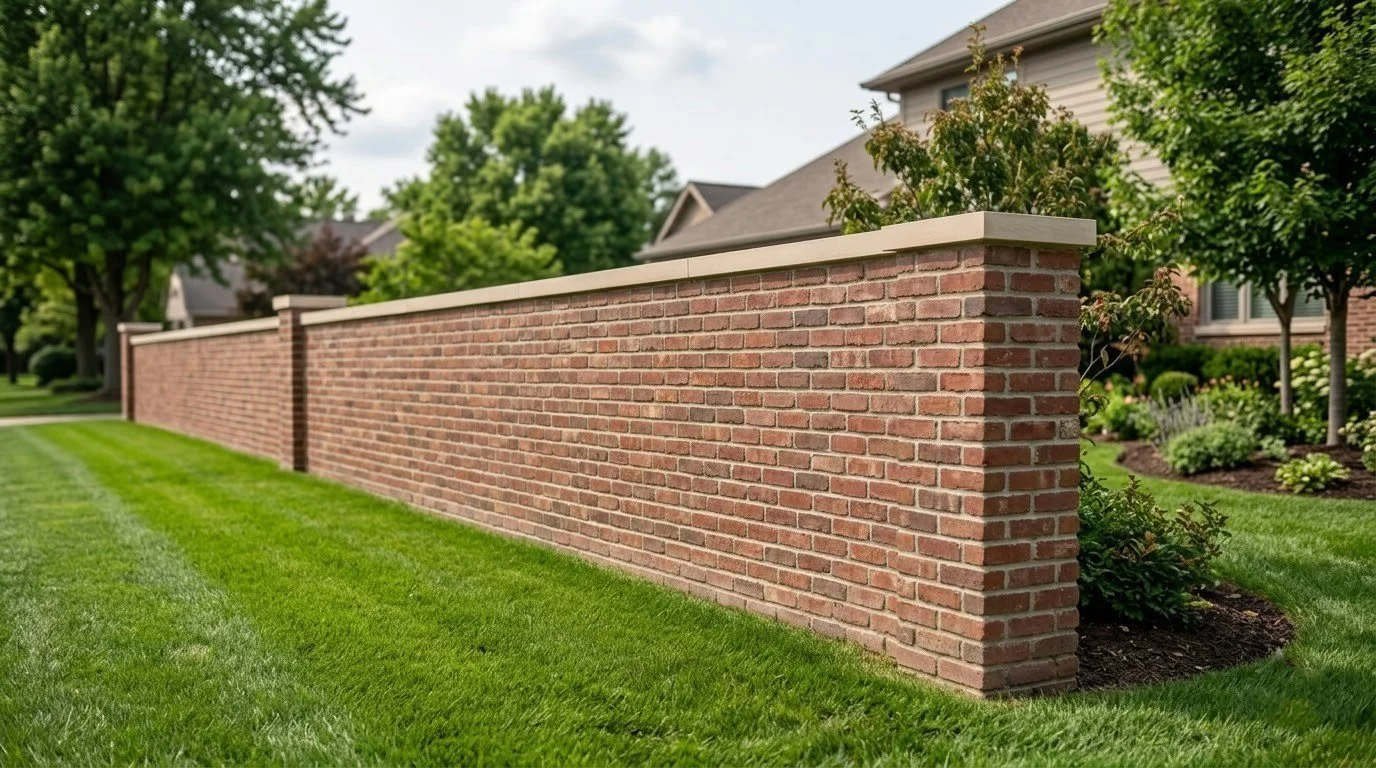
Brick Entry Work, Taken and Declined
Taken: spalled or loose brick in treads and risers, cut out and replaced
Taken: repointing the joints across a brick stoop and its steps
Taken: a brick entry whose base has moved, rebuilt from the base up
Taken: a concrete stoop at the door, repaired in kind or rebuilt as concrete
Declined: brick or concrete pavers laid as steps
Declined: painting or coating brick to hide spalled faces
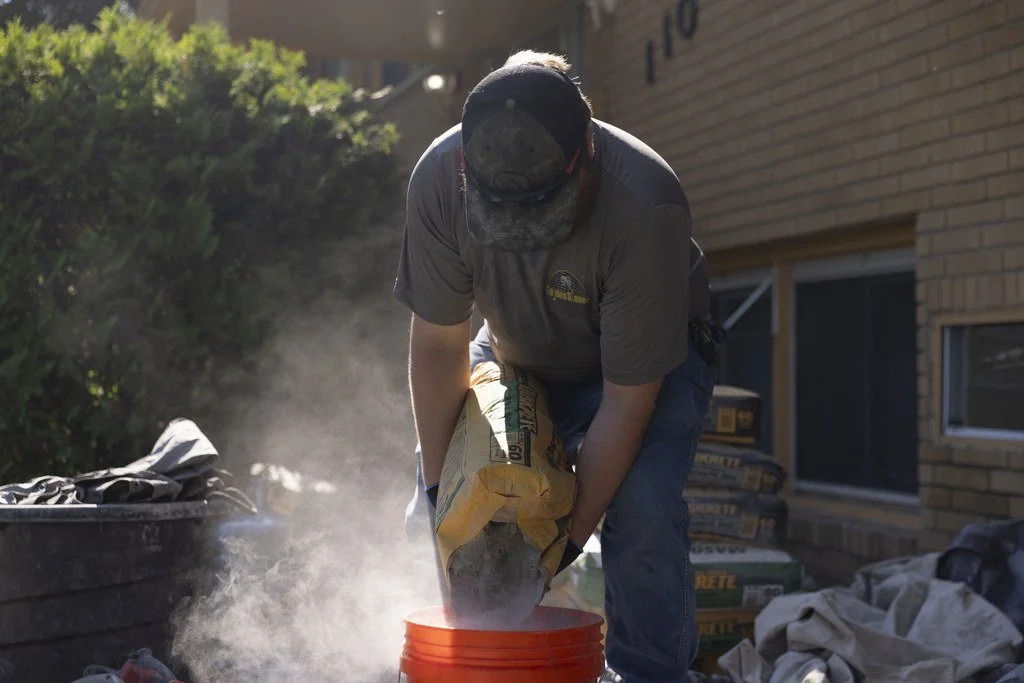
Same Lines for Brick and Stone
Brick entries are priced on the same steps lines as stone. A few replaced units and fresh joints are listed below, and a stoop rebuilt from its base is listed below as well.
Before you call
Every figure on this page depends on square footage and on what we find when we look. They are rough guides to help you decide whether to call, not quotes. The exact number comes after the visit, and the visit is free.
Matching Brick at the Door
Can the brick steps be rebuilt in stone instead?+
Yes, as new natural stone steps, the only material we build new in. That is a replacement and not a repair, a choice our Eagan stone steps page covers. New stone steps are priced once Sam has seen the entry.
Our brick steps match the front of the house. Will the new brick?+
It will be chosen to sit close to both. Where the steps were laid in the same brick as the house front, one close choice serves the two.
Should a brick stoop be sealed?+
Brick near the ground has its own case for and against a sealer, set out on our Apple Valley brick repair page. Whether a sealer suits your stoop is settled once Sam has seen it.
What Customers Say
What appears below is our live Google feed rather than testimonials we picked out, so it shows whatever is genuinely on it.
Details for the Call
What helps on the first call:
- The material of each tread and riser
- The number of steps up to the door
- Any corner of the stoop that has dropped
- Any earlier patches in the brick