

Stone Steps in Blaine
10 Years
Workmanship warranty, in writing

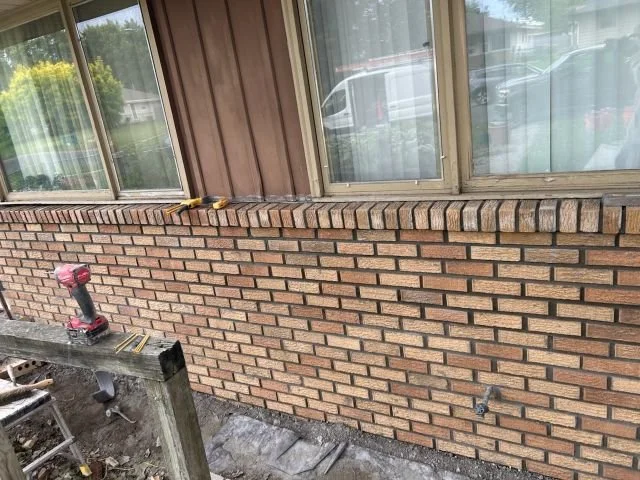
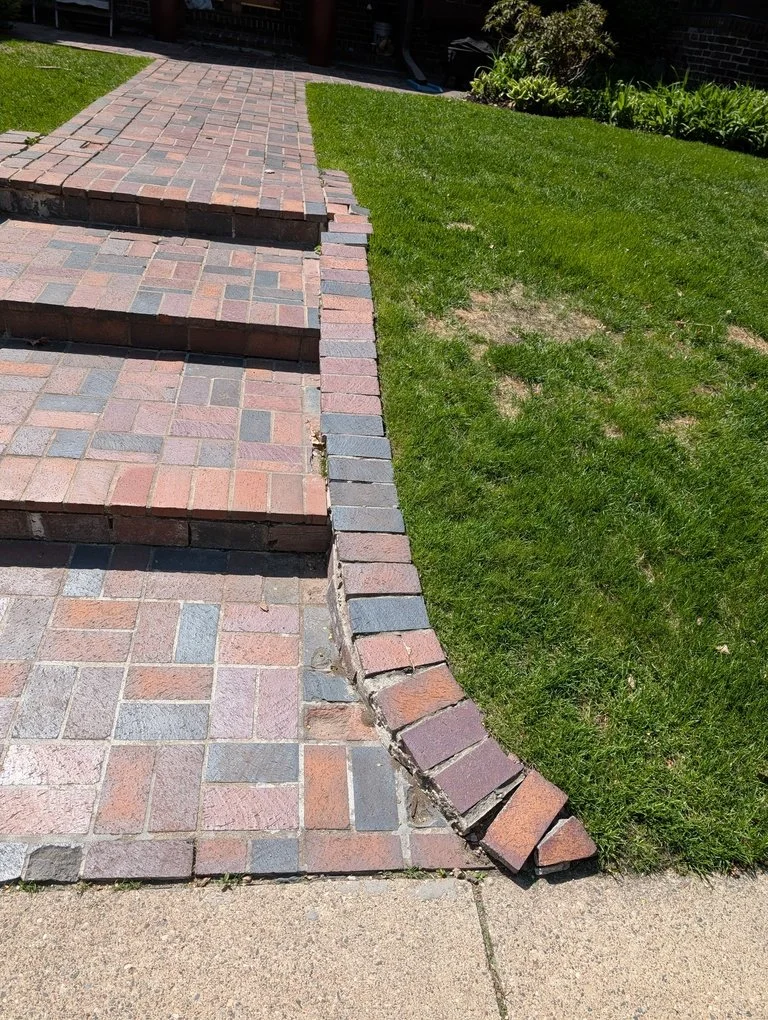
On some Blaine houses, the first sign of trouble at the front door is a line, not a crack: a dark gap opening between the stoop and the house. It means the steps and the house have moved apart, and filling the gap does not bring them back together. The repair of stone or brick steps involves resetting or rebuilding them, and a failed concrete stoop can be replaced with new natural stone.
A City Still Adding Front Stoops
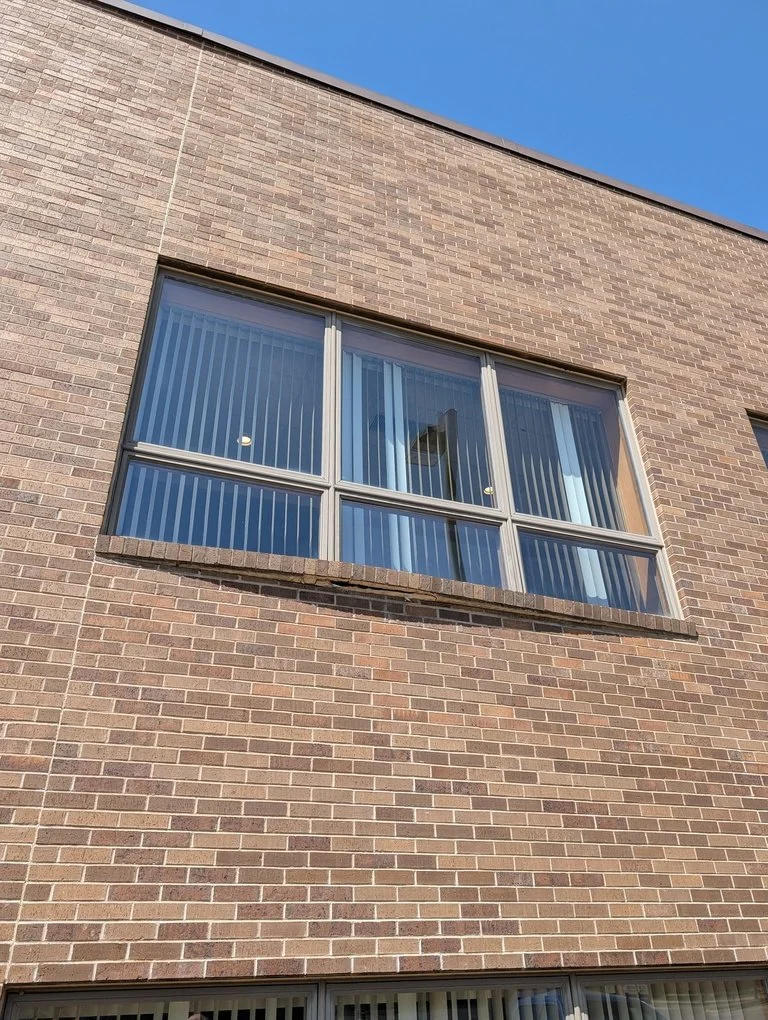
Blaine has kept building: about 5,150 of the homes standing here today date from 2010 or later. On an entry that new, the stone or brick itself has had little time to wear, so a crumbling edge or a split tread is seldom what an owner notices first. A gap opening at the house wall can be.
Older Blaine entries pull away too, and the work on them is the same. On those, the gap may already have been filled and reopened more than once, and any old filler comes out where the steps are rebuilt. Where a Blaine entry is poured concrete, the gap still tells you something, though what follows from it differs, as the scope list below sets out.
The Gap Between the Stoop and the House
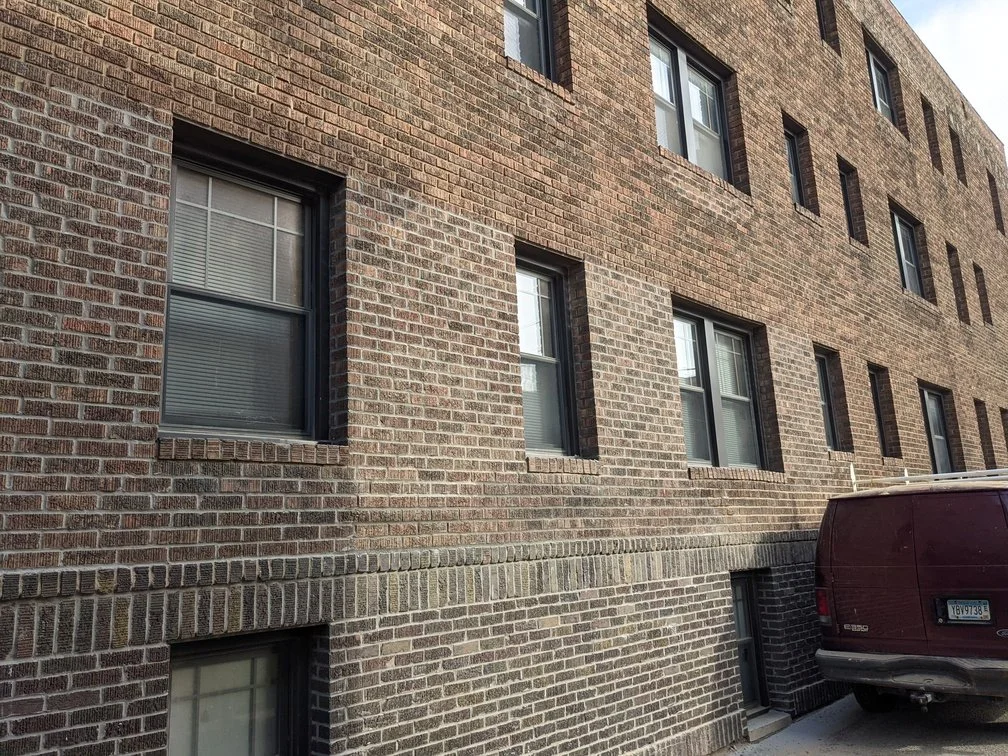
A house stands on its own foundation. Front steps very often do not share it, which is why they can move when the house does not; our stone steps page sets out what moves them. When the steps shift, and the house stays put, the joint between them opens.
The shape of that opening says something about the movement. A gap wider at the top than at the bottom usually means the stoop is tipping out, away from the house. Wider at the bottom, it is tipping in, the direction our Woodbury stone steps page is about. A gap of the same width all the way down can mean the whole set has slid or dropped as a single piece.
Whichever shape it takes, rain and melt find the opening and run down it to the foundation. On a stoop that also tips in, the treads send their water the same way. So a gap at the wall is worth a look, even when the steps still feel solid underfoot.
Caulk, foam, or mortar packed into the gap closes it for a while. If the steps are still moving, it can open again because the filler only sits in the joint and does nothing to address what moved. We do not use caulk or foam in place of mortar, and we do not sell filling the gap as a repair.
The repair depends on whether the movement has stopped. Steps that shifted once and then settled can sometimes be reset; steps still in motion are rebuilt from what they stand on. How the rebuilt steps meet the house wall is settled at the visit, once Sam has seen what is there.
At that visit, the gap is read alongside the rest of the entry: whether the treads have tipped with it, whether the joints between them have opened, and whether the sides of the steps have cracked where they meet the house. Together those show whether the set has moved as one piece or begun to come apart within itself, and that tends to decide between a reset and a rebuild more than the width of the gap does.
Which Gap Repairs Are Ours
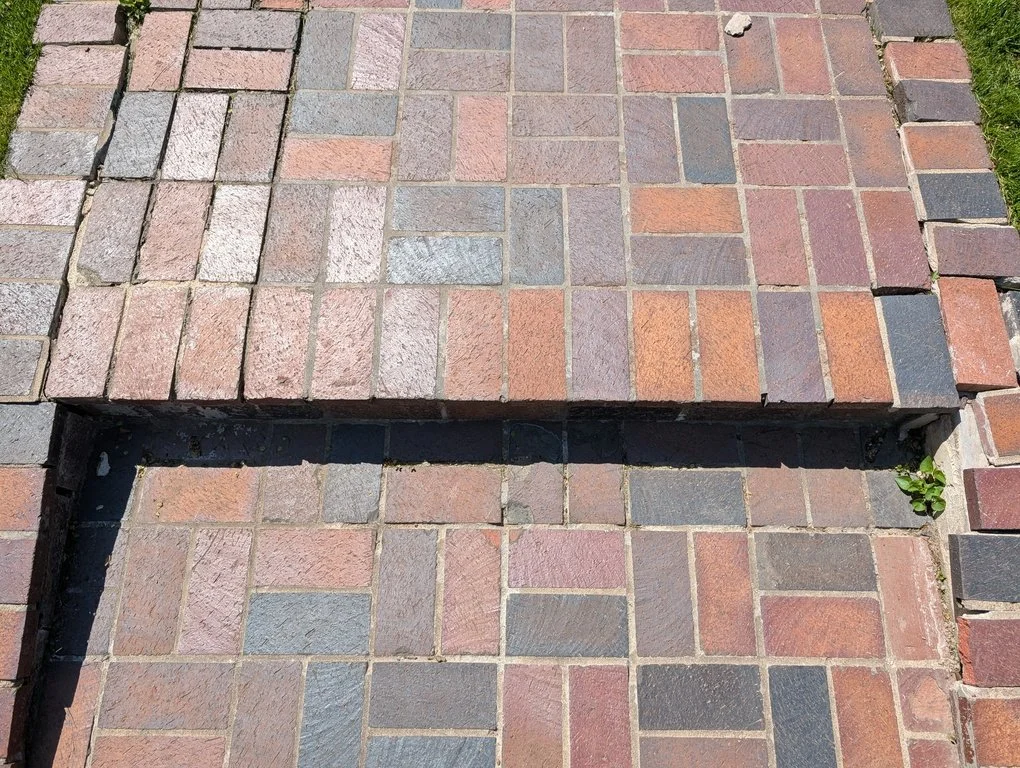
Ours: stone and brick steps that have pulled away from the house, reset where they have settled or rebuilt where they are still on the move
Ours: a poured stoop at the front door that has come away from the wall, mended or rebuilt in the concrete it is made of
Ours: new natural stone steps in place of a concrete stoop that has pulled away and failed, the route covered on our Eagan stone steps page
Not ours: caulk, foam, or mortar packed into the gap as a fix, with nothing done to the steps
Not ours: mudjacking a concrete stoop, or facing one that is still moving
Railings: metalwork, outside our trade, and we will give you a metalworker's number
Moving Stoops Go Back on a Sound Base
A set that has separated from the wall and kept moving comes apart and goes back on a sound base, which puts it on the rebuild band. A concrete stoop replaced in stone falls on the second line:
Within the band, the figure follows whether the old stone is fit to lay again and what the dig beside the foundation runs into.
Before you call
Every figure on this page depends on square footage and on what we find when we look. They are rough guides to help you decide whether to call, not quotes. The exact number comes after the visit, and the visit is free.
Where the Stoop Meets the Foundation
Is a gap at the wall a foundation problem?+
That cannot be answered from the steps alone. Sam can explain what the steps have done and why; the steps are the part we repair.
We filled the gap once, and it has opened again. Why?+
Most likely the steps kept moving after the filler went in. A gap that reopens is a sign the movement has not stopped, which is the first thing the visit sets out to settle. Filling it again would hide whether it is still growing, and that is the most useful thing the gap can show.
Can the steps be tied to the house?+
That is not something we promise. How a rebuilt set meets the wall depends on what it stands on and what the house wall is, and it is worked out at the estimate.
Does a gap mean water is getting into the basement?+
It lets water reach the foundation at that spot, and whether any comes through is a separate question. Where a Blaine basement wall is block, leaks in it are covered on our Blaine basement tuckpointing page.
What Customers Say
What appears below is our live Google feed, not testimonials we picked out, so it shows whatever is genuinely on it.
Measure the Gap, Top and Bottom
What helps on the first call:
- How wide the gap is at the top step, measured against the house wall
- How wide it is at the lowest point you can see
- Whether it has grown since you first noticed it