

Brick Repair in Bloomington
10 Years
Workmanship warranty, in writing

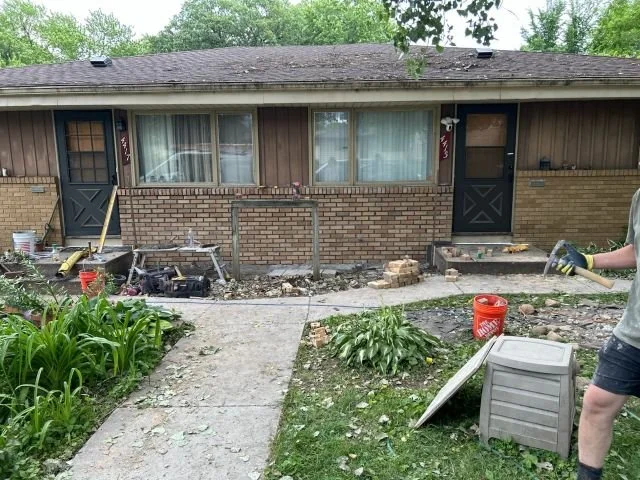
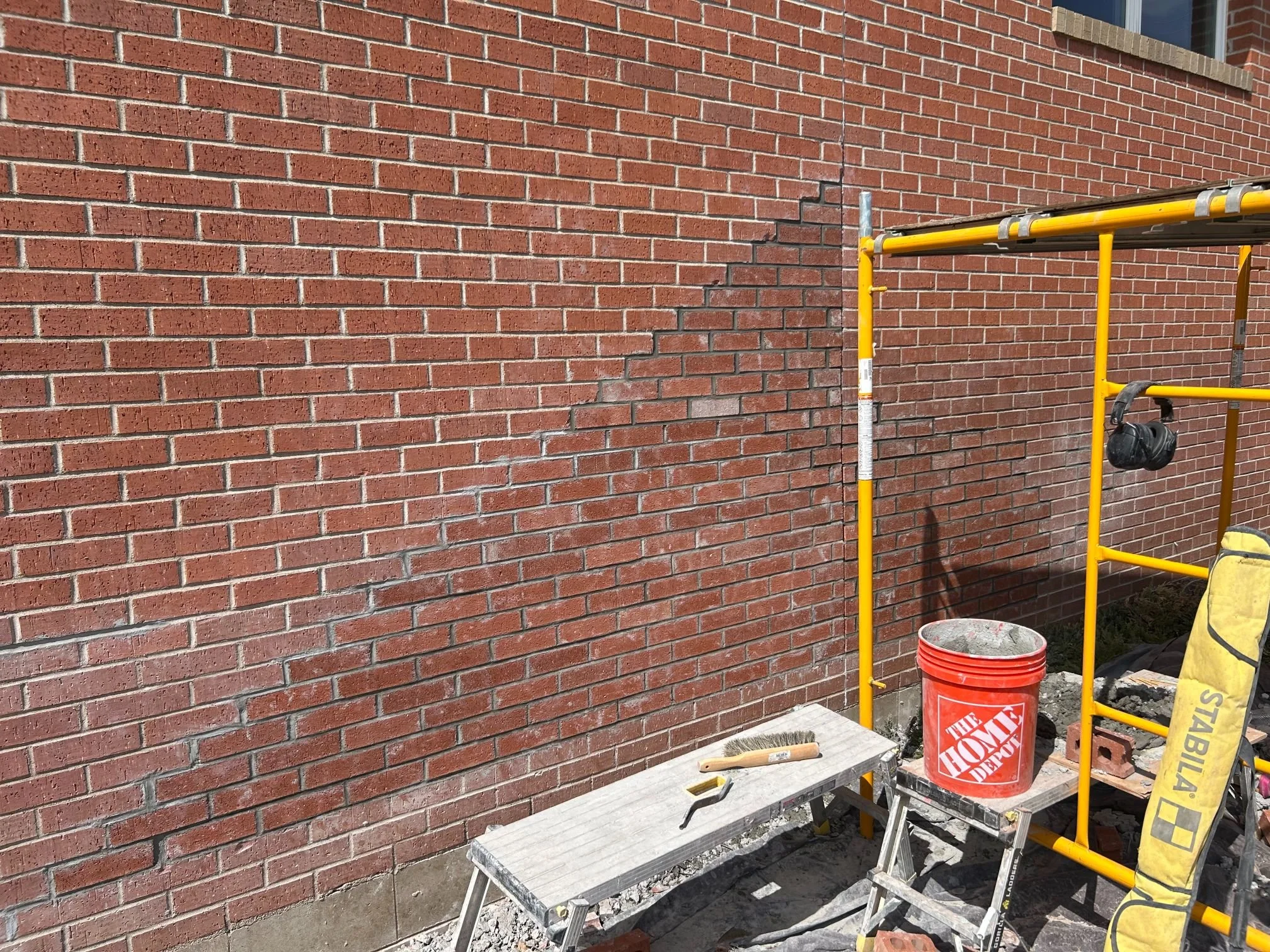
A crack that climbs a brick wall in steps, following the mortar joints from one course to the next, is a record of movement. On a Bloomington front, the question that decides the repair is whether that movement has finished. If it has, we cut out the cracked bricks and the mortar along the crack and rebuild through them. If it may still be going, the first step can be smaller: repoint the crack and watch whether it opens again before anything larger is committed to.
Cracks Worth a Closer Look
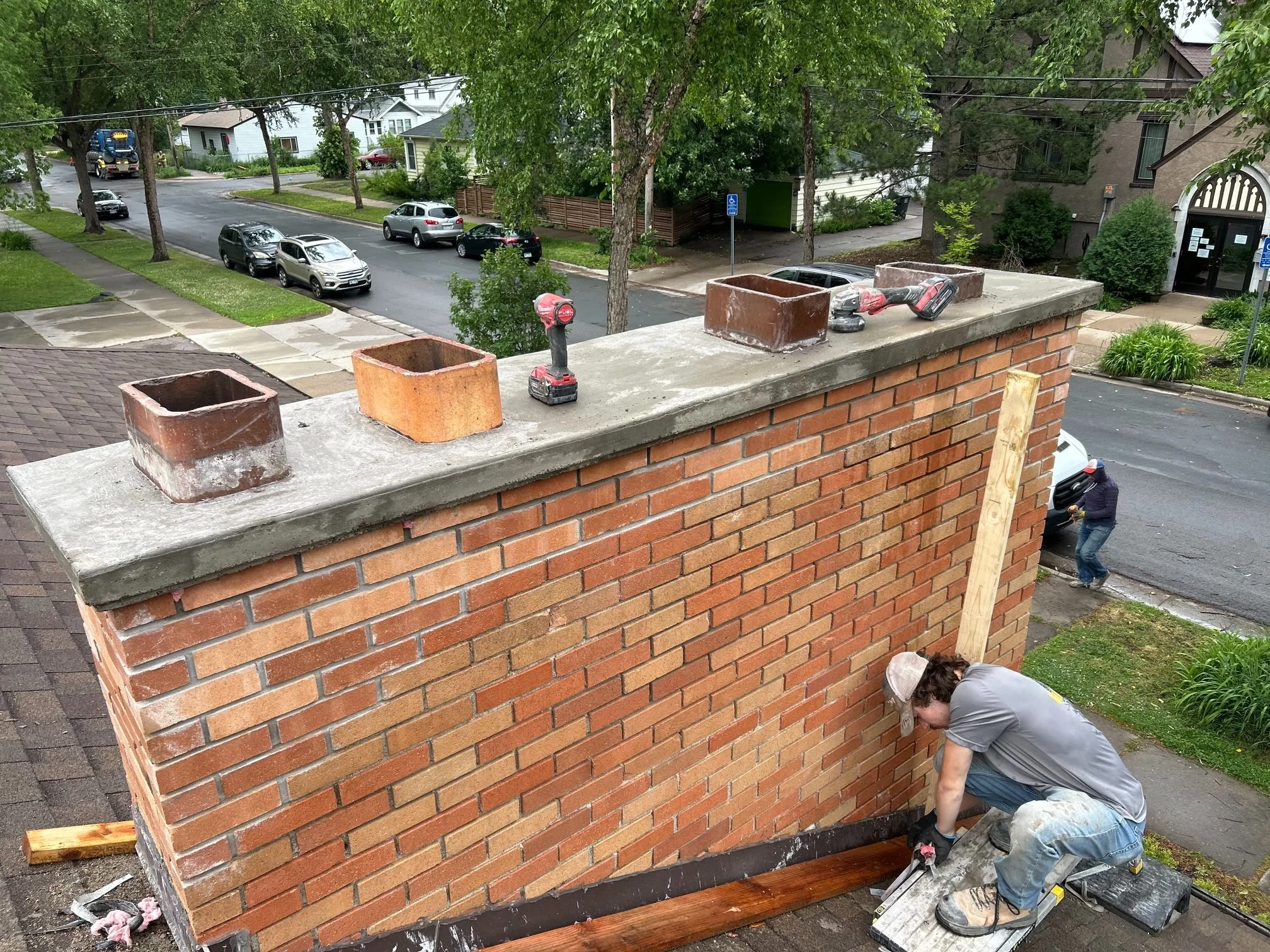
A crack that steps up through the mortar joints, course by course, and leaves the bricks themselves whole
A crack that runs straight through the faces of the bricks, splitting units in two on its way across the wall
A crack that was filled once, with mortar or caulk, and has opened again along the old fill
A crack that starts at the corner of a window, a door or the garage opening, which can trace back to rusting steel above it, covered under lintels on our brick repair page
A crack with a bulge beside it, where the wall ties behind the brick come first, as the same page sets out
A Crack That Moved Once, or One Still Moving
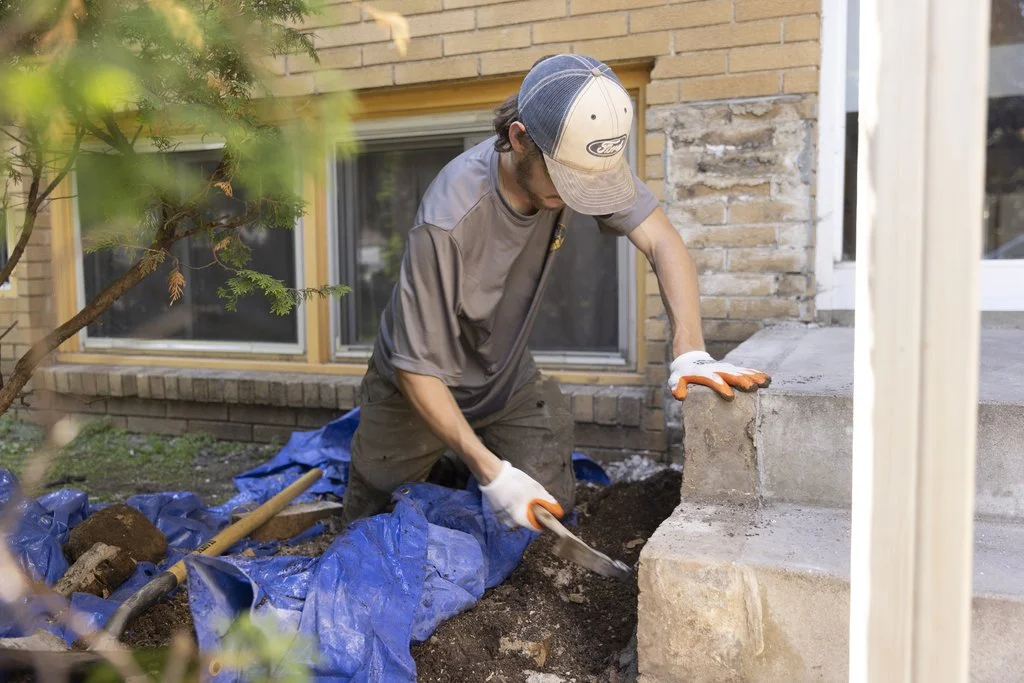
A stair-step crack follows the mortar because mortar is the weaker material in the wall. When part of a wall drops or shifts, the joints part first and the line zigzags along them. Where the crack cuts through the bricks as well, the force is usually enough to split fired clay, and the repair along it takes more replacement brick.
The repair turns on whether the wall is still on the move, and the crack itself carries the clues. One that holds the same width along its whole run, with clean, weathered edges, can suggest a single movement that has stopped. Crushed or crumbling edges, a gap wider at one end than the other, or old filler split open again point the other way. A reopened fill is the plainest of these signs, because it usually shows the wall has moved since someone last closed the gap.
For a crack that has finished, filling it is cosmetic. The cracked bricks and the joints along the line are cut out, and the run is rebuilt through the affected area so the wall is whole again across the old break. For a crack that may still be moving, rebuilding at once can come too early, since a new run laid across a live crack can open along the same line. Repointing it and keeping track of whether it grows, as the pencil-mark tip below describes, is sometimes the right call before any rebuild, and the estimate says which case we think you have.
Caulk pressed into the crack, or mortar smeared across it, hides the line. It also hides the one piece of evidence that shows whether the crack is still growing.
Cutting Out Along the Crack
1. Reading the run. During the free visit, Sam follows the crack along its length, looks at its width and edges, then checks the wall beside it for any lean or bulge.
2. Putting the choice in writing. The estimate says whether the crack reads as finished or moving. Where both a rebuild and a repoint are defensible, each is priced as an option.
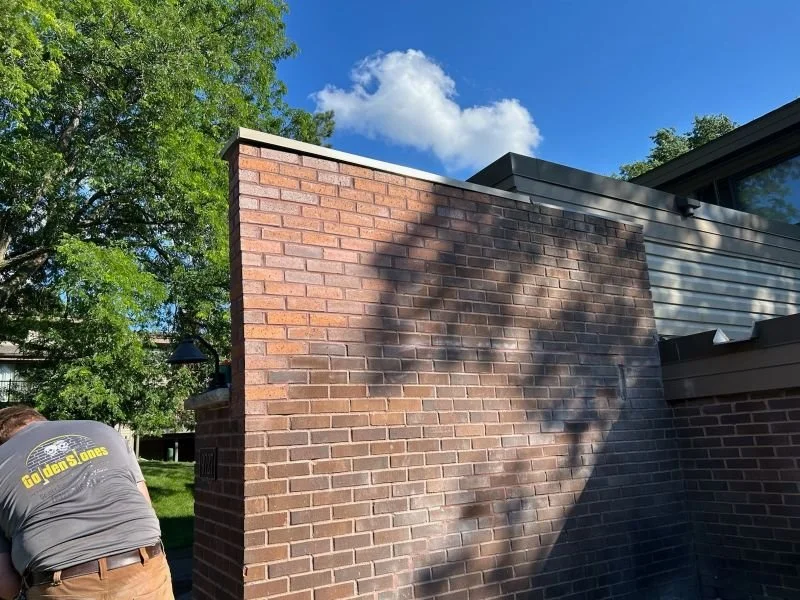
3. Cutting out cleanly. Bricks cracked through are cut out, and the mortar following the crack is cut back, so the bricks on either side keep their bond.
4. Laying across the line. Replacement units chosen to suit the wall are set in fresh mortar, and each course is carried through where the crack once broke.
5. Striking to the old profile. The fresh joints are struck to match the shape of those around them, with the aim of a repaired run that reads as part of the wall. Exterior mortar work is scheduled for weather mild enough for it to cure.
Built in Bloomington After 1970
Building here did not stop in 1970: 16,716 homes in the city date from the three decades after, close to the count from the three decades before.
Some of those later houses carry brick across the front, on a wing beside the entry or around the garage. On brick laid in those decades, a stair-step crack can trace back to one event, such as ground settling under a corner of the house, as easily as to slow movement over many years. Which of the two it was matters less than whether it has stopped.
Where a Crack Repair Lands on the Price List
Cracks are priced by the bricks and the stretch of wall they take with them:
A crack that has broken a handful of units in a wall that stayed put sits on the first line. Once the stretch beside it has moved and has to come down, the second or third line applies, depending on how much of the wall is involved.
Before you call
Every figure on this page depends on square footage and on what we find when we look. They are rough guides to help you decide whether to call, not quotes. The exact number comes after the visit, and the visit is free.
Asked Before the Estimate
Should I mark the ends of the crack?+
It can help. A fine pencil line across each end, with the date written beside it and a photo taken, gives you a simple record of any growth. Bring it up at the visit.
Will the rebuilt run show?+
Up close, a repaired line can be picked out at first. Our Minnetonka brick repair page explains how replacement brick is selected, and our Bloomington tuckpointing page covers mortar color. How closely your repair will blend is discussed in the estimate.
Does a crack mean the foundation is failing?+
A crack in the brick indicates that something moved, but it does not say how far below the brick the cause lies. We tell you what the brick shows. Underpinning, piers and other structural foundation work are not our trade, and where the cause looks to lie below the brick, we say so and leave that part to a foundation specialist.
Can the crack wait while the chimney is done?+
If the crack reads as finished, it can wait its turn; if it reads as moving, the estimate determines whether it should go first. The stack has its own page: chimney repair in Bloomington.
What Customers Say
What appears below is our live Google feed, not testimonials we picked out, so it shows whatever is genuinely on it.
The Crack, End to End and Up Close
What helps on the first call:
- Photo 1: the full length of the crack, taken square on to the wall
- Photo 2: the widest point, close up, with a coin held flat against the brick for scale
- Note: whether the crack has been filled before and, if it has, whether the fill has opened again