

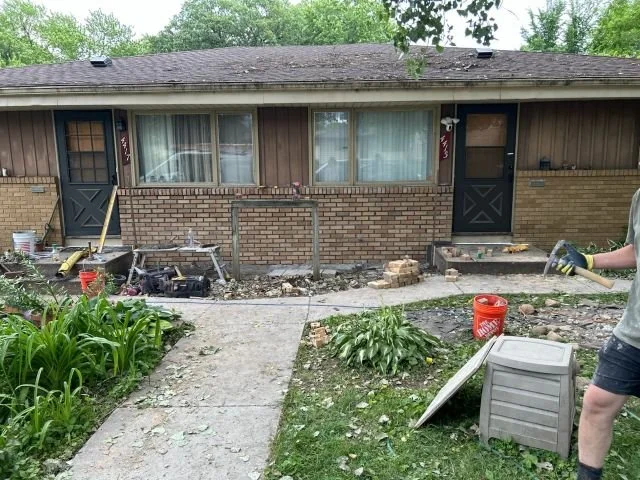
Tuckpointing in Bloomington
10 Years
Workmanship warranty, in writing
Tuckpointing means grinding out worn mortar from a brick wall and packing new mortar into the joints. In Bloomington, the walls that call for it are the brick fronts from the city's postwar boom. Those joints have weathered for well over half a century, and on a front that faces the street, how new mortar looks beside the old counts for nearly as much as how well it is packed.
Grinding depth, packing, and the choice among Type N, S, and O mortar are set out on our tuckpointing page.
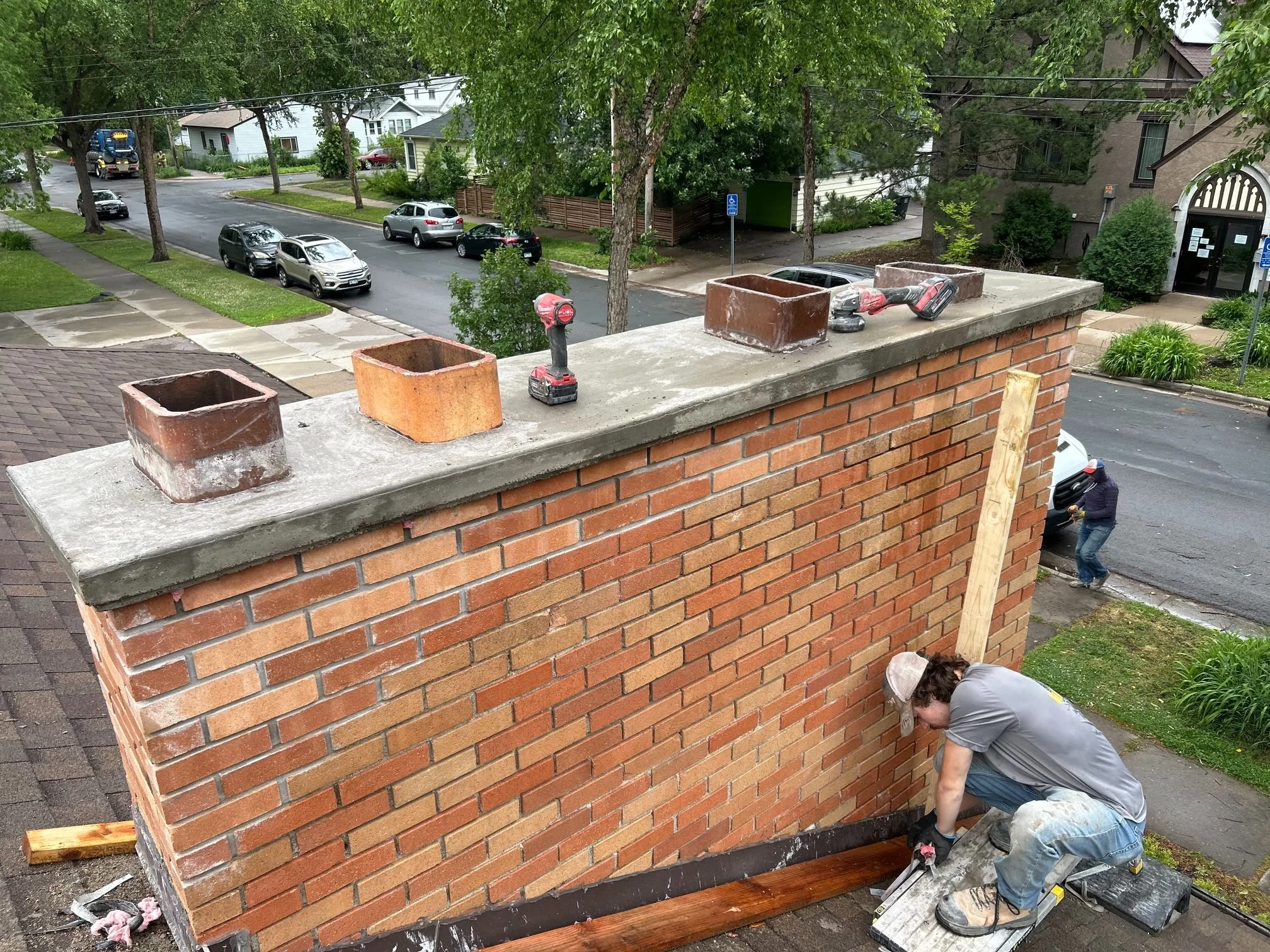
Brick Fronts From Bloomington's Boom Years
The City's comprehensive plan records its population climbing from 9,902 in 1950 to 50,498 in 1960, a fivefold jump in a decade. Census estimates put 16,859 of today's homes in the 1940 to 1969 span, 42.9 percent of the city's housing.
On the 1960s ramblers Sam is called to, the brick tends to run part of the way up the front, with siding above it. Sam also finds brick from that era hard to match. Replacing brick is covered on our brick repair page.
Much of the rest of the city is younger. Another 16,716 homes were built between 1970 and 1999, and on many of those, the brick is an accent panel or a chimney.
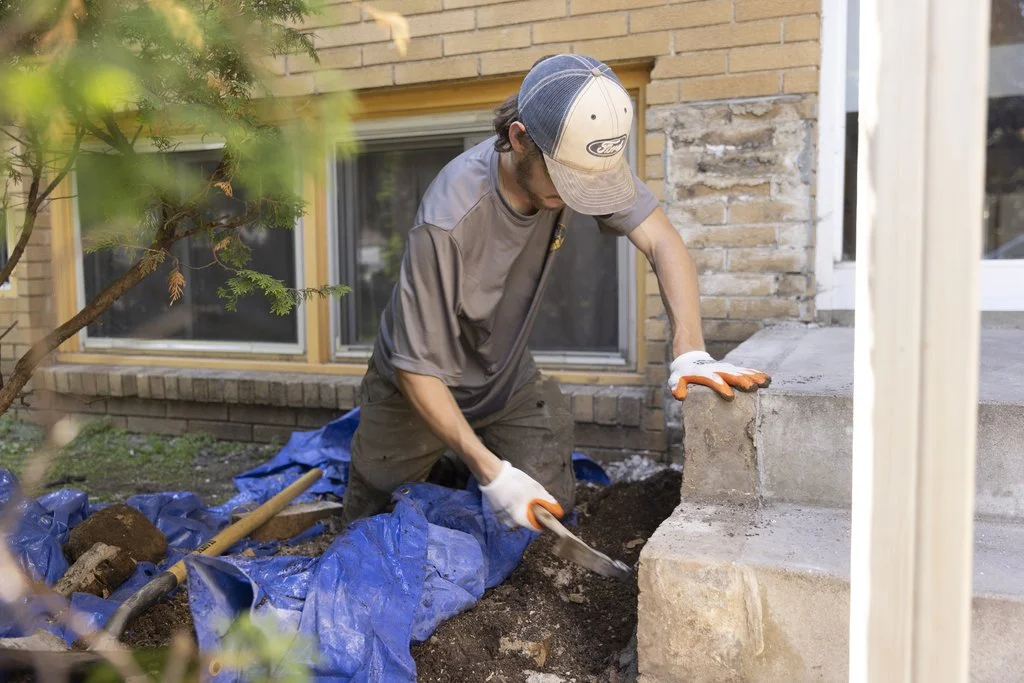
Matching New Mortar to Mid-Century Joints
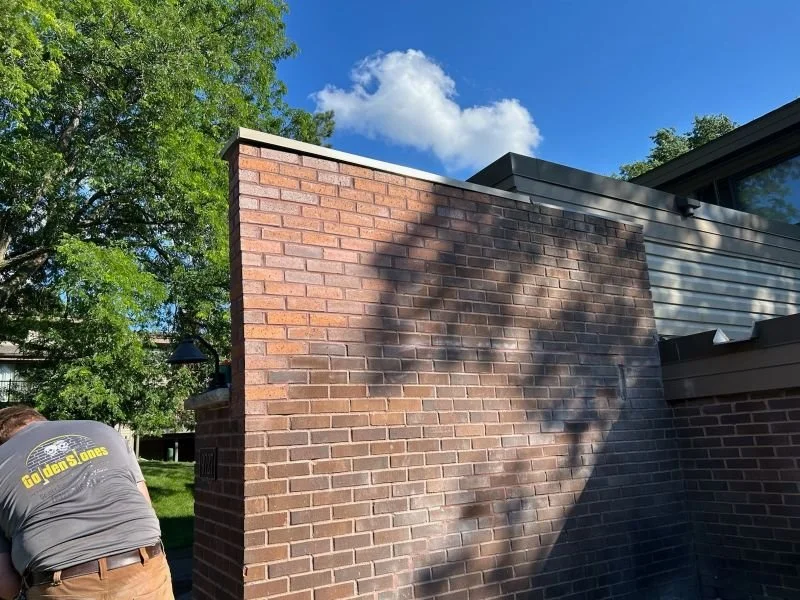
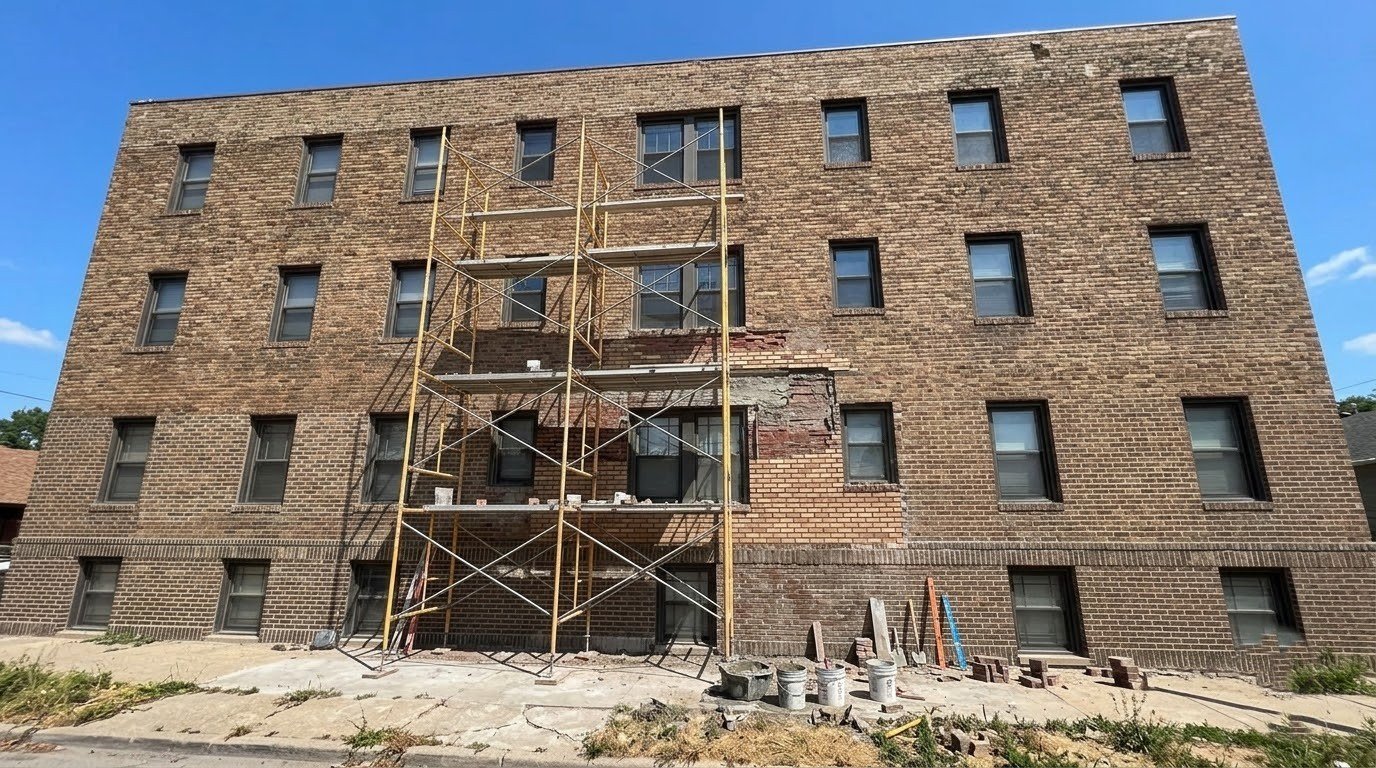
A joint laid in the 1950s is no longer the color it was on the day it was struck. Rain has worn away its skin and opened the sand inside, and decades of dust have darkened what is left. Fresh mortar from the same plain mix would come out lighter and flatter than everything around it. On the front of a rambler, a mismatched repair sits at eye level beside the door.
On a front elevation, the target for the new mortar is the weathered joint as it looks now. Moving a mix toward the tan, buff, or brown that old gray mortar has turned means tinting it, and we make a custom blend on request, with its cost shown on the estimate.
Mortar also changes color as it dries. A wet sample can look like a match and dry a shade or two lighter, so a color is judged dry.
Dyes seldom finish exactly on the sample. A careful blend aims for a repair that sits with the rest of the front when seen from the sidewalk.
Signs a Bloomington Brick Front Needs Repointing
Worn joints along the lowest courses
Beside a walk or a drive, the bottom few courses take splash, melt, and salt, and their joints wear back first.
An old repair in a different shade
A band of grayer or whiter mortar indicates that someone has repointed before. Joints from that repair that are still tight can stay, and their color becomes one more thing the new mix has to sit beside.
Open joints on the chimney
A stack stands in the weather on all four sides, and its joints can open well before the front's do. Our Bloomington chimney repair page covers the stack.
Dirt or moss lodged in the joints
A joint worn back far enough to hold dirt or grow moss is holding water as well, and in a freeze that water pries the joint open a little further.
A front that has moved
If the brick has bulged outward or a crack runs through brick and mortar alike, the joints are a symptom. Sam checks for movement before pricing any joints, and that repair is on our brick repair page.
How a Repointing Job Runs on a Bloomington Front
1. The estimate
Sam looks at the joints, the brick faces, and any earlier repairs, and marks which runs have failed and which have only weathered. The written estimate names those runs, with a color blend priced as an option.
2. Settling the color
If you chose a blend, you and Sam settle on the color before any grinding starts.
3. Covering up
Plantings, windows, and the front walk are covered against grinding dust.
4. Grinding out
Only the marked joints are ground out to the depth described on our tuckpointing page, with the grinder kept off the brick edges.
5. Packing and striking
New mortar is packed in layers and struck to the profile already on the front. Exterior mortar work is scheduled for weather mild enough for it to cure.
6. Cleaning down
The brick faces are brushed clean before the mortar sets, and the dust and debris leave with us.
What Tuckpointing Costs in Bloomington
Bloomington is priced from the same published lines as our tuckpointing page:
Patch work, up to 10 by 10 or so: from about $2,800
A full wall of the house: around $6,000 to $8,000
Several elevations or the full perimeter: priced from there upward
A chimney: priced on our chimney repair lines
A front where the brick stops partway up holds fewer joints than a full-height wall. A custom color blend adds to the figure.
Every figure on this page depends on square footage and on what we find when we look. They are rough guides to help you decide whether to call, not quotes. The exact number comes after the visit, and the visit is free.
Bloomington Tuckpointing Questions
Will the repair show on the front of the house?+
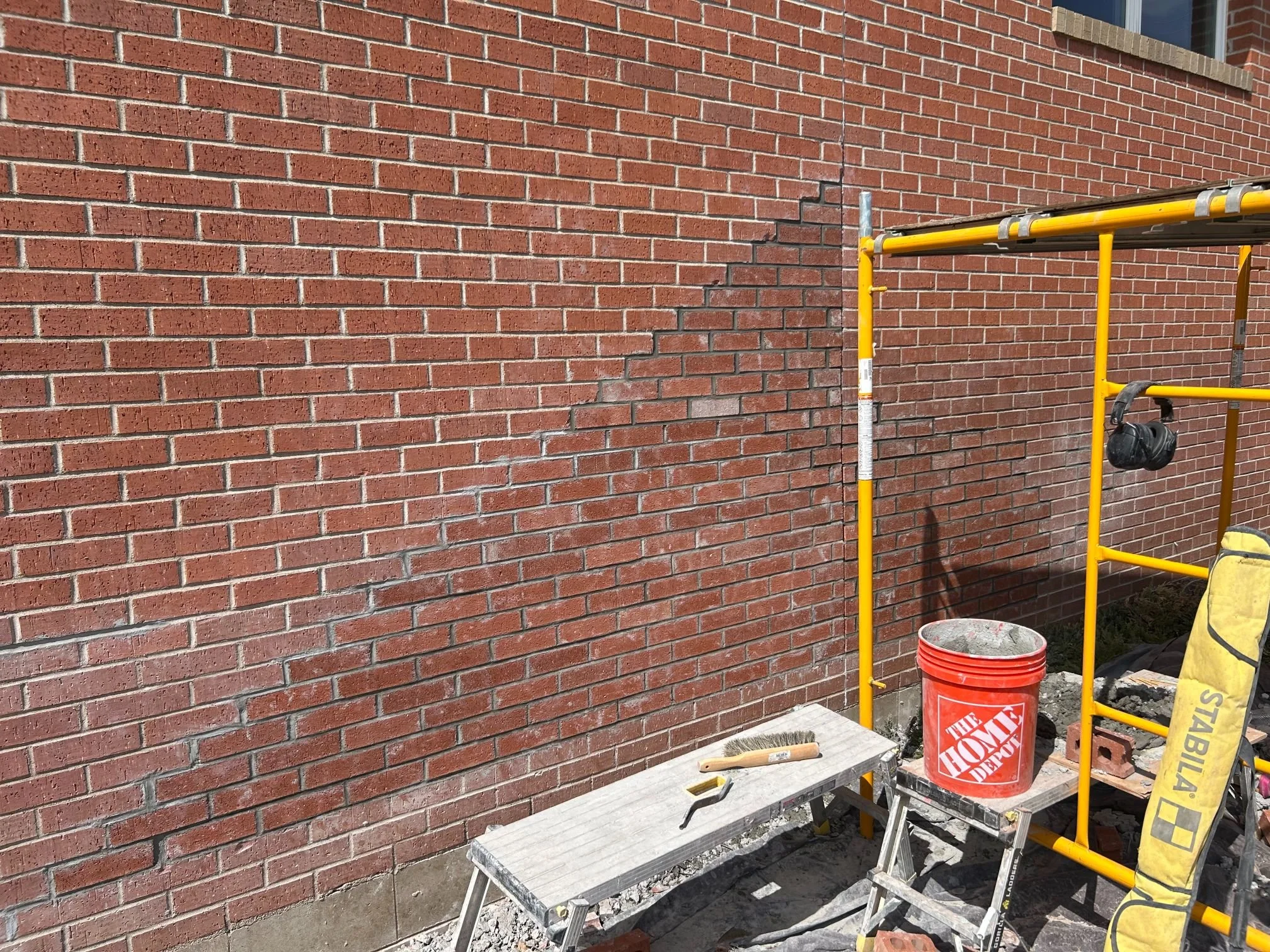
Up close, for a while: new joints look newer at first and tend to soften as they weather. Sam tells you at the estimate how near he expects to get on your wall, before you decide on a blend.
Our mortar was plain gray when it was laid. Do we need a colored mix?+
Not necessarily. After six decades or more outside, a gray joint has taken on the color of its sand and the weather, and the new mix is blended toward that. On a wall that has stayed close to its first color, plain gray may be the right answer.
The brick on our front stops partway up, with siding above. Do you repoint up to the siding?+
Yes, where those joints have failed. Brick right up to where the siding starts can go on the estimate. The siding itself belongs to another trade.
Our house was built in the 1980s. Is it likely to need tuckpointing?+
Less likely than a 1950s front, because its joints have had fewer winters. On houses that age, the chimney is the more probable call, and if your joints are sound, Sam will price nothing for them.
What Customers Say
What appears below is our live Google feed, not testimonials we picked out, so it shows whatever is genuinely on it.
Your Bloomington Estimate
What helps on the first call:
- When the house was built, or the decade if that is all you know
- A photo of the whole front from the street and one close-up of the joints in the worst shape
- Whether you want the new mortar tinted toward the color of the old