

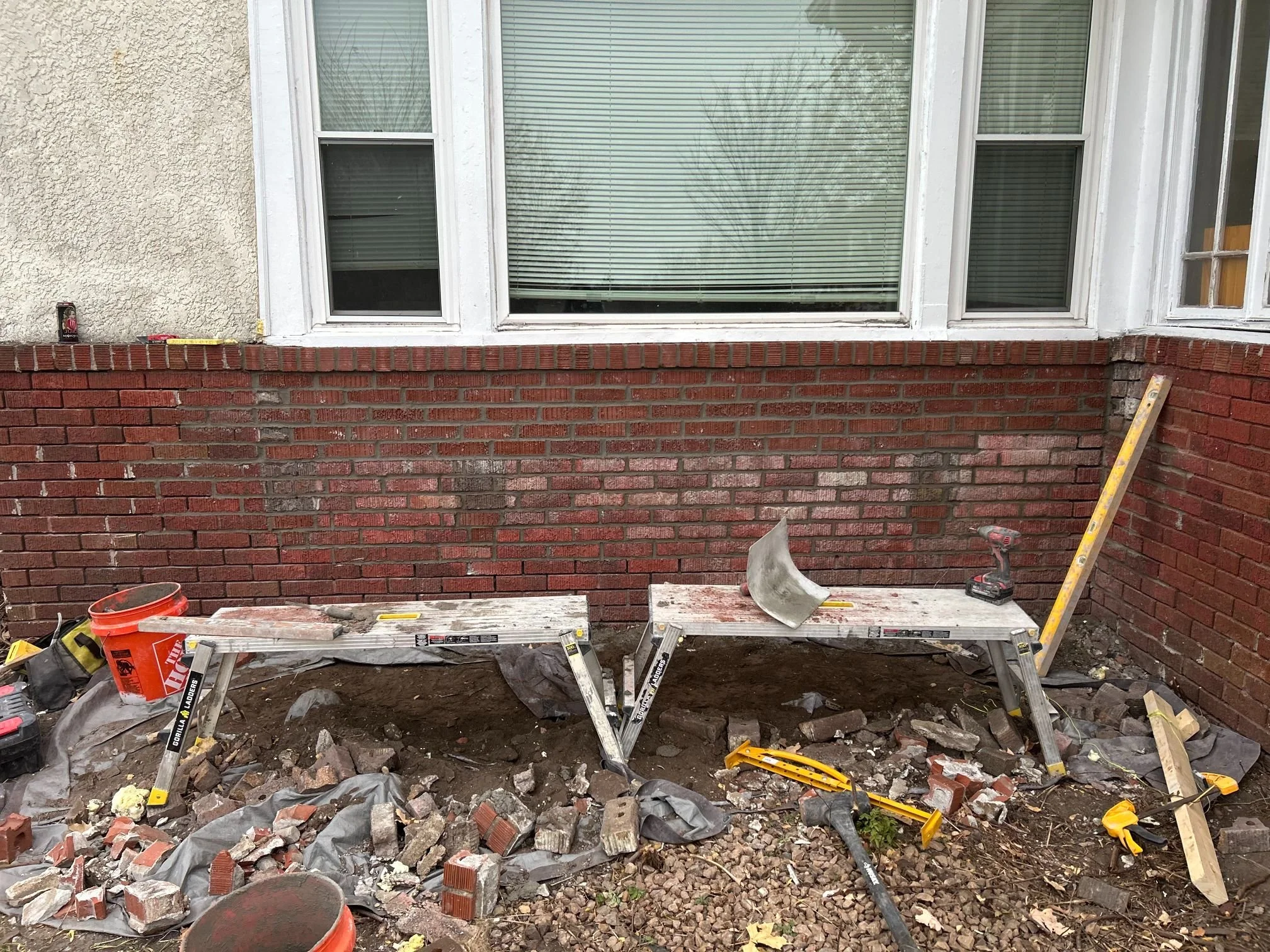
A vehicle has hit your brick boundary wall, knocked an entrance column off plumb, flattened a brick mailbox, or clipped the corner of a garage. Putting that right is what this page is about. We rebuild the brick and stone that cars and trucks knock down throughout the Twin Cities, and we document the damage so you have something to provide to your insurer.
Impact damage differs from the slow failures that the rest of our pages deal with. The weather takes years and shows its work. A vehicle does it in a second, and the part you can see is rarely the whole of it. A column that looks only scuffed can be off its footing, and a wall that lost three bricks can have moved along a longer run than the strike.
What Vehicle Impact Looks Like
What We Rebuild
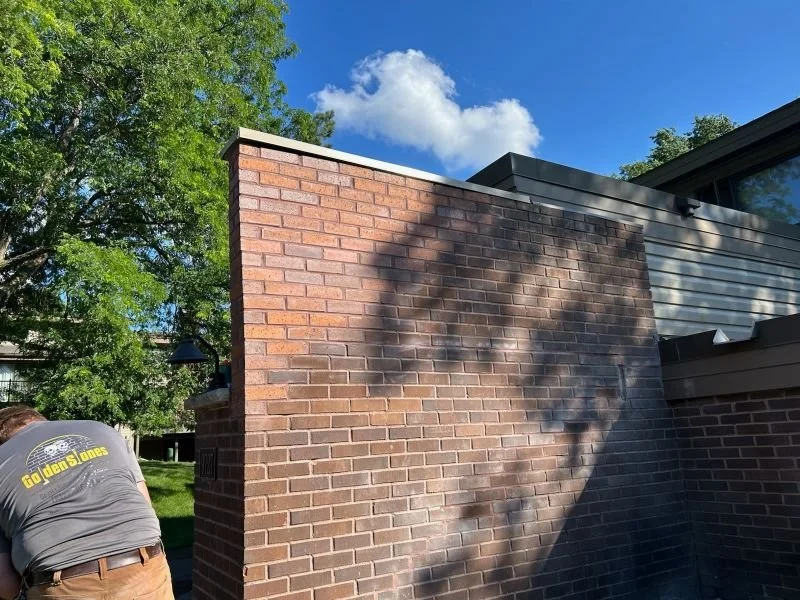
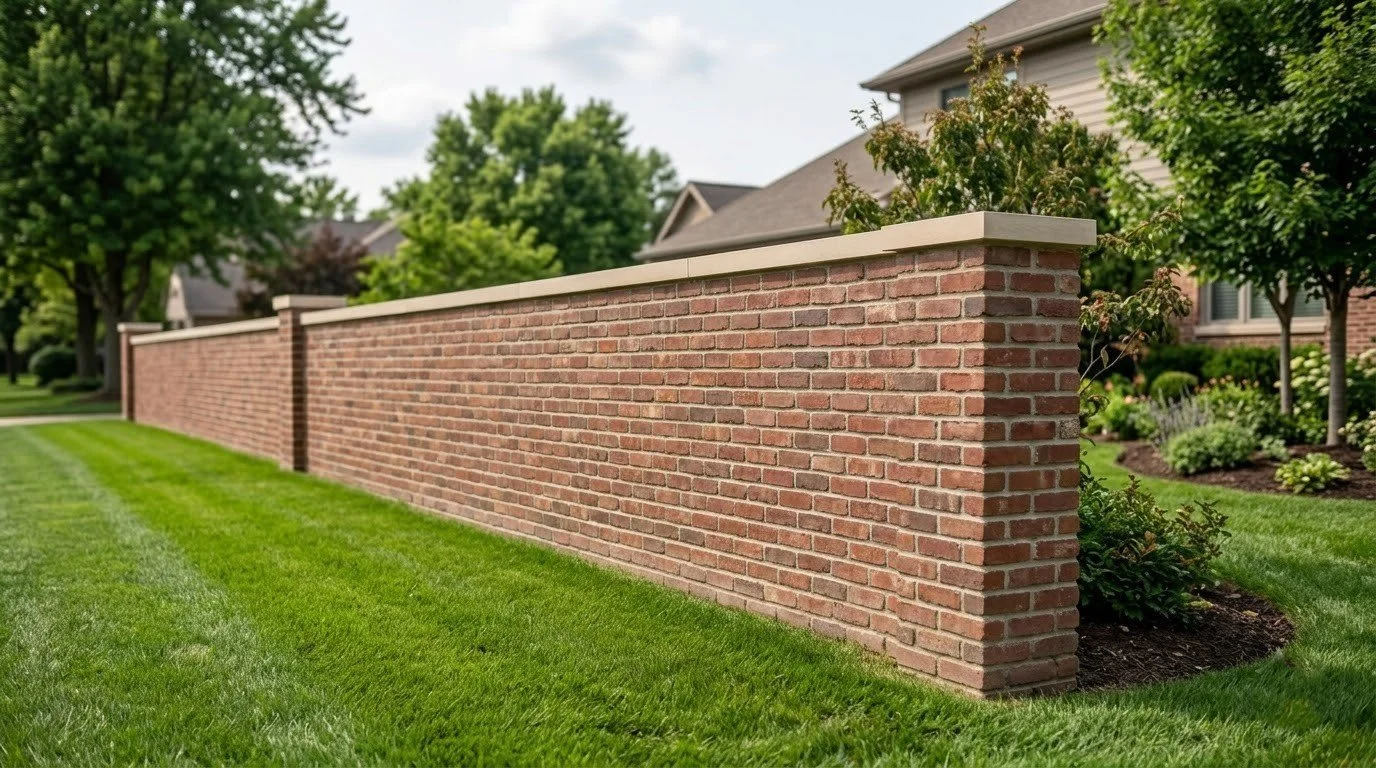
Struck brick boundary and garden walls
The damaged section is taken down to sound work, the courses either side are checked for movement, and the wall is rebuilt and matched. Where the footing took the blow, the footing is dealt with first. The rebuild rule we use for any moved brick wall is set out on our brick walls page.
Entrance columns, piers, and gate pillars
Rebuilt from a sound base rather than patched at the top. Where the footing shifted under the impact, that is addressed before the column goes back up, because a column re-laid on a base that moved is a column that will lean.
Brick mailboxes and decorative pillars
Rebuilt and matched to what was there, or to the matching masonry on the property.
Struck corners on garages and houses
The affected brick on both walls that meet at the corner is taken back to sound work and rebuilt, so the corner braces properly again rather than being made good only on the face.
Stone walls and stone columns
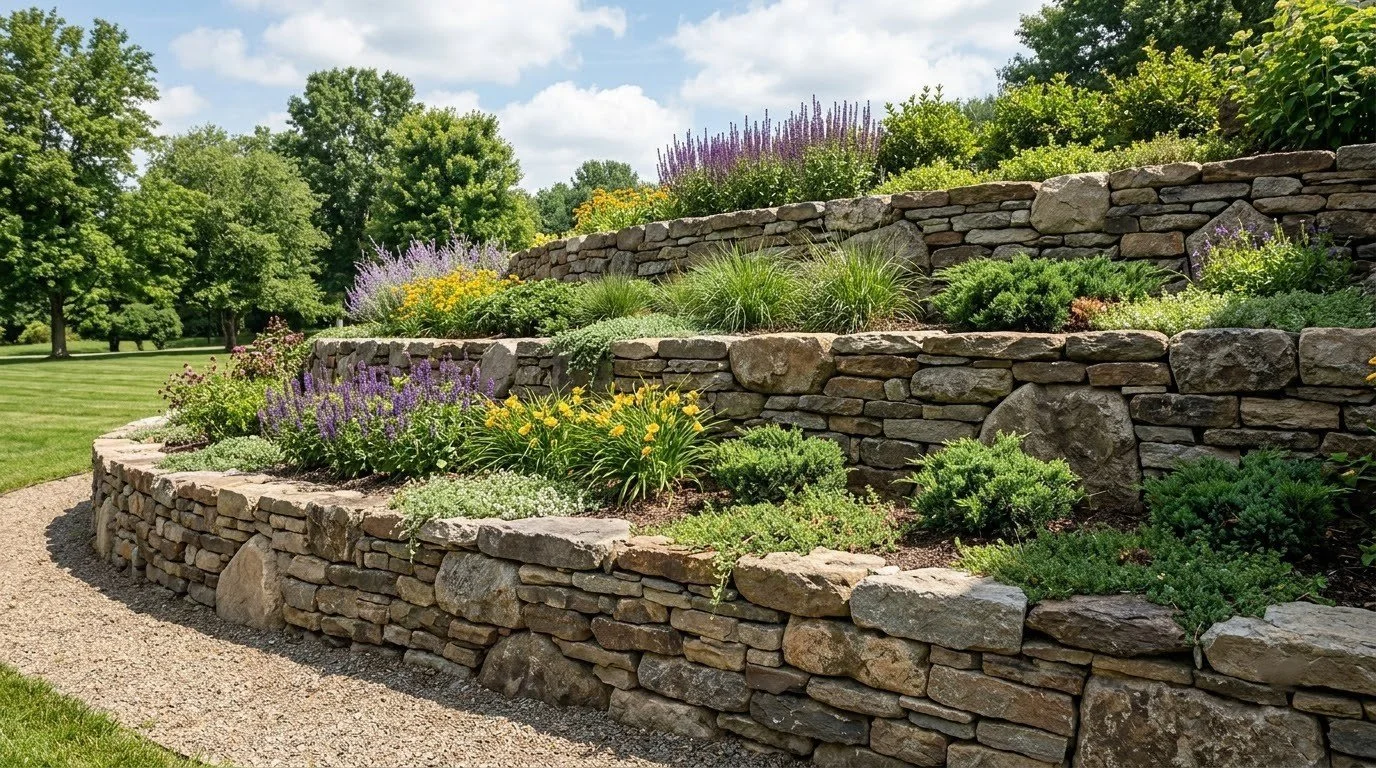
Where a stone wall, column, or pier was struck, the same assessment and rebuild apply to stone. Our stone walls page covers how we build and rebuild in stone and fieldstone.
Matching the rebuilt section
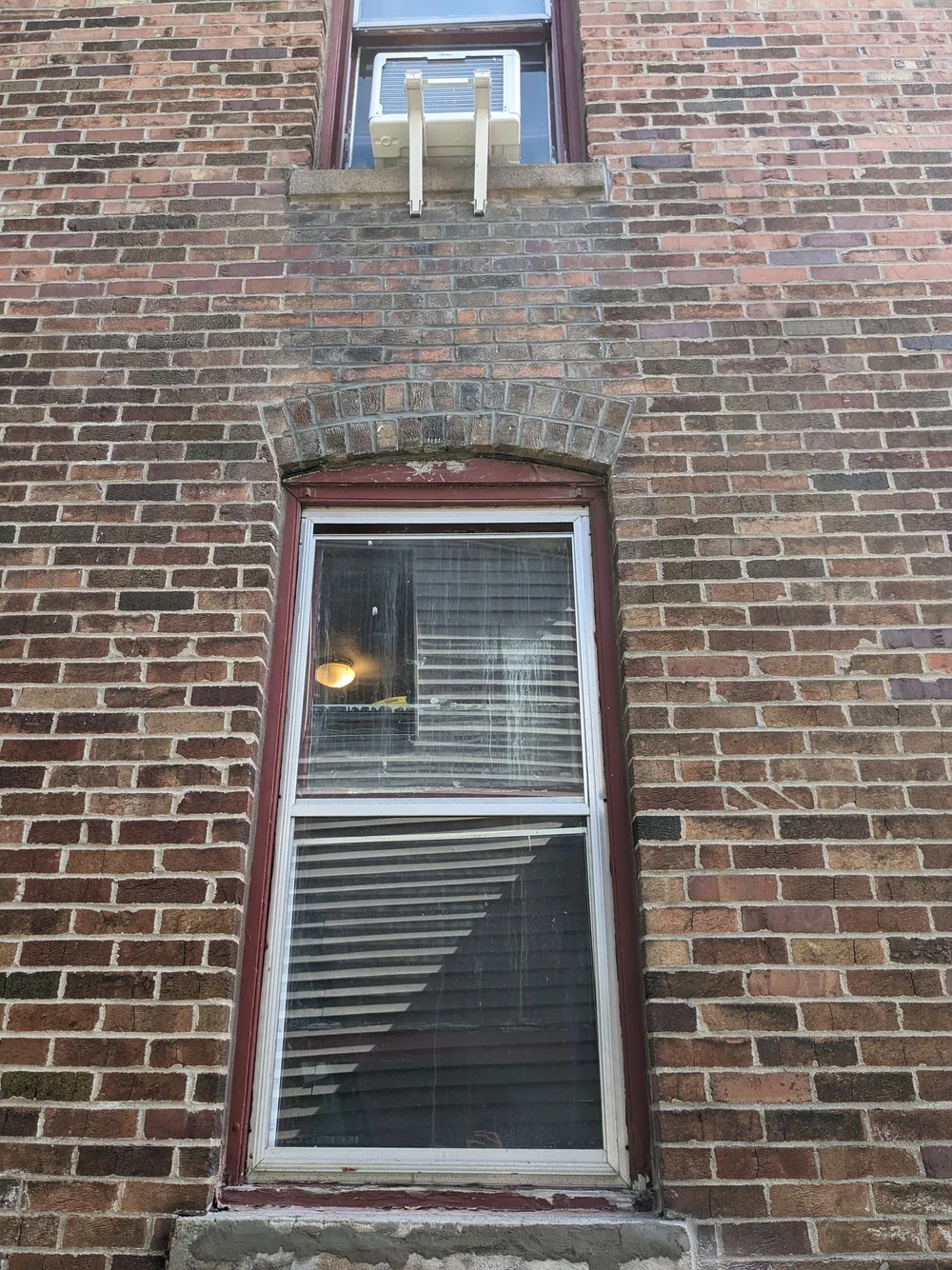
Brick and stone are matched to the rest of the structure by our supplier, and our brick repair page outlines what a match can and cannot do. On an older wall, there is usually a small difference the eye can find, and we are clear about how close is achievable before the rebuild starts.
What this job does not include
Filing, negotiating, or managing your insurance claim. We document, and we rebuild; the claim is between you and your insurer, and more on that is below.
Steel and timber fencing, gates, and railings. We rebuild the masonry and set anything bedded into it, then coordinate with whoever handles the ironwork.
Poured concrete barriers, bollards, and guard posts. If the aim is to stop the next vehicle, that is a different trade, and we will say so.
How the Insurance Side Works
Most of these jobs involve a claim, and it helps to be clear about where our part ends and your insurer's begins.
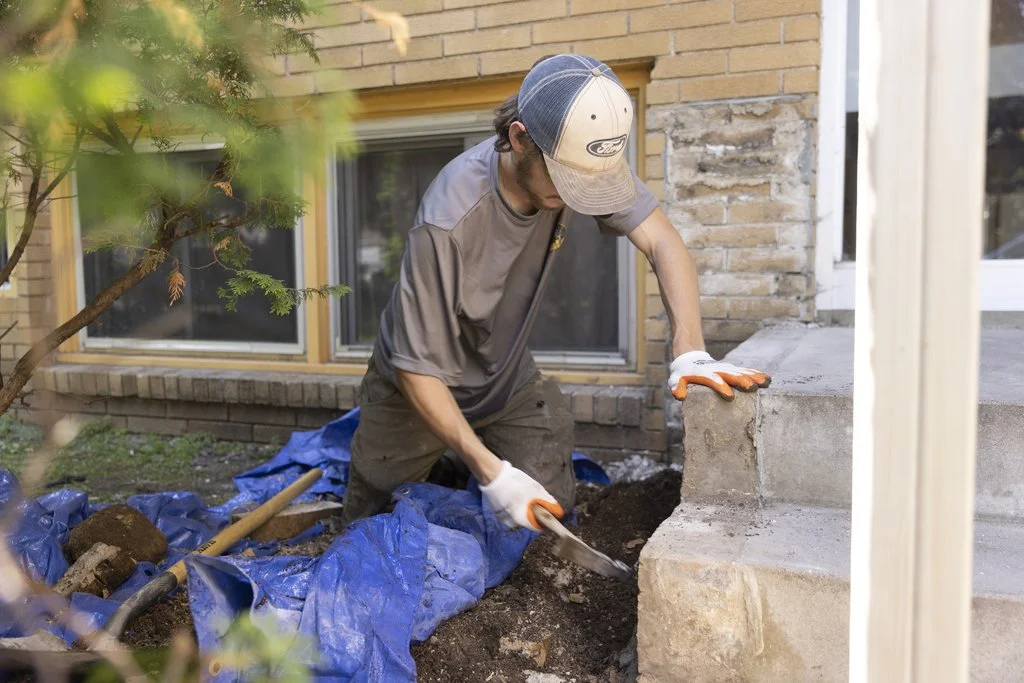
What we do is document. Sam photographs what was found and what the repair involves, and prepares a written estimate to be handed to an adjuster, a landlord, or whoever is responsible for the property. That gives you something concrete to submit.
What we do not do is deal with the adjuster or coordinate the claim, and the coverage decision is between you and your insurer. We are not going to advise you on what your policy will or will not pay, because that is their call and not ours. What we can accurately tell you is what the damage is and what putting it right takes.
If the driver is known and uninsured, or the vehicle is left, the estimate works the same way. It is an honest account of the damage and the repair, which is what you need whoever ends up paying for it.
How a Repair Runs
Why Us for Impact Repair
We find the damage you are going to be billed for twice if it is missed
The hidden movement in a footing or along a run of wall is the part a quick patch leaves behind, and it is the part that fails again. Reading it properly is the whole point of the assessment.
Documentation written to be handed on
The estimate and photographs are prepared so they stand up when they reach an adjuster or an owner who was not there.
Sam is on the job, not just on the estimate
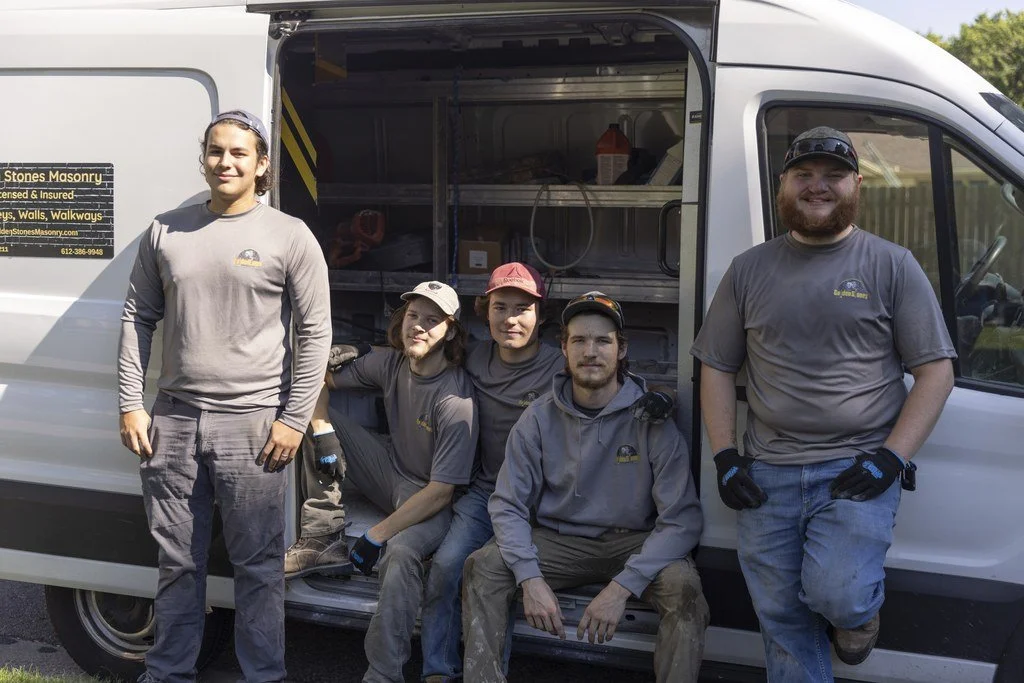
Most of our Google reviews name him personally. On a six-person crew, the rebuild matches the rest of the structure.
Ten years on the workmanship
In writing, on what we rebuilt. Get it on paper before you sign, and ask anyone else quoting the job for their terms too, because a verbal warranty is worth what it sounds like.
Why the Visible Break Is Not the Repair
The costly mistake on impact damage is to price the hole. A vehicle strike applies a sudden sideways load to masonry built to carry weight straight down, and that load does not stop at the bricks that fell out. It travels along the courses and down into the footing.
On a free-standing wall, that shows up as courses pushed out of line a foot or more either side of the gap, so the sound-looking brick next to the break has actually moved and will not sit true against a rebuilt section. On a column, it shows up as a base that has shifted, which is why a column left standing after a knock can still need taking down: relaid on a footing that moved, it leans within a season.
So the assessment matters more here than on almost anything else we do. We take the damage back to where the wall or column is genuinely sound, and we rebuild from there. It is also why the honest estimate is sometimes larger than the one that only counts the missing bricks, and why the photographs and the written scope matter when a claim is involved: they show what the real repair is.
Common Questions
A car hit my brick wall. Can you rebuild it?+
Yes. We take the damaged section back to sound work, check whether the courses or the footing moved beyond the visible break, and rebuild and match it. Struck columns, piers, mailboxes, and walls.
The column is still standing but was hit. Does it need rebuilding?+
Possibly. A column carries its load on a small footprint, so a knock that leaves it standing can still shift it on its footing. If it is off plumb or the base has moved, it is rebuilt from a sound base rather than patched, because a relaid column on a moved footing will lean.
Do you handle my insurance claim?+
We document the damage and the repair with photographs and a written estimate you can submit, but we do not deal with the adjuster or coordinate the claim, and we do not advise on what your policy will pay. The coverage decision is between you and your insurer. What we give you is an accurate account of the damage and what fixing it takes.
Will you give me something I can send to my insurer?+
Yes. The estimate is written so it can be handed to an adjuster or an owner who was not at the site, and we add photographs of what was found and what the repair involves.
Why is your estimate higher than the number of bricks that fell out?+
Because the impact usually moved more than it knocked down. Courses either side of the gap, or the footing under a column, can shift, and a repair that only replaces the visible brick leaves that behind to fail again. The estimate reflects the real extent, and the photographs show why.
Will the repair match the rest of the wall?+
Close, because our supplier is good at matching. There is no exact match to century-old masonry from anyone, and we say so up front. Our brick repair page sets out what a match can and cannot do.
Can you make it so a vehicle will not knock it down again?+
Rebuilding it as a wall does not turn it into a crash barrier, and we will not pretend otherwise. If the aim is to stop the next vehicle, that is a bollard or a barrier, which is a different trade, and we will say so honestly.
How fast can you come out?+
We will come and assess it promptly, and make anything unsafe safe first. The rebuild itself is scheduled around the match and, for exterior work, around weather mild enough for mortar to cure.
What does the warranty cover?+
Ten years in writing on the masonry we rebuilt. Get the terms on paper before you sign, and ask anyone else quoting the job for theirs, because a warranty you cannot read is not one you can hold anyone to.
Where We Do This Work
We rebuild vehicle-damaged masonry across St. Paul, Minneapolis, Bloomington, St. Louis Park, Richfield, Minnetonka, Eden Prairie, Plymouth, Maple Grove, Wayzata, Blaine, Circle Pines, Little Canada, Woodbury, Lake Elmo, Cottage Grove, Stillwater, South St. Paul, West St. Paul, Inver Grove Heights, Mendota Heights, Eagan, Burnsville, Apple Valley, Rosemount, Lakeville, Victoria, North Branch and Big Lake. For locations farther than about 45 miles from St. Paul, send photographs before the visit.
What Customers Say
What appears below is our live Google feed rather than testimonials we picked out, so it shows whatever is genuinely on it.
Get a Free Estimate
Photographs are especially useful on impact damage, both for us and for your claim. A close shot of the break, a wider one of the whole wall or column, and one along the length of the wall from the corner let us gauge how far the damage traveled before we arrive.
Call (612) 509-0718 · Written estimate and photographs for your claim · 10-year workmanship warranty