

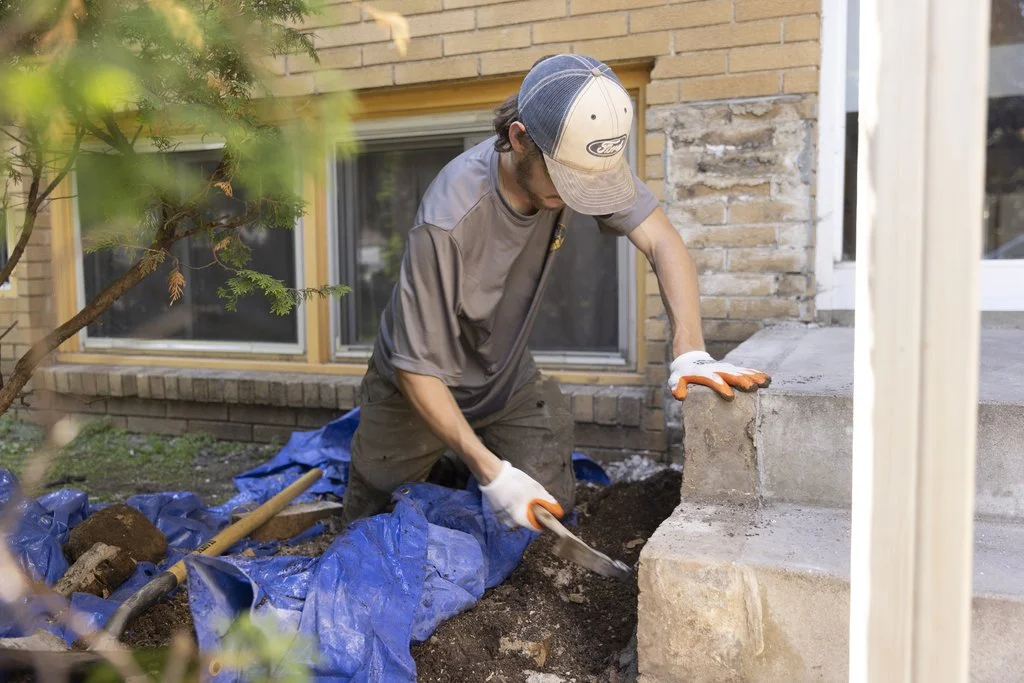
Tuckpointing in Richfield
10 Years
Workmanship warranty, in writing

Part of tuckpointing a Richfield wall can be undoing the last repair. An open joint on an older front may have been patched more than once, and three kinds of fix can sit right where the new mortar has to go: caulk, mortar spread over the surface, and hard cement patches. Each one needs a decision before the grinding and packing on our tuckpointing page can begin.
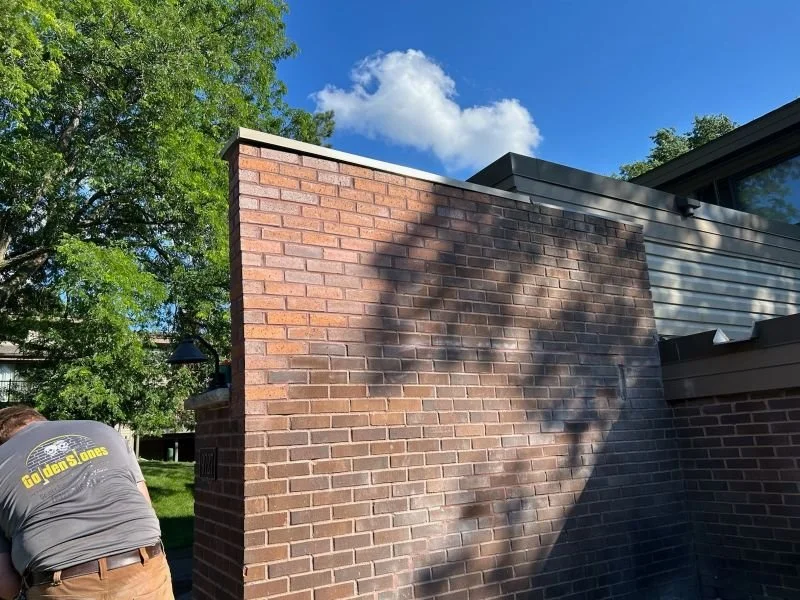
What Comes Out Before New Mortar Goes In
Each earlier repair is judged on whether it is still bonded tight and whether it sits in joints that need doing. Sam's rule for old, hard cement patches on a basement wall is to remove them if they are loose and leave them if they are sturdy. On a brick front, whether the patch is loose or sturdy is the obvious first question to ask of any patch, and the condition of the joints around each repair settles the rest.
Caulk in the joints
Caulk stays soft, and mortar has nothing to bond to, so a strip left at the back of a joint would leave new mortar sitting on a surface it cannot grip. We do not fill joints with caulk, and a caulked joint that will be repointed is cleared of caulk down to sound material before the joint is ground to depth.
Mortar spread over the surface
A fast fix for a worn joint is to smear mortar across it without grinding it out. Our tuckpointing page lists this among the repairs we take back off because a thin skim has no depth to hold it and will let go. Where the skim has lifted, it comes off. Where it still grips a brick face, taking it off can mark the brick, and that is weighed at the estimate.
Hard cement patches
Gray cement packed into a hole or along a run of joints sets harder than mortar. In a joint marked for repointing, a patch that has cracked loose or let go along an edge must be removed because new mortar cannot reach full depth past it. A patch that is still sound and tight to the brick can stay, with the joints around it repointed up to its edges.
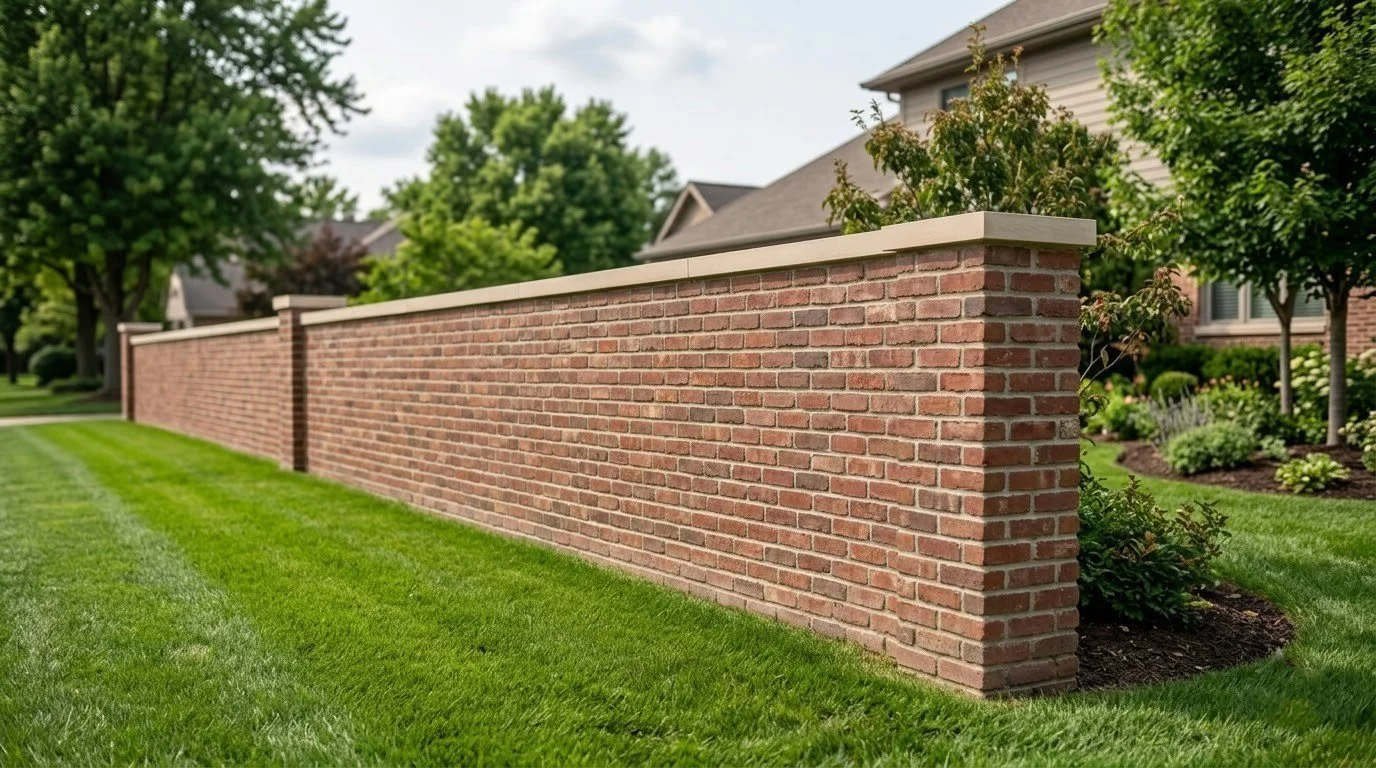
When an Old Repair Gives Out
Joints wearing back beside a patch
The patch holds while the original joints on either side sink behind the brick face. Those joints are the job.
A crack tracing the edge of a patch
A hairline gap where old cement meets brick or mortar lets rain in along the boundary, behind a patch that looks solid from the yard.
Flakes of mortar on the ground below the wall
Thin pieces in the bed below are a skim that has come away from the joints it was spread over.
A later fill gone soft
Bagged repair mortar or a tube product that crumbles under a fingernail has failed the same way an original joint does, and it comes out like one.
Holes where an old filler has dropped out
An empty pocket in a joint that was once patched holds water, and in a freeze that water opens it further.
The brick giving way before the patch
Once a face beside a hard patch begins to flake away, the new mortar around it will not save that brick. Replacing it is a brick repair job, set out on our brick repair page.
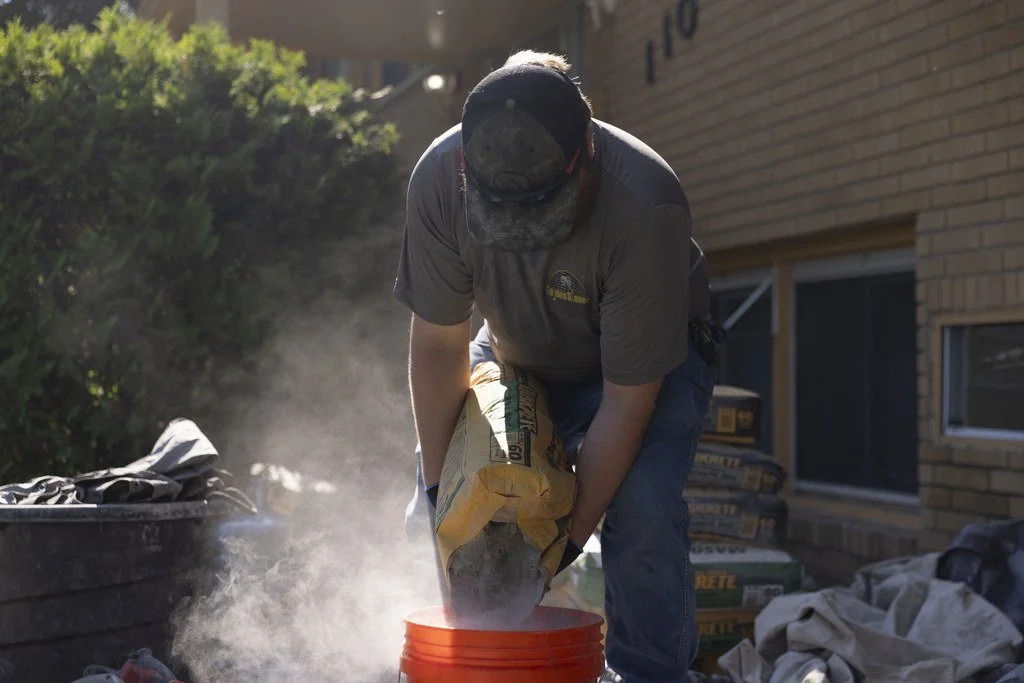
Richfield's Decade of Building
Richfield went up fast. An article on the city's postwar years in Minnesota History, the state historical society's journal, counts 4,074 housing units in 1950 and 11,116 by the end of the decade, with 44 percent of the city's housing stock built in those years. Census survey estimates for 2020 to 2024 still date 10,875 Richfield homes to 1940 through 1969.
Not every house was finished by its builder: the same article quotes a veteran who bought one partly built and finished the rest himself, which was how he could afford it. A front from that decade has had plenty of time, and possibly several owners, to pick up a patch or two along the way.
Old Repairs Out, New Joints In
First, the estimate
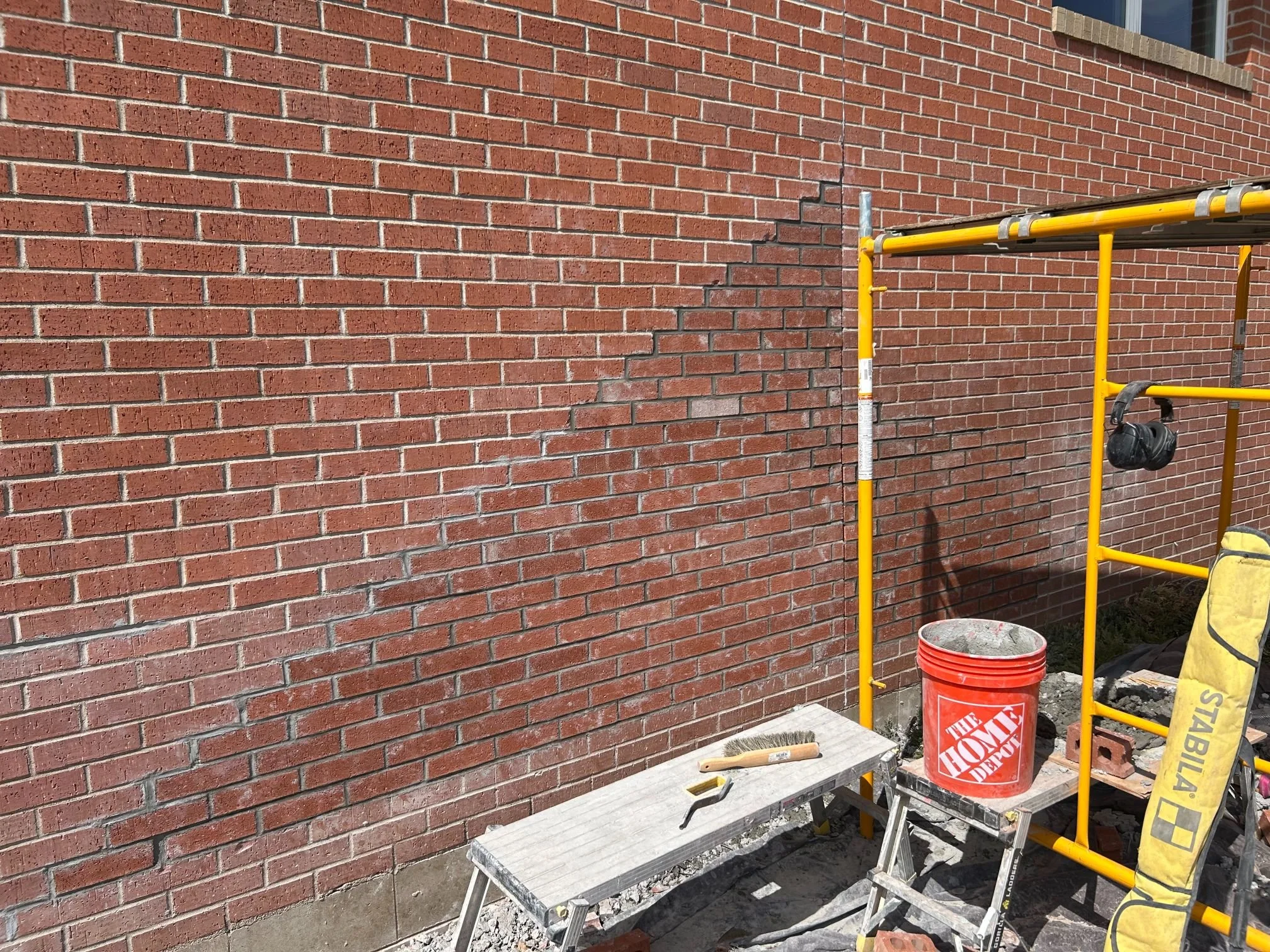
Sam goes over the wall closely, noting failed joints and sorting each earlier repair into coming out or staying, all set down in writing.
Old repairs out
Caulk, loose skim, and loose cement are cleared from the joints marked for repointing.
New joints in
The marked joints are ground to depth and packed in layers by the method on our tuckpointing page, up to the edges of any patch that stays.
Finishing
Tooling gives the fresh joints the same shape as their neighbors, and the brick is cleaned of smears before they set. Exterior mortar work is scheduled for weather mild enough for it to cure.
What Old Patches Do to the Price
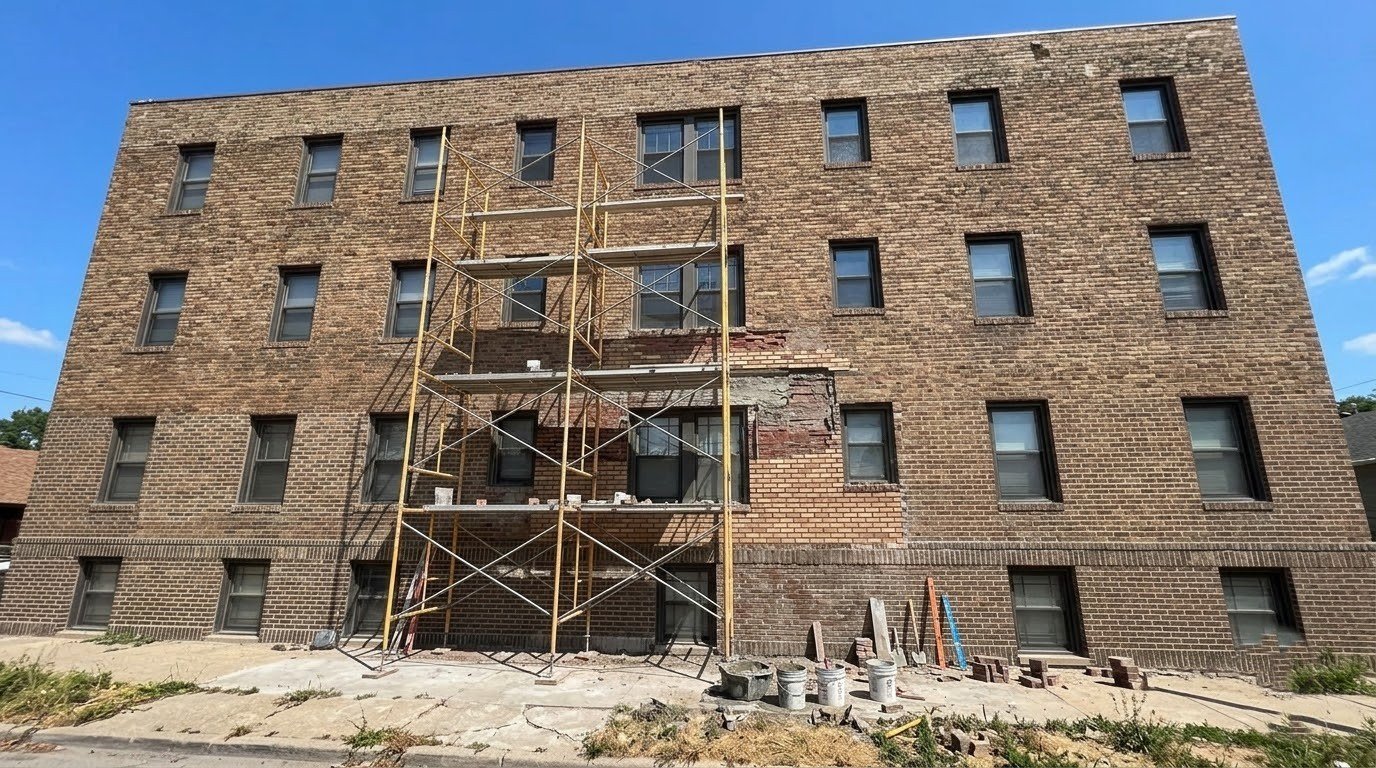
Cutting out old caulk or cement slows the grinding, and that time shows in where a job lands within the ranges on our tuckpointing page:
Repair confined to about 10 by 10 feet of wall: from about $2,800
One wall of the house, repointed throughout: around $6,000 to $8,000
Beyond one wall, up to the whole house: priced from there upward
A chimney, done alongside chimney work: priced on our chimney repair lines
A sound patch left in place adds nothing to the figure.
Every figure on this page depends on square footage and on what we find when we look. They are rough guides to help you decide whether to call, not quotes. The exact number comes after the visit, and the visit is free.
What Customers Say
What appears below is our live Google feed, not testimonials we picked out, so it shows whatever is genuinely on it.
Patches, Caulk and the Warranty
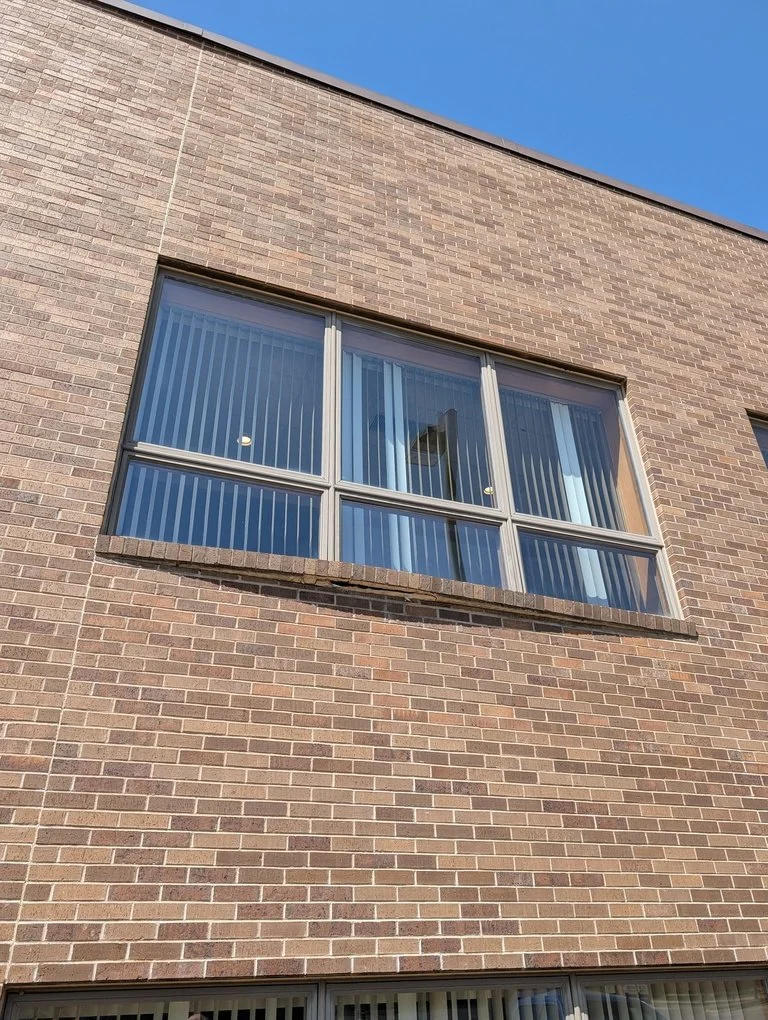
The caulk in some of our joints is still holding. Does it have to come out?+
Only from joints we are repointing. A caulked joint that is holding well enough to stay off the estimate will remain as is.
Will cutting out a hard patch chip the brick?+
It can. Cement sets harder than mortar, so cutting it out requires more force near the brick edges, and a chipped edge stays chipped. That risk is part of why a sound patch is left alone.
Does the warranty cover the old patches you leave in?+
No. Our 10-year workmanship warranty covers the work we do. If we repoint part of a wall and later an old patch, or a joint we did not touch, cracks, that falls outside it. The full terms are in the contract, and they are worth reading before you sign.
Can every old patch come out, sound ones included?+
That is a conversation for the estimate. The starting point is to leave a sound patch where it is, because each one cut out adds time and puts the brick edges beside it at the same risk as any hard patch.
What Customers Say
What appears below is our live Google feed rather than testimonials we picked out, so it shows whatever is genuinely on it.
Show Sam the Old Repairs
What helps on the first call:
- Anything you know about past repairs saves time at the visit:
- A close photo of each old repair, plus one of the whole wall
- What went into any joint you filled yourself, if you remember: caulk, a tube of mortar repair, or bagged cement
- Which side of the house each repair is on