

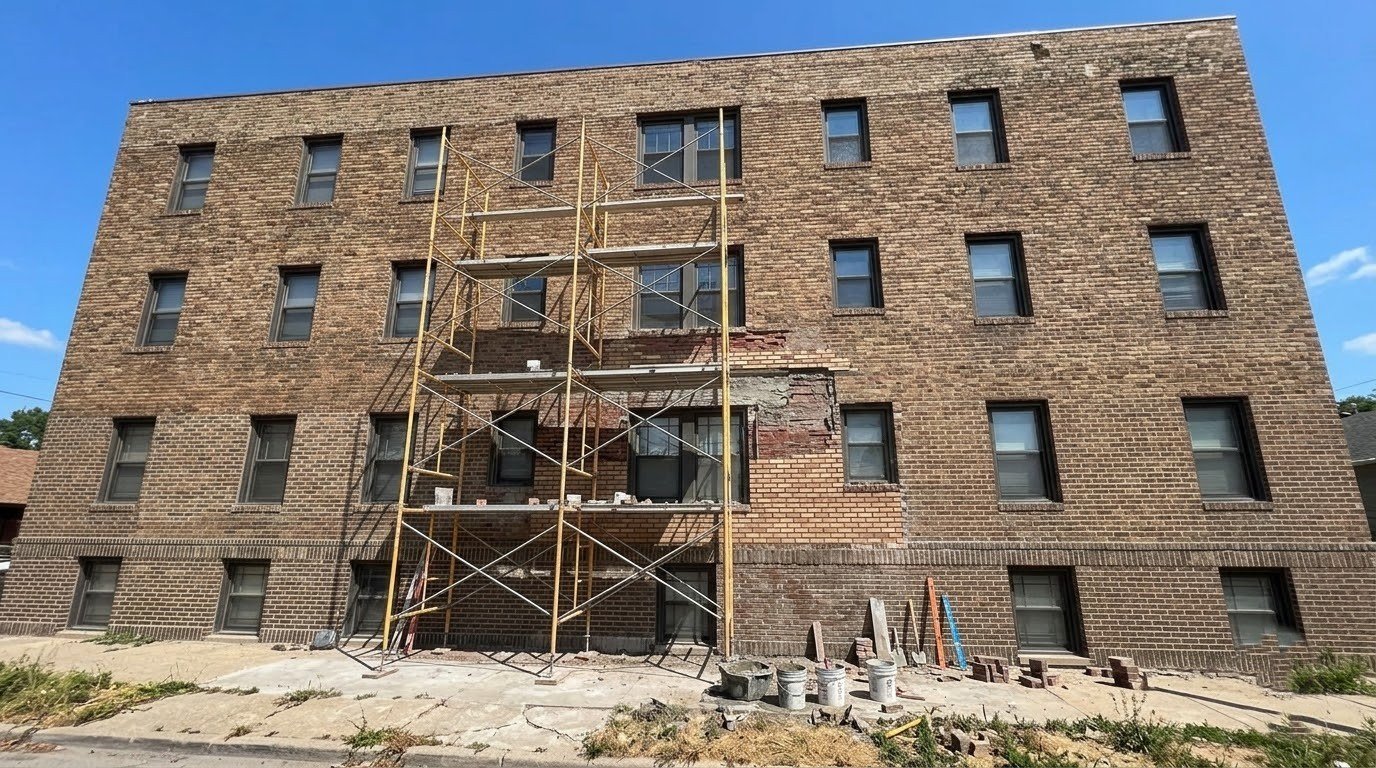
Tuckpointing in Maple Grove
10 Years
Workmanship warranty, in writing

Which mortar joints on a Maple Grove house should you look at first? The ones in flat brick: the sill under a window, the row of bricks set on edge to finish a wainscot, the cap on a low brick return by the steps. Flat brick faces the sky. Rain lands on it before it runs off, and its joints collect more water than the upright joints around them.
The first thing to settle is whether a joint needs new mortar or a sill brick needs to be lifted and reset. The wall around them may need nothing at all yet, and if so, the estimate omits it.
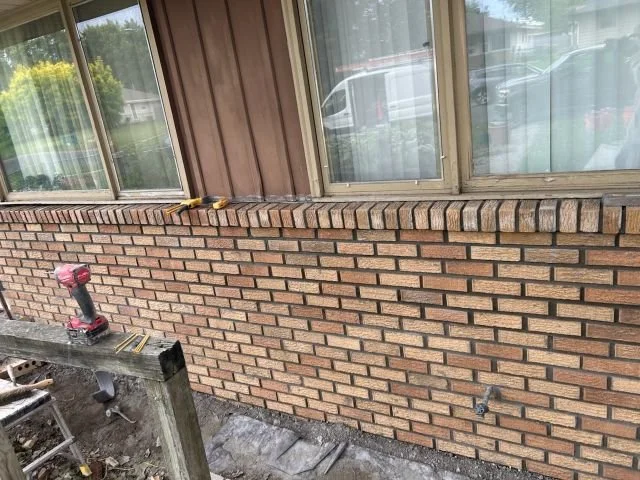
What Failing Flat Brick Looks Like
A crack running along the joint just under a window sill, or between the sill and the course below it
Gaps between the bricks of the sill itself, where mortar has washed out of the joints that face upward
A sill brick that rocks under your hand or has tipped back toward the window
A groove along the top of a rowlock course or a brick cap where the mortar has gone, holding water after rain
Staining on the wall below a sill, or a water mark on the trim or drywall under a window indoors
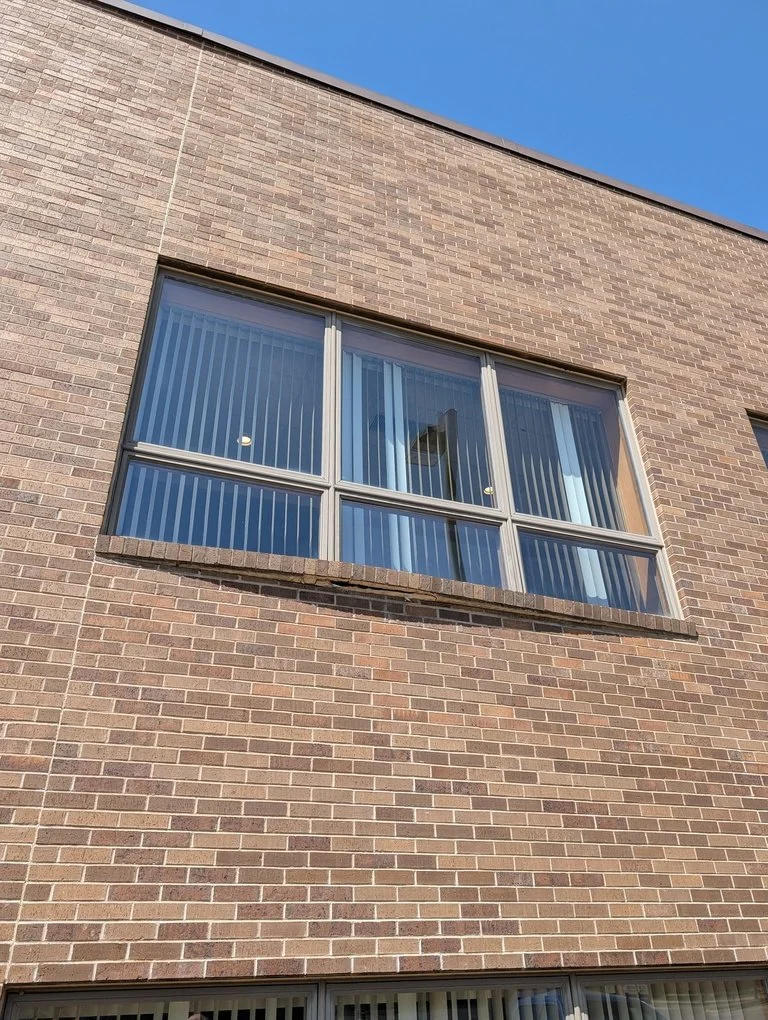
Maple Grove's Newer Brick Fronts
More than half of Maple Grove's homes went up in the last 30 years of the 20th century. Census survey figures for 2020-2024, as Minnesota Compass publishes them, date 16,631 homes to 1970 through 1999. Another 9,875 are newer, and about 2,100 are older.
On houses from those decades, brick tends to be a face on a frame house, used across part of the front: a wainscot below siding, a surround at the entry, a column or a return beside the garage. Where a face like that stops or turns, it may finish in flat brick. Those finishing courses carry the water, and on a house from the 1980s or 1990s the upright joints in the wall can still be sound while the flat ones have opened.
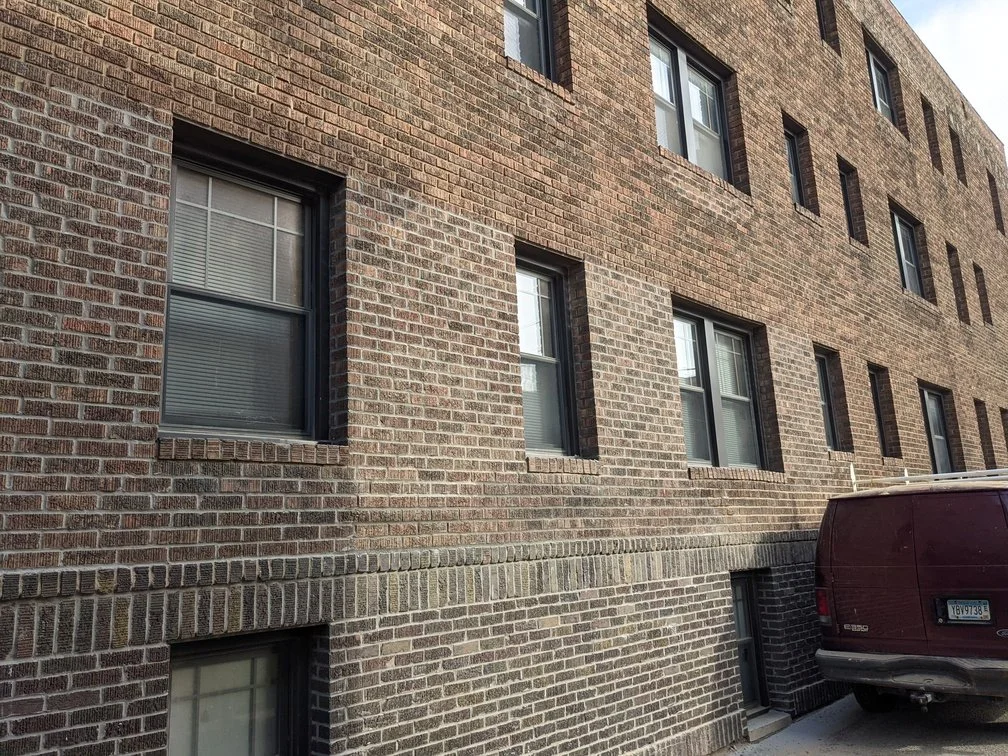
Sills and Rowlock Courses: Repoint or Reset
A brick sill is a row of bricks set on edge under a window and sloped so water runs off toward the yard. A rowlock course is the same arrangement used to cap a wainscot or a low wall. Both carry joints on their upper surface, between one brick and the next, and those head joints face the rain directly. Once the mortar in them shrinks back or cracks, water runs into the joint and down into the wall below the sill.
When the joints can be repointed in place
If the sill bricks are still bedded tight and do not move, the joints are ground out and repointed where they sit. The head joints between the sill bricks and the bed joint underneath are cut with care, because a grinder that wanders on a sill marks the top edge, which is the edge everyone sees from inside the window. The joints are then packed and struck so water runs off the top of the sill.
When a sill needs resetting
If a sill brick rocks, has tipped back toward the window, or has lost the mortar bed underneath it, new mortar around it has nothing solid to hold. The loose bricks are lifted out, cleaned of old mortar, and relaid on a fresh bed at the right slope. That part of the job is brick repair, and our brick repair page covers replacing single bricks. A sill brick that has cracked through, or lost its face, is replaced. Repointing around a broken unit would only dress it up.
The same reading applies to a rowlock course at the top of a wainscot. We repoint it and reset any bricks that have come loose.
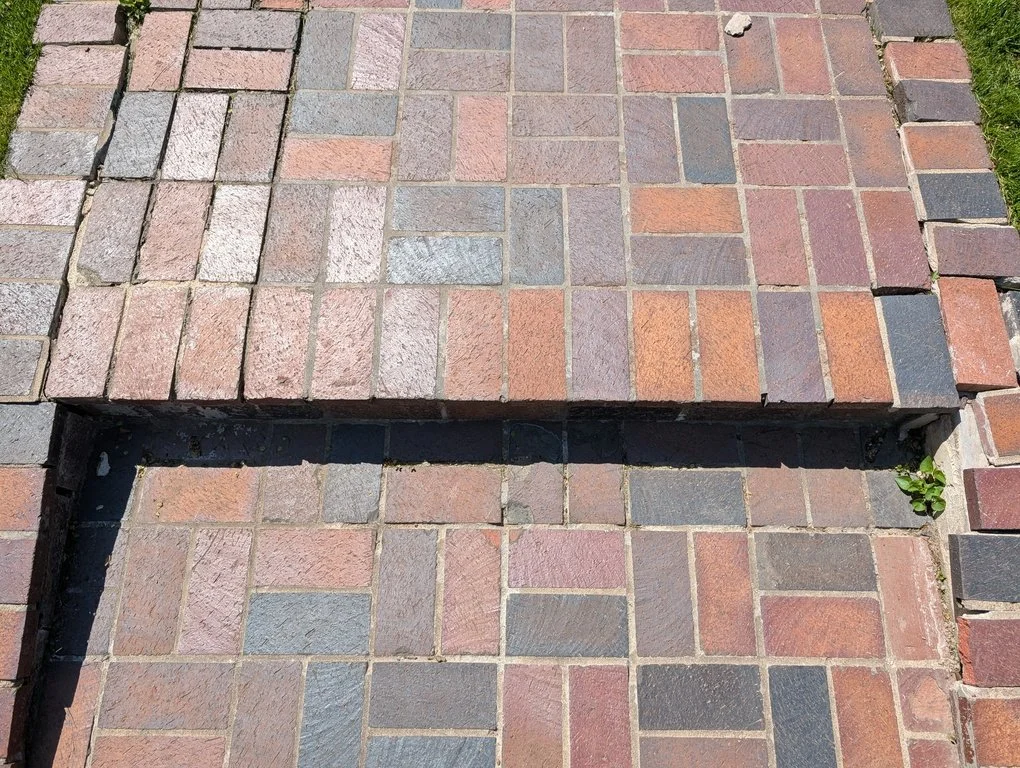
Sill Work, Step by Step
1. Sam looks over every sill and flat course on the house, not only the one you called about, and checks for sill bricks that move.
2. The written estimate splits the work into joints to repoint in place, bricks to lift and reset, and any brick to replace, with each priced.
3. Windows, frames and glass are masked, and drop cloths go over the plantings and ground below.
4. Failed joints are ground out to depth, with those on top of a sill ground more slowly than the rest.
5. Any sill bricks marked for resetting are relaid before the joints around them are filled.
6. The joints are refilled with the mortar chosen for that brick. Our tuckpointing page covers the method and the mix.
7. Joints on top of the sill are struck to shed water, and the profile on the wall face is matched to the surrounding joints.
8. Any mortar on the brick or the window glass is cleaned off before it sets.
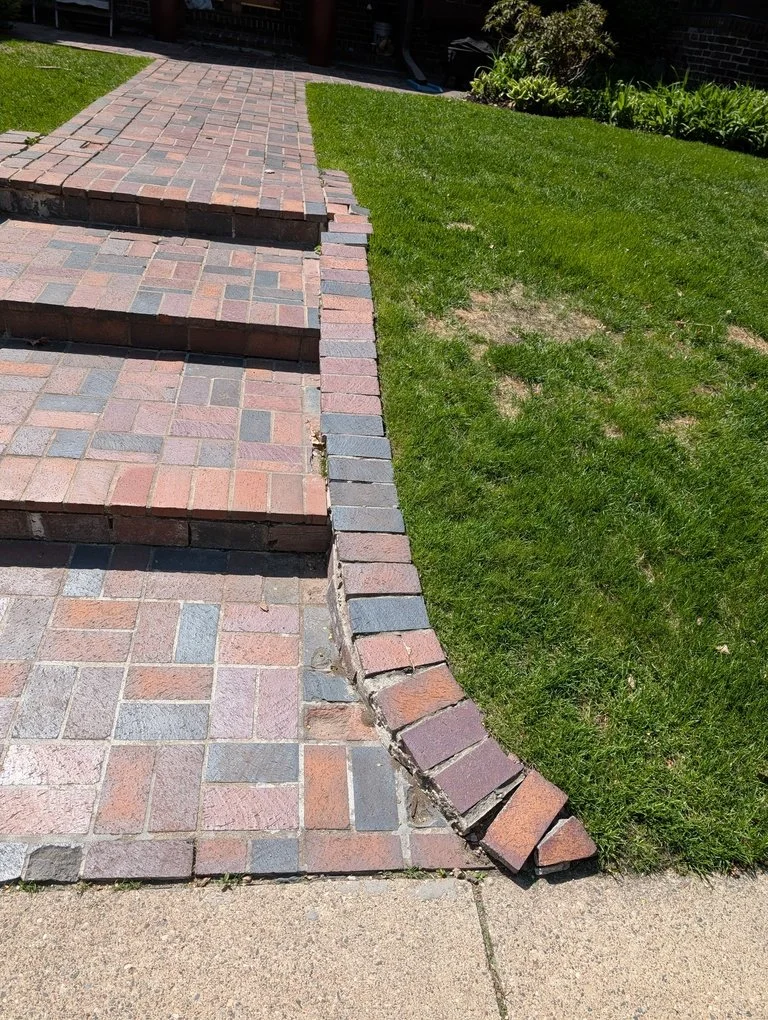
Sill Jobs on the Price Lines
A job confined to sills and flat courses covers little wall area, so it sits on the small-area line our tuckpointing page publishes: from about $2,800 for a patch inside roughly a 10 by 10 section. If the wall itself needs repointing, around $6,000 to $8,000 covers a whole wall of the house, and work across several elevations or the full perimeter is priced from there upward.
Resetting loose sill bricks adds to the figure, because brickwork mixed into a repointing job changes the scope, and Sam prices each part separately in writing.
Every figure on this page depends on square footage and on what we find when we look. They are rough guides to help you decide whether to call, not quotes. The exact number comes after the visit, and the visit is free.
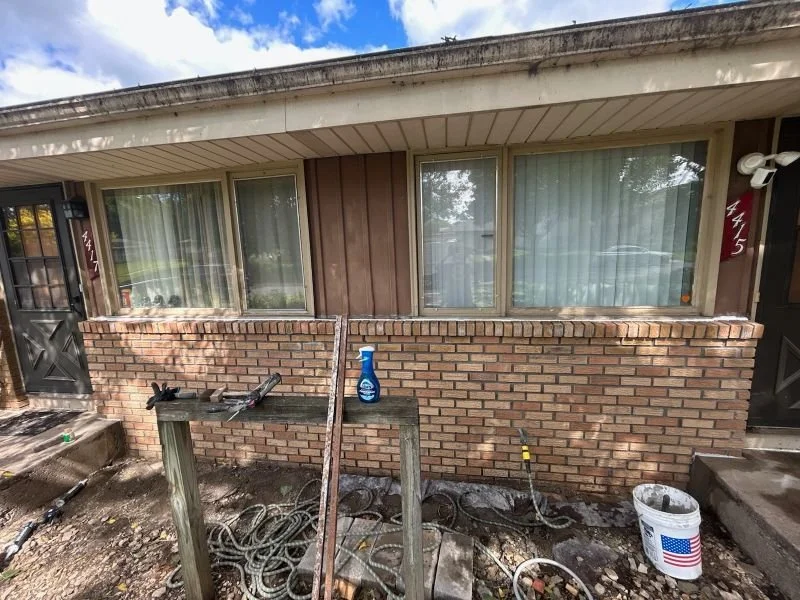
What Customers Say
What appears below is our live Google feed, not testimonials we picked out, so it shows whatever is genuinely on it.
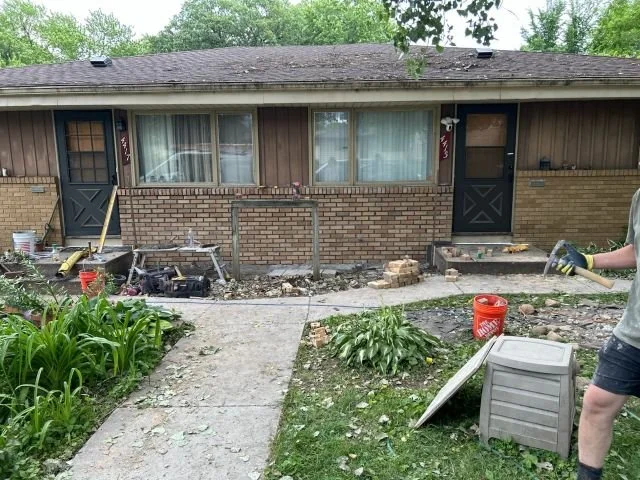
What Owners Ask About Sills
Why does the joint under my window crack first?+
The sill sheds water down the wall's face every time it rains, and the joint directly beneath it takes its share of that water each time. It wears faster than the joints in the open wall.
Water shows up indoors under one window. Is that the sill joints?+
Not always. Water can come in through the window unit as well as through open joints below it. Sam checks the sill joints and tells you which route looks likelier. If the window is the cause, that repair is for a window installer.
What Customers Say
What appears below is our live Google feed rather than testimonials we picked out, so it shows whatever is genuinely on it.
Sill Photos Worth Taking
What helps on the first call:
- 1. One photo of the worst sill or flat course, taken up close, with a note of which side of the house it faces.
- 2. If water has shown up indoors below that window, note when it appears and in what kind of weather.