

Tuckpointing in Eden Prairie
10 Years
Workmanship warranty, in writing

Hard, dense brick calls for a different mortar decision from the soft brick on a prewar house, and on Eden Prairie houses built from 1970 through 1999, that is likely the brick on the fronts, base bands and fireplace stacks. When the joints in brick like that fail, we grind out the old mortar, pack new mortar in its place, and pick the mix for the brick on the wall.
Eden Prairie's Builder-Brick Decades
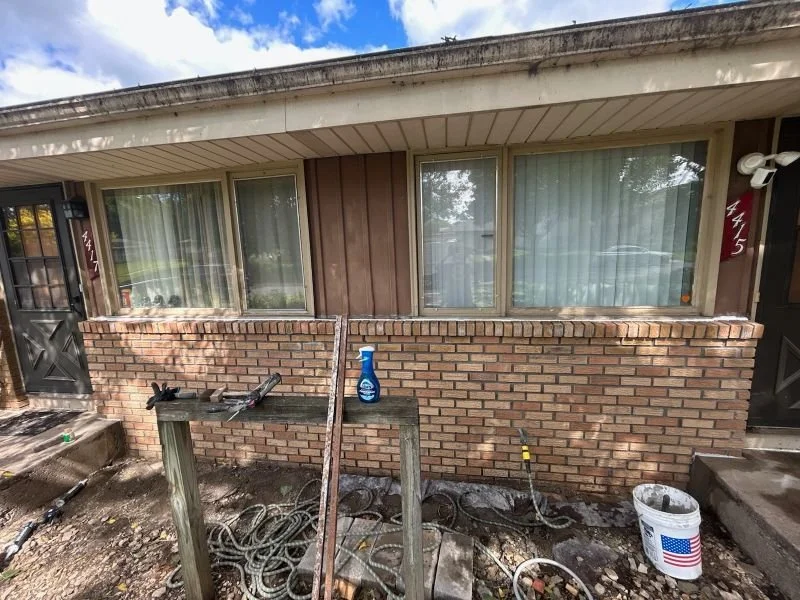
Eden Prairie has roughly 2,200 homes built before 1970 and some 5,600 built from 2000 onward. The other 18,678 standing today went up from 1970 through 1999.
Brick from those years is a facing on a wood-framed house. Joints laid then have stood outside long enough that some are opening now, starting where water lands hardest.
How Joints Let Go of Hard Brick
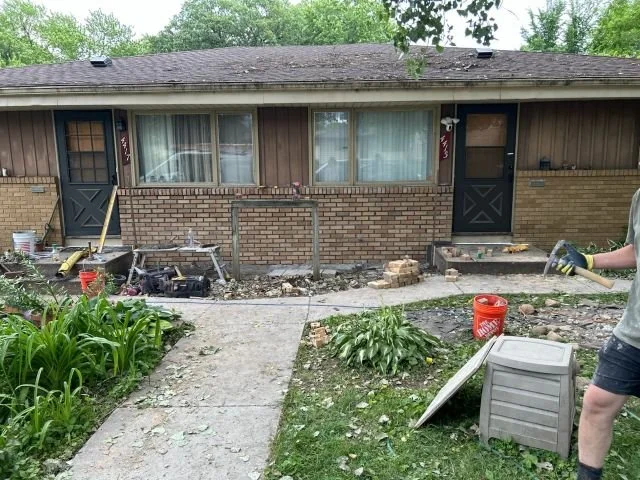
Mortar lifting out in clean strips
Dense brick has smooth, hard faces that give mortar less to hold. When a joint on brick like that fails, it can come away in a whole strip, with the brick behind it clean. Once the mortar has let go of the brick, it no longer seals the joint, however hard the mortar itself still feels.
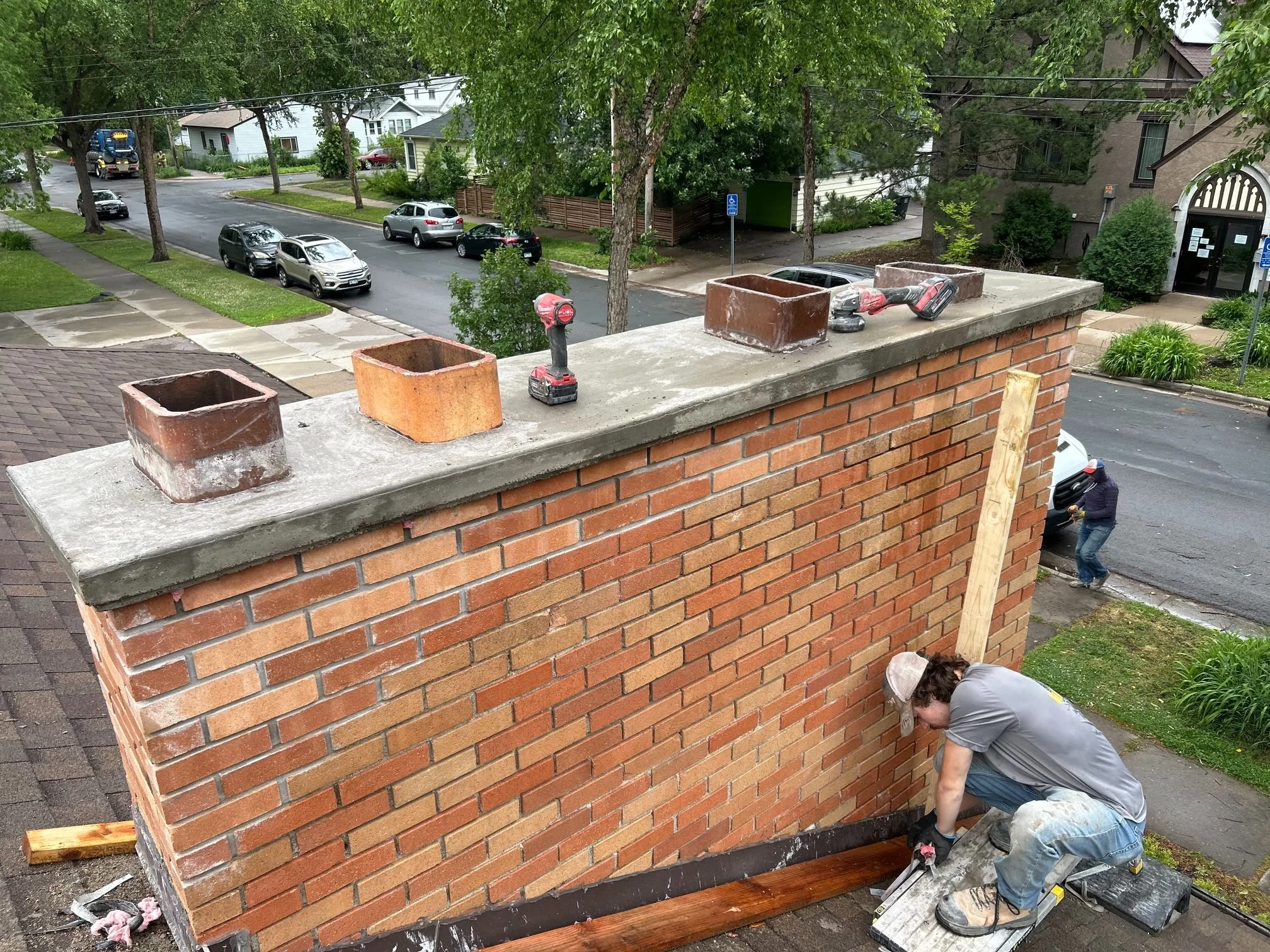
A fireplace stack wearing faster than the wall
A stack's joints can turn sandy while the front of the house is still tight, and it can be the only job the house needs. Crown and flashing work on the stack is covered on our Eden Prairie chimney repair page.
Wear where water lands
Joints beside a downspout outlet, under a gutter that overflows or in the arc of a lawn sprinkler wear back deeper than the rest of the wall. Repointed joints there hold up far better once the water is redirected, so moving the downspout or the sprinkler head is worth doing as well.
Choosing Mortar for Hard 1980s Brick
Our tuckpointing page sets out the mortar types we use, which are graded by strength, and the reasoning for matching each to a wall. With soft, old brick, that reasoning runs toward caution, because a mix too hard for the brick ends up damaging its faces.
Brick laid in Eden Prairie in the 1980s sits at the other end of the scale. It is likely to have been fired harder and to take up less water, so a stronger mix is far less of a threat to it than it would be to a prewar wall. That lower risk is not a reason to reach for strength.
Three things still steer the choice on brick this dense. Whenever the wall next needs work, that work should be new mortar again, with no brick to replace. Smooth, hard brick gives mortar less to grip, so the mix and how wet it goes in decide how well it holds, whatever its strength. And the new joints sit beside the original ones for the rest of the wall's life, where they ought to weather in step with them.
On a typical Eden Prairie front, that points to the general-purpose mix our tuckpointing page describes for repair work.
From the Grinder to the Strike on Dense Brick
A look at the brick and the joints
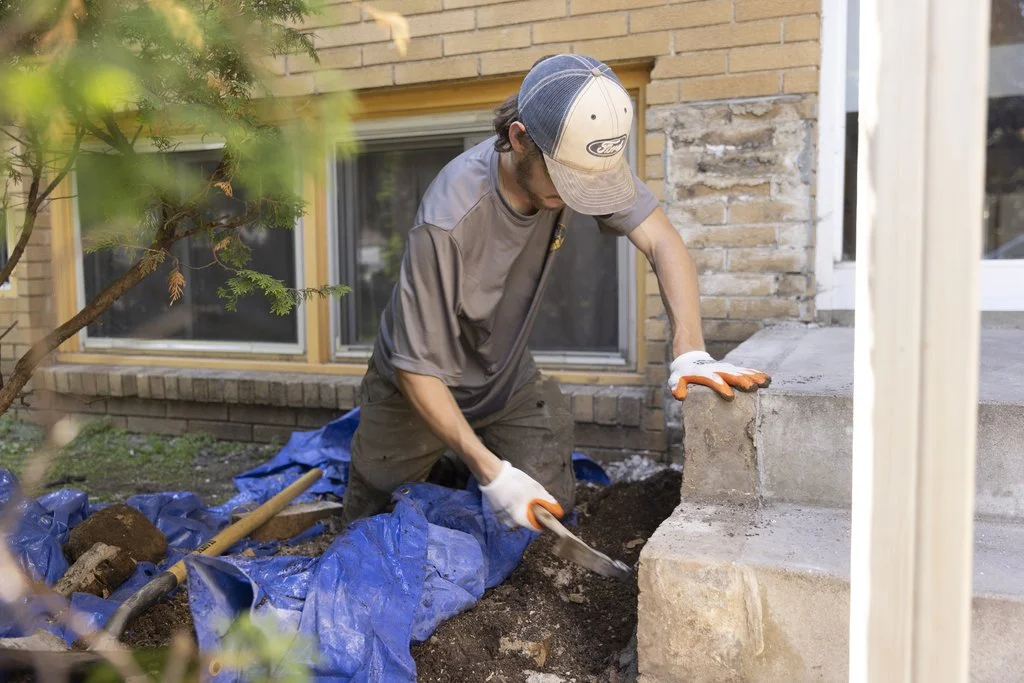
On hard brick, the first thing to find is mortar that has parted from the smooth face, so Sam works along the joints on the stack and the front looking for edges that have let go, as well as sandy mortar and wear on the brick itself.
A written scope and mix
The estimate lists the runs to be repointed, names the chosen mix and the reason, and prices the options.
Cutting out
The grinder takes failed joints back to full depth while staying inside each joint. On hard brick, a slip leaves a scar on the edge that no mortar will hide.
Packing
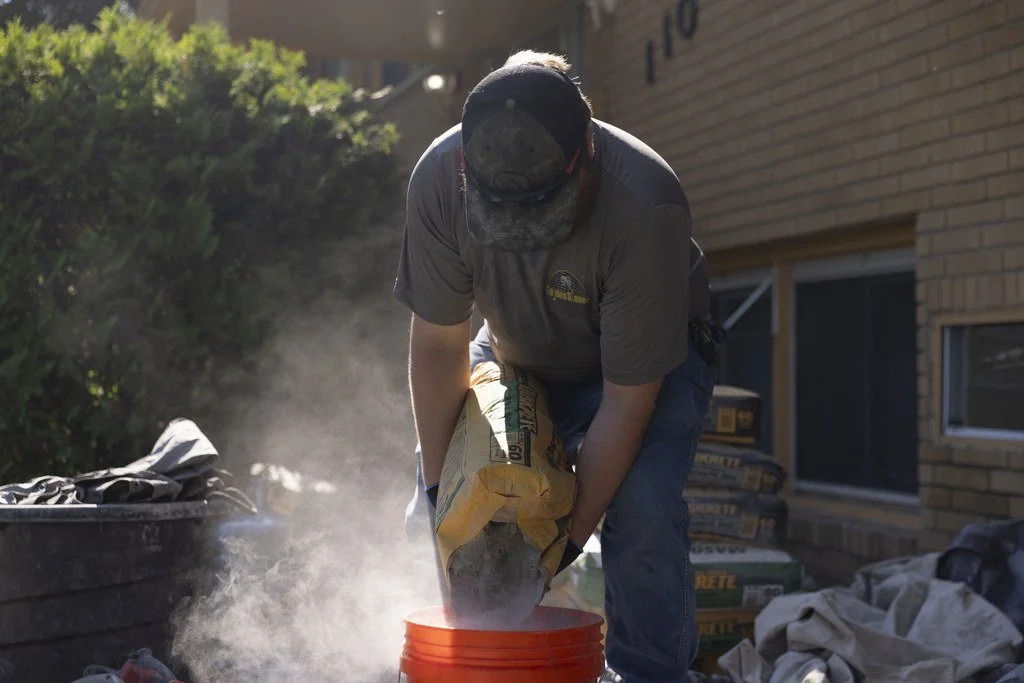
New mortar goes in using the layered method described on our tuckpointing page. Dense brick draws little water from fresh mortar, so how much the wall is damped depends on the day.
Striking and cleanup
On dense brick, a joint can take longer to be ready to strike, so the tooling waits on the mortar, and any mortar left on the smooth faces comes off while it is still soft. Exterior mortar work is scheduled for weather mild enough for it to cure.
Ranges for a Stack or a Front
A house of this age falls on one or more of these lines from our tuckpointing page:
A patch inside about a 10 by 10 area: from about $2,800
One whole house wall: around $6,000 to $8,000
Two walls or more, up to the whole house: from there upward
The fireplace chimney: on our chimney repair lines
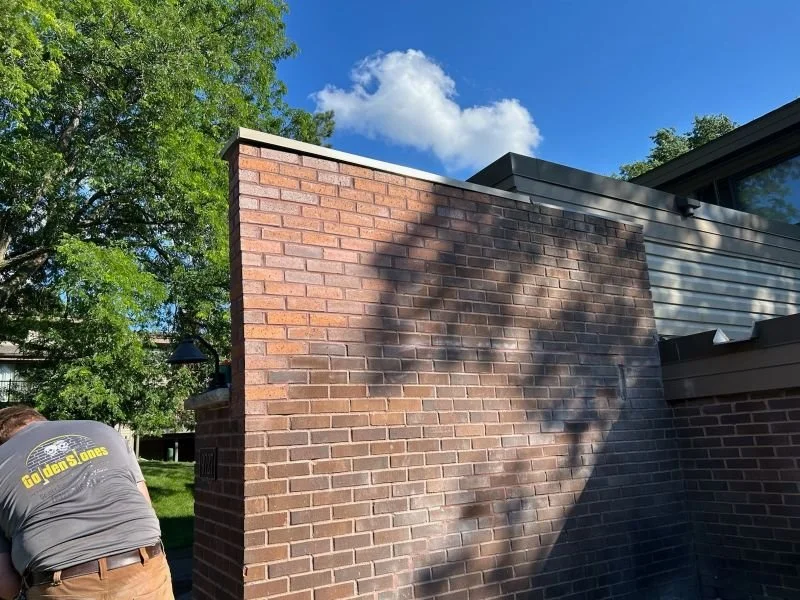
On many houses here, the work is the stack alone or a stretch of one front.
Every figure on this page depends on square footage and on what we find when we look. They are rough guides to help you decide whether to call, not quotes. The exact number comes after the visit, and the visit is free.
The Mix in Question
Will you use the strongest mortar so the repair lasts?+
Not as a rule. Depth, packing and timing at the strike decide how long a joint lasts, more than the strength of the bag.
Why not match the mortar already in the wall?+
Its recipe can't be read off the wall, and after decades outside, it is no longer the material it was when laid. The new mix is chosen for the brick, and the exposure, and its color can be blended toward the old joints on request.
Does the chimney take a different mix from the front?+
It can. Courses relaid at the top of a stack count as rebuilding, which may call for a stronger mix. Its joints are priced as part of the chimney work, on our chimney repair lines.
How long before the new joints need anything again?+
No one can promise an interval, since exposure decides it. We do put a 10-year workmanship warranty on paper for the joints we repoint, with its terms set out in the contract.
What Customers Say
What appears below is our live Google feed rather than testimonials we picked out, so it shows whatever is genuinely on it.
A Year, Two Photos and a Call
What helps on the first call:
- 1. The year the house was finished
- 2. A daylight photo of the brick, taken from the yard
- 3. A photo close enough to read a single joint