

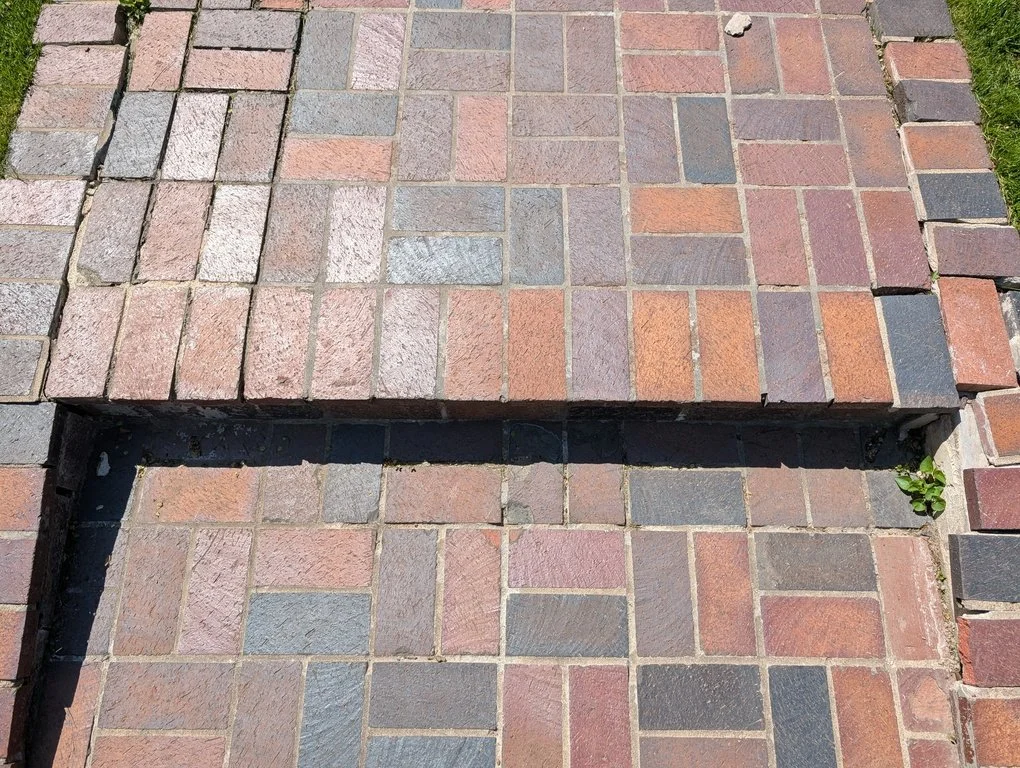
Tuckpointing in Blaine
10 Years
Workmanship warranty, in writing

A white stain on the brick is a fair reason to ask about the mortar joints on a Blaine house. The stain does no harm. Sam reads it for what it says about the wall, and on a house built since 1990 the answer may well be that the joints are fine.
When they are not, the failed joints are ground out and packed full again, which is all tuckpointing means.
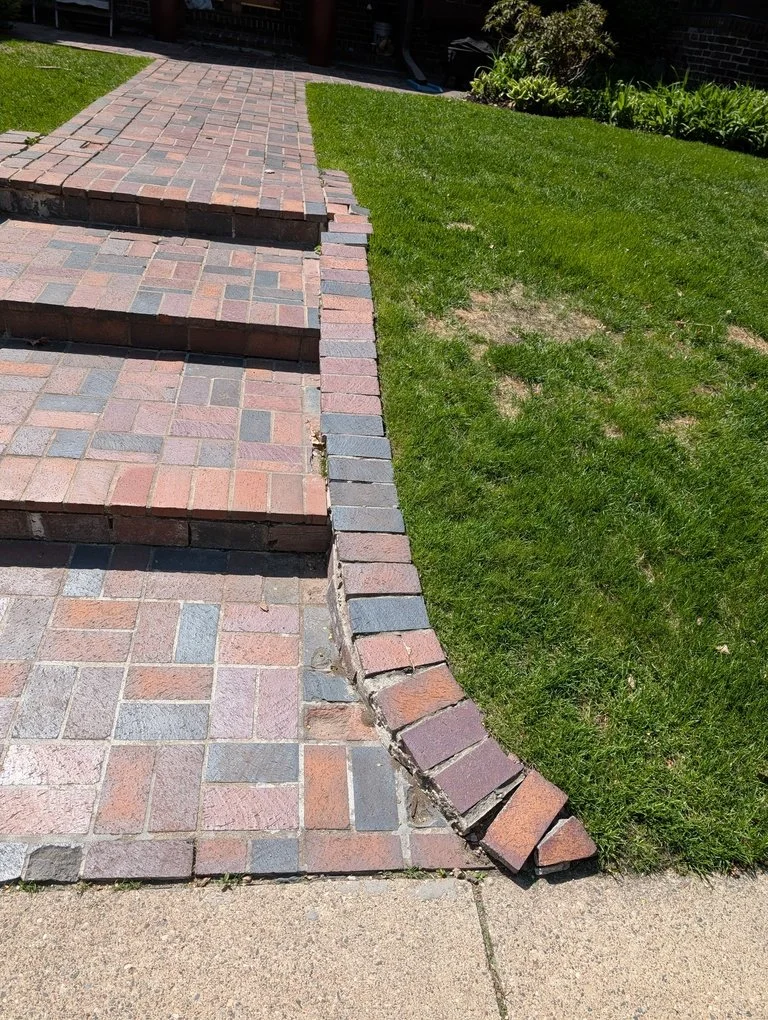
What White Staining Says About the Joints
The white is efflorescence. Water moving through brick and mortar dissolves salts on the way, and when it dries at the face, it leaves them behind. So a stain means water is getting into the masonry and leaving through its face. Our brick repair page covers the stain itself. For tuckpointing, the useful part is where it shows.
A band along the bottom courses
Brick close to the ground can take on water from the soil, from rain splashing off the walk and from snow banked against the wall. Staining low down sends Sam to those joints first.
A fan under a window sill
Water sitting on a sill can find an open joint at either end and surface lower down as a spreading patch of white.
Streaks just under the chimney crown
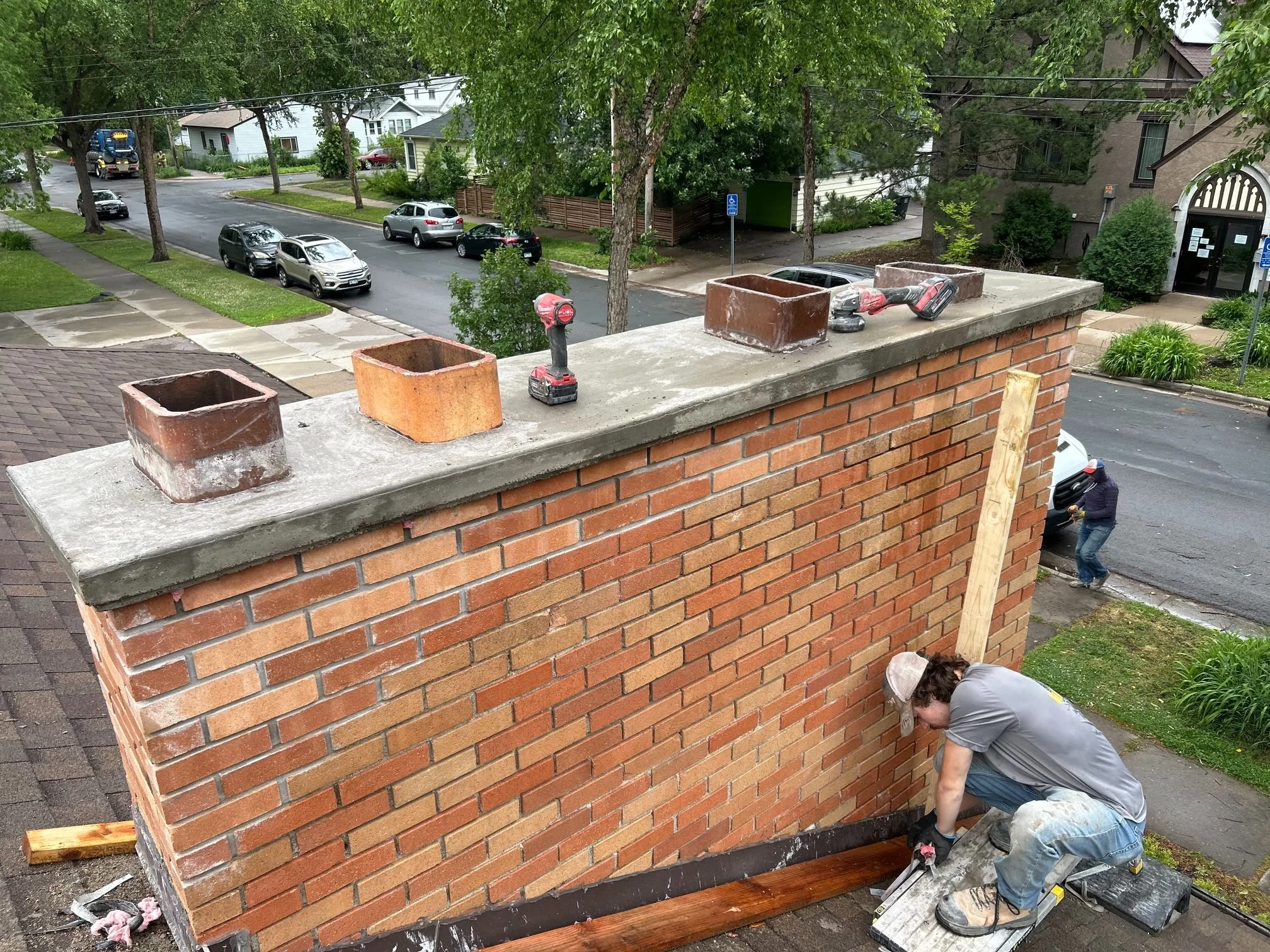
A stain that starts near the top of a stack points up to a cracked crown or to open joints in the last few courses. We handle both: the crown as chimney work and the joints as tuckpointing.
A light, even haze on new brick
On brick only a few years old, a faint bloom spread across the whole wall can be construction moisture working its way out, and it may fade by itself.
If the joints are tight and the stain is light, a dry brush and some patience may be all it needs. If it keeps coming back in one place and the joints there are open, sandy, or pulled away from the brick, those joints are the way in. Repointing them shuts that route.
One thing to avoid is sealing over the stain. On a wall still taking water through open joints, a sealer holds that water in the brick, where it can freeze. Sealing belongs after the repointing, as our tuckpointing page explains.
Brick on a Sand Plain With Water Close Below
Blaine's housing is young. By the Census Bureau's survey estimates, more of it has gone up since 2000, 11,607 homes, than in the three decades before, which account for 11,079.
The ground beneath them is the Anoka Sand Plain, which the state DNR describes as a glacial sheet of sand and gravel, roughly 20 to 80 feet thick, that covers much of Anoka County. The county's geologic atlas adds that a water table within 10 feet of the surface is common across the county, with a few named exceptions. That makes ground moisture one more possible source of water for the bottom courses, alongside rain, splashback, and snow. Which one feeds a given stain is judged at the wall, from where the white sits.
Of the roughly 4,100 Blaine homes built before 1970, a stain is more likely to indicate worn mortar. Basement walls are a separate job, covered on our basement tuckpointing page for Blaine.
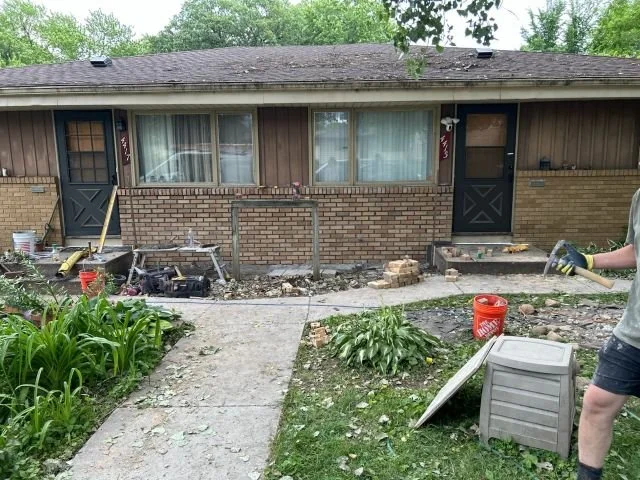
Joint Failures to Look For in Blaine
Mortar a house key can score
If a key drawn along the joint cuts a groove with little effort, the binder in that mortar has given out.
A hairline gap beside the brick
Mortar that has shrunk away from the edge of the brick leaves a fine dark line along the joint, and rain follows that line into the wall.
Joints worn back behind the face
A joint sitting well back from the brick leaves a little shelf for rain to stand on after every storm.
Gaps in the top courses of the stack
Mortar gone from just under the crown is hard to see from the yard, though a zoomed photo will show it.
Brick that stays dark after rain
Brick, still darker than the rest, a day after rain, is holding water, and the joints around it come first.
The Price of Repointing Behind a Stain
With or without a stain, joints are priced by how much of the wall has failed:
A patch smaller than roughly 10 feet by 10 feet: from about $2,800
One complete house wall: around $6,000 to $8,000
Two sides of the house or more: from there upward
Joints on the chimney: priced with the chimney work, on our chimney repair ranges
Every figure on this page depends on square footage and on what we find when we look. They are rough guides to help you decide whether to call, not quotes. The exact number comes after the visit, and the visit is free.
From the First Look to New Joints
1. Sam looks at where the white sits and follows it to its likely source: the ground, a sill, the top of the stack or open joints in between.
2. You get a written estimate naming the joints to be repointed, plus anything that belongs to someone else, such as a downspout emptying against the brick.
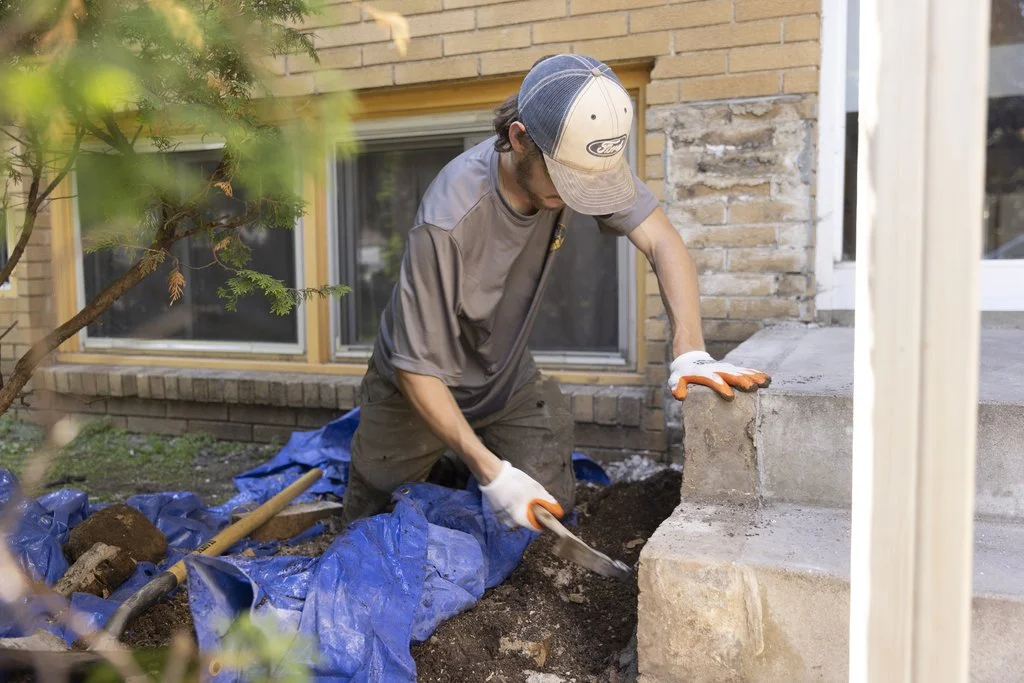
3. Before any grinding, the drive, the windows and the beds below them go under covers.
4. The failed joints are cut back to depth, the blade kept inside each joint so the brick edges stay crisp.
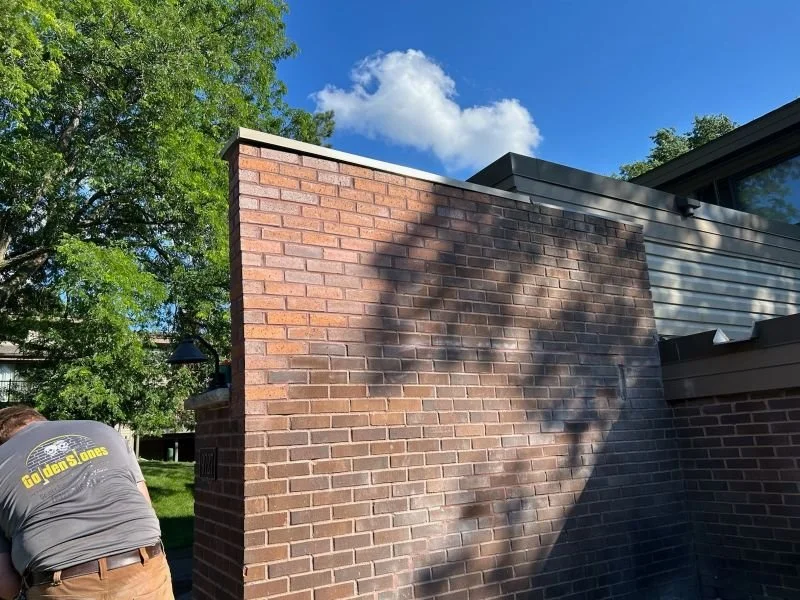
5. New mortar chosen for that brick is packed into each joint and tooled to match the rest of the wall.
6. The faces are cleaned of mortar. Exterior mortar work is scheduled for weather mild enough for it to cure.
Questions About White Staining in Blaine
Will the white come back after the joints are repointed?+
A little may show while the wall dries out, from salt already in the brick. Staining that keeps returning after that means water is still finding another way into that part of the wall.
Is it mold?+
Efflorescence is salt: white, dry and powdery or crusty, and it brushes away. Growth that is green, black, or fuzzy on a shaded wall is something else, and not something we treat.
Should I pressure-wash it off?+
We would not. A hard jet can strip mortar that is already weak and drive water into the wall, which feeds the next stain. Brush it off dry and send us a photo of where it was.
What Customers Say
What appears below is our live Google feed rather than testimonials we picked out, so it shows whatever is genuinely on it.
What to Note About the Stain
What helps on the first call:
- Photograph the stained patch and the entire wall around it so the location is clear. Note whether the white comes back after rain, after a wash, or not at all, and where the downspouts on that side of the house empty. If the brick has been sealed or patched before, say so, along with roughly when the house went up.