

Stone and Retaining Walls in Bloomington
A front-yard planter in east Bloomington and a terrace wall behind a house in the west share a name and little else. The City's water plan shows why: it maps the city as highlands, an outwash plain, and the river valley, and the unit a yard sits in decides whether a stone wall holds back a slope or stands on level ground, and whether the slope is one we leave alone.
10 Years
Workmanship warranty, in writing

Highlands, Plain and Valley
The City's surface water management plan describes the three landscape units as the ground left by the retreat of the last glacier, more than 10,000 years ago. The highlands are concentrated in the northwest and west of the city. The outwash plain covers the majority of central and east Bloomington. The river valley is the land beside the Minnesota River, and the same plan notes that the Minnesota Valley National Wildlife Refuge covers much of the land directly next to the river here.
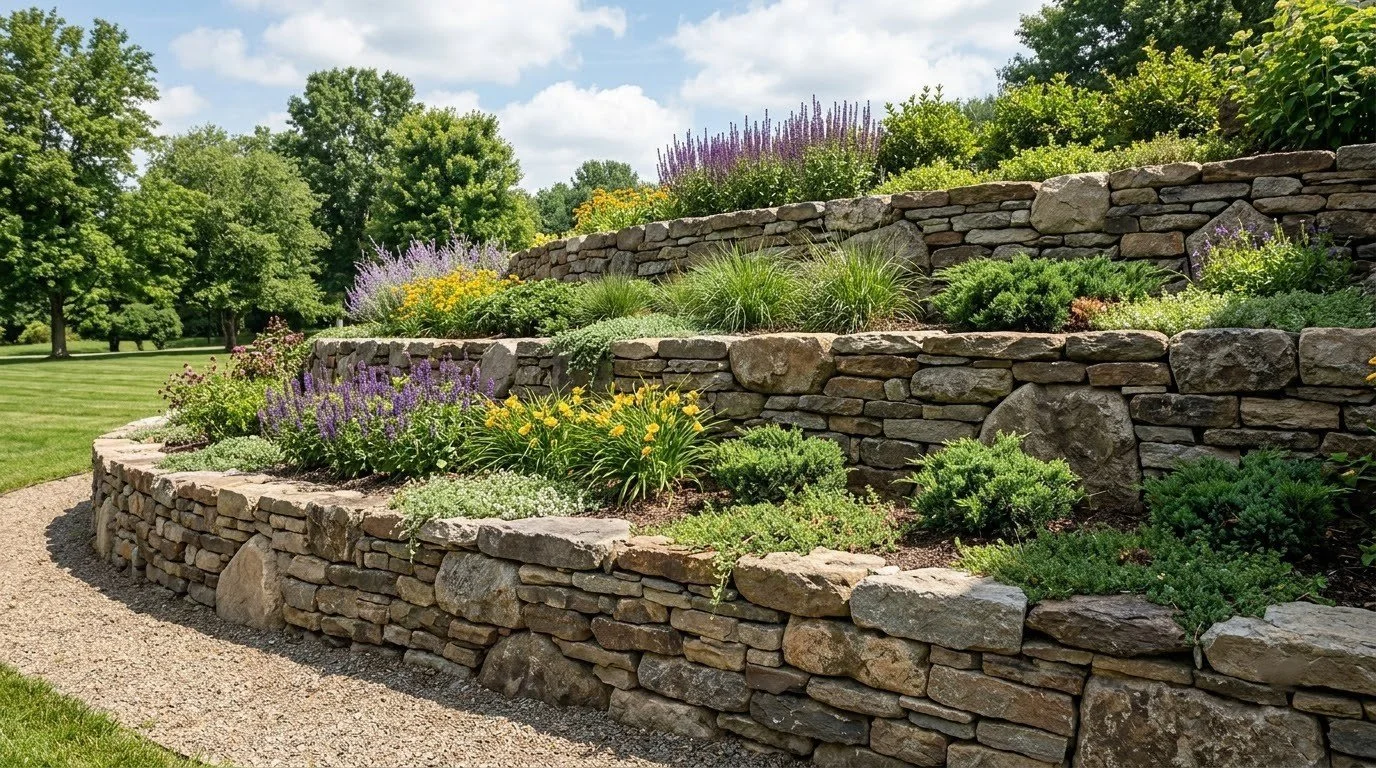
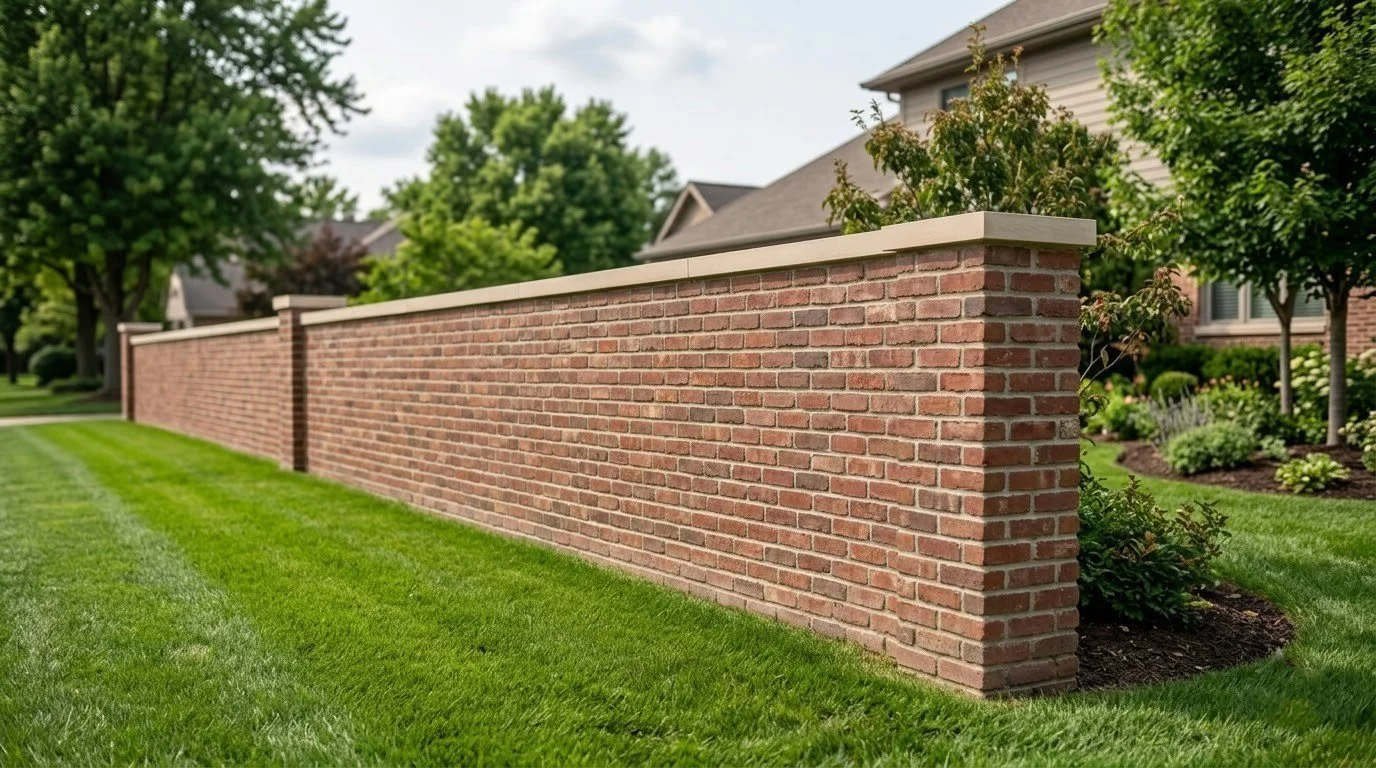
For a homeowner, that leaves two kinds of yard and an edge between them. The plan's soil survey calls the outwash ground nearly level to hilly, and a stone wall on level ground is a garden wall, a boundary wall or a planter: footed and capped, but holding nothing back. In the highlands, a lot can rise or fall across its width, and a wall set across that slope is a retaining wall. Below both, toward the river, is the bluff.
Walls That Hold a Grade
The same plan's soil survey adds a second difference. It describes the soils that formed in glacial till as well-drained and hilly, which fits the highland ground, with poorly drained organic soil in the depressions between them; in the northwest of the city, the plan adds, the till includes loam, clay loam, and sandy loam. The outwash association is underlain by sand and gravel and drains from moderately rapid to rapid.
For a retaining wall, that comes down to how much water ends up standing behind it. On the plain's sand and gravel, water has somewhere to go, downward. On highland till with clay in it, water moves through more slowly, and a wall at the foot of a slope or beside one of those low, soft hollows can have wet ground leaning on its back after heavy rain or a thaw. On a highland lot, the drained backfill behind the wall carries more of the work than it does on the plain's sand and gravel.
The plan's advice is that soils be inspected site by site as projects come up, and for a wall that means the backfill is settled at your own wall line.
The Creek and River Slopes We Leave Alone
The plan also identifies Bloomington's steepest slopes: along the Minnesota River and the Nine Mile Creek corridor. The creek's lower valley runs through central Bloomington, roughly from Old Shakopee Road down to the river. The plan notes that steep slopes like these are prone to erosion, and it describes the soil right beside the river as subject to flooding.
A wall on the face of the river bluff, down the creek's valley wall, or along the top of either is not work we typically take on. On a yard that backs onto the valley, the stone wall that can be ours stands on the level ground near the house, and a slipping slope is not something a wall above it would cure.
What a Stone Wall Costs Here
On a Bloomington lot, the price moves first with whether the wall holds a grade, which brings in the base and the drained backfill a garden wall can do without.
Before you call
Every figure on this page depends on square footage and on what we find when we look. They are rough guides to help you decide whether to call, not quotes. The exact number comes after the visit, and the visit is free.
Taking Out the Old Wall First
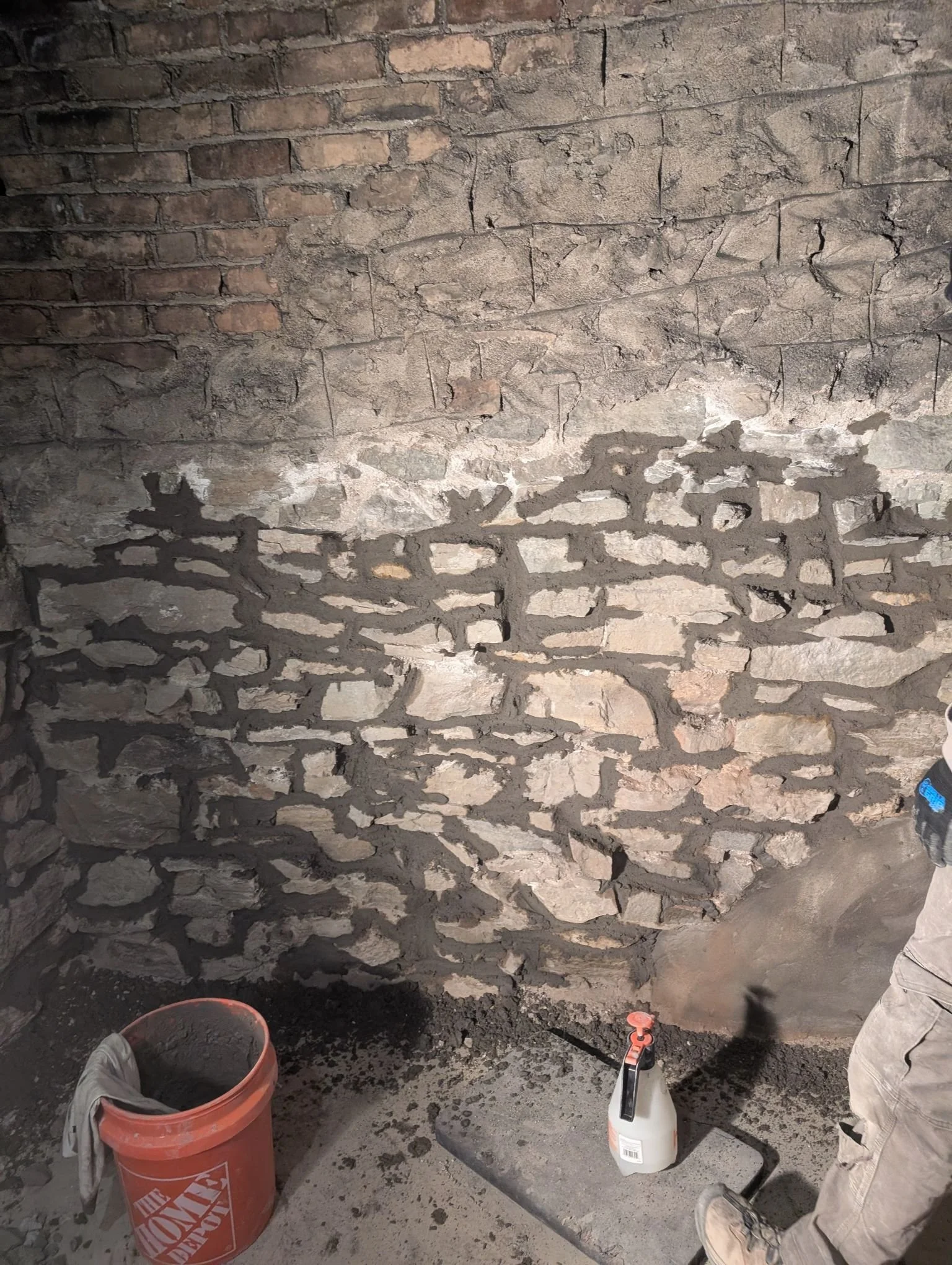
A sloped lot may already carry a timber or block wall on the line the new one needs. It comes out first, and that is the second thing that moves the price.
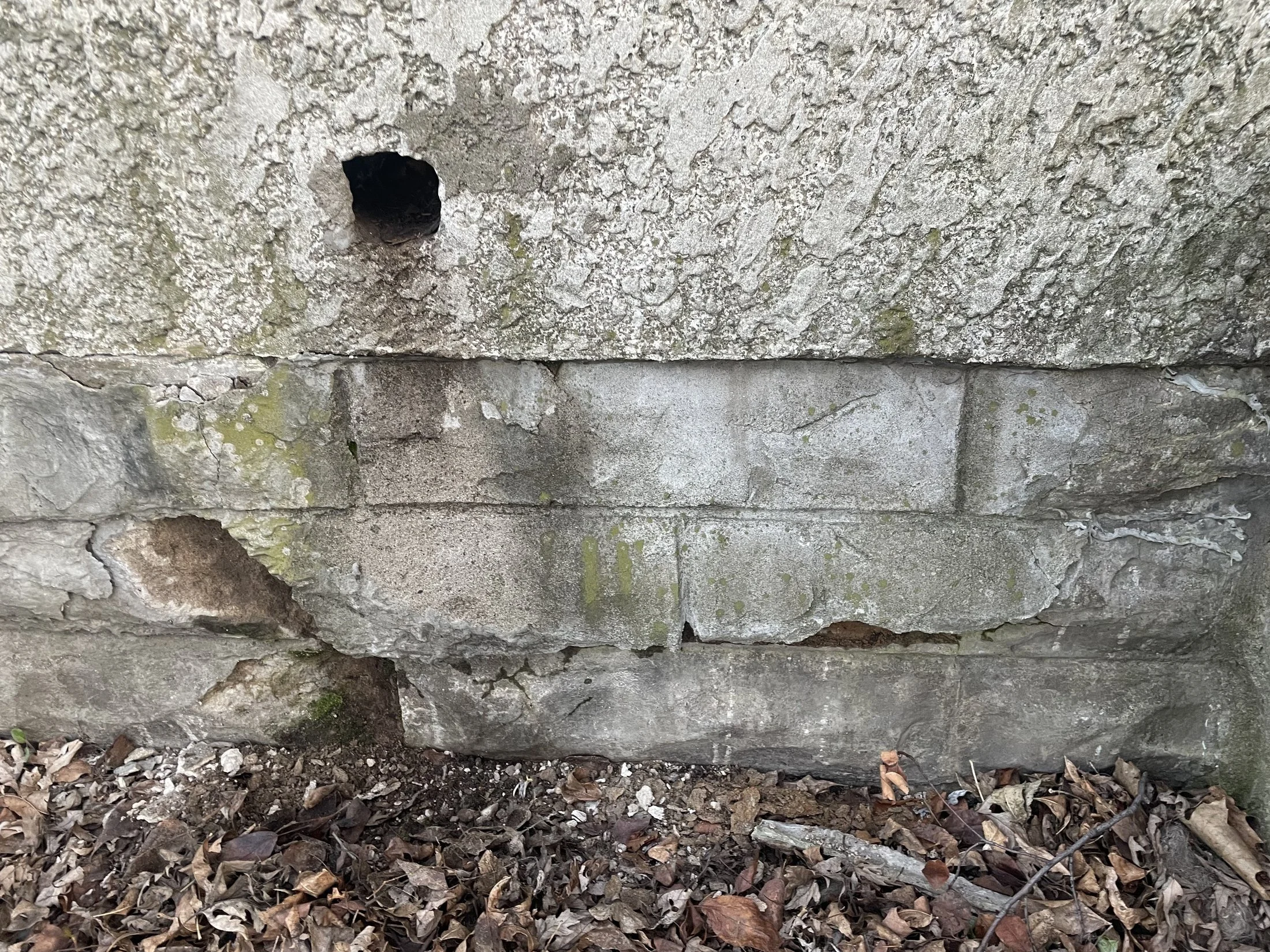
The new wall goes up in natural stone or fieldstone, whatever stood there before, and an old stone wall on the line can be repaired where it stands.
Questions About Walls on Bloomington Lots
We can't tell whether our lot is on the highland or the plain. Does it matter?+
Only for what goes behind the wall. If the ground rises across the lot, or a hole dug for a shrub still holds water the next day, the wall gets the drained backfill a highland wall gets, wherever your street falls on the plan's map.
There is a low, wet spot at the bottom of our slope. Can a wall still go there?+
It can, though the line may sit better a little above the hollow than in it.

What Customers Say
What appears below is our live Google feed rather than testimonials we picked out, so it shows whatever is genuinely on it.
Photos From the Wall Line
Before the visit, send:
- A cross street near the house, so we know which part of the city the yard is in
- The wall's rough length and height, and whether the ground rises behind it
- A photo from each end of the wall line, with any old wall that stands there now