

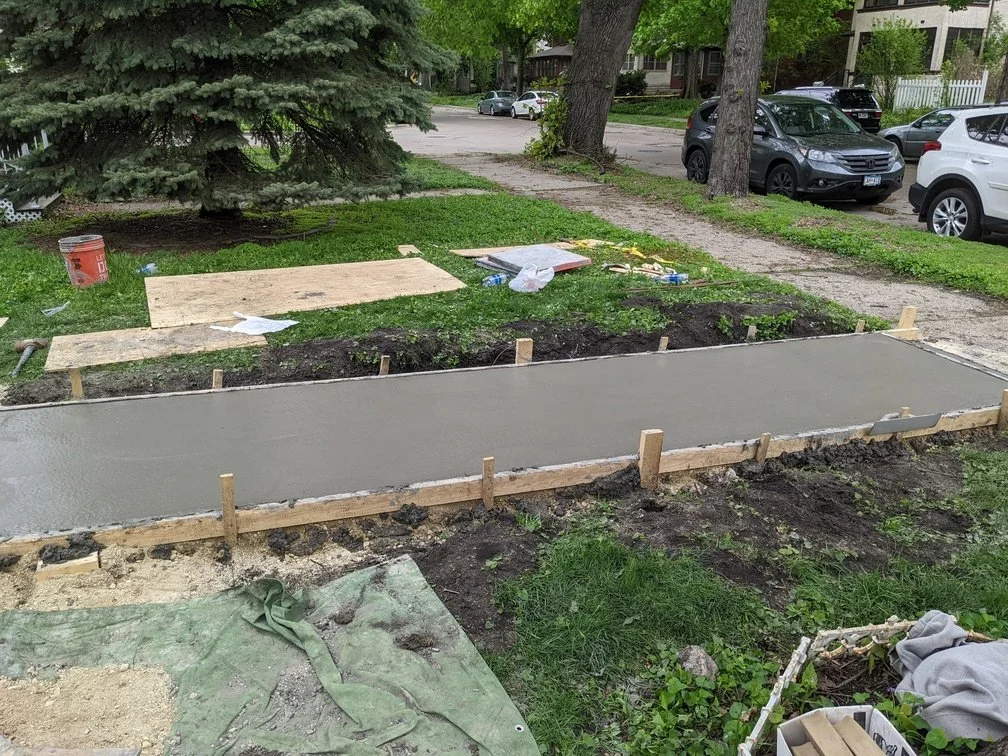
Stone Steps and Front Stoops in Minneapolis
Somewhere under the front yard of a Minneapolis house, between the street and the basement wall, runs the pipe that brings in the water. A front step rebuild is dug in that same ground. Before a footing goes in, it helps to know roughly where the pipe runs, what it is made of, and whether the City plans to replace it.
10 Years
Workmanship warranty, in writing

The Pipe Between the Street and the Front Door
The City defines a service line as the pipe that connects a property to the water main in the middle of the street. The diagram in its 2025 service-line letters shows that pipe running from the main, under the sidewalk, across the property line, and into the basement. On a lot whose main runs in the street out front, that route crosses the front yard, where the front steps are.
On an older house, the pipe is in two parts. The City says service lines installed before 1930 usually used lead between the main and the stop box, and galvanized steel from the stop box to the meter. Its own question-and-answer sheet on the program adds that the galvanized part was more likely to fail over the decades, and that before 1990, a failed galvanized section was sometimes replaced with copper and the lead part left in place.
What that history means for the steps is that a replaced section had to be dug. On a house with an old line, the ground from the boulevard to the basement wall may have been opened once already, and a trench that was filled back in can remain softer than the surrounding ground. Where one passes close to the steps, it is one more reason a step can drop on one side, and the dig for a rebuild finds it.
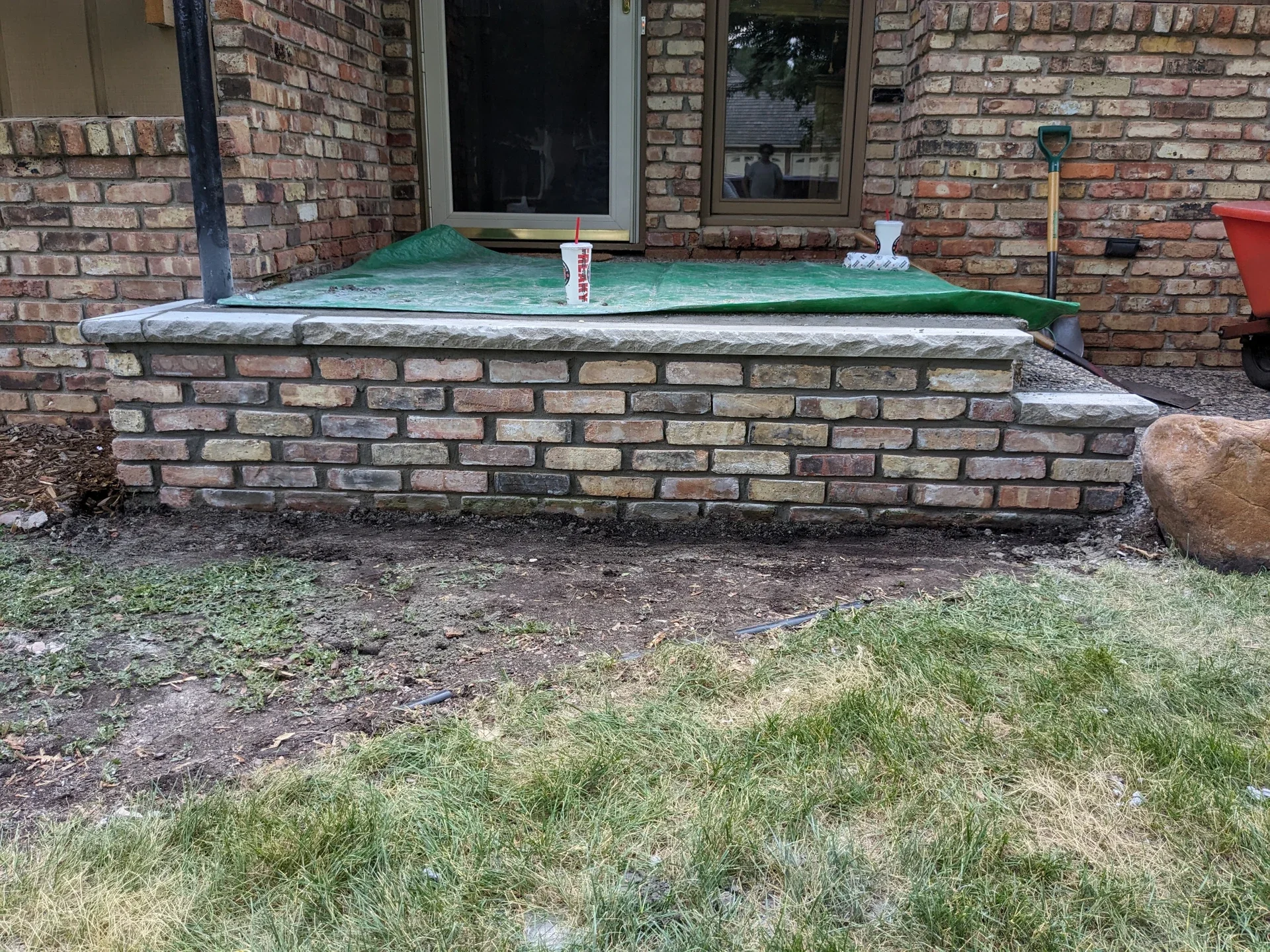
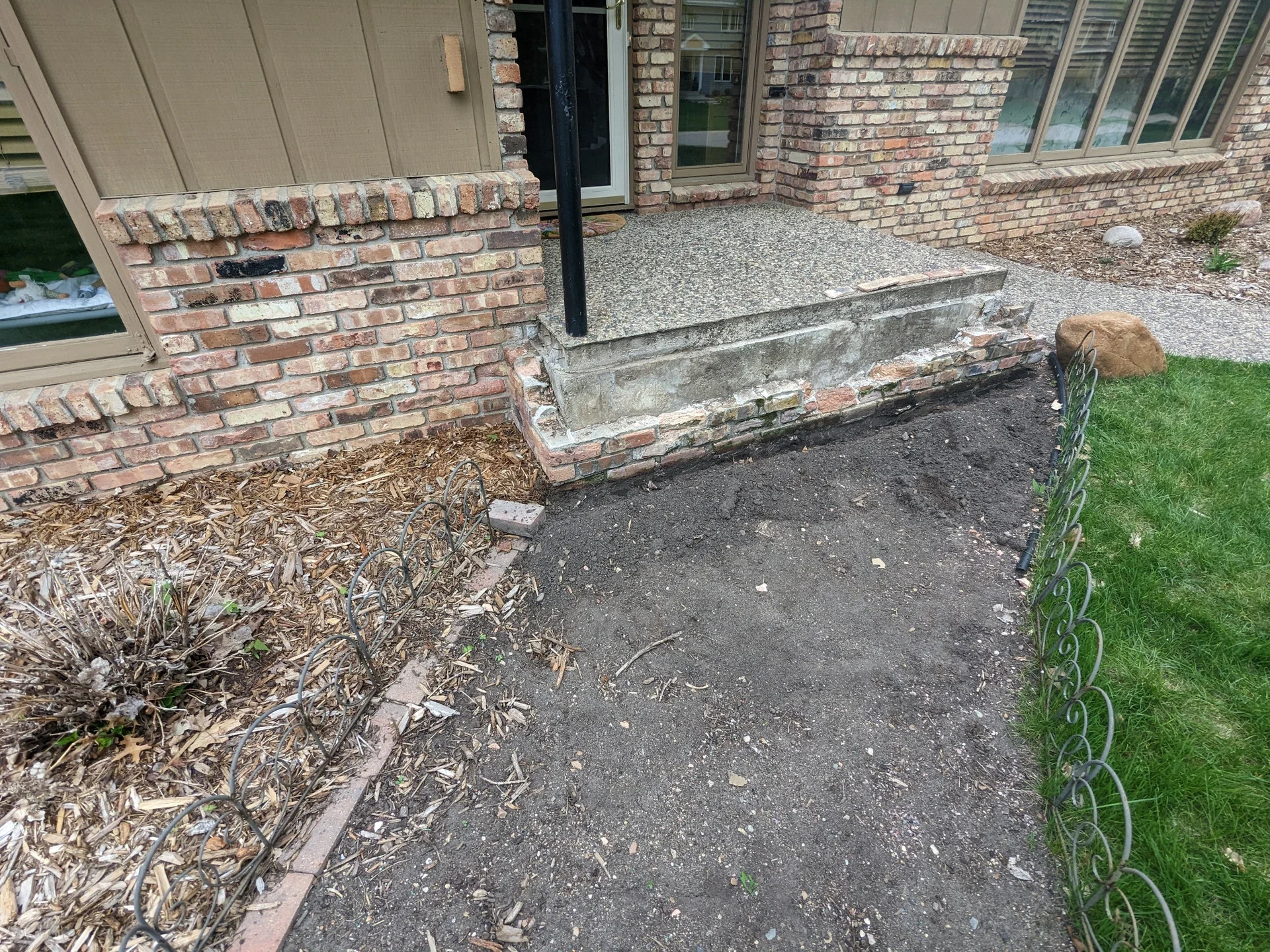
When the City's Replacement Crew Comes Through
The City is replacing lead service lines with state and federal money. It says it contacts eligible owners before work begins on their property. It chooses project areas based on funding criteria, and one of those criteria is streets with pavement work already scheduled. It displays the year's project areas on an interactive map, so you can see whether your street is included.
It is a long program. The City's question-and-answer sheet puts the number of Minneapolis properties with a lead service line at about 40,000, calls 2024 the first summer of a 13-year program to replace them, and says it cannot yet tell an owner when their property will fall in a replacement area. For a house on a lead line, the crew may be years away, and steps that are moving now do not have to wait for it.
What touches front steps is how the crew works. The contractor digs two holes, about 6 feet square, one over the water main in the street and one over the curb stop in the boulevard or sidewalk, then pulls the new copper line through with a small directional drill.
On a lot where the steps stand back from the sidewalk, the crew's holes are well away from them. The drilled line still runs under the yard to the house, wherever the drill took it, so a footing trench dug beside the foundation can still meet it.
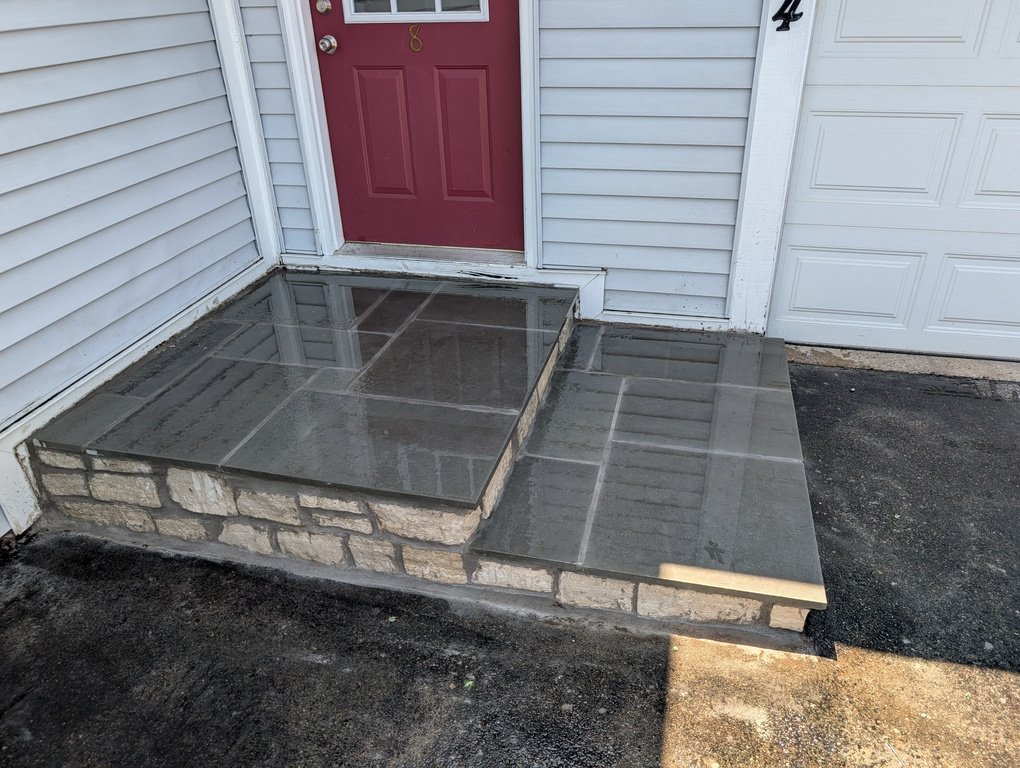
What the City's Map Shows
The City publishes a lead service line map. Search a Minneapolis address, and it shows the water service line for that property as lead, non-lead, or unknown. The City says the map is updated daily.
For a set of steps, the map settles one question and leaves another open. It tells you what the line is made of, and so whether the replacement program has reason to come to your house. It does not show where the pipe runs; the City notes that some symbols are drawn along the street near an address, away from the property's center.
The route has two ends you can find. Outside, the line connects to the stop box, which is used to turn the water on or off without entering the house. Inside, the City says, the meter sits on the main water pipe where it comes in through the floor, in the basement on the street side, so a meter near the front wall suggests the line enters near the steps. The stretch between them is the one a footing trench can cross.
Front Step Prices in Minneapolis
The rebuild band is the one on our front steps page. Where a Minneapolis entry lands in it depends partly on what the footing trench meets, and a service line close to the steps is one of those things.
Before you call
Every figure on this page depends on square footage and on what we find when we look. They are rough guides to help you decide whether to call, not quotes. The exact number comes after the visit, and the visit is free.
Stone on Footings, Concrete in Concrete
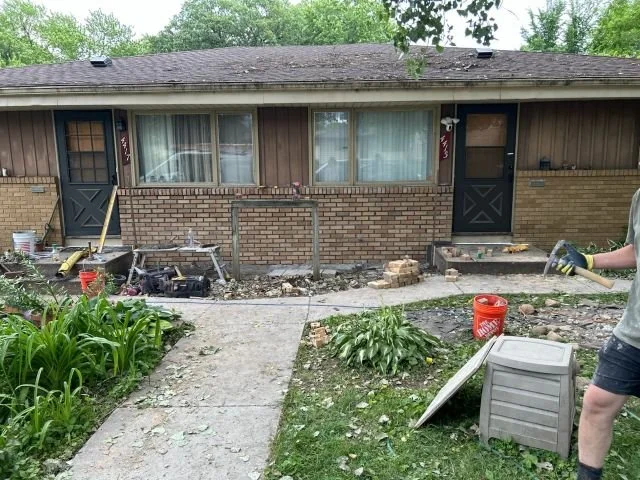
How deep the dig goes, and so how close it comes to the line, depends on what the steps are made of and what is being done to them. Brick steps are repaired and rebuilt in brick. On a rebuild, sound old footings are reused and failed ones are replaced, so steps on good footings need less digging.
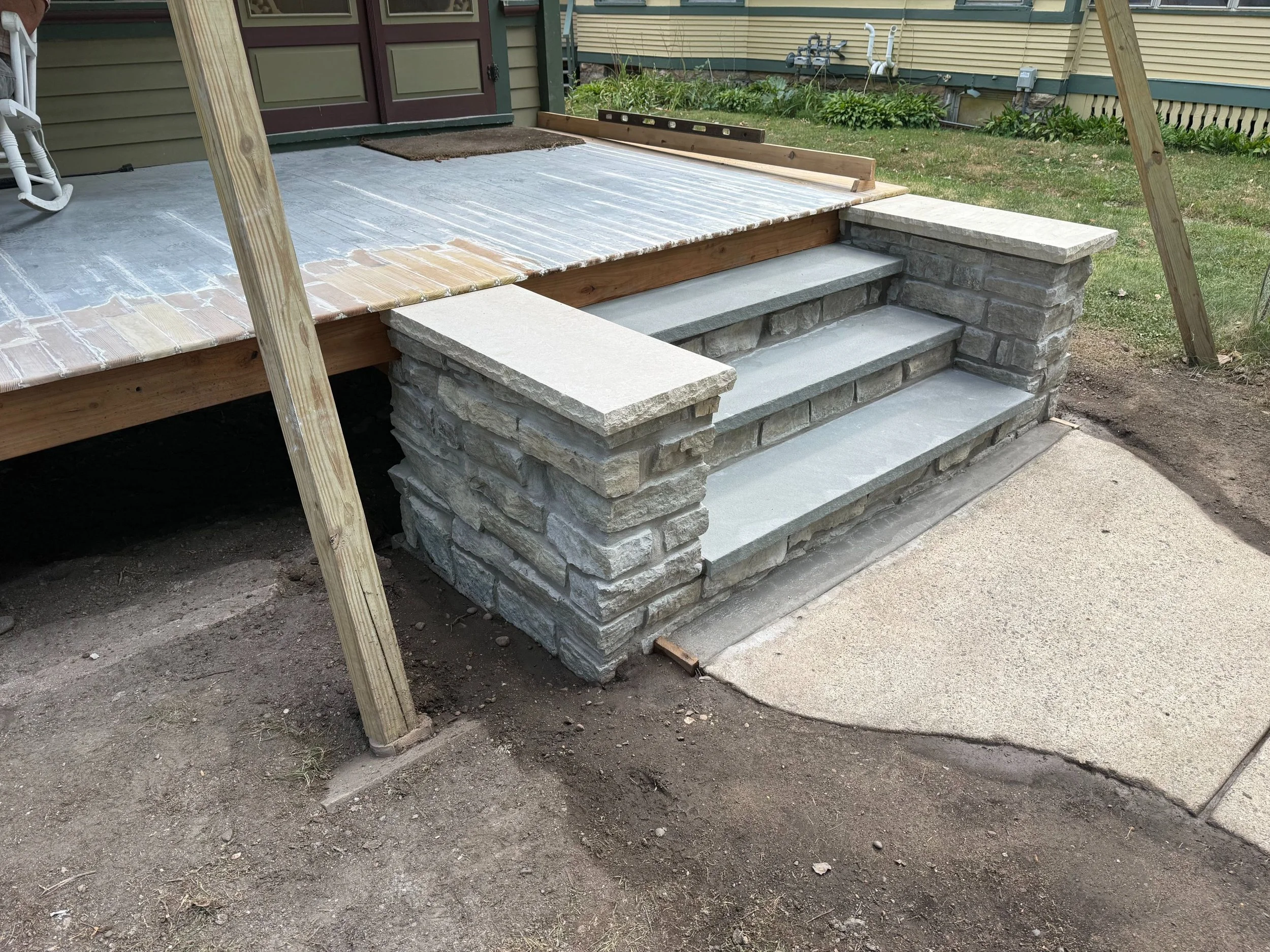
New natural stone steps
Anything we build new is natural stone, and new stone steps go on frost footings dug to depth. That is the deepest dig in this work, and the one most likely to meet a pipe near the house.
A poured concrete stoop
A concrete stoop is rebuilt in concrete, and the dig is usually shallower than for new stone steps.
Stone over sound concrete
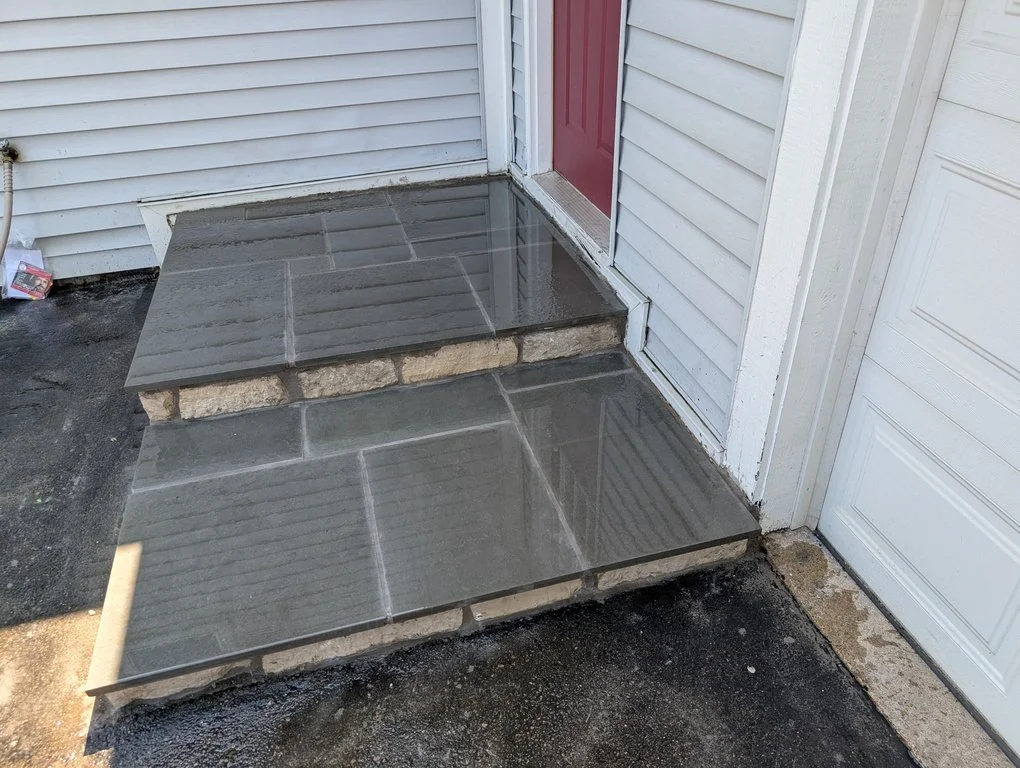
Sound concrete steps can be covered with natural stone, leaving the ground under the entry undisturbed. On a lot where the line runs beneath the steps, that counts in its favor.
Side Walls, Railings and Work We Pass On
The low walls flanking a front entry have a page of their own: our step side walls page. Sam's Minneapolis entry with new bluestone steps between new stone side walls is written up there. Side walls are built on their own footings, so a new pair adds to the digging required to meet the line.
Railings are metalwork, which is outside our trade, so we pass on the number of someone who does it. Paver steps, mudjacking, sidewalks, and other concrete flatwork go to other trades.
The Water Line and the Steps
We have had a letter from the City about our service line. Should the steps wait?+
No. The City's crew digs at the street and the curb stop. If both jobs fall close together, each crew works better with the front of the house to itself.
Can you tell where the line runs before the dig?+
Only roughly. An old pipe may not run straight between the stop box and the meter, and the footing dig is where its real path shows.
The City replaced our line last year. Does that change anything for the steps?+
It removes one worry. A drilled line leaves no trench of its own across the yard, so any soft fill near the steps would date from an earlier dig, such as a pre-1990 repair.
What Customers Say
What appears below is our live Google feed rather than testimonials we picked out, so it shows whatever is genuinely on it.
What Helps Sam Plan the Dig
Send us:
- Whether the City has written to you about the water service line, has set a crew date or has already replaced it
- Where the water meter sits in the basement: front wall, side wall or back
- What the lead service line map shows for your address: lead, non-lead or unknown
- What the steps are made of: natural stone, brick or poured concrete
- A side-on photo of the entry, with any side walls in frame