

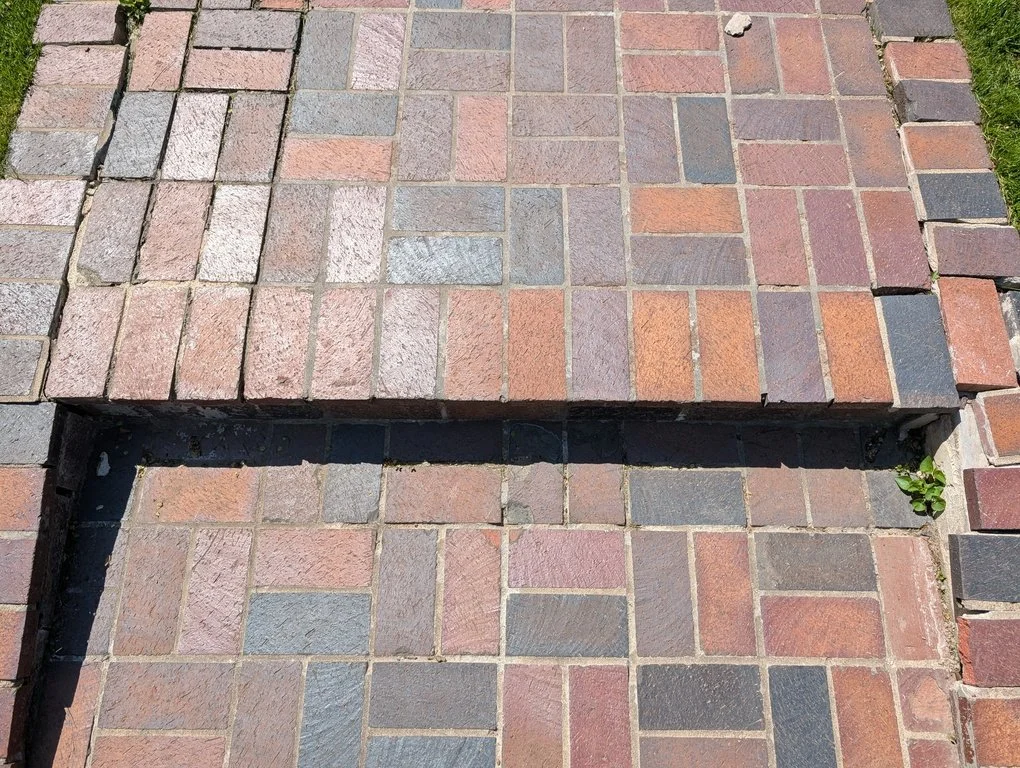
Stone Steps in Burnsville
10 Years
Workmanship warranty, in writing

One stone that tips under your foot, on a flight that otherwise stands level, is the smallest job a set of steps can ask for. We free that tread, clear out the old bed beneath it, set it back on fresh mortar and repoint the joints around it. In a Burnsville entry, the visit must first show that the rest of the steps warrant that answer, because a loose stone is also the first way a failing base makes itself known.
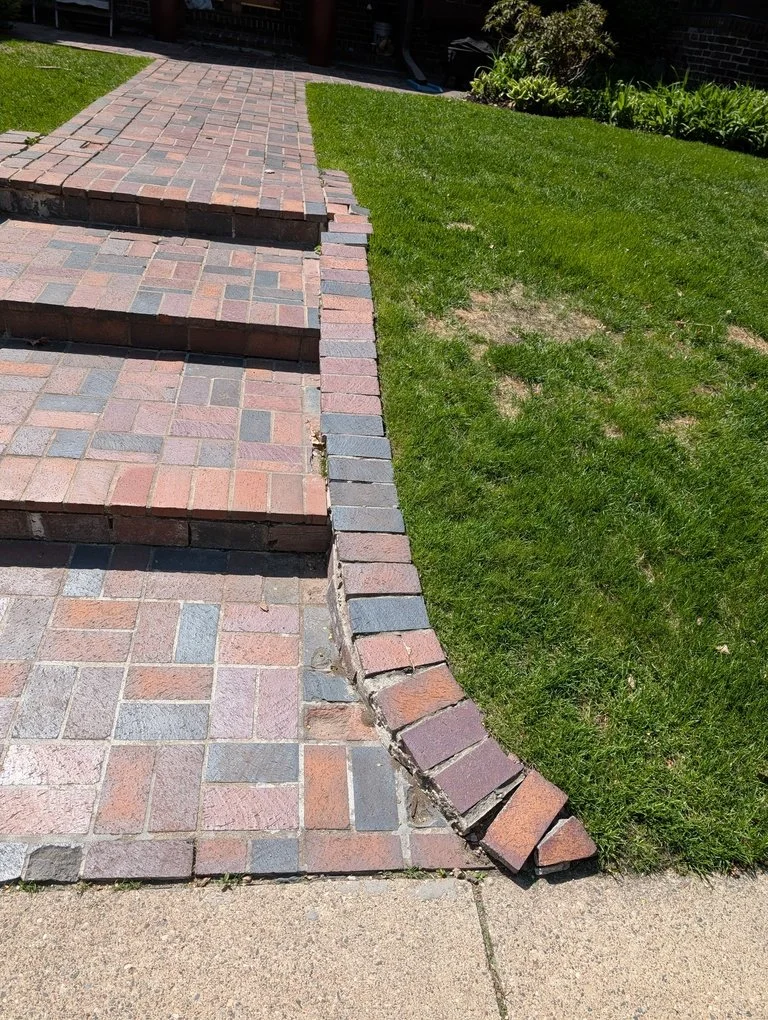
When a Reset Is Enough
A reset fixes the stone. A rebuild fixes what the stone sits on. The visit is about deciding which of the two has failed, and four things together point to the stone alone. The loose tread is one, or two at most. The treads above and below it sit level and tight, and the flight as a whole has not tipped toward or away from the house. The face of the steps stands straight, with nothing pushing out at the front or the sides. And the movement has stopped: the stone rocks, but it is not sitting any lower than it was, and the joints around it are not still widening.
Movement is the part that takes judgment. A tread whose bed mortar has crumbled can rock in place for a long time without dropping. A tread over a base that is settling keeps going down, and resetting it only levels it temporarily. Where one look cannot settle which of the two you have, the better course is to watch the steps for a period and to check them again before anything larger is committed.
The last test comes once the tread is up. With the stone off, the bed and the material under it are in plain view. Firm ground beneath a layer of old, broken-down mortar is a reset. Soft fill, a hollow or wet, sunken material under the stone, means the base is going, and a fresh bed laid over it would only cover the problem. At that point the job is a different one, and you hear so before any more stone comes off.
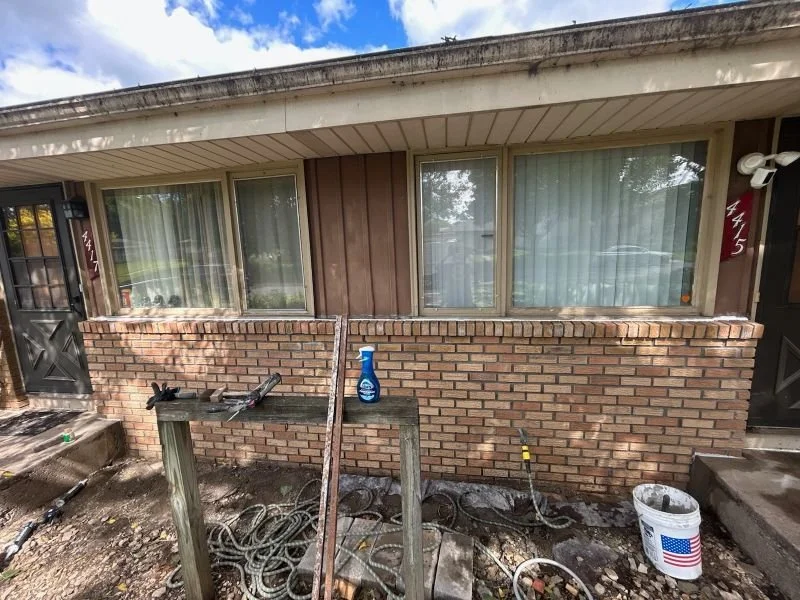
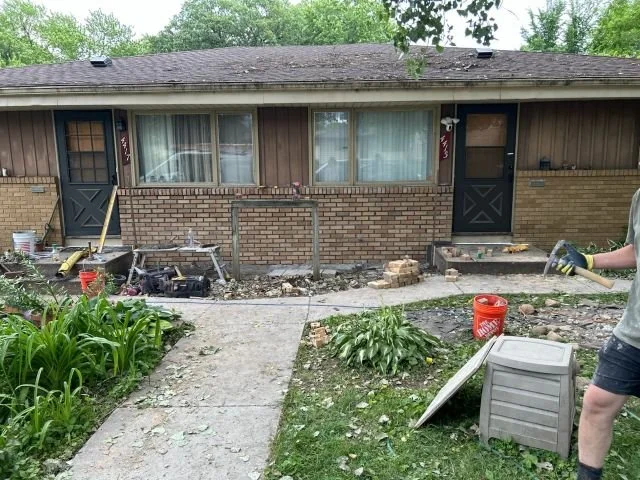
Lifting and Rebedding One Tread
Exterior mortar work is scheduled for weather mild enough for it to cure. On the day, a one-tread reset runs like this.
1. The joints around the loose tread are cut out first, so the stone can come free without the treads beside it being disturbed.
2. The tread is lifted out whole and set to one side. Stone that has only come loose is usually fit to go straight back; a tread found cracked through is set aside and replaced with a matched stone instead.
3. With the tread out, the bed and what lies under it are checked as described above. This is where a reset either stays a reset or becomes a different conversation.
4. The old bed is cleared down to firm material, and fresh mortar made up for the stone goes down in its place.
5. The tread is set back to the line of its neighbors, level with them across its width and, where needed, with a slight fall toward its front edge, so water runs off the step and away from the house.
6. Its surrounding joints are packed and struck to match the work beside them. That step then stays out of use until the mortar has cured, and you are told how long to keep off it.
The Reset Line and the Rebuild Band
The first line below is where a single loose tread belongs, and the second is where the job moves if the base has gone; our front steps page sets the two side by side.
That first line has no figure, since a reset depends on the stone and on what turns up beneath it. The band on the second line is for a front entry whose base has failed, where the steps are removed and laid again.
Before you call
Every figure on this page depends on square footage and on what we find when we look. They are rough guides to help you decide whether to call, not quotes. The exact number comes after the visit, and the visit is free.
Older Stone Entries Around Burnsville
Much of Burnsville went up in the 1960s and 1970s, and the front entries were built along with the houses. Some were poured in concrete, some laid in brick, and some built as natural stone treads over a raised base. For the stone ones, a rocking tread is a common reason for a call.
The ground under those entries is the catch. Many may have been built on fill placed around the house when it went up, and such fill can settle unevenly over the years. That is why, on a Burnsville entry, a loose stone is checked against the base before anything else, and why a reset here has to be earned. Where the base has held, one tread can be all the job is. Where it has not, the steps come out, and the footing beneath them is kept where it is sound and replaced where it has failed.
With a low entry of two or three treads, one loose stone can make up a large share of the flight, and it can look as if the whole entry has failed. The test is the same, however short the steps are. A poured concrete entry has no tread to lift, so its repair or rebuild will remain poured concrete throughout.
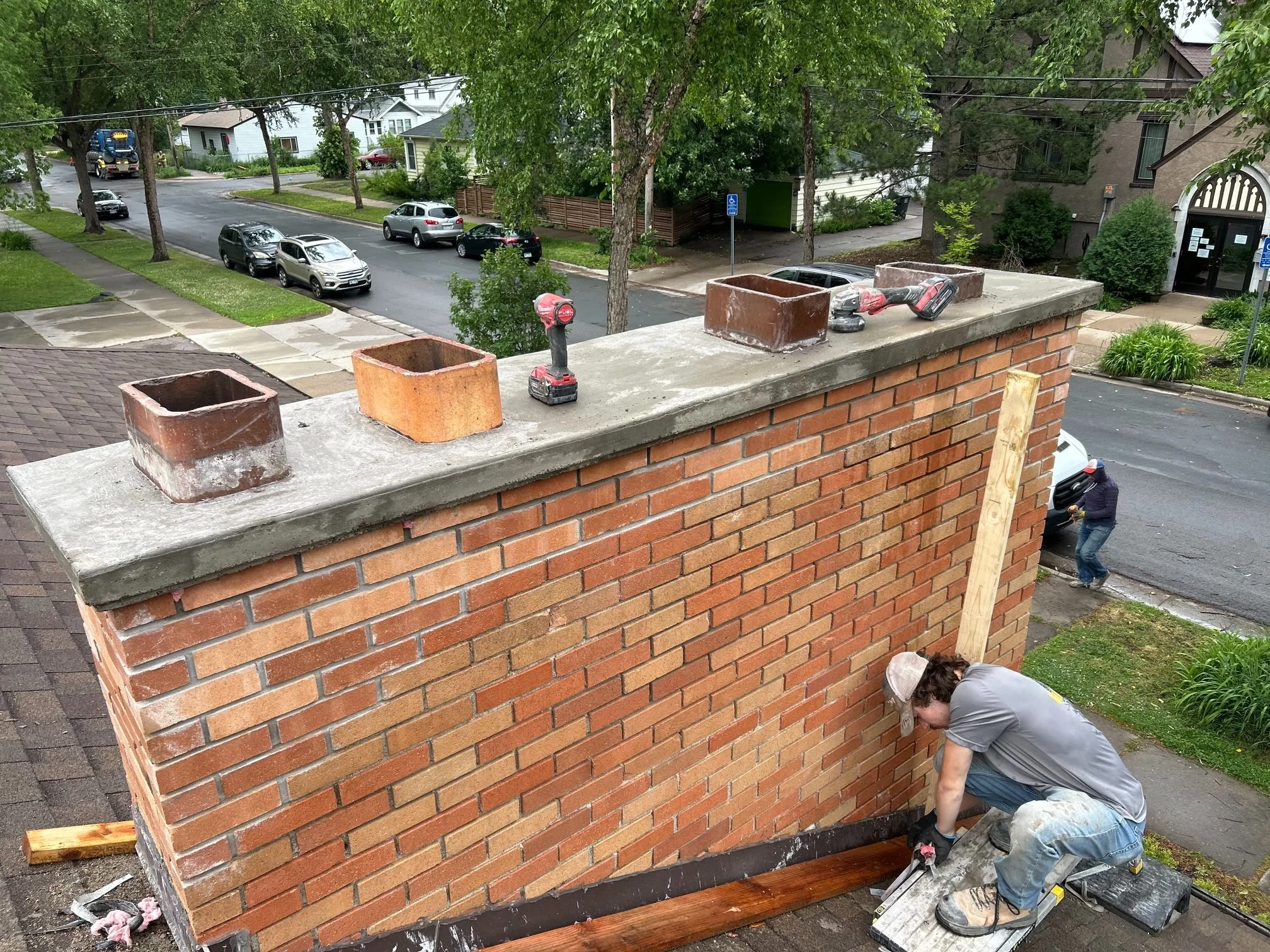
Second Thoughts on a Loose Tread
Can I reset a loose tread myself?+
That is your call, and we do not give instructions for it. A proper reset means freeing the stone without loosening the ones beside it, clearing the bed down to firm material and setting the tread back to the line of the steps. If a tread works loose again after a reset, whoever did it, the base is the thing to look at.
Will a reset tread stay put?+
No one can promise that, because it depends on what is underneath. Where the bed mortar is the only thing that failed and the ground beneath it is firm, a reset can hold for a long time. Over a base that is still settling, it is unlikely to hold for long, which is why the base is looked at before the stone goes back.
We were told the whole set has to come out. Could we have a second opinion?+
Yes. Sam looks at the steps as he would any others and tells you which he sees: a reset, a rebuild, or a case for watching them a while. If he finds the base has gone too, he says that just as plainly.
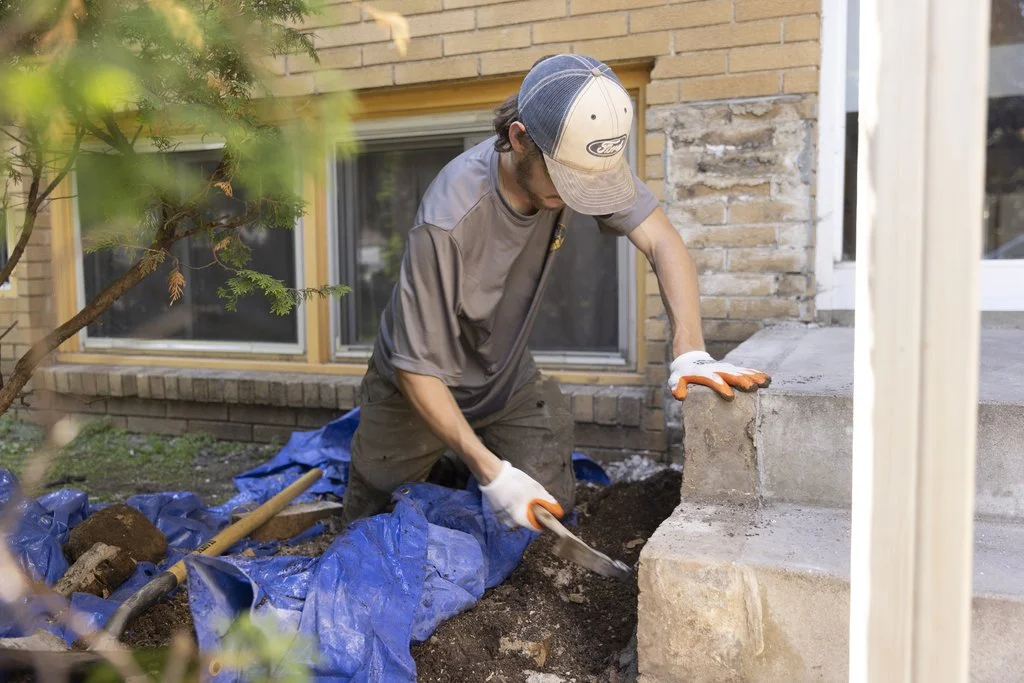
What Customers Say
What appears below is our live Google feed rather than testimonials we picked out, so it shows whatever is genuinely on it.
If It Is Only One Tread
What helps on the first call:
- If one stone rocks and the rest of the steps sit level, tell us which tread it is, counting from the bottom, and roughly how long it has been loose. Or if more than one has moved, or the flight leans toward the house, say that instead, since it changes which job Sam comes out to price.