

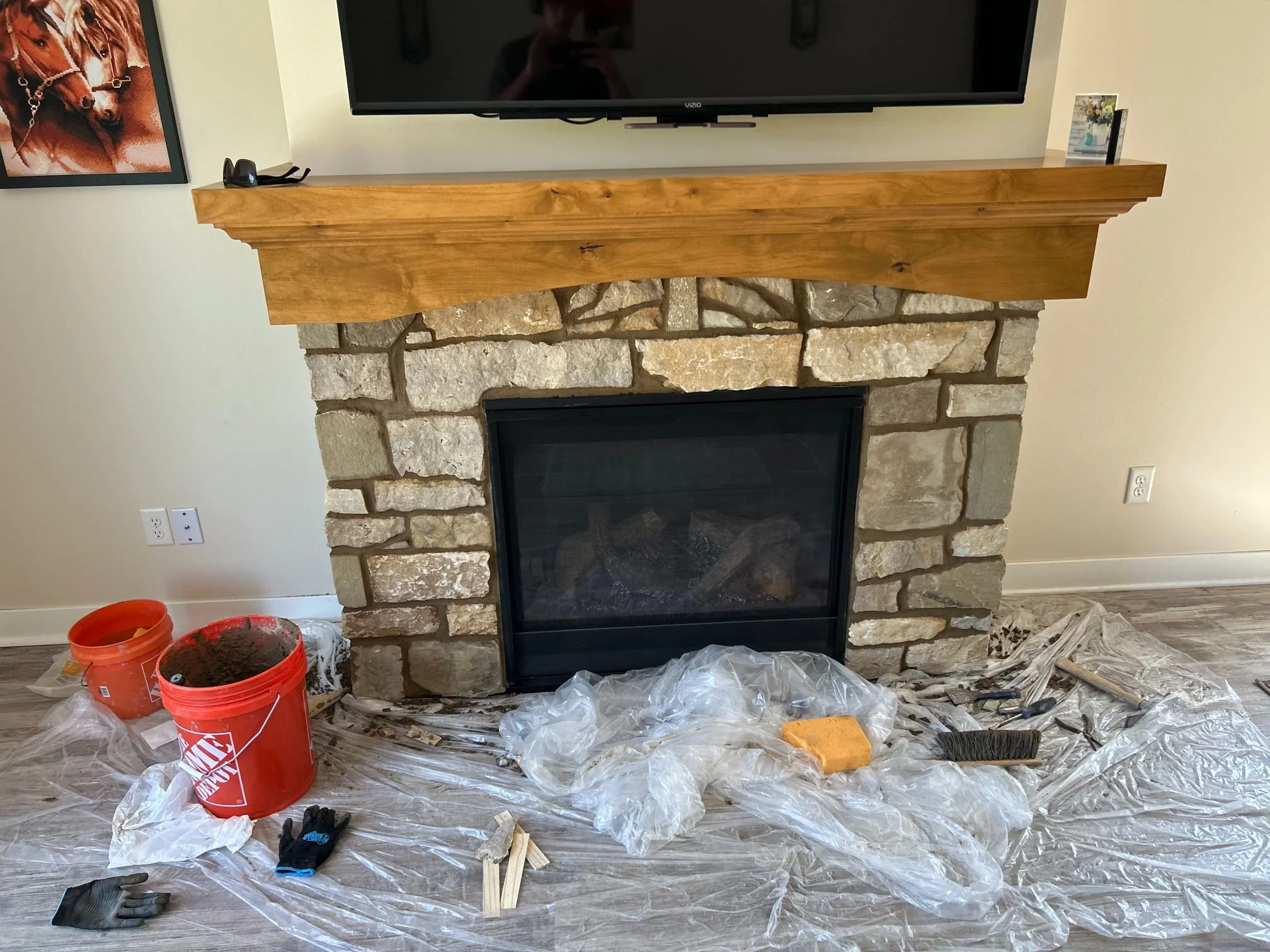
Fireplace and Interior Stone in Minneapolis
In Southwest Minneapolis, 7 of 10 houses have a fireplace in the City's records. In Phillips, fewer than one in 12 do. Fireplace work in this city starts from which of those streets you live on: on one, the fireplace is already in the room, and the question is its condition; on the other, the question is whether the house can have one at all.
10 Years
Workmanship warranty, in writing

A Map of Minneapolis Fireplaces
Of 86,803 houses on the City's roll, 33,644, or about 39 percent, have at least one fireplace on record. The share is far from even. Uptown matches Southwest, and Nokomis is at about half. In Near North, Camden, Northeast and Powderhorn, it is about one house in five, and Longfellow, at about one in four, is not far above them.
The record also sorts them by build decade. Of the houses still standing from 1901 to 1909, about one in five has a fireplace today. For the 1910s, it is a little over one in four; for the 1920s, nearly half; and for the 1930s, three in four. A fireplace built with a house in 1930 has stood through more than 90 winters, and if it has been used, the firebox has taken every fire in them.
39%
Houses with a fireplace
Houses Built Between the Crash and the War
In the 1930s, the decade with three fireplace houses in four, houses were built in Minneapolis in two bursts with a gap between. The City's history of the period, its Modern Era context study, and records show that housing construction did not stop with the 1929 crash. More speculative housing went up in the city between 1929 and 1932 than in the three or four years before, and many of its more memorable architect-designed houses date from those years. Then it nearly stopped. When building partly resumed in the late 1930s, the study says, it included upper-middle-class houses on scattered lots around the lakes and Colonial-style houses south of Minnehaha Parkway and 50th Street.
Much of that is on the Southwest and Nokomis sides of the map above, and the chain of lakes runs through Uptown and Southwest, the communities where a fireplace house is most likely to have a second one. Where a fireplace was installed in one of those houses, its surround and hearth were likely part of the room's design. So the aim on a fireplace like that is to repair what has failed, the firebrick and the joints, and keep the surround and hearth the room was built around. Before anything comes out, the visit notes what they are made of and how they were laid, so new joints and any replacement bricks can be chosen to match what stays.
3 in 4
1930s houses, three in four
Fixing a Fireplace, or Adding One
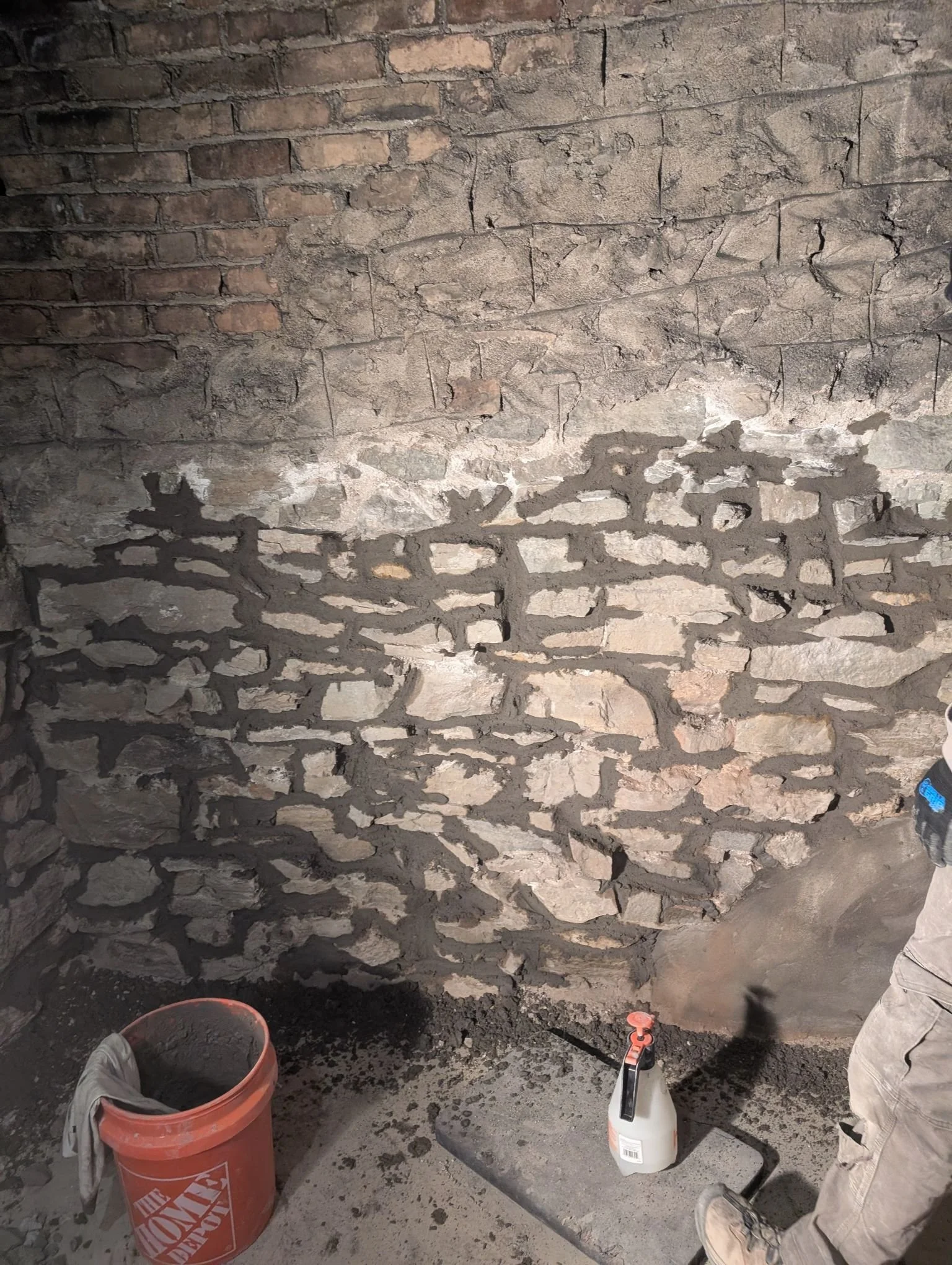
In Southwest and Uptown, the work starts with an existing fireplace. It may need its firebox rebuilt in refractory brick, its joints repointed, a surround brought back from under old paint, or a stone hearth cut back so a new floor can run beneath it. Each of those is laid out on our fireplace page. The first question is whether the problem is the firebox, the stack above it, or both.
In Near North, Camden, Northeast, and Powderhorn, the house is more likely to have none, so a request there leans toward a new one or toward a fireplace that may once have been there and was closed up. A masonry fireplace is built from its own footing up, so whether a house can take one depends on where it would stand, what is under the floor at that spot, and how the smoke would leave the house. The masonry is ours, including the chimney above a new fireplace and the reopening of one that was bricked up. Liners, venting, and draft go to a specialist, and so do gas inserts and wood stoves.
Nokomis sits between the two, with about half its houses on each side of the line. On a Nokomis block, the two kinds of house are mixed: one house may have a fireplace and the next none at all, so the visit opens by settling which of the two conversations you are in.
Longfellow shows the second conversation plainly. In the Planbook, the community council published in 1997, the guide's first project is to add a fireplace to a bungalow living room. It also records how fireplaces were made in 1926, as solid masonry, a concrete block core sheathed in brick. For adding one today, it points to factory-built steel boxes framed in by carpenters. What we build is the other kind: a fireplace in solid masonry, brick or stone. We do not work on factory-built fireboxes or framed chases, and we have no one to refer them to.
The same guide describes the inside of a bungalow: walls of genuine plaster and living-room woodwork it calls, typically, a darker, heavier oak. Around an existing bungalow fireplace, the plaster and oak sit within reach of dust when joints are ground out, or firebrick is removed, so both are covered before the work starts.
Where the stack above the fireplace is the worry, see the chimney rebuild in Minneapolis on houses where the chimney runs through rooms under the roof.
Houses With a Second Fireplace
About 7,900 Minneapolis houses have two or more fireplaces on record, just over 23 percent of fireplace houses. The share climbs where fireplaces are thickest. In Uptown, 35 percent of the houses with a fireplace have at least two. In Southwest, it is about 27 percent, some 3,000 houses, and in Nokomis about 25 percent.
Each firebox is its own structure. Two fireplaces in one house can share a stack, or each have one, and they run on their own schedules: one may be lit every winter weekend while the other has sat cold for years, and either can be the one that needs work. So the visit looks at each firebox in turn, and each can be priced separately, letting you do one now and leave the other.
Duplexes run the other way. Of the city's 10,584 two-unit houses on the assessor's roll, about one in five has a fireplace on record, less than half the share for single-family houses. Only 154 have more than one. So in a Minneapolis duplex with a fireplace, there is, in more than nine cases in 10, one fireplace for two households, and it usually sits in one of the two units. If that unit is rented, the visit and the work take place in a tenant's home. The firebox can only be reached through that unit, so arrange the days with the tenant first.
23%
Have two or more
The Question of Lighting It Again
Ours has not been lit in years. Can we start using it again?+
Have a chimney sweep look at the flue first, because that side is theirs. If the firebox has open joints, cracked firebrick, or loose brick at the front, that part is ours, so fix it before the first fire.
Pricing Fireplace and Stone Work
Sam does not give a range for fireplace or interior stone work, because he cannot without knowing the material you want and the size of the job. Repointing a firebox and building a fireplace from the footing up are both fireplace work, and they are nowhere near each other in cost. Interior stone that has nothing to do with a fire, an accent wall, a column, or stone stair treads, is priced the same way, job by job. What moves the number:
What Customers Say
What appears below is our live Google feed rather than testimonials we picked out, so it shows whatever is genuinely on it.
Two Photographs to Start
A photograph of the firebox from the front, and a second of the whole surround and hearth, or one of the room where you want a fireplace, is a good start. Sam then comes out and writes up the options.