

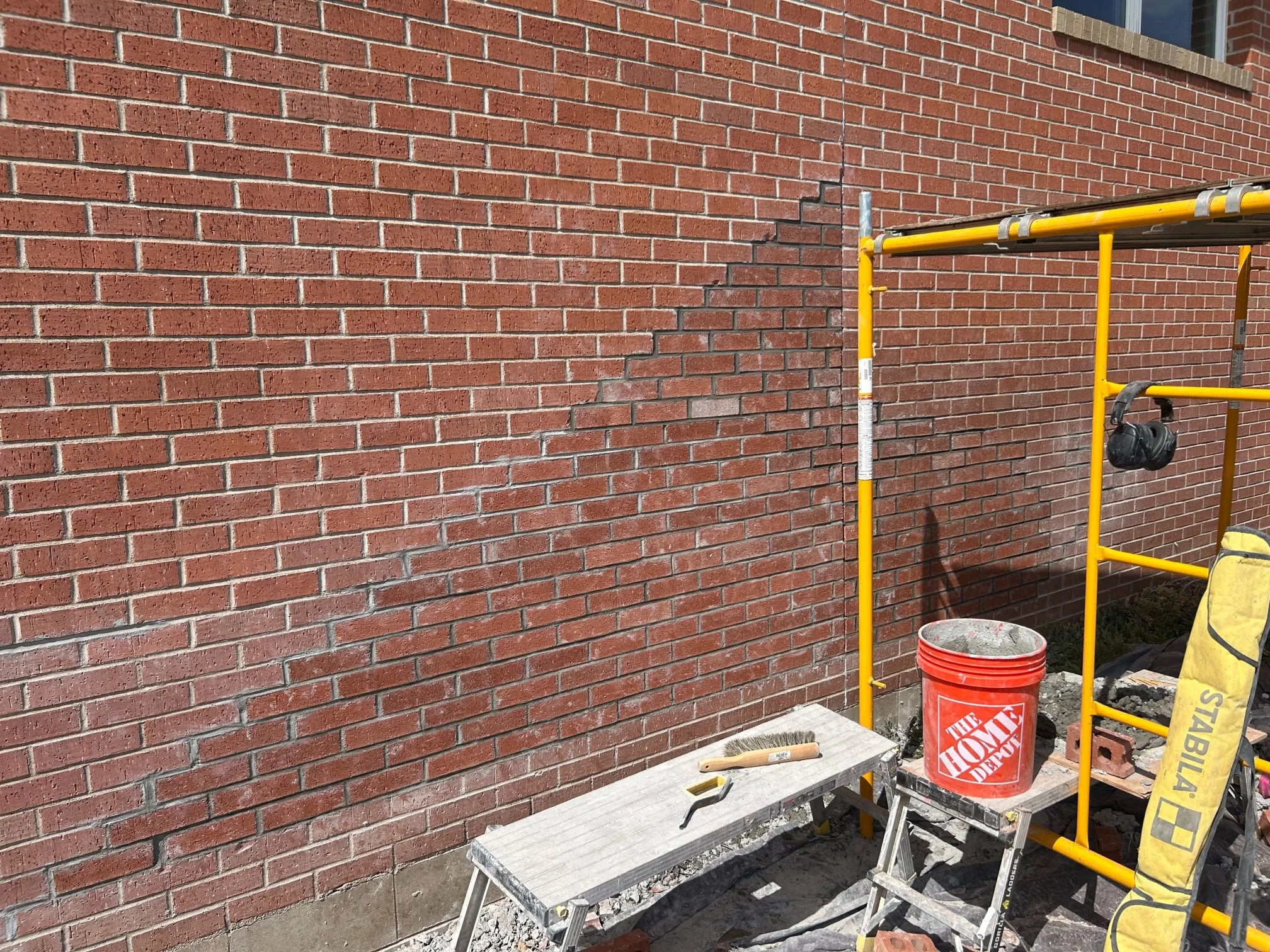
Closing up a window or a door you no longer want, or replacing a run of concrete block that has cracked, bowed, or spalled: both are what this page is about. We brick up and block up openings in masonry walls, and we cut out and replace failed concrete block across the Twin Cities.
Both jobs come down to the same hard part: not laying the new masonry. It is making the new work sit in the old wall without announcing itself as a filled-in hole or a patch. A filled opening is a rectangle the eye goes straight to, and a block replacement is only as good as the match and the tie-in around it.
When This Is the Work You Need
What We Do
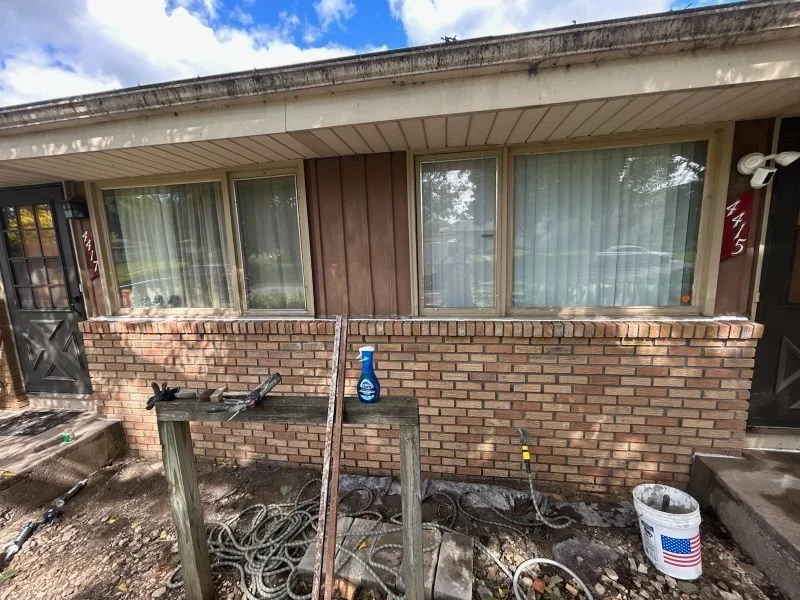
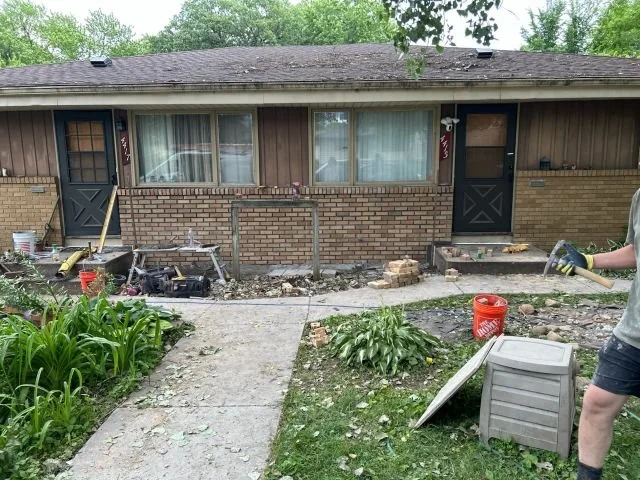
Bricking up a window or door opening
The opening is closed in brick laid to match the coursing and the bond of the wall around it, toothed into the existing masonry so it becomes part of the wall, and pointed with mortar specified to match. Where the brick has to come from the wall itself to get a match, we plan that before anything starts.
Blocking up an opening
On a block or foundation wall, an opening is closed in matching concrete block, toothed into the existing courses so the closure becomes part of the wall and carries load like the block around it.
Concrete block replacement
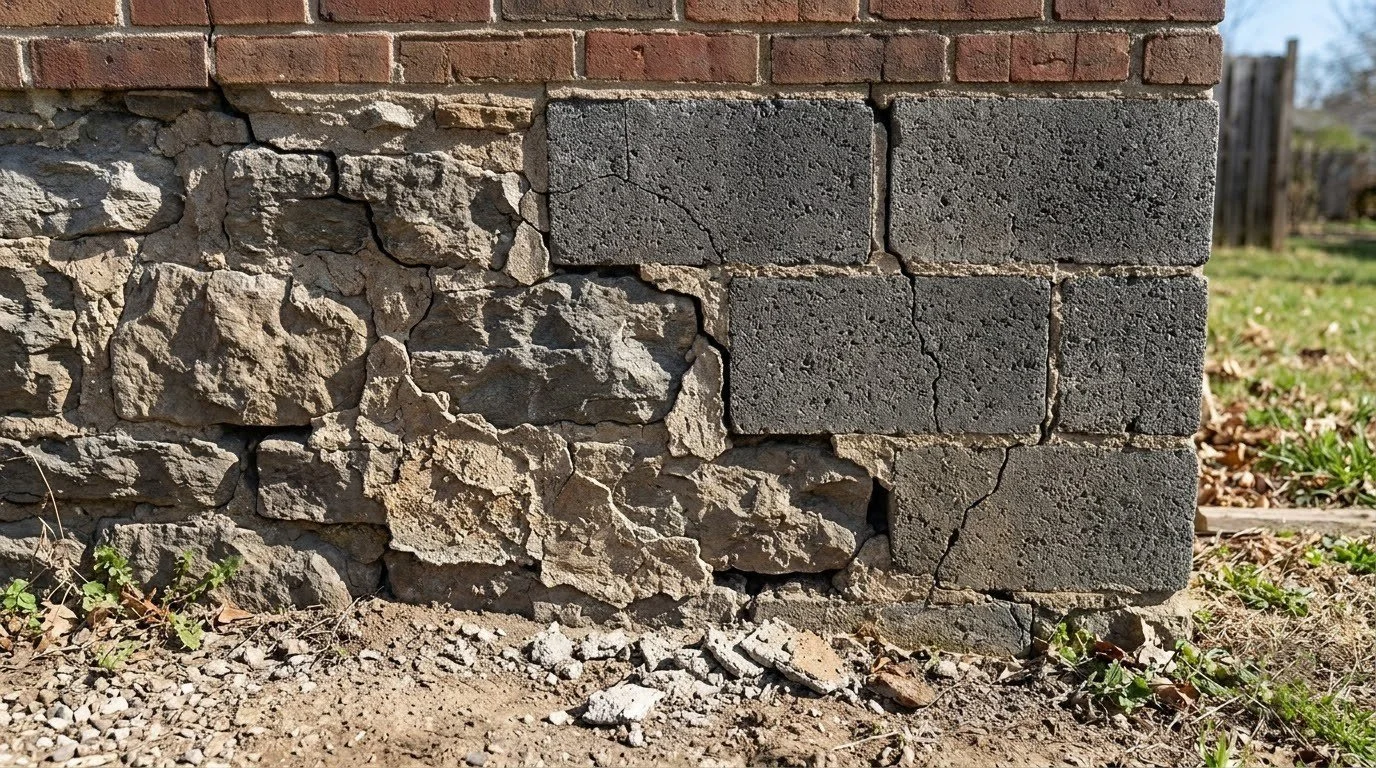
Cracked, crushed, spalled, or impact-damaged block is cut out cleanly and replaced with block matched to the wall. Where only the face has gone, but the wall is sound, that is a smaller job than a homeowner usually fears.
Lintels over new and existing openings
Where an opening is being cut, or an old lintel over a kept opening has failed, the steel or masonry lintel that carries the load above is part of the job. The wall above has to be supported while it goes in.
Sills, jambs, and making good around a closure
The edges of a filled opening are where a fill betrays itself. The sill line, the jambs, and the course heights either side are matched so the closure reads as part of the wall.
Matching brick, block, and mortar
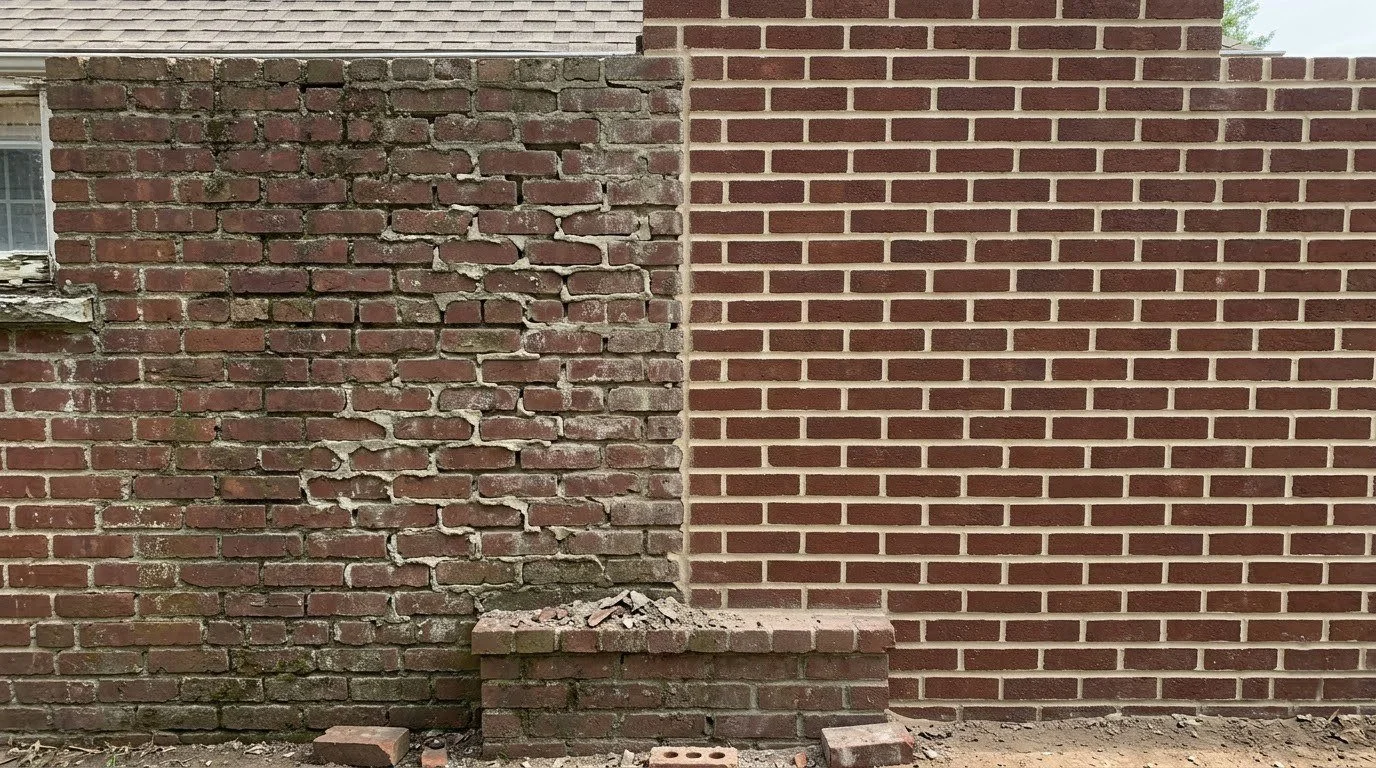
Matching is the part of this work you will look at every day afterward. Our supplier is good at sourcing a close match for brick or block; how we choose the mortar is outlined on our tuckpointing page, and our brick repair page covers what we will and will not promise for a brick match. What we will not do is promise an identical match on a wall that is already a century old and already more than one color.
What this job does not include
Cutting structural openings in a load-bearing wall when an engineer's design is required. We will build to a provided design, and we will tell you plainly when the job needs one.
Thin adhered brick veneer, the quarter-inch glued product. Different material, different trade.
Poured concrete walls and segmental block retaining systems. Footings for masonry we build; poured structural walls we do not.
Drywall, framing, trim, and the interior finish on a closed opening. We leave you a sound masonry closure; the inside finishing is a different trade.
Why a Filled Opening Shows, and How We Stop It
The reason a bricked-up window so often looks like a bricked-up window is that the person who closed it treated it as a hole to plug rather than a wall to extend. Three things give it away, and all three are avoidable.
The first is the bond. If the new brick is simply stacked inside the old opening and butted against the sides, there is a straight vertical joint running up each edge, and the eye finds it immediately. Toothing the new work into the old, so the courses interlock with the wall, is what makes the closure read as continuous.
The second is the coursing. The new courses have to land at the same heights as the old ones across the whole opening, or the fill sits a little high or low, and the lines do not run through. That is set out before the first brick goes down, not corrected afterwards.
The third is the mortar and the brick themselves. A match that is close in the yard can look wrong on the wall once it is next to weathered masonry, so on an older wall the honest conversation is about how close is achievable, and sometimes about taking matching brick from a less visible part of the structure. We would rather have that conversation before you commit than hand you a surprise.
How the Work Runs
Why Us for This Work
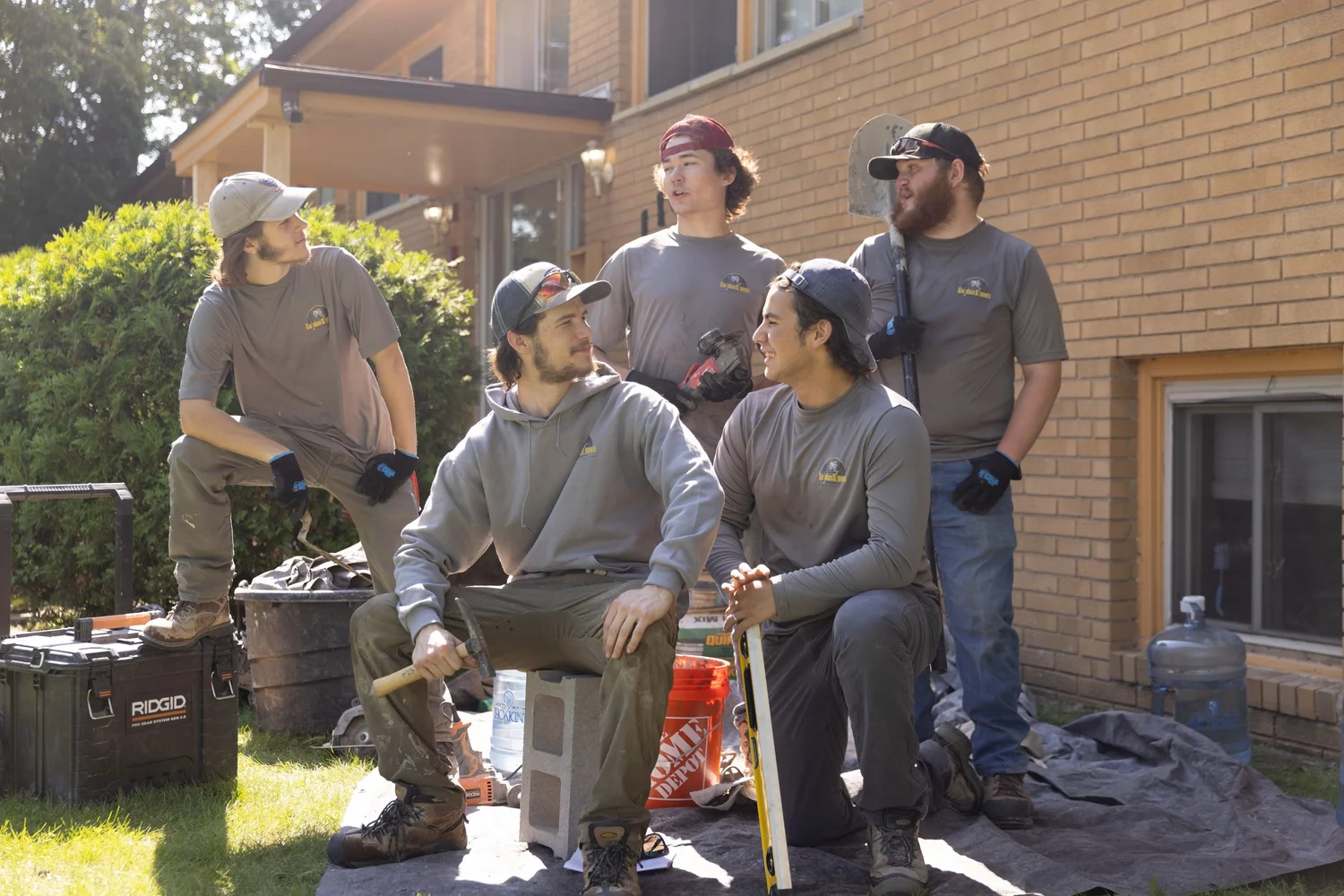
We treat a closure as a wall, not a plug
The tie-in, the coursing, and the match are decided before the first unit goes down because they determine whether the finished wall looks like a wall.
We are honest about the match before you commit
On an old wall, an exact match is not on offer from anyone, and we will tell you how close is realistic before the work starts.
Sam is on the job, not just on the estimate
Most of our Google reviews name him personally. On a six-person crew, that is how the detail work stays consistent.
Ten years on the workmanship
In writing, on what we built.
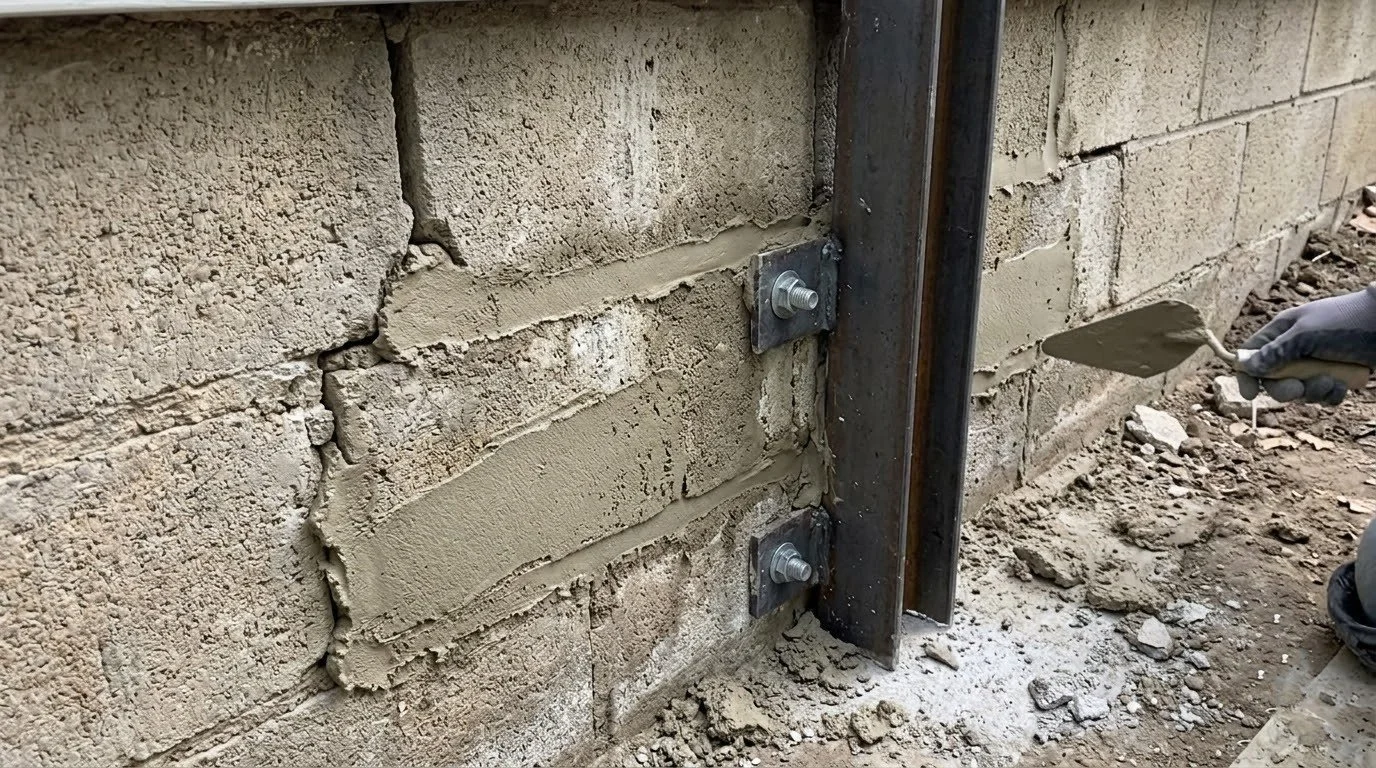
Replacing Block Without Rebuilding the Wall
The useful question on a damaged block wall is the same one that governs brick: how many units have actually failed, and has anything moved? Those two answers decide whether this is a replacement or something larger.
Where a handful of blocks have cracked, been crushed, or lost their face, but the wall is still in plane and carrying its load, the damaged units are cut out and replaced, and the wall is otherwise left alone. That is the job on this page, and it is smaller than most homeowners expect when they first see a broken block.
Where the wall has bowed, leaned, or stepped, replacing the visible block does not address why it failed, and the honest scope is different. A bowing block foundation wall is a structural matter covered on our foundation repair page. A free-standing block or brick wall that has moved is a rebuild, covered on our brick walls page. We will tell you which of these three you have, and we will not sell you a block replacement on a wall that needs more than that, because it would not hold.
Common Questions
Can you brick up a window or door I am removing?+
Yes. The opening is closed in brick or block matched to the wall, toothed into the existing courses so it bonds to the wall, and pointed to match. Done properly, it reads as part of the wall.
Will the filled-in opening be noticeable?+
On a newer, single-color wall, it can be very close. On an older wall that is already more than one brick and more than one mortar, there is usually a small difference, and we will tell you honestly how close is achievable before you commit.
Why do bricked-up windows usually look obvious?+
Because they were plugged rather than tied in. A straight vertical joint up each side, courses that do not line up, and a mortar that is off all give it away. Toothing the new work into the old and setting the coursing first are what avoid that.
Can you cut a new opening into a masonry wall as well as close one?+
Yes, where the wall allows it. Cutting an opening means putting a lintel over it to carry the load above, and supporting the wall while that goes in. Where the span or the load calls for an engineer's design, we build to the design and tell you up front that it is needed.
A few concrete blocks are cracked. Does the whole wall need replacing?+
Usually not. If the wall is still in plane and carrying its load, the failed blocks are cut out and replaced, and the rest is left alone. It is only when the wall has bowed, leaned, or stepped that the question becomes larger than a replacement.
My block wall is bowing inward. Is that this job?+
No. A block wall pushed in by soil or water is a structural problem, and it is on our foundation repair page. We will say plainly if that is what you have, because replacing the face would leave the cause behind.
Can you match my existing block or brick?+
Close, because our supplier is good at it. Identical on century-old masonry, no. Where a match matters and the wall is old, sometimes the answer is to take matching units from a less-visible part of the structure, and we will talk that through in the estimate.
Do you finish the inside of a closed opening?+
We leave you a sound masonry closure. The drywall, framing, and trim on the inside are a different trade, and we will hand off to whoever is doing your interior finish.
Can you do this work in winter?+
Interior block work can carry on through the winter. Exterior laying waits for weather mild enough for mortar to cure. We will come, look, and get you priced in any season.
What does the warranty cover?+
Ten years in writing on the workmanship, and it covers what we built. It stops at the boundary of our work, so the existing wall we tied into, or a finish another trade applied over our closure, is outside it. The full terms are in the contract.
Where We Do This Work
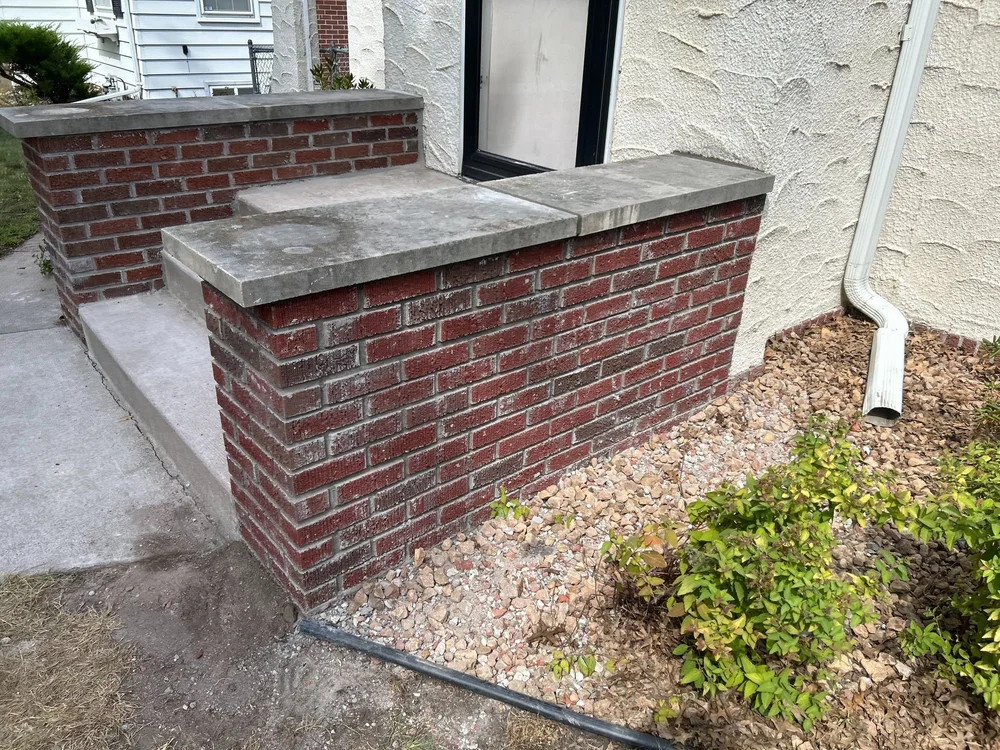
We close openings and replace block across the same metro as the rest of our work: St. Paul, Minneapolis, Bloomington, St. Louis Park, Richfield, Minnetonka, Eden Prairie, Plymouth, Maple Grove, Wayzata, Blaine, Circle Pines, Little Canada, Woodbury, Lake Elmo, Cottage Grove, Stillwater, South St. Paul, West St. Paul, Inver Grove Heights, Mendota Heights, Eagan, Burnsville, Apple Valley, Rosemount, Lakeville, Victoria, North Branch and Big Lake. For locations farther than about 45 miles from St. Paul, send photographs before the visit.
What Customers Say
What appears below is our live Google feed rather than testimonials we picked out, so it shows whatever is genuinely on it.
Get a Free Estimate
Photographs help a lot here. For a closure, a straight-on shot of the opening and a wider one of the whole wall let us read the bond and the match before we arrive. For block replacement, a close shot of the damage and one of the wall along its length tell us whether anything has moved.
Talk to Sam: (612) 509-0718 · Written estimate, options priced · MN BC807211