

Commercial Masonry in South St. Paul
Several of South St. Paul's older commercial buildings stand on its shopping streets. Dakota County's property records date seven commercial buildings in the 400 to 600 blocks of Marie Avenue to between 1910 and 1929, and two on Southview Boulevard to 1926 and 1930.
10 Years
Workmanship warranty, in writing

Where a front like that is brick or stone, Sam is typically called to tuckpoint it, and that is the work this page covers.
Marie Avenue and Southview Boulevard Storefronts
The City's 2014 study of the Southview Hill area says the area "has traditionally been the primary retail core for the community" and that it encompasses both streets.
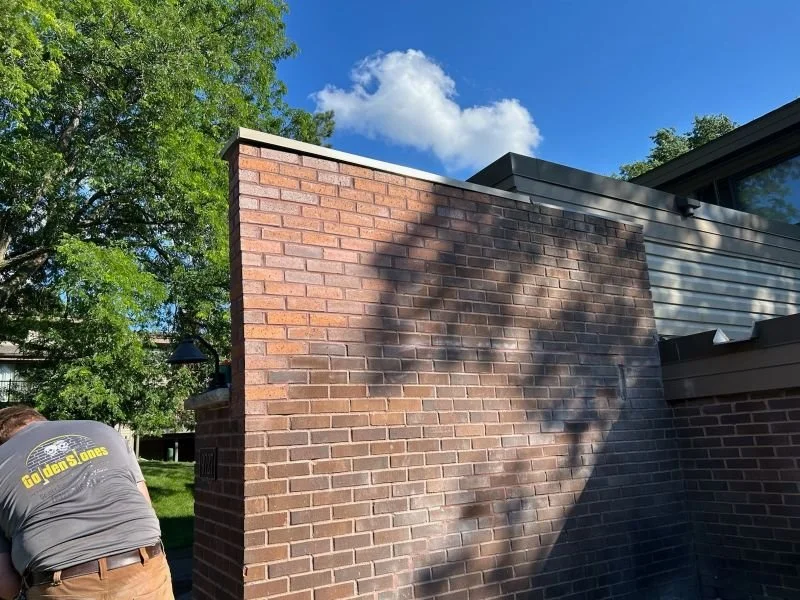
Those Marie Avenue fronts span two decades, long enough for the brick, the mortar mix, and the way joints were finished to change. Two fronts side by side on Marie Avenue can be more than 10 years apart, so Sam reads each one separately: the color of its mortar, the shape of its joints, and how hard its brick is. New mortar on one building is chosen to suit that building's joints, even where the building next door was laid differently.
The same streets hold apartment buildings from the same years. The county records two on Marie Avenue, built in 1924 and 1933, and one on Southview Boulevard, built in 1925. Brick apartment buildings are work we take on, by the wall, the same way as a shop front. Condominiums are the exception, because a building run by an owners' association is outside the work we accept.
2
Early apartments on Marie Ave
What Gets Repointed on a Marie Avenue Front
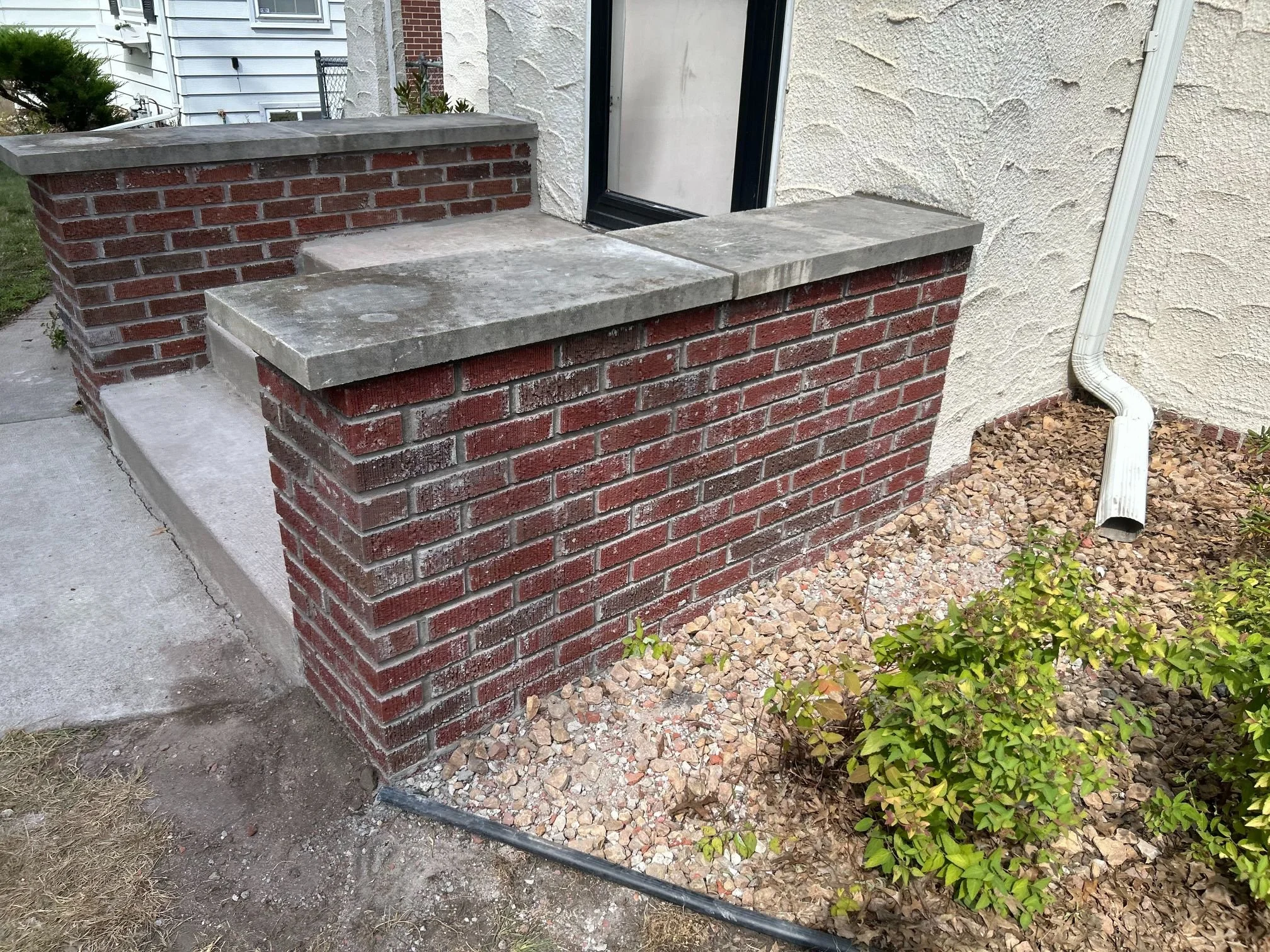
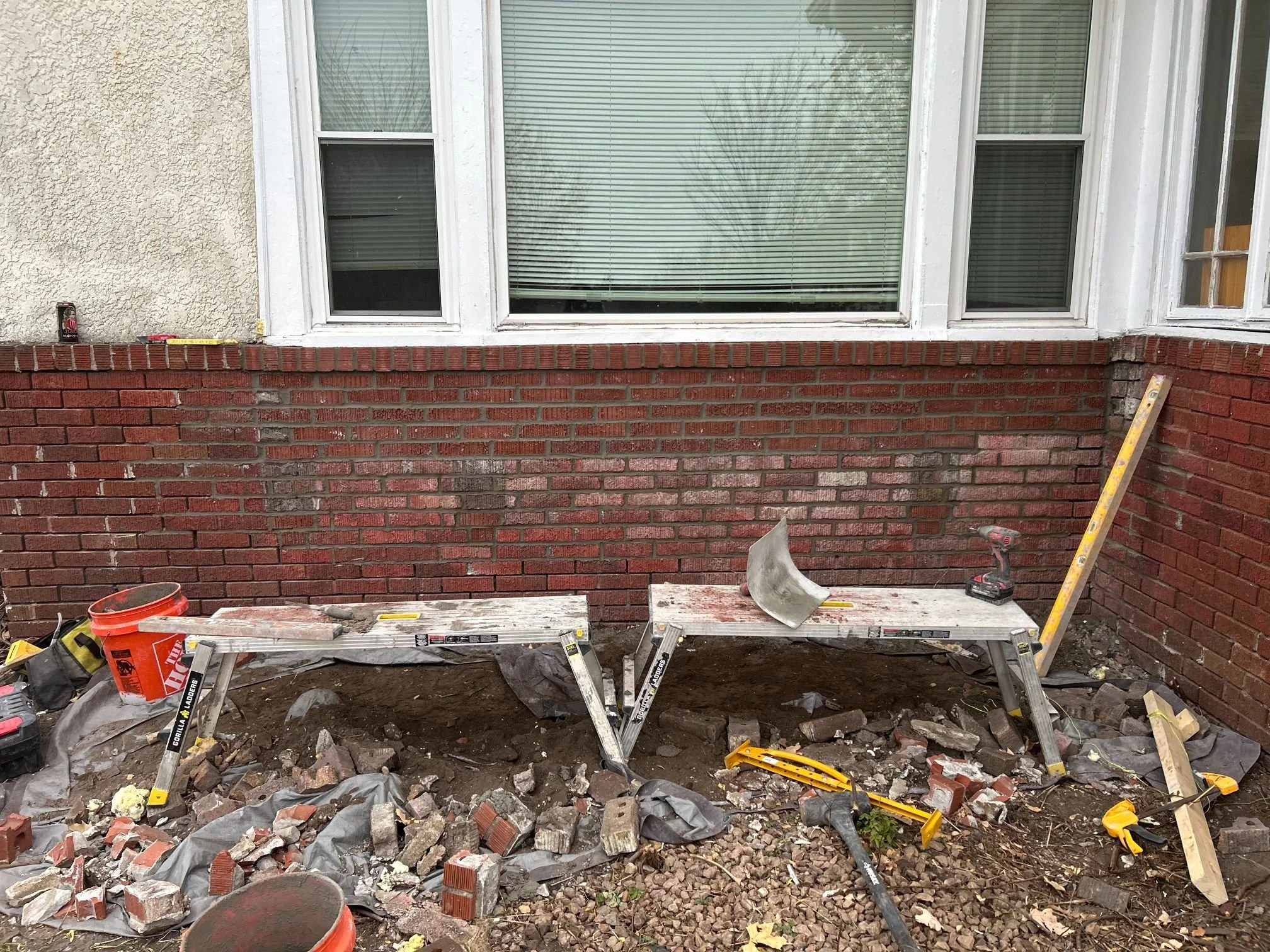
On these buildings, the job is the joints. Sam grinds out the ones that have failed and repoints them, across a whole front or only along the worst run of them, and a brick that has cracked through or worked loose comes out and is replaced in the same scope. The street front is the wall people notice, but the back and any open side are checked at the same appointment, because a wall nobody sees from the sidewalk can be the one letting water in.
Four things on an old front we leave to others: clay tile caps that need resetting, brick arches that have sagged, painted signs and terracotta.
Concord Exchange and the Old Business Strip
More older commercial buildings stand on Concord Exchange. The county dates three of them to 1922, 1923 and 1938, one of them recorded as a warehouse. Our commercial masonry page includes tuckpointing on older industrial brick, and where buildings like these are brick, they are in that range.
Beside them stands the Stockyards Exchange of 1887, listed on the National Register in 1979. Officially designated buildings are work we refer out, so that one goes to others. We do take on the brick buildings around it that carry no designation.
Concord Street itself has a different history. Lois Glewwe, writing the city's history for a local paper in columns the Dakota County Historical Society now posts, describes the Concord Street business strip of the early 1960s as boarding houses, storefronts and taverns "piled on top of each other," where "clapboard structures leaned precariously against their sturdier brick neighbors." The renewal plan the City Council adopted in 1968 aimed to demolish the old structures that stood in the way of new business.
Where an older building in that part of town lost the neighbor it was built against, a side wall laid up to be shared may now face the weather on its own. That wall gets its own reading, since its brick and joints were laid to be covered by the building that once stood beside it.

How an Older Storefront Is Priced
The City's Southview Hill study recorded a problem with older storefronts here. The study heard that owners wanted to upgrade their buildings, but when they worked through the numbers, "the increase in rent did not justify the expense, particularly in older buildings." When the study's survey asked which improvements the area needed, building facades were the only option to receive high support.
Our written estimate breaks a front into parts, each with its own price: the stretch of failed joints, the rest of the front, the back wall, and any brick to be replaced. An owner can address the failed part first and leave the rest for later.
Sam prices a storefront once he has seen it.
A Question About Old Corner Shops
Our house used to be a corner store. Do you take on buildings like that?+
Glewwe wrote that many of the city's former neighborhood shops still stand, "barely disguised as apartments or single-family homes," and that they "retain the storefront silhouette of earlier days." Whether yours is a home now or a shop, the brick or stone on it is work we take on.
What Customers Say
What appears below is our live Google feed rather than testimonials we picked out, so it shows whatever is genuinely on it.
What Sam Needs to Estimate a Storefront
It helps to send ahead of the visit:
The license we hold, Minnesota BC807211, is for residential building contractors. For commercial buildings, our work is repair and replacement; new brickwork is outside what we take on.