

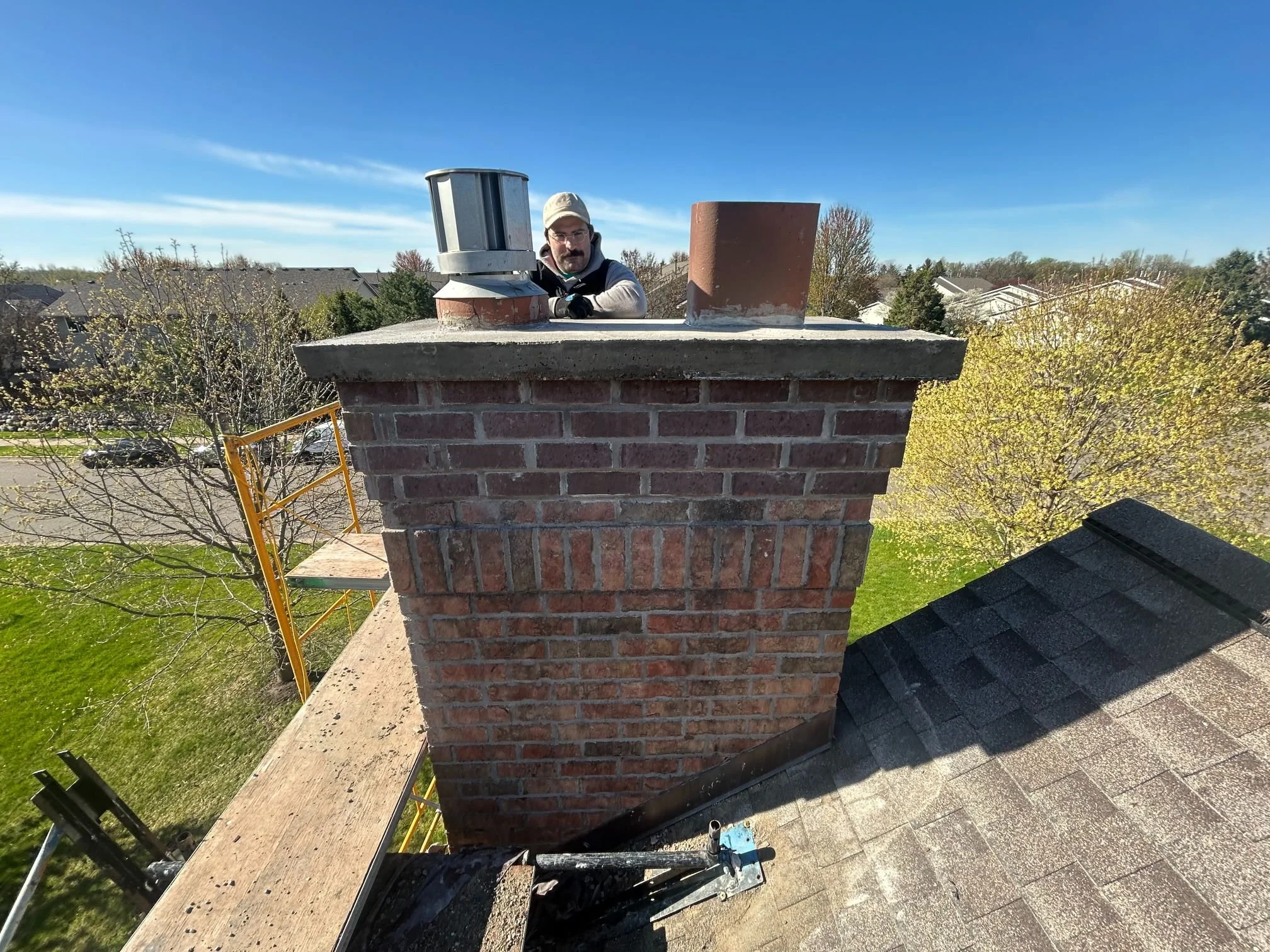
Chimney Repair in St. Louis Park
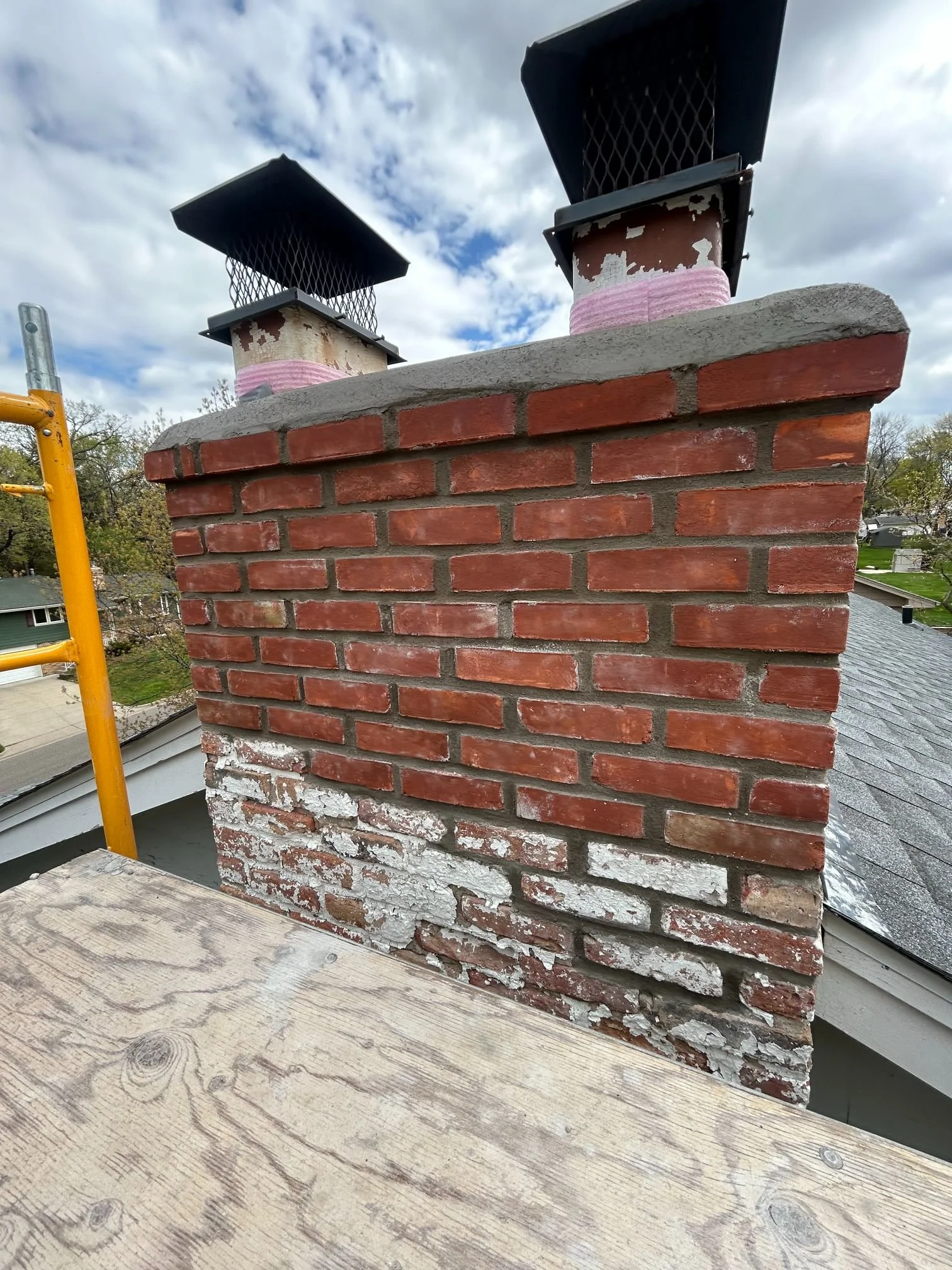
In St. Louis Park, we took one chimney all the way down to the ground and built it back up in black brick. The house dates to about 1890, which makes it one of the oldest in the city, and the stack ran up an outside wall. Here is why no repair could have saved it, and how to tell whether yours can still be repaired.
10 Years
Workmanship warranty, in writing
An 1890 House in a Postwar City
St. Louis Park was four years old as a village in 1890. A village history on the Historical Society's site records 499 residents that year and lists what they lacked: no water system, no gas mains, and no electricity. The stoves for heat and cooking burned oak and elm.
Few houses from that time are still standing. Hennepin County's property records date 51 of the city's 11,780 houses to before 1900, fewer than one in 200. The Society's own list of the oldest buildings stops at 1938, because FHA loans from 1939 “created a huge building boom that would make this a very long list.”
So a house of about 1890 is a different case from a postwar St. Louis Park house. If its chimney went up with the house, the brick was laid for wood stoves and has stood through some 135 winters, and any furnace or water heater venting into it now was connected long after. Sam reads a stack that old from the base up: the shoulders, the body, and the top.
Why This Stack Came Down to the Ground
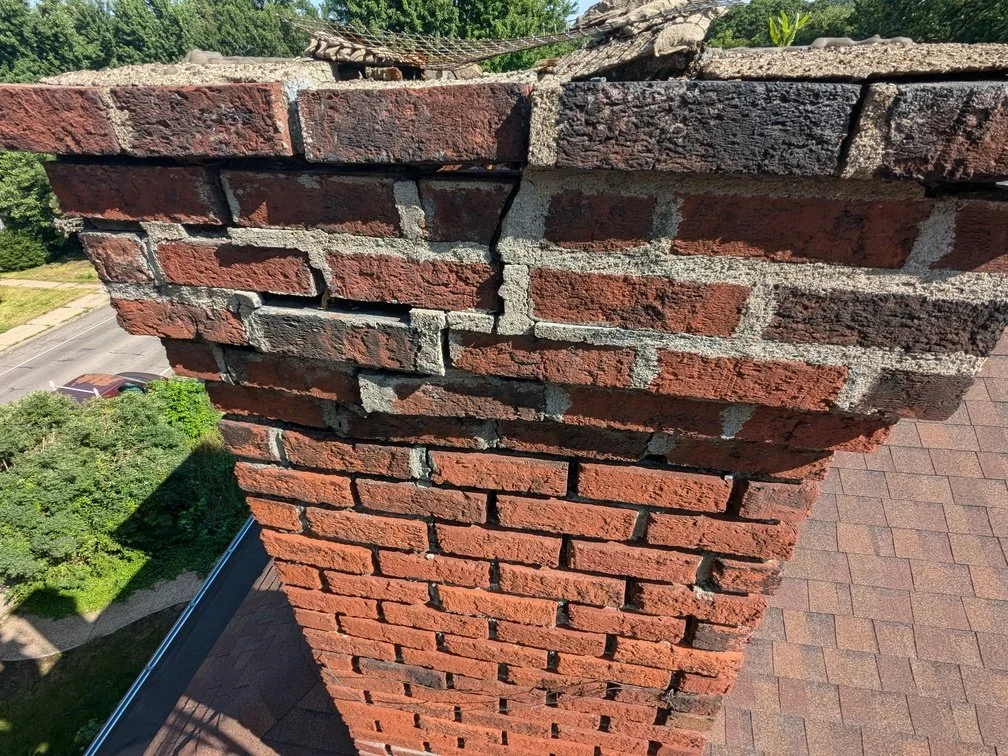
Sam's account of why it had to come down is short: spalling at the shoulders, with the brick “eroded all the way through in some spots.”
The shoulders are the sloped sides where a masonry chimney narrows from its wide base to the slimmer stack that carries on above the roof. Apart from the crown, they are the parts of a chimney that face the sky, and, where they are built in steps, each step is a ledge for water to sit on. A building inspection reference warns of an increased risk of water and frost damage on a stepped shoulder, and of how difficult it is to seal a shoulder against the wall of the house. On a stack that climbs an outside wall, that wall is right behind the shoulders, so water getting in there can reach the house as well as the brick.
Spalling is the face of a brick breaking away. A spalled brick with sound brick around it can be cut out and replaced. Brick eroded clean through, at the point where the stack narrows, is another matter, because everything above the shoulders stands on them. A repair at the top, or a rebuild from the roofline up, would have put new work on brick that was already gone. Our chimney rebuild page sets out how Sam decides how far down a rebuild has to go. On this house, the answer was the ground.
A Photo From the Yard
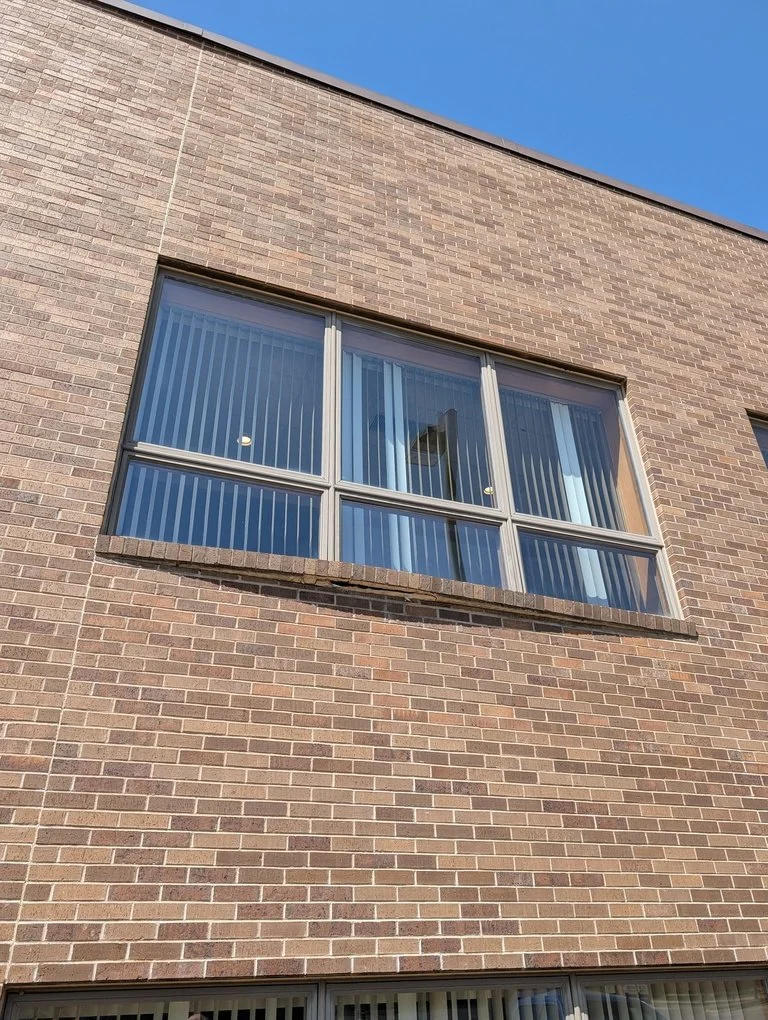
If your house was built before 1900 and its chimney climbs an outside wall, a photo taken from the yard and zoomed in on the shoulders, where the brick steps in, tells Sam a good deal before he arrives. Brick chips lying at the foot of the wall, or holes where a brick face should be, belong in that picture.
For active leaks, we work evenings and weekends, and urgent scheduling costs more, which we tell you before you agree. Exterior mortar work is scheduled for weather mild enough for it to cure.
Black Brick From the Ground to the Crown
Sam's photos of the job appear on this page, without the address.
Because none of the old stack was left, the entire chimney is work we performed, and the contract's 10-year workmanship warranty covers it all. On a rebuild that stops at the roofline, the older masonry below it stays outside the warranty.
Chimney Repair Prices on an Older Stack
Where the shoulders and the body of an old stack are sound, and the wear is at the top, the job is a repair on these lines:
Before you call
A rebuild from the ground, like the one on this page, is priced only after Sam has seen the stack. So is taking down and capping a stack that no longer serves the house.
Every figure on this page depends on square footage and on what we find when we look. They are rough guides to help you decide whether to call, not quotes. The exact number comes after the visit, and the visit is free.
Sweeping, creosote, flue liners, dampers, gas inserts, and wood stoves go to a chimney sweep or installer.
Questions About an Older Chimney
We have a roofer booked. Should the chimney wait until the new roof is on?+
Sam would rather do the chimney first.
Is a house this old a historic property you refer out?+
Only if it is officially designated, and that work goes to others. Without the designation, the masonry on an old house is work we take on.
What Customers Say
What appears below is our live Google feed rather than testimonials we picked out, so it shows whatever is genuinely on it.