

Chimney Repair in Lakeville
On a Lakeville rambler built between 1968 and 1973, the first question about the chimney comes before any price: is there a fireplace behind the stack at all? These ramblers are mostly in the Donnay's Valley Park plats, where 808 houses went up in those six years, the largest block of older houses in the city.
10 Years
Workmanship warranty, in writing
Fireplace Flue or Furnace Flue
The Census Bureau's published series on fireplaces in new houses starts in 1973, the last year of the plats' main run. That year, 62 percent of new houses in the Midwest were finished without one. If there is no fireplace, the stack may have been built for the furnace. The Bureau's heating figures for those years add a second clue: gas heated 78 percent of new Midwest houses in 1971 but 61 percent in 1973, when a quarter were heated by electricity, which needs no flue. On a Valley Park house built with electric heat, a brick stack is more likely to point to a fireplace, past or present.
So the question is what the chimney serves: a wood fireplace, a gas one, or no fireplace at all. In Sam's experience, the stack on a rambler or split-entry usually does both jobs, with one flue for a fireplace and another for the furnace or the water heater, and the clues below show whether yours does.
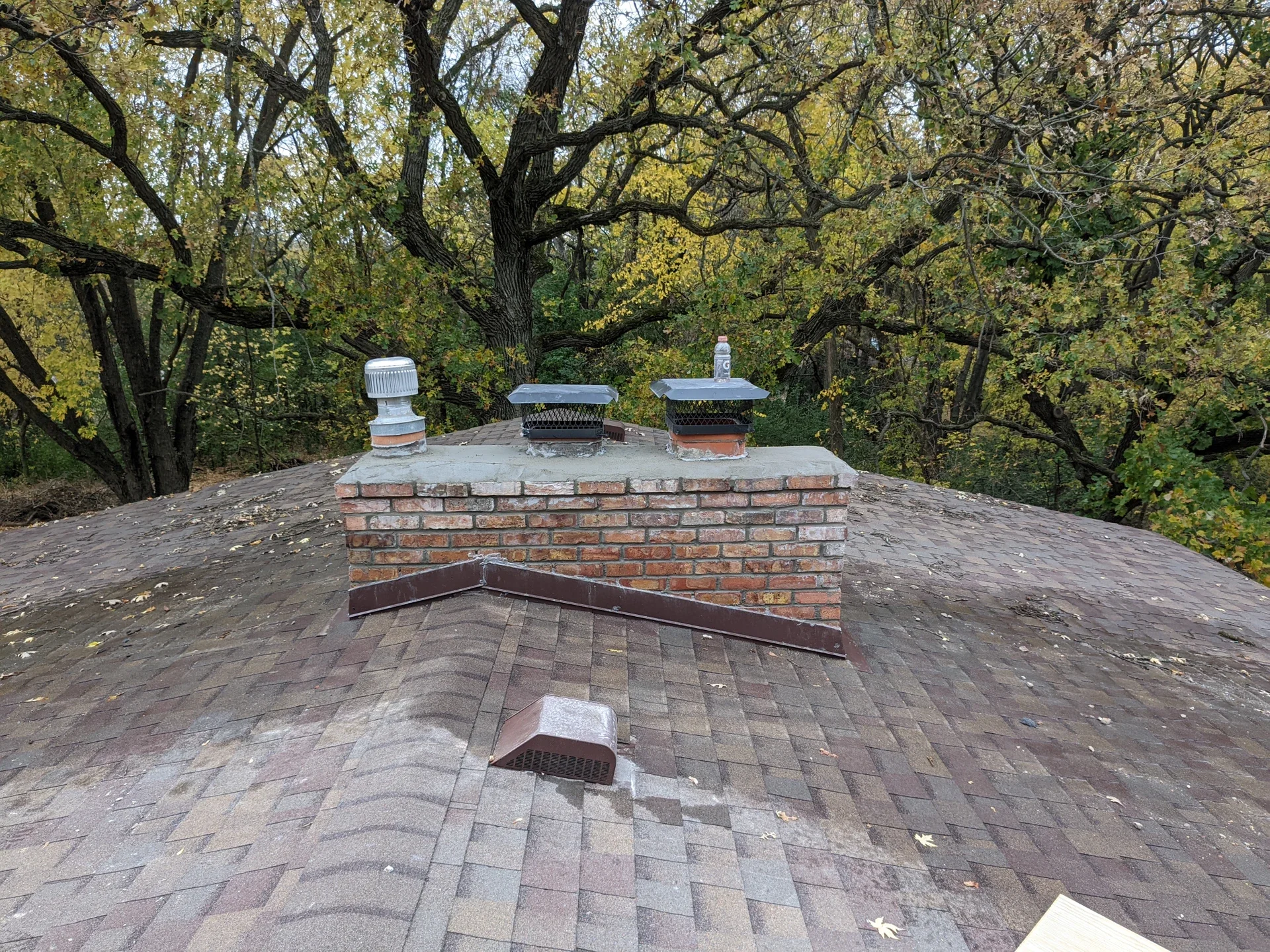
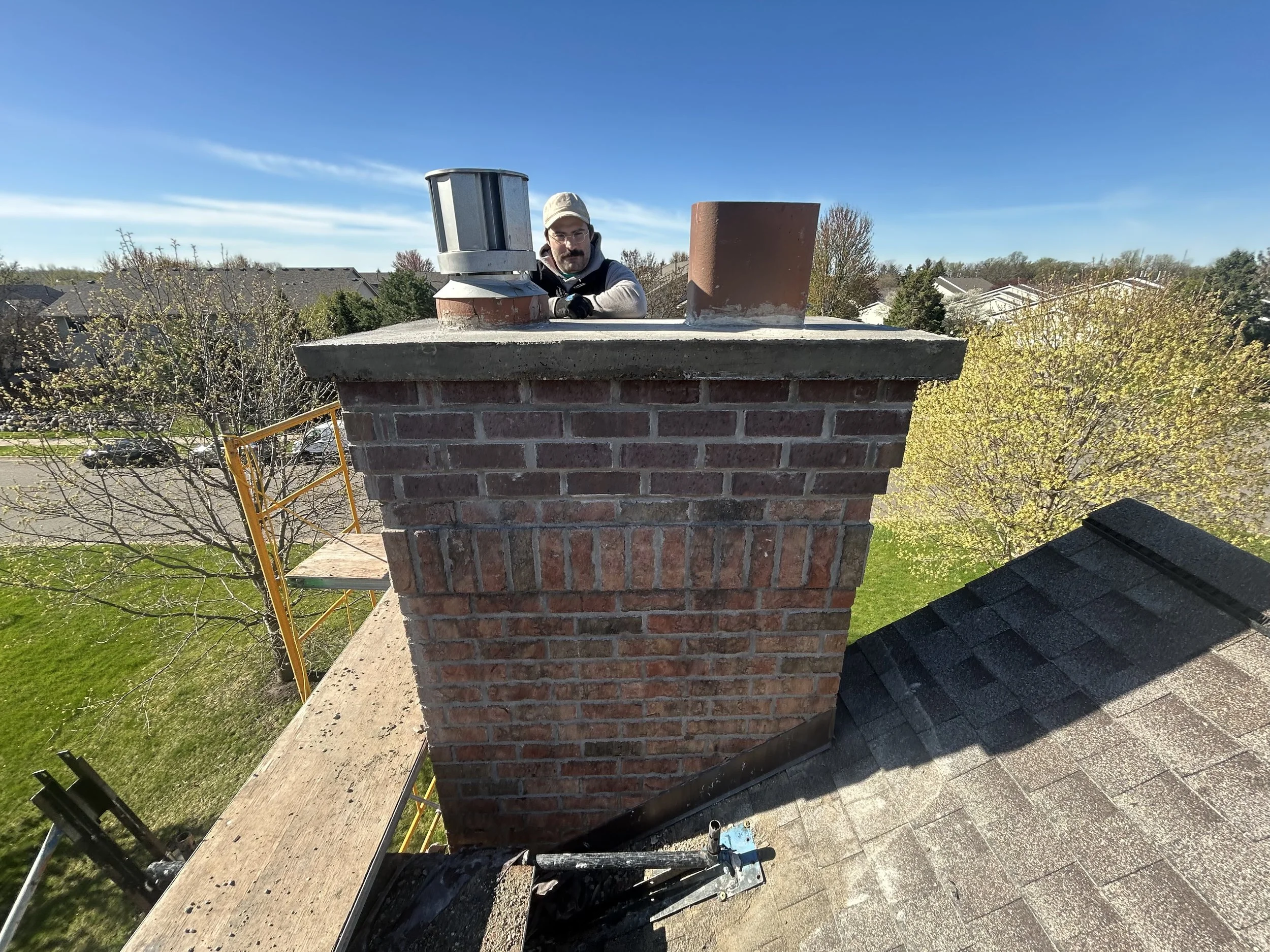
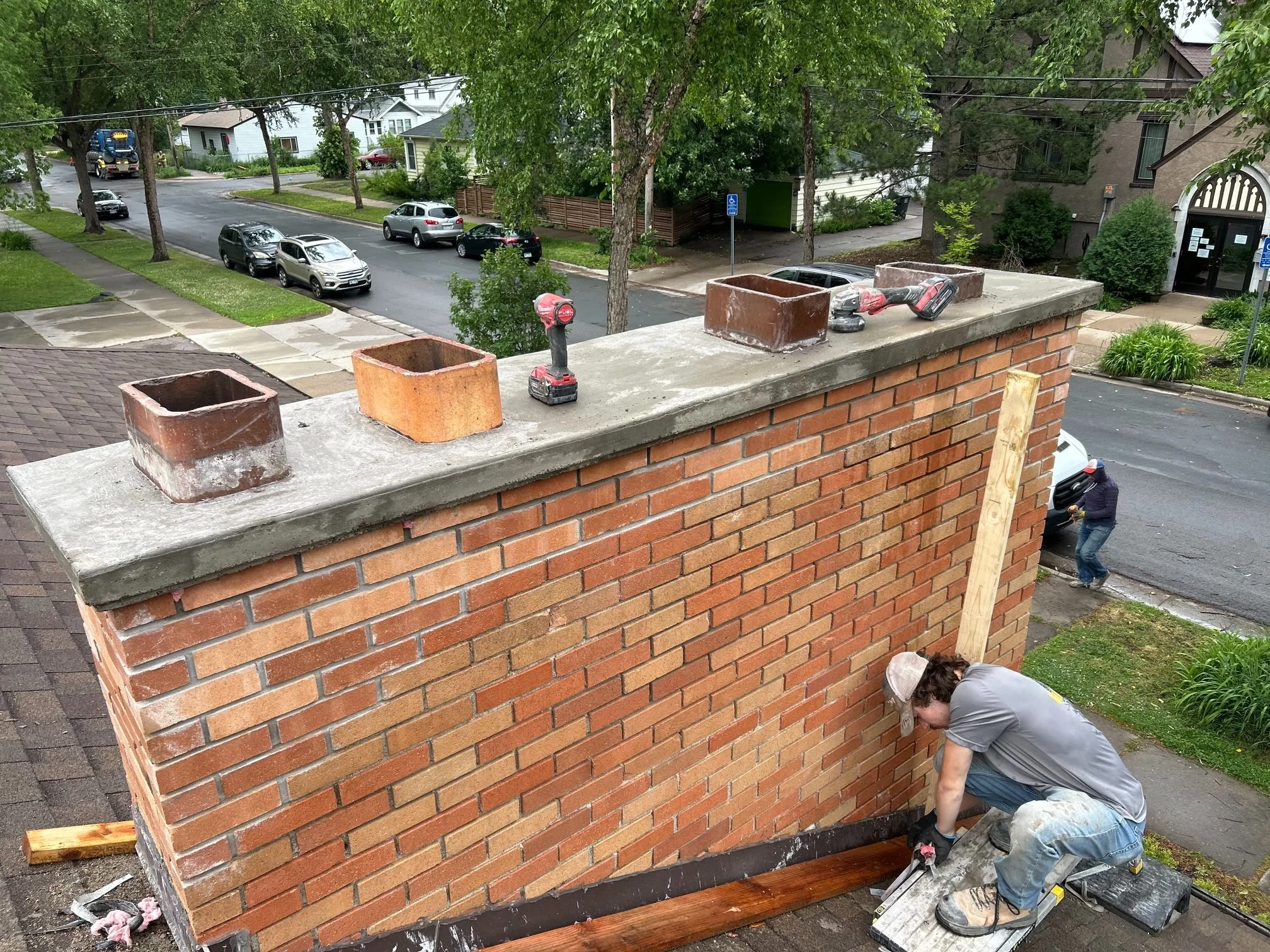
Look for a fireplace opening on the main floor or the lower level, including one that has since been closed up, and for a metal vent pipe from the furnace or the water heater running into the brick in the basement. From the yard, where no cap hides them, each flue usually shows at the top of the stack as its own clay tile, so two tiles point to two jobs for the chimney. Where a vent pipe is still connected to the brick, work up top has to keep that flue clear.
About a third of the houses in the Valley Park plats are split-entries, most of them built after the ramblers, and the same check applies to them.
The Split-Entry Years
Outside the Valley Park plats, the house Lakeville built most in the 1970s and 1980s was the split-entry: 1,434 of the 3,522 detached houses from those two decades. Almost half of those split-entries, 695 of them, went up in just four years, from 1986 to 1989.
The same Census Bureau series shifts with those years. From 1976 to 1979, half or more of new houses in the Midwest were finished with a fireplace. From 1980 to 1983, more than half again went without one, 58 percent in 1982. From 1986 to 1989, about 6 of 10 new Midwest houses had a fireplace.
So the build year of a Lakeville split-entry says something about the chimney. On one from the late 1970s or the late 1980s, the stack is more likely to have been built for a fireplace; on one from the early 1980s, the question is as open as it is on a Valley Park rambler.
The Old Village and the Farm Parcels
The old village is the railroad's town. When the Hastings and Dakota Railroad came through in 1869, it placed its stop just east of the first Lakeville, and the businesses moved to the new village of Fairfield, which was renamed Lakeville when it was incorporated as a village. From 1900 to 1950, the population grew only from 1,178 to 1,984, so few houses were built between the village years and the postwar plats. A pre-1940 village chimney is a generation or more older than a Valley Park rambler's.
Three in four of the pre-1940 houses on the county's record, about 115 of them, sit in two places: the old village plats around the original Town of Fairfield, and farm parcels, where three farmhouses in four rise more than one story. On these houses Sam does occasionally find a chimney of soft old brick or fieldstone.
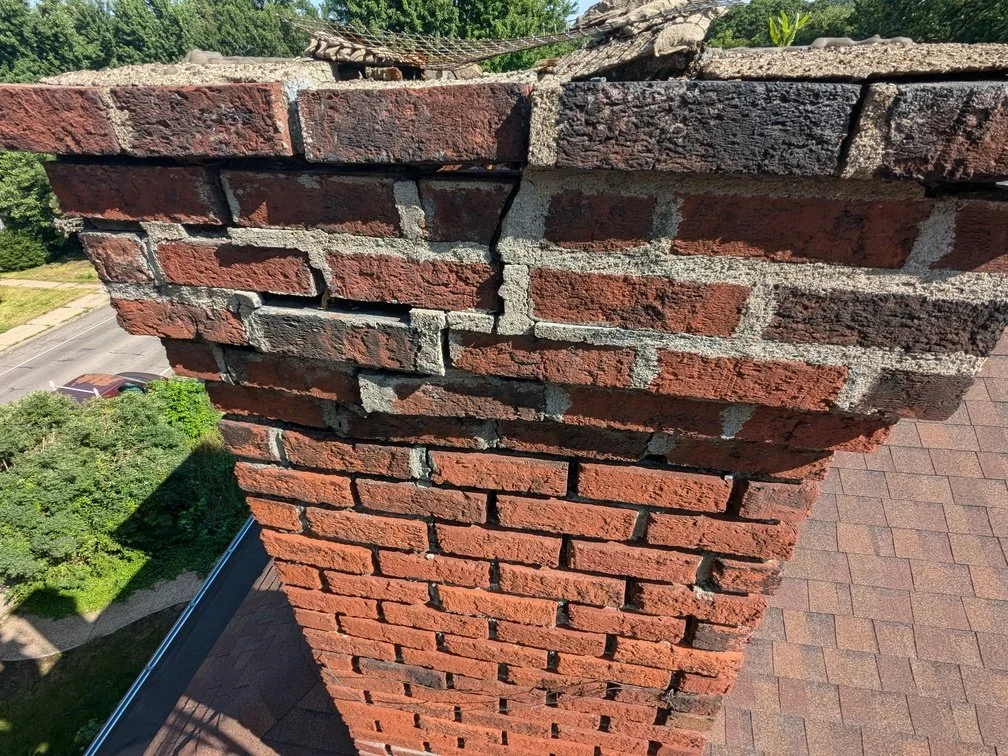
The village houses are taller than a rambler, too. Of the 70 pre-1940 houses in the old village plats, all but six rise more than one story, most of them with rooms under the roof, so an upper floor stands beside the stack. A stack like that is priced on site, and so is a fieldstone chimney.
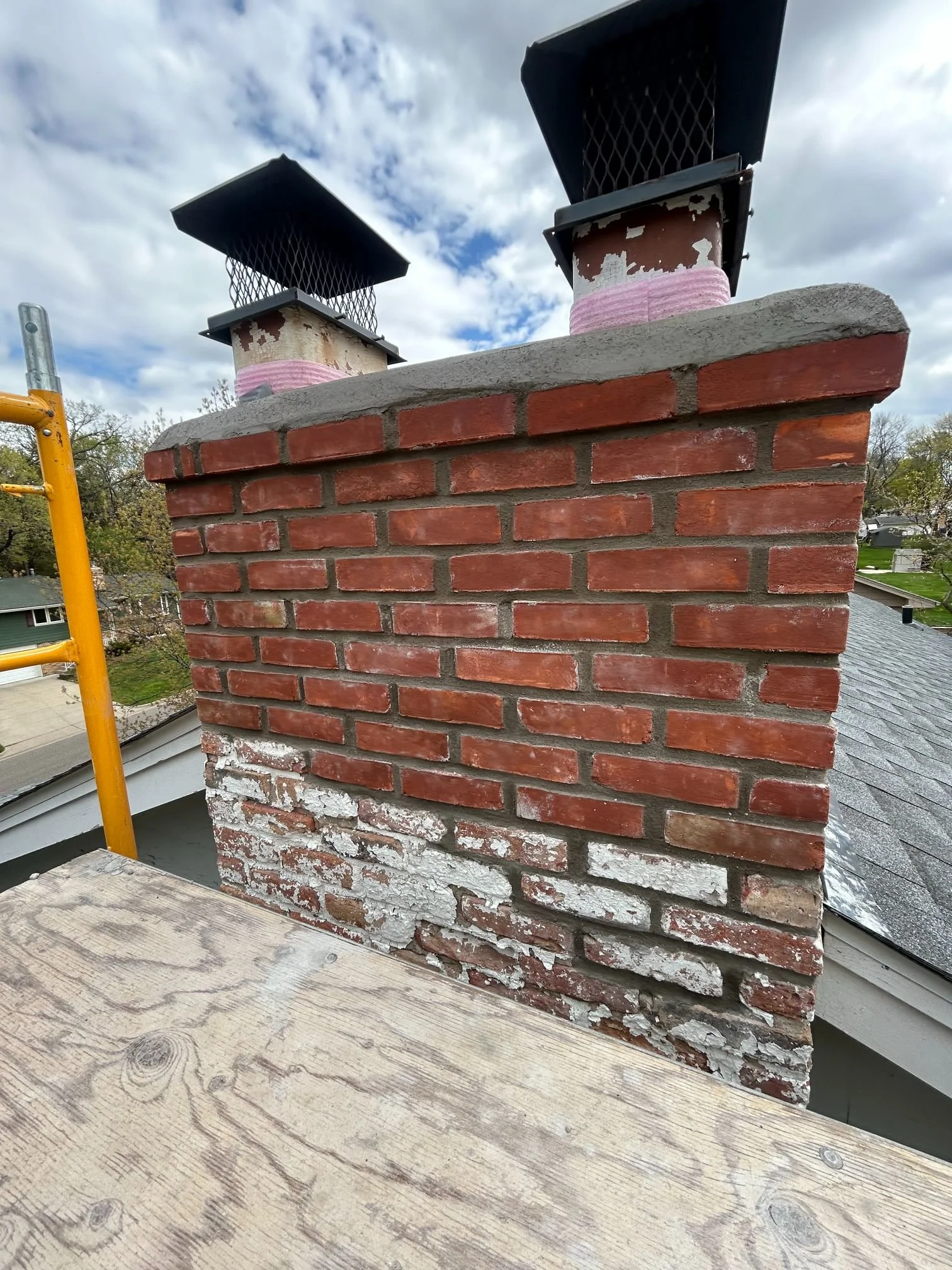
Fireplace or Furnace, the Same Price Lines
Before you call
Every figure on this page depends on square footage and on what we find when we look. They are rough guides to help you decide whether to call, not quotes. The exact number comes after the visit, and the visit is free.
Sweeping, creosote, flue liners, dampers, gas inserts, and wood stoves go to a chimney sweep or installer.
A Lakeville Chimney, Priced in Writing
Send Sam:
- Which of the fireplace and flue clues above you can find
- Whether the house is a Valley Park rambler or split-entry, a later split-entry, or one of the old village or farm houses
For active leaks, we work evenings and weekends, and urgent scheduling costs more, which we tell you before you agree. Exterior mortar work is scheduled for weather mild enough for it to cure.
What Customers Say
What appears below is our live Google feed rather than testimonials we picked out, so it shows whatever is genuinely on it.