

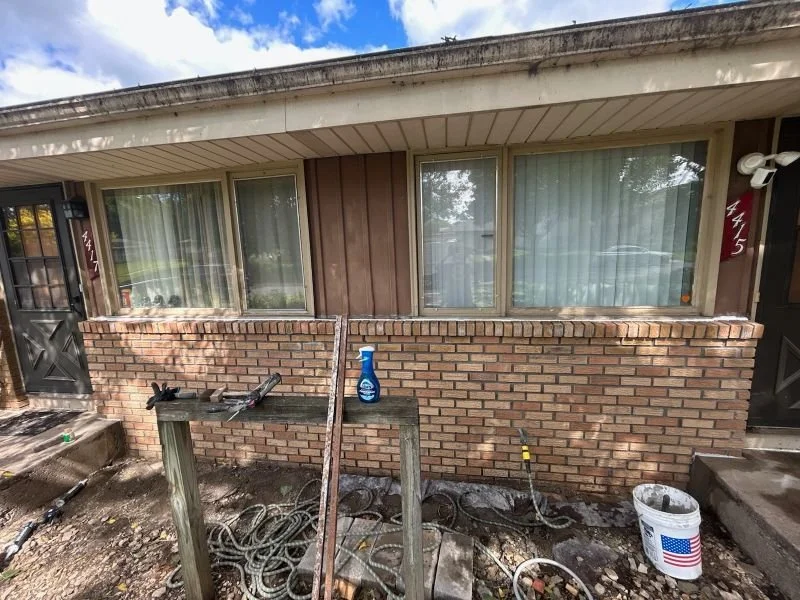
Brick Repair in St. Louis Park
10 Years
Workmanship warranty, in writing

A replacement brick has to fit its course before its color matters. In St. Louis Park, where a prewar house and a 1950s house can share a block, size comes first. The right height keeps the bed joints running level, and the right length keeps the head joints spaced like the rest of the wall. Failed units come out, and brick sized to the courses already laid goes back in.
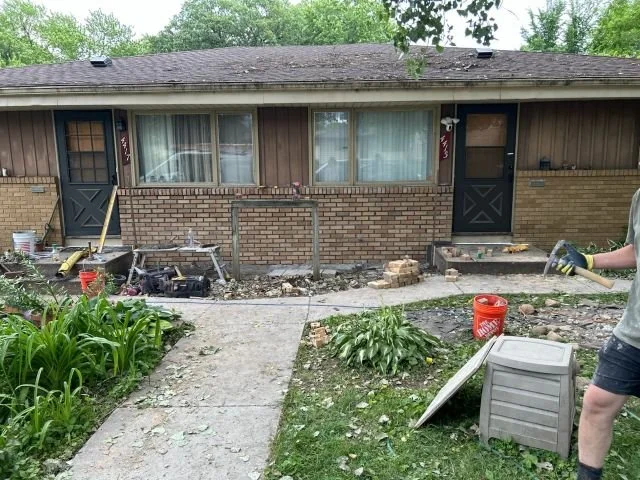
Course Height Decides the Match
Brick goes up in courses, and each course rises by the same amount: the height of one brick plus one bed joint. A replacement even slightly taller or shorter than its neighbors leaves a difference that has to be taken up somewhere, and the mortar is where it goes.
Published sizes show how fine the differences are. The Brick Industry Association's technical note on brick dimensions lists modular brick at 3 5/8 by 2 1/4 by 7 5/8 inches and standard brick at 3 5/8 by 2 1/4 by 8 inches. Both lay up three courses to 8 inches, so they agree in height and part ways in length by 3/8 of an inch. Queen and king sizes stand about 2 3/4 inches tall and lay up to 16 inches in five courses, which puts them out of step with both. The same note observes that "brick sizes have varied over the centuries but have always been similar to present-day sizes."
Similar is where the trouble starts. A replacement that runs short leaves a wider head joint at each end, and one that runs long is cut down to length. A unit a fraction off in height creates a slightly thicker or thinner bed joint above and below it, so the course line remains level across the repair. Small differences can be absorbed that way. A brick a full size apart cannot, and a better-fitting one has to be found.
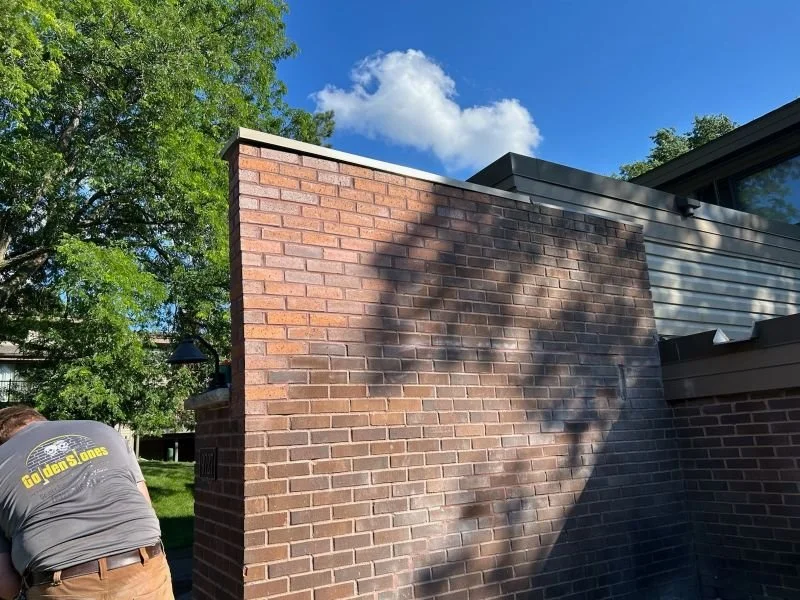
Earlier repairs show what happens when size is skipped. A patch laid in the wrong brick can be picked out by its joints: bed joints that pinch thin or swell thick around a few units, head joints wider than the rest, or a course that drifts off line and then settles back. Where we find one, the estimate says so, and whether it is left or redone is your choice.
The same arithmetic governs a small wall rebuild. Every course that goes back has to finish at the height where the old courses carry on, or the joints step where the new work meets the old. So the brick in the wall is measured, along with the height of a few courses and their joints, before any replacement is chosen. Three courses are measured together because a single bed joint can run a little thick or thin, and the average across three is the truer figure. Color and texture come next, and our Minnetonka brick repair page takes up that half of the match.
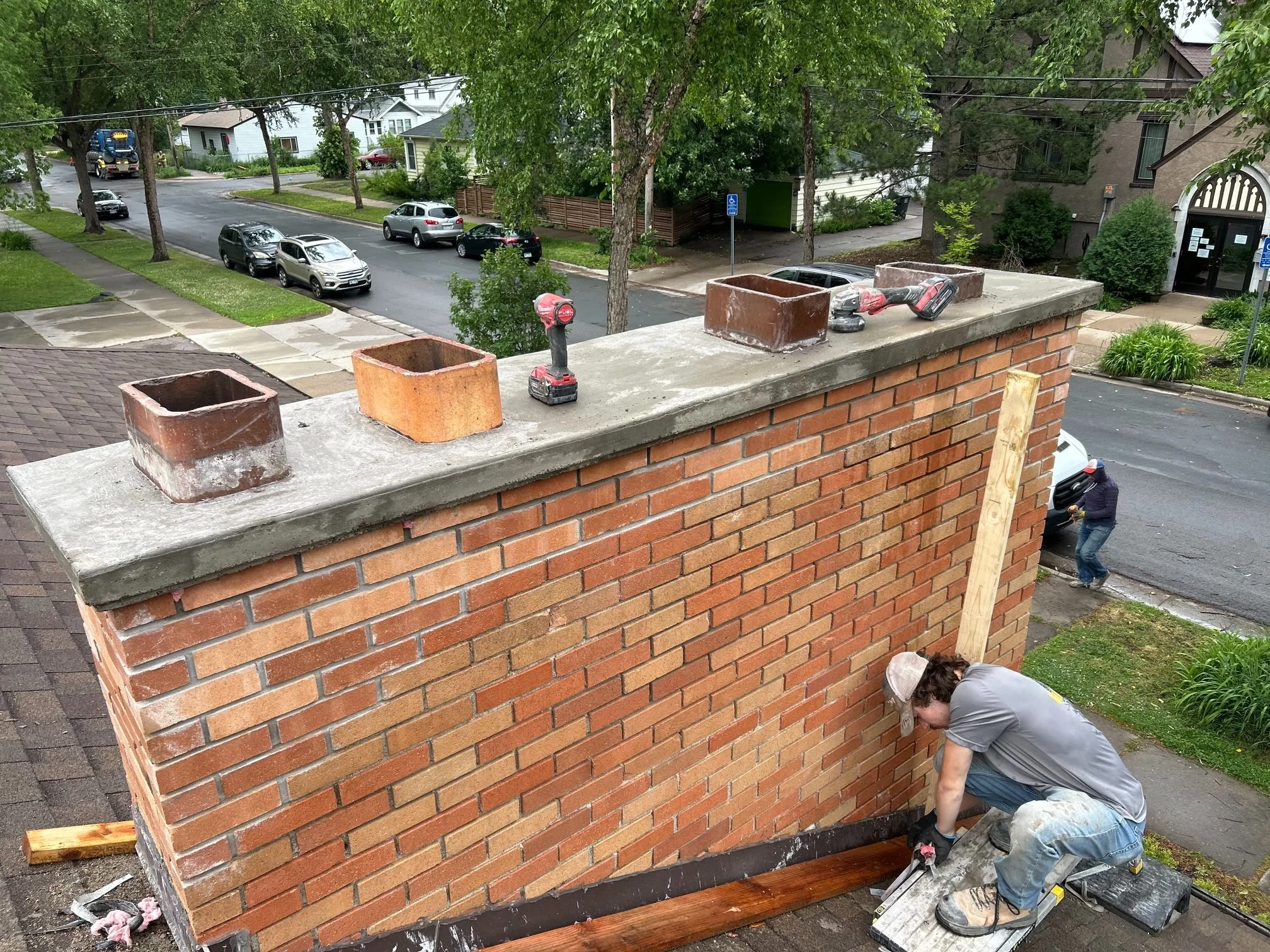
Prewar and Postwar Brick in One City
St. Louis Park has plenty of both kinds of houses. Of its homes, 2,361 were built in 1939 or earlier, and 12,067, about 46.5 percent, were built from 1940 through 1969. Sam counts it among his biggest markets.
Brick made a generation apart was not necessarily made to one size, so a prewar wall and a postwar wall a few streets away may call for different replacements. The size of a wall is measured, not assumed from the age of the house.
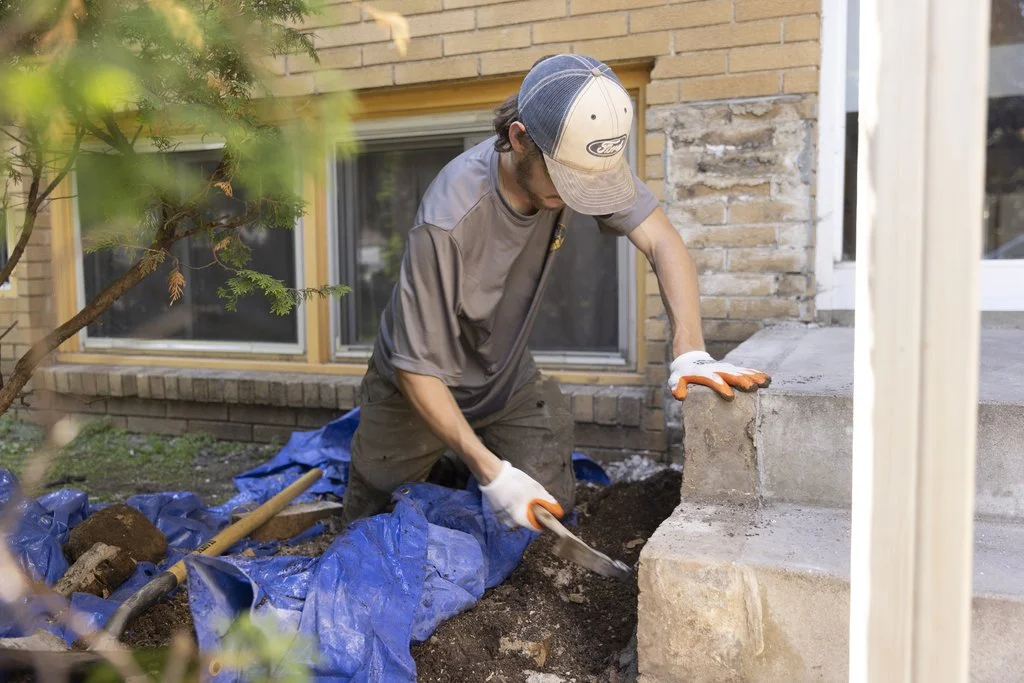
Holding the Course Line Through a Repair
Measuring the brick in the wall, and the height of three courses with their joints
Cutting the failed units out
Cutting replacements to length where they run long
Bed and head joints made a little thicker or thinner, where needed, to hold the course line
Mortar mixed for the brick it beds, chosen the way our tuckpointing page describes
Outside this work: chimney brick, which our St. Louis Park chimney repair page covers, thin brick veneer and painting brick
Brick Repair Price Lines
Two of the published brick lines fit a size-matched repair:
Cutting units to length and adjusting the joints are part of laying them, and they have no line of their own. The count of failed units and whether a stretch has to be relaid place a job on one line or the other.
Before you call
Every figure on this page depends on square footage and on what we find when we look. They are rough guides to help you decide whether to call, not quotes. The exact number comes after the visit, and the visit is free.
Odd Sizes and Older Walls
My brick is longer than the ones at the store. Can it still be matched?+
Possibly. A store stocks the sizes it sells most, and a longer unit may have to be sourced elsewhere. If none of the right length turns up, you hear that before any brick is cut out.
Will a thicker joint show?+
A joint thickened by a small amount across one or two courses is hard to pick out from the yard. The bigger the difference, the more it shows, which is why a brick too far off is passed over.
Does an apartment building get the same size check?+
Yes, measured on the wall being repaired, because a building that size may have been laid in more than one brick. Our St. Louis Park tuckpointing page covers the joints on those buildings.
Is the prewar brick on my house a different size from my neighbor's 1950s brick?+
It may be, and the house next door is no guide to yours. A brick that fits your neighbor's courses fits yours only if a tape across one brick and three courses says so.
What Customers Say
What appears below is our live Google feed, not testimonials we picked out, so it shows whatever is genuinely on it.
One Brick and Three Courses, Measured
What helps on the first call:
- A tape measure and a minute at the wall give Sam two useful numbers.
- The length and height of one brick, taken on its face
- The height of three courses together, joints included